PaintingProGuide is reader-supported. When you buy through links on this page we may earn an affiliate commission at no extra cost to you.
A good liner brush is the difference between tree branches that taper naturally and branches that look like they were drawn with a marker. Liners have long, thin bristles that hold a reservoir of fluid paint, so one stroke can travel several inches while staying hair-fine. Choosing the best liner brush comes down to bristle length, fiber spring and how well the tip snaps back to a point after every stroke.
Fair warning about this roundup: the current Amazon results for “liner brush” are dominated by nail-art liners. We have included one dedicated fine-art detail set that contains true liners, plus three long-bristle striping liners that also list acrylic paint use and can work for small craft details. Each one is labeled honestly so you can tell which is which.
Quick answer: For painting on canvas, paper or models, the Golden Maple 15-piece Miniature Paint Brush Set is the best choice here because it includes true fine-art liners alongside rounds and flats, with long ergonomic handles. If you mainly paint tiny stripes and lines on small crafts or nails with acrylic, the Komall 6-piece metallic liner set and the Artdone 5-piece liner set offer several bristle lengths up to 25mm.
What Makes the Best Liner Brush?
Liner brushes (also called script liners or long liners) are a sub-type of round brush with extra-long, thin bristles. The length acts as a reservoir: the brush holds more paint than a short round of the same width, so you can paint a long, unbroken line. The thinness keeps that line narrow. If you want a deeper comparison of how liners differ from standard rounds, see our explainer on round brush vs liner brush differences.
| Brush | Bristle length | Line type | Typical uses |
|---|---|---|---|
| Short liner / detail liner | Short to medium | Short, precise lines | Eyelashes, outlines, small lettering |
| Long liner / script liner | Long | Longer flowing lines | Branches, grass, signatures, calligraphic strokes |
| Rigger | Very long | Very long, thin lines | Ship rigging, power lines, long twigs |
| Striping liner (craft/nail) | 5mm to 25mm | Straight stripes | Borders and patterns on small objects |
Our Top Picks at a Glance
- Golden Maple 15PC Miniature Paint Brush Set — Best for fine-art liner work on canvas, paper and models
- Komall 6Pcs Metallic Liner Brushes — Best for long stripes on small crafts with acrylic
- Artdone Metallic Liner Brushes Set — Best for budget striping and outline details
- vivinin 7PCS Metallic Liner Brushes — Best for long geometric lines and outlines
| Product | Best For | Key Spec | Key Strength | Price Tier |
|---|---|---|---|---|
| Golden Maple 15PC Miniature Paint Brush Set | fine-art liner work on canvas, paper and models | 15 brushes incl. liners, rounds, flats, spotters | True artist liners in a complete detail set | $ |
| Komall 6Pcs Metallic Liner Brushes | long stripes on small crafts with acrylic | 6 nylon liners: 5, 7, 9, 11, 20 and 25mm | Wide range of bristle lengths | $ |
| Artdone Metallic Liner Brushes Set | budget striping and outline details | 5 liners: 5, 8, 12, 20 and 25mm | Double-crimped copper ferrules | $ |
| vivinin 7PCS Metallic Liner Brushes | long geometric lines and outlines | 7 liners: 2×7, 2×9, 11, 15 and 21mm | Duplicate sizes for color switching | $ |
How We Chose
We did not paint with these brushes. Our picks are based on the Amazon listing details and specifications checked in October 2026, how well each brush’s bristle length, fiber and handle fit liner work, and how widely each product is reviewed by Amazon buyers. Because most current listings are nail-art tools, we also checked that each pick mentions acrylic paint compatibility. Criteria:
- Liner shape: long, thin bristles that hold fluid paint for continuous lines.
- Fiber: synthetic nylon or taklon that springs back to a point.
- Size range: multiple bristle lengths for short details and long strokes.
- Handle and ferrule: secure, crimped ferrules and a comfortable grip.
- Medium compatibility: stated use with acrylics or other fine-art paints.
Best Liner Brushes Reviewed
1. Golden Maple 15PC Miniature Paint Brush Set — Best for fine-art liner work on canvas, paper and models

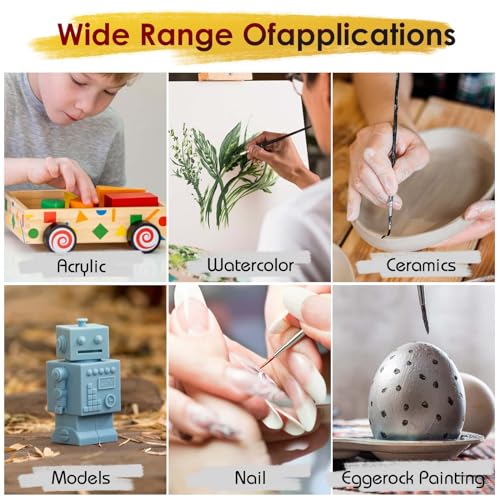
This is the only set in our lineup built for fine-art detail rather than nails. The listing describes super-fine round, liner, flat and spotter brushes with soft synthetic hair and rust-proof ferrules, designed for acrylic, oil, watercolor, gouache and other media.
Long triangular handles give a stable, pencil-like grip, which helps keep liner strokes steady. Because it includes rounds and spotters too, it covers the main detail tasks around a painting: tree branches and grass with the liners, eyes and highlights with the spotters, and small shapes with the rounds. A storage case keeps tips protected.
Best suited for: Acrylic, oil and watercolor painters, model and miniature painters, and paint-by-number hobbyists who want a real liner plus supporting detail brushes.
Key features:
- 15 detail brushes including liners, rounds, flats and spotters
- Soft synthetic hair with rust-proof ferrules
- Triangular ergonomic handles
- Carrying case with tip protection
Pros:
- Designed for artist paints rather than nail polish
- Covers liner work plus other fine detail tasks
- Comfortable grip for steady lines
Cons/limitations:
- Liners are sized for detail work; for very long rigging lines a dedicated long rigger may be better
- Listing does not break down each liner’s exact bristle length
Buying consideration: Liner work needs fluid paint. Thin acrylic with water or a flow medium to an ink-like consistency for the cleanest lines.
2. Komall 6Pcs Metallic Liner Brushes — Best for long stripes on small crafts with acrylic

Komall’s set is a nail-art product, but the listing specifically mentions acrylic paint, drawing lines, fine drawing and painting flowers. The range of bristle lengths, from 5mm up to 25mm, is what makes it useful: the long 20mm and 25mm bristles behave like striping liners and can pull a long, even line in one pass.
Bristles are nylon, ferrules are double clamped according to the listing, and metal handles keep the set compact at roughly 7.5 inches long. Short brushes like these work best on small surfaces such as ornaments, rocks, mugs and nails rather than large canvases.
Best suited for: Crafters adding stripes, borders and fine lines to small items, and nail artists who also paint with acrylics.
Key features:
- 6 liners from 5mm to 25mm bristle length
- Nylon bristles with double-clamped ferrules
- Metal handles, about 7.5 inches long
- Listed for gel polish and acrylic paint
Pros:
- Long bristles hold enough paint for extended stripes
- Several lengths in one inexpensive set
- Compact and easy to store
Cons/limitations:
- Designed primarily for nail art, not easel painting
- Short handles feel different from artist brushes
Buying consideration: Soak new brushes briefly in warm water to remove the sizing wax, as the listing recommends, before first use.
3. Artdone Metallic Liner Brushes Set — Best for budget striping and outline details

Artdone’s five-piece set covers a similar range of bristle lengths, 5mm through 25mm, with easy-grip handles and double-crimped copper ferrules. The listing describes it as ideal for thin fine lines, small details and short strokes and states it works with regular nail polish and acrylic paint.
For fine-art users, the 5mm and 8mm sizes are handy for short accents and outlines, while the 20mm and 25mm sizes reach the long-line territory a liner is known for. As with any nail-art liner, think small surfaces and steady, close-up work.
Best suited for: Crafters, rock painters and hobbyists who want inexpensive liners for small acrylic detail and outlines.
Key features:
- 5 liner sizes from 5mm to 25mm
- Easy-grip handles
- Double-crimped copper ferrules
- Listed for acrylic paint and nail polish
Pros:
- Low price tier for a range of sizes
- Secure ferrules help prevent loose bristles
- Good for borders and outlines on crafts
Cons/limitations:
- Not designed for canvas painting at an easel
- Listing gives limited fiber detail
Buying consideration: Clean acrylic out promptly with water and mild soap; the listing’s suggested nail cleaner is for polish.
4. vivinin 7PCS Metallic Liner Brushes — Best for long geometric lines and outlines

vivinin’s set includes two each of the 7mm and 9mm sizes, plus 11mm, 15mm and 21mm liners. Having duplicates is more useful than it sounds: you can keep one brush for dark paint and one for light without washing between colors.
The listing describes the brushes as designed for classic polish, gel polish and acrylic paint, and pitches them for long lines, geometric patterns and detailed outlines. It also notes they resist deformation and corrosion. The longest brush here tops out at 21mm.
Best suited for: Crafters who paint geometric patterns, lettering outlines and borders on small surfaces with acrylic.
Key features:
- 7 liners including duplicates of the 7mm and 9mm
- Sizes up to 21mm for longer lines
- Metal handles
- Listed for polish, gel and acrylic paint
Pros:
- Duplicate sizes save cleaning time
- Lowest price tier in this list
- Good for geometric and outline work
Cons/limitations:
- Nail-art design with short handles
- Longest bristle is shorter than some sets
Buying consideration: If you mostly paint long tree branches on canvas, a fine-art liner with a long handle will feel more natural.
How to Use a Liner Brush for Clean Lines
- Thin the paint. Mix acrylic with water or flow medium until it moves like ink. Thick paint drags and breaks.
- Load the full length. Roll the bristles in the paint so the whole length fills, then twist gently on the palette edge to form a point.
- Hold the brush further back. A looser grip lets the line wander naturally, which suits branches and grass.
- Pull, do not push. Drag the brush in the direction of the bristles and lift gradually to taper the end.
- Reload often. Long lines use paint quickly; reload before the line starts to skip.
Buying Guide: How to Choose a Liner Brush
Bristle length
Longer bristles hold more paint and give longer, more fluid lines, but they are harder to control at first. Shorter liners suit precise details. A set with several lengths lets you match the brush to the line.
Liner vs rigger
Riggers are even longer than liners. Our guide to rigger brush vs liner explains when the extra length helps, and the companion piece on the difference between rigger and liner brushes covers how the strokes differ.
Fiber type
Synthetic nylon and taklon fibers are the norm for acrylic and hold a point well. Natural hair liners are favored by some watercolor and oil painters for their paint-holding ability.
Size numbering
Artist liners are usually labeled with numbers such as 10/0, 2/0, 0 and 1, where smaller numbers mean thinner brushes. Nail-art liners are often labeled by bristle length in millimeters instead. Our article on what size brush to use for detail acrylic work helps match sizes to tasks.
Handle length
Long handles suit easel painting and loose, flowing lines. Short handles give close control on small objects, nails and models.
Snap and point retention
A good liner returns to a fine point after each stroke. If the tip splays or curls, lines will widen unexpectedly. Rinsing and reshaping after each session keeps the point longer.
Budget and replacement
Liners wear out at the tip sooner than larger brushes, especially with acrylic. Many painters keep one good liner for finished work and a cheaper one for rough lines, texture flicks and anything that might damage the point, such as masking fluid. Multi-size sets are an economical way to have spares on hand.
Medium compatibility
Check that the brush suits your paint. Most synthetic liners handle acrylic, watercolor and gouache; for oils, choose fibers that tolerate solvents and clean with appropriate methods.
Liner Brush Techniques Worth Practicing
Tree branches
Start at the trunk with slightly more pressure, then lift as you move outward so each branch tapers. Branch off existing lines at varied angles, and let smaller twigs fork from larger ones. A slight wobble looks more natural than a perfectly straight stroke.
Grass and reeds
Flick upward from the base with quick strokes, lifting at the end. Vary the height and lean of each blade, and overlap light and dark greens for depth.
Lettering and signatures
Thin paint a little more than usual and keep the brush nearly vertical. Practice on scrap paper first; liners exaggerate any hesitation, so a smooth, confident pace matters.
Fine outlines on crafts
For stripes on mugs, ornaments or rocks, rest your little finger on the surface as a pivot and rotate the object rather than your hand. Long striping liners make this especially easy.
Caring for Liner Brushes
Liners lose their point faster than other brushes because the long, thin bristles bend easily. Rinse them often during a session, never leave them standing in water, and reshape the tip with your fingers before drying. Store them flat or tip-up in a case. A small amount of brush soap worked through the bristles at the end of the day helps remove acrylic residue that builds up near the ferrule.
Keep Learning
Once you have a liner in hand, practice drills make a fast difference. Our tutorial on how to use a liner brush for detail work includes exercises for branches, grass and lettering.
Common Mistakes to Avoid
- Using paint straight from the tube. Thick paint will not flow off a liner.
- Loading only the tip. The line runs dry after an inch or two.
- Pressing too hard. Pressure widens the line and bends the bristles.
- Letting acrylic dry in the bristles. Dried paint near the ferrule ruins the point.
- Storing brushes tip-down. Bent bristles rarely recover fully.
- Buying nail-art liners for large canvases. Short handles and short lengths limit easel work.
FAQs
What is a liner brush used for?
A liner brush paints long, thin, continuous lines such as tree branches, grass, hair, rigging, signatures and fine outlines.
What is the difference between a liner and a rigger brush?
A rigger has even longer bristles than a liner, so it holds more paint for very long, thin lines. Liners are a little easier to control for shorter details.
What size liner brush should a beginner buy?
A 0 or 1 liner, or a set with a few sizes, covers most needs. Smaller sizes such as 2/0 or 10/0 suit very fine detail.
Can you use nail art liner brushes for painting?
For small surfaces and acrylic paint, they can work for stripes and outlines. For canvas painting, a fine-art liner with a longer handle is easier to control.
How do you thin acrylic paint for a liner brush?
Add water or a flow medium until the paint flows like ink. Test a line on scrap paper before painting.
How do you clean a liner brush?
Rinse in water while the paint is wet, wash gently with mild soap, reshape the point and dry flat or tip-up.
Final Recommendation
For canvas, paper and model painting, choose the Golden Maple 15-piece set: it is the only option here built for fine-art detail and includes liners plus rounds and spotters. If your projects are small crafts, rocks or nails where you mainly paint stripes and outlines in acrylic, the Komall and Artdone sets give a useful range of bristle lengths, and the vivinin set adds duplicate sizes for faster color changes. None of the nail-art sets is a substitute for a long-handled artist liner at the easel.