
PaintingProGuide is reader-supported. When you buy through links on this page we may earn an affiliate commission at no extra cost to you.
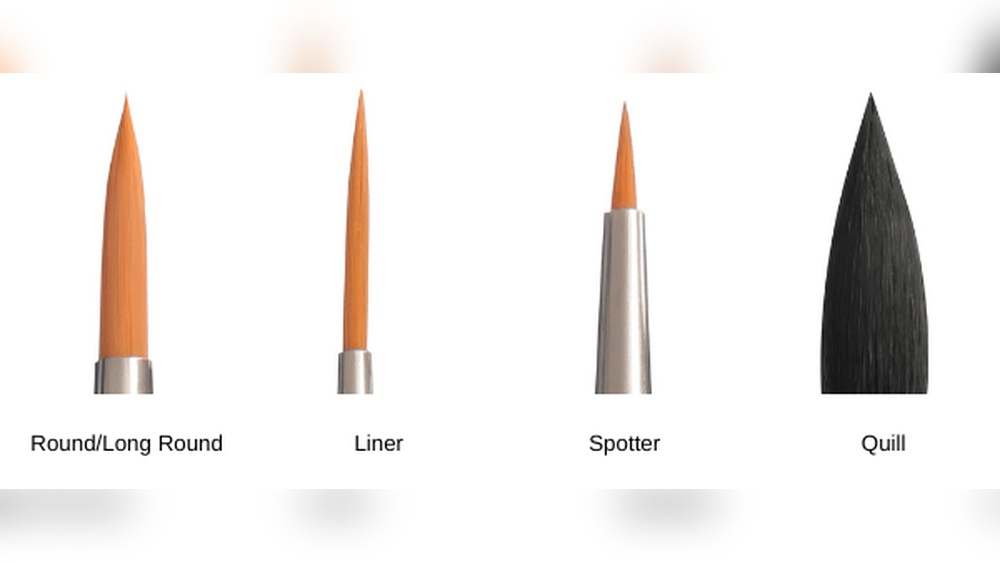
Round brushes and liner brushes both come to a point, which is why beginners often treat them as the same tool. The difference is in the hair. A round has a full belly that tapers to a point, so it can make thin lines, thick lines and filled shapes depending on pressure. A liner (often called a rigger or script liner when the hair is extra long) has much longer, thinner hair with very little belly, so it holds a reservoir of fluid paint and releases it in a long, even line that does not swell when you press slightly.
Understanding the round brush vs liner brush differences saves a lot of frustration. Rounds are your all-purpose detail and shape brushes; liners are specialists for branches, grasses, rigging, signatures and lettering. This guide compares them on shape, stroke, paint consistency and technique, gives a clear verdict by use, and reviews six round and liner sets currently listed on Amazon.
Quick answer: Use a round brush when you need lines that vary from thin to thick, small shapes, dots and controlled washes. Use a liner brush when you need long, continuous, even-width lines such as branches, grass, rigging, hair strands or lettering. For a set with both, the Transon 11-Piece Round Set (2/0 to 18) covers detail liners through big rounds, and the ARTIFY 12-Piece Watercolor Set adds a dedicated liner plus rounds, flats and a cat’s tongue.
Our Top Picks at a Glance
- Transon 11-Piece Round Brush Set, 2/0 to 18 — Best round set that includes a detail liner
- ARTIFY 12-Piece Watercolor Brush Set — Best mixed set with liner, rounds and flats
- Legentura 8-Piece Synthetic Squirrel Set — Best soft set with a dedicated liner for watercolor
- BOSOBO 10-Piece Detail Brush Set — Best budget set with a liner/rigger for acrylic detail
- Sdanart 15-Piece Round Brush Set — Best for the widest range of round sizes
- Transon 9-Piece Round Brush Set — Best snappy synthetic rounds for acrylic
| Product | Best For | Key Spec | Key Strength | Price Tier |
|---|---|---|---|---|
| Transon 11 Rounds | Rounds plus detail liner | Sizes 2/0 to 18, nylon | Liner, normal and big rounds | $ |
| ARTIFY 12 Watercolor Set | Watercolor with liner | Round, flat, cat’s tongue, liner | Bionic sable-like hair | $ |
| Legentura 8 Synthetic Squirrel | Soft watercolor work | 4 rounds, 1 liner, cat’s tongue, 2 flats | High absorption | $ |
| BOSOBO 10 Detail Set | Acrylic and craft detail | Pointed rounds, liner/rigger and more | Very low cost | $ |
| Sdanart 15 Rounds | Full round size range | Sizes 2/0 to 15 | Fifteen rounds in one set | $ |
| Transon 9 Rounds | Snappy acrylic rounds | Sizes 0 to 12, synthetic sable | Strong spring-back | $ |
How We Chose
The comparison reflects long-established brush behavior. The sets were chosen from Amazon listings checked in October 2026 based on whether they include rounds, liners or both, how clearly they describe hair and sizes, and how widely each set is reviewed by Amazon buyers. We left out one round set with minimal size information in favor of sets with clearer specifications.
What we compared:
- Head shape and hair length: belly, taper and overall length.
- Stroke behavior: how line width responds to pressure.
- Paint capacity: how far a single load goes.
- Ideal paint consistency: thick versus fluid.
- Best subjects and techniques: where each brush shines.
Round Brush vs Liner Brush: Side by Side
| Feature | Round brush | Liner brush |
|---|---|---|
| Head shape | Full belly tapering to a point | Long, slim hair with little belly |
| Hair length | Short to medium | Long to very long (riggers longest) |
| Line width | Varies strongly with pressure | Stays fairly even |
| Line length per load | Short to medium | Long, continuous |
| Paint consistency | Any, from thick to fluid | Fluid, ink-like |
| Fills shapes | Yes | No |
| Best for | Detail, small shapes, dots, washes in larger sizes | Branches, grass, rigging, lettering, signatures |
The Round Brush Explained
The round is the most versatile brush in painting. Light pressure on the tip gives a fine line; pressing down spreads the belly for a wide stroke; lifting mid-stroke tapers it again. That variable line is perfect for leaves, petals, outlines that need weight changes and expressive calligraphic marks. Small rounds handle detail and dots, while large rounds lay washes in watercolor or fill shapes in acrylic.
The trade-off is that rounds empty quickly when pulling long thin lines, and the line width wobbles if your pressure changes even slightly. That is where the liner takes over.
The Liner Brush Explained
A liner’s long hair acts as a reservoir. Loaded with fluid paint, it can draw a line many inches long without reloading, and because there is little belly, the width stays consistent as long as you keep the pressure light. Riggers, named after the rigging lines on ship paintings, have the longest hair. Script liners are similar and are popular for lettering and signatures.
Liners need thin paint. Thick acrylic straight from the tube drags and breaks; thinned to the consistency of ink, it flows smoothly. They are also less forgiving of fast changes in direction, so practice loose, relaxed strokes from the wrist or elbow.
Best Round and Liner Brush Sets Reviewed
1. Transon 11-Piece Round Paint Brush Set, Sizes 2/0 to 18 — Best for Rounds Plus a Detail Liner

Transon’s 11-piece set spans sizes 2/0 to 18, described as including an accurate detail liner, normal rounds and big rounds. That range lets you compare round and liner behavior side by side and covers everything from fine detail to watercolor washes.
The nylon hair is described as flexible with good liquid absorbency, soft and snappy, and easy to clean. Handles are short with a multi-layer finish, and copper ferrules secure the hair. It is suited to watercolor, acrylic, gouache, ink and tempera.
Best suited for: painters who want one set covering the full round range plus a liner.
Key features:
- 11 brushes, sizes 2/0 to 18
- Detail liner, normal and large rounds
- Nylon hair
- Copper ferrules, short handles
Pros:
- Huge size range
- Includes a liner
- Low price tier
Cons and limitations:
- Nylon is less absorbent than squirrel or sable
- Liner hair length not specified
Buying consideration: thin your paint more than you think for the liner; it should flow like ink.
2. ARTIFY 12-Piece Watercolor Brush Set, Bionic Hair — Best for Watercolor With a Liner

ARTIFY’s set includes rounds, flats, a cat’s tongue and liner brushes made with bionic synthetic hair designed to mimic natural sable. The listing describes micro-tapered fibers with strong water retention and controlled release, and bristles that keep a sharp point without splitting during line work.
Ferrules are reinforced with heavy-duty adhesive and handles are triple-coated FSC-certified wood. The mix of shapes makes it a complete watercolor kit in which the liner and rounds can each do their own jobs.
Best suited for: watercolor and gouache painters who want rounds and a liner in one quality set.
Key features:
- 12 brushes: round, flat, cat’s tongue, liner
- Bionic sable-like synthetic hair
- Reinforced ferrules
- FSC wood handles
Pros:
- Sharp points
- Good water retention
- Widely reviewed
Cons and limitations:
- Fewer large rounds for big washes
- Synthetic, not natural sable
Buying consideration: use the liner for branches and the small round for leaves to see how differently they behave.
3. Legentura 8-Piece Watercolor Brushes, Synthetic Squirrel Hair — Best for Soft Watercolor Work

This set includes four rounds (sizes 0, 4, 8 and 14), a detail liner (size 1), a cat’s tongue (16) and two flats (8 and 16). The synthetic squirrel hair is described as highly absorbent with smooth pigment flow and resistance to shedding and fraying.
Birch handles and reinforced aluminum ferrules complete the build. It is aimed at watercolor, gouache and thin acrylic.
Best suited for: watercolorists who prefer soft, thirsty brushes.
Key features:
- 4 rounds, 1 liner, 1 cat’s tongue, 2 flats
- Synthetic squirrel hair
- Birch handles
- Aluminum ferrules
Pros:
- Soft, high-capacity hair
- Clear size list
- Dedicated liner
Cons and limitations:
- Soft hair is less suited to acrylic
- Fewer buyer reviews
Buying consideration: squirrel-style hair is very soft, so use light pressure with the liner for even lines.
4. BOSOBO 10-Piece Detail Paint Brush Set, Round Pointed Tip — Best for Acrylic and Craft Detail

BOSOBO’s set is one of the most widely reviewed detail brush sets on Amazon. It includes ten sizes and several shapes: pointed rounds, angular, filbert, flat and a liner/rigger. Nylon hair is described as soft, thick and neat with good spring-back, held by anti-rust nickel ferrules.
It works in acrylic, watercolor, enamel, oil and gouache and is popular for miniatures, nail art, models and crafts. The listing’s care tips, clean immediately and never rest brushes on their heads, are good advice for any brush.
Best suited for: acrylic, craft and miniature painters on a budget.
Key features:
- 10 brushes including a liner/rigger
- Pointed rounds, angular, filbert, flat
- Nylon hair
- Nickel ferrules
Pros:
- Lowest price tier
- Very widely reviewed
- Good variety
Cons and limitations:
- Budget build
- Small sizes only
Buying consideration: keep the liner just for lines so its tip stays sharp.
5. Sdanart 15-Piece Round Paint Brush Set, Sizes 2/0 to 15 — Best for Full Round Size Range

Fifteen rounds from 2/0 through 15 is a remarkable range for one set: sizes 2/0, 0, 1, 2, 3, 4, 5, 6, 7, 8, 9, 10, 12, 13 and 15. It shows clearly how a round’s behavior changes with size, from tiny detail to broad washes.
Nylon bristles are described as soft and flexible with good water absorption, held by metal double-ring ferrules on glossy black wooden handles. It does not include a dedicated liner, but the smallest rounds can handle short detail lines.
Best suited for: painters who rely on rounds and want every size.
Key features:
- 15 rounds, sizes 2/0 to 15
- Nylon bristles
- Double-ring metal ferrules
Pros:
- Widest size range
- Low price tier
Cons and limitations:
- No dedicated liner
- Fewer buyer reviews
Buying consideration: pair it with a separate liner if you paint branches or lettering often.
6. Transon 9-Piece Round Brush Set, Synthetic Sable — Best for Snappy Acrylic Rounds

Transon’s nine rounds in sizes 0, 1, 2, 3, 4, 8, 9, 10 and 12 use high-grade nylon designed to mimic sable, described as very snappy, absorbent and elastic with good spring-back. FSC-certified wooden handles and nickel-plated aluminum ferrules round out the build.
Snappy synthetic rounds are ideal for acrylic, where you want the point to recover after each stroke. The listing calls the smallest sizes detail liners, though they are short rounds rather than long-haired liners.
Best suited for: acrylic painters who want responsive rounds.
Key features:
- 9 rounds, sizes 0 to 12
- Synthetic sable-like nylon
- FSC wood handles
- Nickel-plated aluminum ferrules
Pros:
- Strong spring-back
- Good for acrylic
- Low price tier
Cons and limitations:
- No true long-haired liner
- Gaps in the size range
Buying consideration: use the size 0 and 1 for short details, and a separate rigger for long lines.
Verdict by Use
- Tree branches and twigs: liner or rigger.
- Grass blades: liner for individual blades; fan for masses.
- Leaves and petals: round, using pressure to shape each stroke.
- Lettering and signatures: liner or script liner.
- Dots and small accents: small round.
- Outlines with weight variation: round.
- Ship rigging, wires, fences: rigger.
- Watercolor washes: large round.
How to Use a Liner Brush Well
- Thin paint to an ink-like consistency.
- Load the full length of the hair by rolling it in the paint.
- Hold the brush further up the handle for looser lines.
- Touch down lightly and pull, keeping pressure constant.
- Turn the brush slightly as you go for natural, tapering branches.
Buying Guide: Choosing Between a Round and a Liner
Start With Rounds
If you can only buy one, choose a medium round. It handles more tasks than a liner. Add a liner when you start painting branches, grasses or lettering.
Pick Hair by Medium
Snappy synthetics suit acrylic. Soft synthetic squirrel or sable-like hair suits watercolor. For oil, use synthetic or sable liners with thinned paint.
Check Hair Length on Liners
Longer hair holds more paint and draws longer lines but is harder to control. Shorter liners are easier for beginners.
Size Ranges
Rounds in sizes 2, 6 and 10 cover most work. Liners in sizes 0 to 2 are typical. Sizes vary between brands, so compare actual head lengths.
Point Quality
A good round and liner both return to a sharp point after rinsing. Splitting or curling tips make precise lines impossible.
Handle Length
Short handles give control close to the surface. Longer handles encourage loose, relaxed liner strokes from further back.
Practice Guides
For step-by-step liner exercises, see our guide to using a liner brush for detail work. To practice round brush control, try painting dots with a round brush, and choose the right size with our tips on brush size for detailed acrylic work.
Common Mistakes to Avoid
- Using thick paint in a liner, causing broken, dragging lines.
- Using a liner to fill shapes instead of a round.
- Pressing hard with a liner and getting blobs instead of lines.
- Expecting a round to draw long, even lines without reloading.
- Letting paint dry in the long hair of a liner, ruining its point.
- Storing liners where the long hair gets bent.
FAQs
What is the difference between a round brush and a liner brush?
A round has a full belly that tapers to a point, giving lines that vary with pressure and the ability to fill shapes. A liner has long, slim hair that holds fluid paint and draws long, even lines.
Is a rigger the same as a liner brush?
They are closely related. A rigger is a liner with especially long hair, originally used for painting ship rigging. Both draw long, thin lines.
Can I use a round brush instead of a liner?
For short lines, yes. For long continuous lines like branches or rigging, a round runs out of paint and varies in width, so a liner is much easier.
What paint consistency works best with a liner brush?
Thin, fluid paint similar to ink. Add water or a flow medium to acrylic, and use watercolor or thinned oil.
Which size liner brush should I buy?
Sizes 0 to 2 cover most needs. Smaller sizes give finer lines; larger sizes hold more paint for longer strokes.
Are round brushes good for beginners?
Yes. A medium round is one of the most versatile brushes and a great first purchase for any medium.
Final Recommendation
Use rounds for most detail, shapes and variable lines, and liners for long, even lines like branches, grass and lettering. To get both in one purchase, choose the Transon 11-piece round set or the ARTIFY 12-piece watercolor set. Watercolorists who like soft brushes should consider Legentura, acrylic and craft painters will get great value from BOSOBO, and painters who mostly use rounds can explore every size with Sdanart’s 15-piece set or Transon’s snappy 9-piece set.


One Comment