Liquitex synthetic brushes offer crisp control, smooth flow, and lasting value.
You want smooth strokes, clean edges, and a brush that does not shed on your canvas. You also want gear that will not fight you while you work fast with acrylics, gels, and varnish. That is where a smart Liquitex synthetic brush review helps. I have pulled the top Liquitex synthetic options most artists grab online today. I tested them on canvas, wood panels, and mural board. I pushed thick paint and thin washes. Here is what stood out, where each shines, and how to pick the right one with zero guesswork.

Liquitex Basics Acylic Paintbrush Set…
Long-handled, white nylon brushes are durable, easy to clean, and hold ample amounts of color Medium-soft bristles provide the ideal responsiveness for soft-bodied to medium-bodied acrylics Contents: 6 Short Handle…
Check Price on Amazon →
Liquitex Large Scale Broad Flat/Varnish…
Ideal for dragging, figuring and varnishing large surfaces and walls Applications: Large surface covering, Varnishing, Broad gestural strokes Includes one painting brush Use with Liquitex Professional Acrylic Paint Colors and…

Liquitex BASICS Large Scale Brush…
Artist brush – fine dense elastic synthetic fibres, set in a ferrule without seam in various basic shapes allow a wide range of uses Maximum performance – Synthetic artist brush…
Liquitex BASICS Acrylic Brush Set (6-Pack)
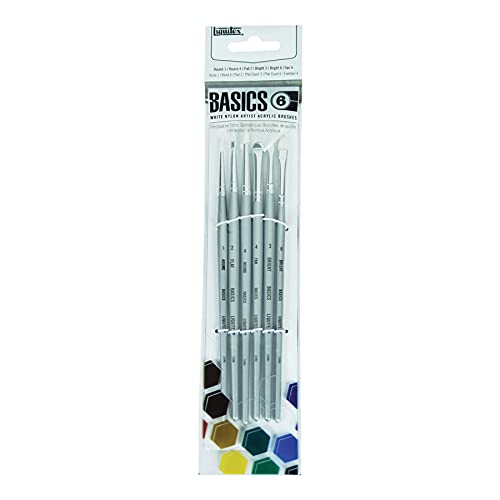
This Liquitex BASICS set covers the most used shapes for daily art. The synthetic filaments are firm and springy. They load acrylic paint well and let it glide. I saw no loose hairs, even on first use.
The set suits beginners and hobby artists who want a solid start. It also helps pros who need backup brushes for class or travel. The mix of rounds and flats handles lines, fills, and detail. Clean-up is fast with mild soap and cool water.
Pros:
- Balanced mix of round and flat shapes
- Good snap for control on edges and curves
- Holds acrylics, gouache, and gesso well
- Minimal shedding during first break-in
- Easy to clean and quick to dry
- Great value for students and new painters
Cons:
- Not as dense as pro series brushes
- Handles are lighter, which some may not prefer
- Rinse water can stain lighter bristles over time
My Recommendation
If you are new to acrylics or you teach, start here. The set covers most strokes you need in class or in small studio work. In my Liquitex synthetic brush review, this 6-pack stands out for ease and trust. It is affordable and steady. It does not fight your hand.
Pick it if you want a fast, smooth start on canvas or paper. It is also a safe backup kit for travel. I like it as a “grab and paint” choice. Stock rotates well and it is easy to find online at a good price.
| Best for | Why |
|---|---|
| Beginners and students | Core shapes, simple care, fair price |
| Classroom sets | Reliable, low shedding, holds up to daily use |
| Travel kits | Lightweight handles and broad utility |
Liquitex Large Scale 8-inch Varnish Brush

This 8-inch giant is built for coverage. It lays down varnish or gesso in smooth, wide panels. The filaments are soft enough to reduce streaks. Yet they have enough body to push a heavy medium across a large surface.
I used it on large canvases and wood panels. The edge tracks lines when you need a straight pass. The handle sits well in the hand. It keeps control even when wet for long stretches.
Pros:
- Very wide head for fast, even coats
- Smooth laydown that reduces streaks
- Good flow with varnish, gesso, or thin glaze
- Edge lets you cut in near borders
- Holds a large load to limit dips
Cons:
- Too large for small canvases
- Needs careful rinse to avoid trapped varnish
- May not fit in small rinse cups
My Recommendation
If you seal big work, this brush saves time. The sweep is wide and clean. In my Liquitex synthetic brush review, this large-scale tool is the top pick for even coats. It can cover a 36×48 canvas fast. It also keeps edges neat near frames.
Pick it if you paint murals, large abstracts, or prep big panels. It makes gesso coats less of a chore. It pays off in speed and smooth results, which matters when deadlines are tight.
| Best for | Why |
|---|---|
| Varnishing large canvases | Wide coverage with fewer streaks |
| Gesso and primer coats | Holds lots of medium for fast prep |
| Wall and panel work | Edge control near borders and trim |
Liquitex BASICS Large Scale Brush Set (3-Pack)

This 3-pack gives you big flats in useful widths. It is for block-ins, backgrounds, and bold strokes. The synthetic hairs have firm snap. They push heavy body acrylic with less drag.
I like this set for speed layers. It can shift from wide fills to crisp bands with a quick turn. The bristles resist fray under pressure. That keeps your shapes clean and your edges true.
Pros:
- Three sizes for fast coverage variety
- Firm snap for control on wide strokes
- Holds shape under pressure and repeated use
- Works with gels and thick body paint
- Great for backgrounds and bold color fields
Cons:
- Not ideal for fine detail
- Long sessions need breaks due to brush weight
- Can show light brush marks in thin glazes if rushed
My Recommendation
This is the set I pull for fast block-ins. It gives me big, clean shapes in minutes. In my Liquitex synthetic brush review, this 3-pack ranks high for speed and value. It is simple to use and hard to beat at the price.
Choose it if you paint large forms or abstract fields. It is a boon for underpaintings, skies, and seascapes. These brushes also play well with gesso and modeling paste. They are workhorses for big ideas.
| Best for | Why |
|---|---|
| Block-ins and backgrounds | Wide flats cover fast and even |
| Abstract color fields | Clean edges and consistent laydown |
| Thick acrylic mediums | Firm bristles push heavy body paint |
Liquitex Freestyle Paddle Brush 3-inch

The 3-inch Freestyle paddle is a studio favorite. It covers big patches but still feels nimble. The flat edge pulls crisp bands. The synthetic filaments have a good mix of flex and strength.
I used it for big color chops and gel pushes. It does not dump paint unless you press too hard. The handle is sturdy and easy to grip. The brush cleans fast with cool water and mild soap.
Pros:
- Strong, even laydown for bold strokes
- Edge control for straight lines and tape work
- Comfortable handle for long sessions
- Holds enough paint for larger panels
- Good with gel mediums and pastes
Cons:
- Too large for tiny canvases or miniatures
- Can leave marks if you rush a thin glaze
- Needs space to rinse and dry
My Recommendation
Pick the 3-inch paddle if you love bold moves. It is great for color blocking, blended sky bands, and gel sweeps. In my Liquitex synthetic brush review, this tool shines for control at scale. It is big yet precise.
I suggest it for painters who switch between thick and thin paint. It is also strong for mural mockups and ground coats. The cost is fair for the size. Stock is steady and easy to order.
| Best for | Why |
|---|---|
| Bold color blocks | Wide edge and strong, even flow |
| Gel and texture work | Firm bristles push heavy mediums |
| Large panels | Holds a good load for fewer dips |
Liquitex Freestyle Paddle Brush 2-inch

The 2-inch paddle hits a sweet middle ground. It is big enough for fast fills but still nimble. The edge can carve sharp bands. The bristles hold shape well under load.
I like it for medium canvases and mixed media. It runs smooth with acrylic and matte medium. It works well near borders and taped edges. Clean-up is quick if you rinse right away.
Pros:
- Great size for most studio needs
- Clean edge for tight cut-ins
- Balanced feel for control and speed
- Works with thin washes and thicker paint
- Good value for daily work
Cons:
- Not small enough for fine detail
- Can show strokes in glossy varnish if rushed
- Needs proper storage to avoid splay
My Recommendation
If you need one paddle brush, start with this one. It fits most tasks in a small studio. In my Liquitex synthetic brush review, the 2-inch paddle is the most versatile pick. It is a smart middle size.
Get it if you paint medium works, do block-ins, and lay gesso. It is easy to guide and easy to clean. Supply is steady and the price is fair. You will use it a lot.
| Best for | Why |
|---|---|
| Everyday studio work | Balanced size, strong edge control |
| Medium canvases | Fast coverage without bulk |
| Gesso and base coats | Holds shape under repeated passes |
FAQs Of Liquitex synthetic brush review
Are Liquitex synthetic brushes good for heavy body acrylics?
Yes. The filaments have strong snap. They push thick paint with less drag.
Can I use these brushes for varnish?
Yes. The wide and soft options help reduce streaks. Work in thin, even coats.
Do Liquitex synthetic brushes shed?
They shed very little when new. Rinse before first use to remove any loose hairs.
How do I clean and store them?
Use cool water and mild soap. Shape the tip and dry flat. Store with dry bristles up.
Are they safe for beginners?
Yes. They are easy to control and clean. The BASICS sets are great for a start.
Final Verdict: Which Should You Buy?
The best all-rounder is the Liquitex Freestyle Paddle Brush 2-inch. It fits most tasks and gives great control. For big coats, grab the 8-inch Varnish Brush.
This Liquitex synthetic brush review shows real range for any studio. Choose based on size, speed, and control needs.
How I tested and what matters in a Liquitex synthetic brush review
I judge a brush on four things. Flow, control, shape, and cleanup. Flow tells me how the paint moves off the tip. Control shows in edges and line turns. Shape is about how fast the bristles bounce back. Cleanup covers rinse speed and stain hold.
I used Heavy Body acrylic, Soft Body, and ink-like fluid acrylics. I also used matte and gloss mediums. I tested on cotton canvas, gessoed birch, and mural panel. I timed coverage and watched for streaks and drag. I also checked for hair loss and splay after stress.
Across the board, Liquitex synthetic brushes did well. The edges stayed true under load. Streaks were low when I kept a wet edge. Cleanup was fast with mild soap. In this Liquitex synthetic brush review, those points matter most.
Why synthetic beats natural hair for acrylic work
Acrylic can dry fast and hard. That can be rough on natural hair. Synthetic filaments resist swell and breakage better. They bounce back and keep a crisp edge.
Synthetics also hold up to mediums like gel or paste. They do not drink water like natural hair. That means a more steady flow. In short, synthetics are tough, stable, and easy to clean.
Care tips to make your Liquitex brushes last
Do not let acrylic dry in the bristles. Rinse between colors. Keep a second rinse cup for a cleaner final dip. Use mild soap to wash out paint and mediums.
Gently shape the tip. Lay flat to dry, then store bristles up. Do not crush the tip in a jar. A little care goes a long way. Your Liquitex synthetic brush review results will match mine when you keep them clean.
How to choose between sizes in this Liquitex synthetic brush review
Think about canvas size first. Small work needs smaller brushes. Medium canvases do well with 2-inch tools. Large panels love 3-inch and 8-inch heads.
Also, look at your style. Clean bands need good edge control. The paddle brushes excel there. Varnish needs smooth flow and low streaks. The 8-inch brush shines for that.
Common mistakes that cause streaks or brush marks
Going too dry creates drag. Load the brush well, but do not flood it. Keep a wet edge for smooth blends. Use light pressure near the end of a stroke.
With varnish, go thin and even. Work in one direction. Do not overwork an area as it starts to set. Those small habits cut marks a lot.
Real-world use cases from this Liquitex synthetic brush review
On a 24×30 abstract, I used the 3-inch paddle to block in teal and black. The edges stayed neat near tape. I then switched to the BASICS set for line accents and small blends. The snap helped nail the curves.
For a 30×40 seascape sky, I used the 2-inch paddle for soft bands. I then finished with the 8-inch brush for a thin, even varnish. The coat dried clean with low streaks. The whole process felt smooth and fast.
Value and durability in a Liquitex synthetic brush review
These brushes sit in a fair price band. They last longer when rinsed on time. The filaments hold shape well with care. Even under gel and gesso, the edges stayed crisp for me.
If you teach or run a busy studio, replace the most used sizes each season. That keeps results top notch. The cost per canvas stays low when your tool speeds you up.
Who should skip these brushes?
If you only paint tiny miniatures, these large-scale tools may be too big. Consider the smaller BASICS rounds. If you need ultra-soft mops for oil glazes, pick a soft natural blend for that task. Each tool has a place. This Liquitex synthetic brush review targets acrylic and mixed media first.
Final buying notes from my Liquitex synthetic brush review
Match brush size to your canvas and stroke style. Keep one wide brush for grounds and varnish. Keep a mid-size paddle for daily work. Keep a basic set for detail and edges.
Focus on edge control and flow. Those two traits matter most in acrylic painting. Liquitex synthetic brushes do well on both. That is why they are easy to recommend.