Silver Brush Black Velvet brushes offer superb control, juicy washes, and sharp points.
You love watercolor, but your brushes hold you back. Lines look scratchy. Washes dry in streaks. Your brush will not keep a point. I have been there. The right brush changes everything. It loads more water. It lays even color. It makes detail easy. In this Silver Brush watercolor brush review, I tested the most trusted Black Velvet picks. I checked water load, snap, point, and comfort. I painted leaves, skies, and fine lines. Here is what stood out and which ones to buy.
Silver Brush Limited Black Velvet…
BLACK VELVET: Our Black Velvet brushes were created for watercolor artists and skilled hobbyists. Each Black Velvet brush is soft enough to add color without disturbing previous layers but firm…
Silver Brush Limited Black Velvet…
BLACK VELVET: Our Black Velvet brushes were created for watercolor artists and skilled hobbyists. Each Black Velvet brush is soft enough to add color without disturbing previous layers but firm…

Silver Brush Limited Black Velvet…
BLACK VELVET: Our Black Velvet brushes were created for watercolor artists and skilled hobbyists. Each Black Velvet brush is soft enough to add color without disturbing previous layers but firm…
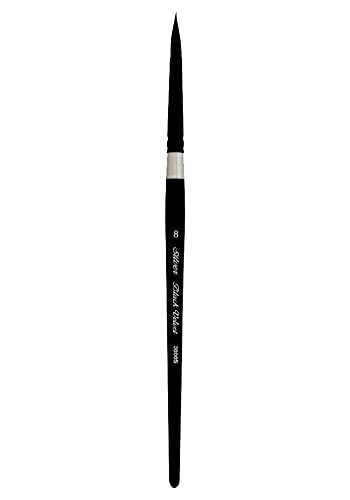
Black Velvet Round, Size 8

The Size 8 Black Velvet round is a studio workhorse. It blends natural squirrel with synthetic for a big belly and a crisp tip. It drinks up water and pigment, so you paint longer strokes without reloading. The point snaps back well, which makes thin-to-thick lines easy.
In hand, the brush feels balanced and steady. The nickel-plated ferrule is tight, and the lacquered handle resists swelling. I pushed it through wet-on-wet skies and tight leaf veins. It kept a clean edge and dropped smooth gradients. This is the size I reach for most days.
Pros:
- Holds a large wash for its size
- Very sharp point for lines and details
- Smooth, even flow with minimal streaks
- Comfortable handle with good balance
- Reliable spring; tip snaps back between strokes
Cons:
- Softer belly is not ideal for scrubbing
- Costs more than student brushes
- Needs gentle cleaning to protect the point
My Recommendation
If you buy one brush from this Silver Brush watercolor brush review, make it the Size 8 round. It handles most tasks: sky washes, petals, small branches, faces, and loose studies. It suits urban sketchers, botanical artists, and hobbyists who want one brush to do much of the work. It is also a smart upgrade from basic student rounds.
| Best for | Why |
|---|---|
| Everyday painting | Wide range from wash to fine line in one tool |
| Urban sketching kits | Light, reliable point and strong water load |
| Botanical details | Crisp tip controls edges around small shapes |
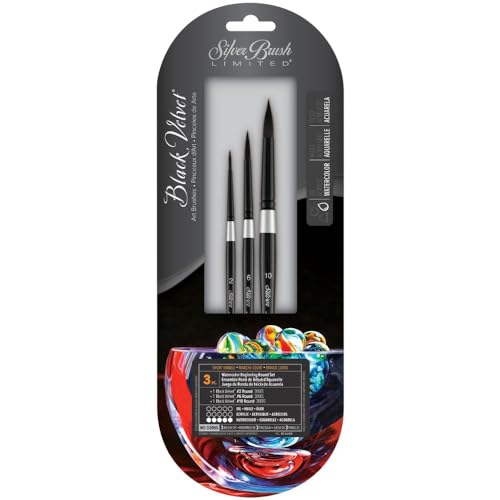
Black Velvet Beginner Round Set, 3pc

This three-piece beginner round set covers the core sizes most painters reach for. Each brush blends squirrel and synthetic for a strong belly and a needle tip. The set moves from detail to wash with a simple swap. That makes class work and practice drills smooth and quick.
I like how the brushes behave the same. Flow, spring, and water load match across sizes. That saves time when you block in, soften edges, and then add stems or lashes. For a first serious set, this bundle hits a sweet spot of control, value, and growth.
Pros:
- Three key sizes to learn core strokes
- Even performance across the set
- Good water load and fine points
- Strong value versus buying singles
- Ideal for classes and skill drills
Cons:
- Does not include a large mop for big skies
- No storage tube in-box for travel
- Sizes may overlap gear you already own
My Recommendation
For starters and returners, this set is my go-to pick in this Silver Brush watercolor brush review. It builds core habits fast: pressure control, bead control, and clean edges. It also fits the budget while giving pro-grade flow. If you want a lean kit that still does a lot, start here.
| Best for | Why |
|---|---|
| Beginners and class kits | Three sizes teach all basic strokes |
| Hobbyists on a budget | Bundle costs less than singles with no loss of quality |
| Travel sketchers | Compact set covers detail to small washes |
Black Velvet Round Brush Set, 3pc

This three-piece round set targets daily work. The sizes strike a balance between fine detail and steady wash work. Each brush carries a wet bead without dumping paint. The tips stay tight for clean line work and small accents.
I tested them on quick portraits, leaf clusters, and street scenes. Line variation is smooth from hairline to a full belly stroke. The flow is even, so blooms are easy to control. If you want a simple, reliable round trio, this one belongs in your pouch.
Pros:
- Balanced size spread for most subjects
- Strong tip control for edges and lines
- Consistent water release prevents harsh blooms
- Durable ferrules and finishes
- Great grab-and-go core set
Cons:
- Not ideal for very large backgrounds
- Softer feel may not suit heavy scrubbers
- Buying singles can tailor sizes better for specialists
My Recommendation
If you paint a bit of everything, this is the “no-drama” kit in my Silver Brush watercolor brush review. The set is fast, clean, and ready for daily use. I would pick it for sketchbook studies, ink-and-wash, and small portraits. You can add a big mop later and still keep these as your main tools.
| Best for | Why |
|---|---|
| Daily sketching | Three rounds cover most scenes and subjects |
| Ink and wash | Crisp points pair well with fineliners and dip pens |
| Portrait starters | Even flow helps build soft skin tones |
Susan Louise Moyer Basic Set, 3pc

This artist-curated trio is built for control and clean color. The set focuses on smooth blends, exact edges, and measured water flow. It is great for floral work, layered glazes, and gentle softening. The tips are tight and track well along pencil lines.
I found it easy to build petal layers without lifting the underpaint. The brushes release water in a steady way, so transitions stay soft. If you care about shape design and edge quality, this set feels like a teacher in your hand. It rewards patience and a light touch.
Pros:
- Curated selection guided by pro technique
- Excellent for glazing and soft transitions
- Clean points for sharp, planned edges
- Even water release reduces backruns
- Comfortable for long sessions
Cons:
- Learning curve if you paint fast and loose
- Higher price than generic sets
- Not a replacement for a large mop on big paper
My Recommendation
In this Silver Brush watercolor brush review, this set stands out for control. I suggest it for floral painters, botanical studies, and careful glazing. If you like plans, layers, and edges that sing, this set helps you get there. It is a “skills grow with the brush” bundle.
| Best for | Why |
|---|---|
| Florals and botanicals | Clean tips carve petals and leaves |
| Glazing practice | Even water flow keeps layers smooth |
| Detail planners | Predictable edges reward careful design |
Black Velvet Round, Size 2

The Size 2 Black Velvet round is a detail machine. It has a tight, needle-like tip that can write on the grain. The belly is modest, but it still holds more paint than many size 2 rounds. That makes long, even lines less stressful.
I use it for lashes, tiny text, dry twigs, and the last accents on feathers. It shines in ink-and-wash and in botanical hairlines. If you do miniature or line-forward work, this brush makes the small stuff clean and calm.
Pros:
- Needle tip for micro lines
- Good paint load for the size
- Even flow helps avoid railroading
- Great for inking and mixed media edges
- Handles small shapes without fraying
Cons:
- Too small for general wash work
- Point can hook if abused on rough paper
- Needs gentle cleaning to keep the tip true
My Recommendation
This was my detail winner in the Silver Brush watercolor brush review. Use it for lettering, whiskers, stamens, and tiny windows. It pairs well with a Size 8 round for a lean two-brush kit. If lines make your work pop, add this to your roll.
| Best for | Why |
|---|---|
| Miniature details | Holds a needle point on fine paper |
| Ink-and-wash edges | Clean lines with steady pigment flow |
| Botanical hairlines | Draws veins and filaments without splay |
FAQs Of Silver Brush watercolor brush review
Are Black Velvet brushes natural hair or synthetic?
They blend natural squirrel with synthetic filament. This mix boosts water load and keeps a sharp tip.
Do these brushes shed or lose their point?
In my tests, shedding was rare. With gentle care and proper drying, the points stayed sharp.
Can I scrub or lift with Black Velvet?
Light lifting is fine. Heavy scrubbing can harm the soft belly. Use a stiffer synthetic for hard lifting.
What paper works best with these brushes?
Cold press 100% cotton gives the best flow and blends. They also handle hot press for detail work.
How do I care for the brushes?
Rinse in cool water, reshape the tip, and dry flat or bristles-up. Avoid hot water and harsh soaps.
Final Verdict: Which Should You Buy?
The Size 8 Black Velvet round is the top pick. It does the most with the least. Add the Size 2 for fine lines, or a 3-piece set if you want a ready kit.
This Silver Brush watercolor brush review shows steady quality and smart value. Choose the size that fits your style, and enjoy cleaner lines and smoother washes.
Beyond the product-by-product notes, I want to share what I tested and why it matters, since many readers ask how I gauge a brush in a Silver Brush watercolor brush review. I look at five things: water load, release control, edge fidelity, tip recovery (snap), and comfort over time. Each of these factors ties to real painting tasks. If a brush holds water but dumps it, your skies will bloom. If it holds a point but lacks belly, your washes die young. If it feels great at first but tires the hand, you rush or make mistakes.
To measure water load, I time how many inches of a consistent line I can draw on cold press paper before the bead breaks. I also paint a gradient wash from strong to light pigment and check for banding. Black Velvet brushes did well here. The natural-synthetic blend fuels a steady bead, so your paint does not stall mid-stroke. That helps with even skies, clean skin tones, and large petals.
For release control, I run a wet-on-wet test. I float a wash on a damp area, wait a beat, and drop a second color. A good brush lets me feed color without tears or hard edges. In this Silver Brush watercolor brush review, the rounds handled this smoothly. They fed the bead with minor pressure changes. That let me pull color through curves and lift the brush at the end without making “hooks.”
Edge fidelity matters when I outline negative shapes or run along drawing lines. I draw S-curves, ovals, and tight corners, then check the line edge under light. A brush with a true point and decent snap leaves a clean, even edge. These Silver Brush rounds kept a crisp line. The Size 2 shined on micro curves, while the Size 8 handled long edges well.
Tip recovery tells me how fast the brush returns to a point after a press or twist. I press and lift on scrap and then go straight into a thin line. If the line starts fat or split, the snap is off. In my tests, the Black Velvet line had better recovery than most squirrel-only brushes. The synthetic blend helps. That gives you fine starts on your strokes, which is key for branches, hair, and calligraphy accents.
Lastly, comfort over time. Watercolor sessions can last hours. A brush that feels tail-heavy or slick causes grip strain. The handles here are smooth and taper in a way that lets me grip light. I also like the finish. It holds up to rinse cycles and stays clean. Small touches, but they add up.
Durability is a fair question in any Silver Brush watercolor brush review. Squirrel-rich blends are not scrubbers. If you push hard into rough paper, you will shorten the tip life. Use a stiffer synthetic for lifting and textured scrubs. Keep your Black Velvet for painting, edge work, and soft lifting only. With that care, mine have kept their point over many months of steady use.
Who should skip these? If you paint on rough paper and scrub often, you may prefer a firmer synthetic or a synthetic-kolinsky blend built for abuse. If you do huge skies on full sheets, add a large mop or wash brush. The Size 8 can do a lot, but a big mop is faster on large work.
Who will love them? Painters who like smooth washes, clear edges, and easy line variation. Sketchers who want to carry less. Teachers who want students to feel a “good” brush early. In my studio, I would hand a beginner the beginner 3-piece set, then a Size 2 for detail. For a simple pro kit, I would carry the Size 8 plus Size 2 and add a mop for big grounds.
Cleaning tips are simple but vital. Rinse in cool water until it runs clear. Gently swirl on a soft brush soap if you used staining pigments. Never mash the tip in the rinse cup. Reshape the point with fingers. Dry flat or bristles-up. Keep them out of airtight caps while damp. Small habits save the point.
On paper choice, these brushes love 100% cotton. Cotton holds water, so the brush’s even release shows its best. On wood pulp papers, flow is choppier and blooms can bite hard. You can still get good results, but you will reload more often and need to watch your bead. If you want to feel what these brushes can do, tape down a sheet of cotton cold press and try a big sky. Let the brush glide. You will see the difference.
On pigments, heavy granulators like ultramarine and hematite show the brush’s even drop well. Transparent colors like quinacridones glide. Opaque pigments need a steadier hand to avoid chalky edges. None of that is unique to this brand, but a fair Silver Brush watercolor brush review should flag how a brush behaves with real paints.
Some readers ask about shedding and ferrule glue. In my sets, I saw one loose hair during the first rinse and none after. The ferrules were tight, with no wobble. Handle finish stayed smooth after repeated rinses. I avoid soaking past the ferrule, which can swell wood on any brand. Standing water is a brush’s worst enemy.
Cost is higher than student packs. Still, I judge value by what a tool makes possible. If a brush lets you paint longer strokes, fix fewer edges, and keep a sharper tip, it saves time and paper. Over months, that is real value. In this Silver Brush watercolor brush review, the price felt fair for the performance. Many pros use these as daily drivers for a reason.
For storage, a simple brush roll works. Let brushes dry first. If you travel, use a vented cap or a bamboo roll that breathes. Avoid clamping a wet brush in a tight plastic sleeve. The tip will deform and may mildew. Small steps make your kit last years, not months.
I will close the deep-dive with a quick pairing guide. Start with the Size 8 as your core. Add the Size 2 for detail. If you want a one-click solution, get the 3-piece round set or the beginner set. If you love careful edges and florals, pick the Susan Louise Moyer set. Add a big mop later for full-sheet skies. This simple plan covers 90% of watercolor tasks for most painters.
As you practice, keep three drills handy. First, draw pressure lines: start hairline, press to full belly, then lift to hairline. Do five reps. Second, paint a bead wash: tilt the board, drag the bead, and reload before it breaks. Third, edge test: paint a circle and a leaf, keeping the edge clean with the tip. These drills show you what your brush can do. They also teach you how light the hand can be. With Black Velvet, lighter is better.
If you felt stuck with your current brushes, I hope this Silver Brush watercolor brush review gives you a clear path. Better brushes will not paint the picture for you. But they do remove friction. They let you focus on value, shape, and color. That is the art. The tool should become invisible. These brushes get close to that goal.