
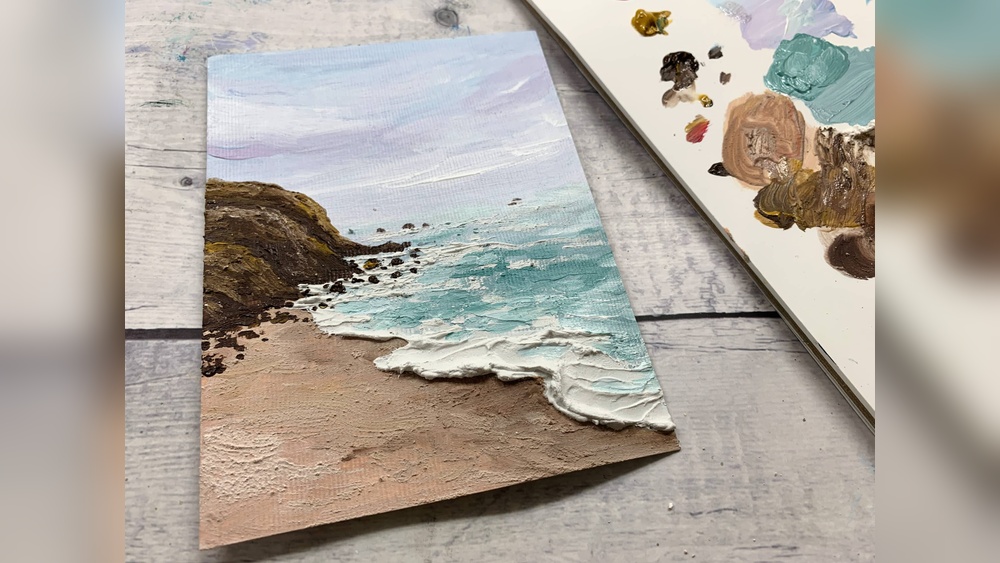
Texture is what makes an abstract painting worth walking up to. From across a room it reads as color and shape; up close, ridges, cracks and scraped layers catch the light and reward a second look. The textured abstract painting ideas below come with step-by-step instructions, the materials that create each effect, and the mistakes that cause texture to crack or look accidental.
Quick answer: To make a textured abstract painting step by step, build a raised base with modeling paste, heavy gel or thick gesso applied with a palette knife, let it dry fully (often overnight), then paint over it with acrylics and use dry brushing or glazing to highlight the ridges. Popular textured ideas include palette-knife ridges, combed lines, stamped or bubble-wrap patterns, sand or grit fields, crackle surfaces and scraped layers that reveal colors underneath.
What Creates Texture in Abstract Painting?
Texture in acrylic abstracts comes from two sources: physical texture, raised material you can feel, and visual texture, marks that look textured on a flat surface. The most striking pieces usually combine both.
Texture also changes with the light in a room. Side lighting from a window throws long shadows across ridges in the morning and flattens them at midday, so a textured painting can look different through the day. That makes it a natural fit for themed or rotating displays, and many painters pair texture with the color moods from our list of painting ideas organized by season.
| Material | Effect | Dry time (thin to thick) | Notes |
|---|---|---|---|
| Modeling paste (light or regular) | Sculptural ridges, peaks, carving | A few hours to overnight | Light versions are less likely to crack in thick layers and are lighter on canvas |
| Heavy gel medium | Glossy or matte translucent ridges | Several hours to overnight | Mixes with paint for textured color |
| Thick gesso | Subtle, painterly texture | 1–3 hours | Budget-friendly base texture |
| Texture gels with sand or pumice | Gritty, stone-like surface | Several hours | Great for dry brushing |
| Crackle medium | Cracked, aged look | Varies by product | Follow label order exactly |
| Heavy-body acrylic | Brush and knife marks that hold shape | 30 min–several hours | Less sculptural than paste |
| Household tools | Stamped or combed patterns | Depends on paint thickness | Bubble wrap, forks, cards, sponges |
Supplies for Textured Abstract Art
- Surface: Stretched canvas, or better, a rigid wood or hardboard panel. Heavy texture can flex a thin canvas and crack; panels stay stable.
- Texture medium: Modeling paste or heavy gel for most ideas.
- Palette knives: A trowel-shaped knife for spreading and a smaller pointed knife for detail.
- Acrylic paint: Heavy-body for impasto, fluid for glazes.
- Brushes: A wide flat for base coats and an old stiff brush for dry brushing.
- Texture tools: Old credit cards, combs or forks, bubble wrap, sponges, plastic wrap, stencils.
- Extras: Painter’s tape, palette paper, spray bottle, varnish.
How to Paint Textured Abstract Art on Canvas: The Core Method
Almost every textured abstract follows the same sequence. Learn this once and you can apply it to any of the ideas below.
- Plan a loose composition. Decide where the heaviest texture will go. Texture draws the eye, so treat it like a focal point and leave some calmer, smooth areas for contrast.
- Prime or seal the surface. A coat of gesso helps paste grip, especially on panels.
- Apply the texture layer. Spread modeling paste with a palette knife, building up to roughly 1/8 to 1/4 inch in most areas. Make marks into it while wet: sweeps, peaks, combed lines or stamps.
- Let it dry completely. Thin layers may be dry in a few hours; thick areas often need overnight or longer. Painting too soon traps moisture and can cause cracking or softness.
- Base coat. Paint the whole surface with a mid-value color, working paint into crevices with a brush.
- Add color layers. Build color with larger shapes, glazes or blended areas.
- Highlight texture. Dry brush a lighter color lightly over the surface so it only catches the raised ridges. Alternatively, glaze a darker, thinned color into the recesses and wipe the high points.
- Accents and finish. Add metallic touches or line work if desired, then varnish once fully cured.
10 Textured Abstract Painting Ideas Step by Step
1. Palette knife ridges
Load a trowel knife with modeling paste and drag it across the canvas in short, overlapping strokes, lifting at the end of each to leave a raised edge. Arrange the strokes in sweeping curves or a fan shape. After drying, paint in neutral tones and dry brush white or gold over the ridges. This is the classic textured wall-art look.
2. Combed lines
Spread an even layer of paste, then drag a comb, fork or notched card through it in parallel lines, waves or crosshatching. Paint once dry and highlight with a contrasting dry-brush color so the grooves stand out.
3. Bubble wrap stamping
Brush thick paint or a thin layer of paste onto bubble wrap and press it onto the canvas, then lift straight up. Overlapping stamps in two or three colors produce a cellular pattern. Our guide to bubble wrap painting ideas and tips covers more ways to use this tool.
4. Sand-textured landscape abstract
Mix fine sand or a sand texture gel into the lower third of the canvas for a gritty “earth” band, leave the upper area smooth, and paint a horizon-inspired abstract with warm earth colors below and soft sky tones above. The contrast between rough and smooth is the point.
5. Scraped layers (sgraffito)
Paint two or three thick layers of contrasting colors, letting each dry. Apply a final layer and, while it is wet, scratch through it with the end of a brush, a skewer or a palette knife to reveal colors underneath. Spontaneous lines and marks work well.
6. Plastic wrap crinkle
Paint a wet layer of fluid acrylic, press crumpled plastic wrap into it, and leave it until the paint is nearly dry before lifting. The result looks like veined stone or crushed fabric, a visual texture with no build-up.
7. Crackle surface
Paint a base color, let it dry, apply crackle medium according to its label, then add a contrasting top coat. As it dries, the top cracks to reveal the base. Thicker top coats generally create larger cracks.
8. Raised geometric blocks
Tape off rectangles or triangles, fill some with modeling paste and leave others flat. Remove tape while the paste is still wet for crisp edges. Paint each block a different color from a limited palette.
9. Monochrome white sculptural piece
Use only white paste and white paint. Create swirls, peaks and petal-like sweeps. The artwork relies entirely on light and shadow across the surface. Lighting from the side makes it come alive.
10. Gold-leaf and texture accents
After painting a textured abstract in deep blues or greens, apply gilding size to the tops of some ridges and lay metal leaf over it, brushing away the excess. The metal catches only the high points.
Abstract Art Ideas for Beginners: Where to Start
If you are new to abstract work, start with ideas that rely on a process rather than design decisions: combed lines, bubble wrap stamping and plastic wrap crinkle. These produce attractive results even if composition is not yet your strength. Teens and new painters looking for more approachable projects can also browse our easy painting ideas for teenagers for simple starting points.
Simple abstract painting ideas without texture paste
- Use heavy-body acrylic straight from the tube with a palette knife for impasto strokes.
- Mix thick gesso with paint for a cheap texture base.
- Use a dry sponge to dab layers of color for visual texture.
- Drag an old credit card through wet paint to create scraped bands.
Abstract Painting Techniques and Ideas for Color
Texture works best with a controlled palette. Too many colors on a heavily textured surface looks chaotic.
| Palette | Colors | Best texture pairing |
|---|---|---|
| Neutral modern | White, cream, warm gray, black | Palette knife ridges, monochrome sculptural |
| Earth tones | Burnt sienna, ochre, umber, sand | Sand texture, scraped layers |
| Ocean | Navy, teal, turquoise, white | Combed waves, plastic wrap |
| Jewel tones with gold | Emerald, sapphire, deep plum, metallic gold | Ridges with gold leaf |
| Soft pastel | Blush, sage, lavender, cream | Raised geometric blocks |
Seasonal palettes are also an easy way to plan a series: warm russets and golds for fall, icy whites and silvers for winter. Painting a set of four textured canvases, one per season, with the same texture pattern but different palettes makes a striking wall grouping.
Safety and Cleanup With Texture Mediums
Modeling paste and gels clean up with water while wet, but dry paste is hard to remove from knives and palettes, so wipe tools as you go. Do not wash large amounts of paste down the sink; scrape excess into the trash first. If you sand dried texture to knock down sharp peaks, wear a dust mask, since fine acrylic and filler dust should not be inhaled. Keep texture tools separate from kitchen utensils once they have been used for art.
Composition Tips for Textured Abstracts
- Vary texture density. Heavy texture everywhere is tiring. Combine dense, sculptural areas with smooth resting zones.
- Use directional flow. Ridges and combed lines create movement. Point them toward your focal area.
- Odd numbers of elements. Three textured shapes often feel more balanced than two or four.
- Value contrast still matters. Even a textured monochrome piece needs lights and darks; side lighting creates these naturally.
- Edges. Decide whether texture runs off the edge of the canvas or stops short. Running off feels expansive; stopping short frames the piece.
Troubleshooting Textured Paintings
Paste cracked while drying
The layer was too thick in one go, or the surface flexed. Build heavy texture in several thinner layers, letting each dry, and use a rigid panel or a light modeling paste formulated for thick application. Small cracks can be filled with more paste and repainted.
Texture looks flat after painting
The paint filled the recesses evenly. Use dry brushing with a lighter color over ridges or a dark glaze in the recesses to bring texture back.
Paint will not get into crevices
Thin the base coat slightly and work it in with a stiff brush using a stippling motion.
The piece is too heavy or sags
Thick regular paste adds weight. Light modeling paste reduces weight considerably, and panels handle heavy texture better than canvas.
Varnish pooled in the texture
Apply varnish in thin coats with a soft brush, and pick up any pooling before it dries. Spray varnish reaches textured surfaces more evenly.
Gouache and Watercolor Variations
Water-based paints like gouache and watercolor are not designed for heavy texture paste, but they can still create textural abstracts. Use granulating watercolor pigments, salt sprinkled into wet washes, or plastic wrap pressed into damp paint. For gouache painting ideas that feel abstract, try layered flat shapes with dry-brushed edges on heavy paper. Some brands offer watercolor grounds that add tooth to a surface, which can introduce mild texture.
FAQs
How do you paint abstract art step by step?
Plan a loose composition, prepare the surface, build texture if desired, lay down a base color, develop larger color shapes, add contrast and accents, then step back and refine before varnishing.
What do you use to make texture on canvas?
Modeling paste, heavy gel medium, thick gesso, texture gels with sand, or heavy-body acrylic. Household tools like combs, cards and bubble wrap shape the surface.
Can I use regular acrylic paint for textured art?
Heavy-body acrylic holds palette knife marks well, but for raised sculptural texture, modeling paste or gel medium is more economical and holds shape better.
How long should modeling paste dry before painting?
Thin layers may dry within a few hours, but thicker texture is often left overnight or longer to dry all the way through.
What are easy abstract painting ideas for beginners?
Combed lines, bubble wrap stamping, plastic wrap crinkle and palette knife ridges in a limited palette are easy and forgiving.
How do I keep textured paintings from cracking?
Build texture in several thin layers, use a rigid surface or flexible light paste, and let each layer dry completely before adding more.
Final Thoughts
Start with one texture technique and a limited palette, let the paste dry fully and use dry brushing to make the surface sing. Once the core method feels natural, combine techniques for richer, more personal abstracts. If you want inspiration for themes and palettes to carry through a series, our guide to the best seasonal painting ideas for every time of year is a good place to look next.




