PaintingProGuide is reader-supported. When you buy through links on this page we may earn an affiliate commission at no extra cost to you.
Quick answer: Alcohol ink is a dye-based color carried in alcohol. It dries in seconds, works best on non-porous surfaces like Yupo, tile and glass, and can be reactivated with isopropyl alcohol even after it dries. Acrylic ink is pigment suspended in a water-based acrylic binder. It works on paper and canvas, becomes permanent and water-resistant once dry, and is generally more lightfast.
The alcohol ink vs acrylic ink question comes up because both are fluid, intensely colored and sold in small dropper or squeeze bottles. On the shelf they look almost identical. In use they behave in opposite ways, and choosing the wrong one for your surface is the fastest way to waste a set.
This guide compares the two side by side, then covers the related questions people ask most: whether acrylic ink is the same as alcohol ink, and how alcohol ink compares with water-based ink and watercolor.
Alcohol Ink vs Acrylic Ink: Side-by-Side Comparison
| Factor | Alcohol Ink | Acrylic Ink |
|---|---|---|
| Carrier (base) | Alcohol (solvent-based) | Water with acrylic polymer binder |
| Colorant | Mostly dyes | Mostly pigments |
| Drying time | Seconds to a few minutes | Minutes; faster in thin layers |
| Best surfaces | Non-porous: Yupo, ceramic tile, glass, metal, resin | Porous: paper, watercolor paper, canvas, wood |
| Once dry | Re-wettable with alcohol | Permanent; does not re-wet with water |
| Look | Transparent, glowing, organic blooms and edges | Transparent to opaque, controllable washes and lines |
| Lightfastness | Generally low; prone to fading in sunlight | Generally better; many lines list lightfastness ratings |
| Cleanup | Isopropyl alcohol or a clean-up solution | Water while wet |
| Fumes and safety | Flammable; needs ventilation | Low odor; water-based |
| Typical uses | Yupo painting, tiles, resin coloring, card making | Illustration, lettering, washes, pouring, airbrush, mixed media |
Is Acrylic Ink the Same as Alcohol Ink?
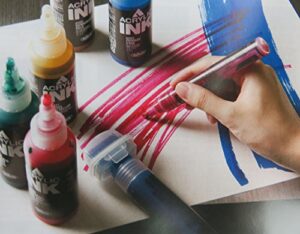
No. They share the word “ink” and a fluid consistency, but the chemistry is different. Acrylic ink is essentially a very thin, highly pigmented acrylic paint: pigment particles held in an acrylic polymer emulsion that thins with water. When the water evaporates, the polymer forms a flexible, permanent film.
Alcohol ink is color, usually dye, dissolved in alcohol. There is no film-forming acrylic binder in the same sense. When the alcohol evaporates, the color is left on the surface, and a fresh drop of alcohol can dissolve and move it again.
That single difference explains most of the practical contrasts below. If you are shopping for the alcohol side, our roundup of the best alcohol inks for Yupo painting and resin separates artist sets from resin sets.
Solvent vs Water Base: Why It Matters
Drying and working time
Alcohol evaporates very quickly, so alcohol ink gives you a short window to push color around. Artists extend that window by adding more alcohol or a blending solution. Acrylic ink dries more slowly and predictably, which suits controlled washes, line work and layering.
Reactivation
This is the big one. Dried alcohol ink can be lifted, softened or completely moved with isopropyl alcohol. That makes corrections and lifted highlights easy, but it also means anything containing alcohol, including some finishes, can disturb a finished piece. Dried acrylic ink does not re-wet with water, so you can glaze over it without lifting the layer below.
Ventilation and safety
Alcohol inks and the isopropyl alcohol used with them are flammable and release fumes. Work in a well-ventilated room, keep them away from open flames and heat sources, and wear gloves if you want to keep dye off your hands. Acrylic ink is water-based and low-odor, though you should still follow the label on any art material.
Surfaces: Non-Porous vs Porous
Alcohol ink needs a surface that does not soak it up. On non-porous surfaces such as Yupo synthetic paper, glazed ceramic tile, glass, metal and cured resin, the ink floats and spreads into the soft blooms and crisp edges the medium is known for. On ordinary paper or raw canvas it sinks in and stops flowing almost immediately, leaving flat, blotchy color.
Acrylic ink is the reverse. It is designed for porous and primed surfaces: drawing paper, watercolor paper, illustration board, gessoed canvas and wood. On glass or tile it can bead up and may not adhere well without a suitable primer.
If you want to try alcohol ink on canvas, the canvas must be sealed so it behaves like a non-porous surface. Our guide on how to use alcohol inks on paper, canvas and glass walks through that prep. For acrylic ink, see our pick of the best canvas for ink.
Permanence and Lightfastness
Alcohol ink is often described as permanent. On non-porous surfaces it is water-resistant once dry, and Jacquard, for example, describes its Piñata inks as indelible and impervious to water. But “permanent” here means it will not wash off with water. It does not mean it resists alcohol, and it does not mean it resists light.
Most alcohol inks are dye-based, and dyes are generally less lightfast than pigments. Pieces left in direct sunlight can fade or shift color over time. To protect finished work, artists typically seal it with light coats of a spray varnish followed by a UV-resistant spray finish, and display it out of direct sun.
Acrylic inks are mostly pigment-based, and many professional lines publish lightfastness ratings for each color. That makes acrylic ink the safer choice when archival quality matters, such as commissioned illustration or work you plan to sell as originals. Our Daler-Rowney acrylic ink review looks at one widely used artist line.
Alcohol Ink vs Water-Based Ink
“Water-based ink” covers a broad group: acrylic ink, India ink (often shellac or acrylic bound), fountain pen inks and dye-based drawing inks. They all thin and clean up with water, and most are designed for absorbent paper.
Compared with any of them, alcohol ink dries faster, moves more freely on slick surfaces, and stays re-workable with alcohol. Water-based inks give you more control on paper, but they generally need a porous surface to grip.
Alcohol Ink vs Watercolor
Alcohol ink and watercolor produce similar soft, flowing, transparent effects, which is why they are often compared. The key differences:
- Re-wetting: Watercolor re-wets with water; alcohol ink re-wets with alcohol.
- Surface: Watercolor is made for absorbent cotton or cellulose paper. Alcohol ink performs best on Yupo, tile and other non-porous surfaces.
- Speed: Alcohol ink dries much faster, so effects happen quickly and are harder to slow down.
- Colorant: Quality watercolors are pigment-based, with many lightfast options. Alcohol inks are mostly dye-based and less lightfast.
- Fumes: Watercolor is water-based; alcohol ink needs ventilation.
Alcohol ink can be used on watercolor paper, but the paper absorbs it and you lose most of the flow. If you love loose watercolor effects but want brighter, faster results on slick surfaces, alcohol ink on Yupo is worth trying.
Which Should You Choose?
Choose alcohol ink if you want
- Abstract, fluid, organic effects on Yupo, tiles, glass or metal
- To color epoxy resin, petri dishes or tumblers
- Fast results and the ability to lift and rework with alcohol
A balanced artist starter such as the Jacquard Piñata Color Exciter Pack includes seven core colors plus a metallic gold and a dense white. If you want a bigger coordinated palette, the Ranger Tim Holtz Adirondack Favorite Set bundles 18 bottles in six color families.
Resin is a special case. Alcohol inks are popular there because they give translucent color and dramatic petri dish effects. Our guide on how to use alcohol ink in resin covers dosing and technique.
Choose acrylic ink if you want
- Line work, lettering, illustration or washes on paper and canvas
- Permanent layers you can glaze over without lifting
- Better lightfastness for work that will be displayed or sold
- Low-odor, water cleanup
Can you use them together?
You can combine them in mixed media, but not by mixing them in the same cup, since one is alcohol-based and the other water-based. Artists who layer them usually let each layer dry fully and test on scrap first, because alcohol ink can bleed through or reactivate under some top layers. Treat it as an experiment rather than a reliable technique.
FAQs
Is acrylic ink the same as alcohol ink?
No. Acrylic ink is pigment in a water-based acrylic binder and becomes permanent when dry. Alcohol ink is mostly dye dissolved in alcohol and can be reactivated with alcohol after drying. They suit different surfaces and techniques.
Can I use alcohol ink on regular paper?
You can, but the paper absorbs the ink and stops it flowing, so you lose the signature blooms. Use Yupo or another non-porous synthetic paper for the classic alcohol ink look.
Is alcohol ink waterproof?
Dried alcohol ink is water-resistant on non-porous surfaces. It is not alcohol-proof, though, and it can fade in sunlight, so sealing with a UV-resistant spray finish is recommended.
Which is better for beginners, alcohol ink or acrylic ink?
It depends on the result you want. Alcohol ink gives dramatic results quickly with little skill, which many beginners enjoy, but it is harder to control. Acrylic ink is more predictable and works on cheaper paper surfaces.
Alcohol ink vs water based ink: which lasts longer?
Pigment-based water inks, including most artist acrylic inks, are generally more lightfast than dye-based alcohol inks. For long-term display, acrylic ink usually holds up better, while alcohol ink needs UV protection and careful placement.
Can you put acrylic ink in resin like alcohol ink?
Some resin artists do use small amounts of acrylic products to tint resin, but they behave differently: acrylics tend to give more opaque color and do not create the same petri dish blooms as alcohol ink. Always follow your resin maker’s guidance on colorants.
Final Recommendation
Pick alcohol ink for fluid, vibrant work on non-porous surfaces and for resin. Pick acrylic ink for controlled, permanent, more lightfast work on paper and canvas. Many artists end up owning both because they solve different problems.
If alcohol ink is the direction you are leaning, start with a set matched to your project. Our comparison of the alcohol ink sets we recommend for painting and resin breaks down which ones suit Yupo, tiles and epoxy.