Acrylic paint brushes for beginners do not need to be expensive, but they do need to be chosen with the paint in mind. Acrylic dries quickly, can destroy a brush that is left unwashed and ranges from thin and fluid to thick and buttery, so the same brush that is delightful in watercolor can be miserable with heavy paint. This guide is about the brushes themselves: which shapes you actually need for your first month, what synthetic hair does well, how to avoid common brush-killing habits and how to read a set’s contents before you buy it. If you are still choosing paint, the companion article on acrylic paint sets covers that side.
The ten listings shown are mostly multi-piece synthetic sets, plus one paint kit. They are described by what they include and who they suit, not by test results.
The Five Brush Shapes a Beginner Really Needs
Large sets often include 15 or 20 brushes, but a handful of shapes does most of the work. If you are comparing sets, check whether these are present.
Flat
A flat brush has square ends and holds a lot of paint. Use it for backgrounds, big blocks of colour, crisp edges and straight lines. A medium to large flat is probably the most used brush in acrylic.
Round
A round brush has a pointed tip and a belly that holds paint. Use it for lines, small shapes and fine details. A medium round is the all-purpose workhorse; a small round handles detail.
Filbert
A filbert is flat with a rounded end. It blends soft edges well and is useful for leaves, petals and portraits. If you only buy one extra shape, make it a filbert.
Angled
An angled flat has a diagonal tip that cuts in neatly along edges and makes clean strokes in corners. It is helpful for geometric shapes and neat borders.
Fan
A fan brush spreads bristles in a semi-circle. It creates texture such as grass, foliage and clouds. It is a specialty brush that you can add after the basics.
Why Synthetic Hair Suits Acrylic Paint Brushes for Beginners
Natural hair brushes are made for water-based paints that soak into the hair. Acrylic polymer paint can be hard on delicate natural fibres and on the glue holding the bristles. Synthetic filaments, usually nylon or polyester, stand up to acrylic, dry quickly after washing and cost much less. Look for brushes with firm but springy hair, a crimped metal ferrule (the metal part) that does not wobble, and a handle that feels balanced. Long handles suit painting at an easel, while short handles suit close-up work.
Many shop pages simply say nylon hair, and that is fine for beginners. When you are ready to compare in more depth, the guides to paint brushes for acrylic paint and the acrylic paint brush page go further into hair types and shapes.
How Many Brushes Should a Beginner Buy
A set of 10 to 15 with several sizes of flat, round and filbert is plenty. Giant sets of 30 or more can look like good value, but beginners usually end up using the same few brushes. Too many tiny brushes may also encourage fussy painting, whereas larger brushes encourage confident strokes. If you are on a tight budget, a smaller set plus one good large flat often beats a huge set of similar brushes. For a general overview of the category, see acrylic paint brushes and the more general page on paint brushes for beginners.
Reading a Brush Set Before You Buy
- Shape list. Does it include flat, round, filbert and angled? Or is it mostly small rounds?
- Size range. Are there at least a couple of large brushes, not only fine detail ones?
- Hair type. Synthetic or nylon is the right fit for acrylic.
- Ferrule and handle. Look for firmly attached metal and handles that do not feel flimsy.
- Extras. Palette knives, sponges and cases are nice, but do not choose a set for extras alone.
How to Read the Ten Listings
The comments below are based on listing descriptions and general brush selection criteria, not on testing. Shape lists, counts and colours change, so confirm them on the page. Several sets are described as suitable for oil, watercolor and acrylic; for beginners, that is fine as a starter, but acrylic is the use case that matters here.
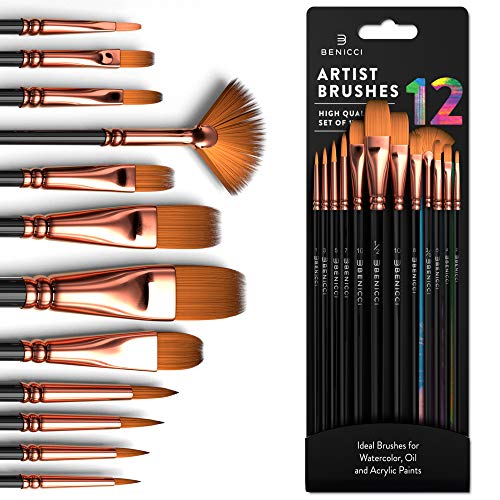
Professional Artist Paint Brush Set Of 12

A 12-piece set from a brand advertised for canvas, watercolor and fabric. A sensible mid-size set for someone who wants shape variety without overload. Rinse promptly, as the listing warns frequent cleaning may be needed.
To buy this product, click here.
Paint Brushes Set For Acrylic Painting
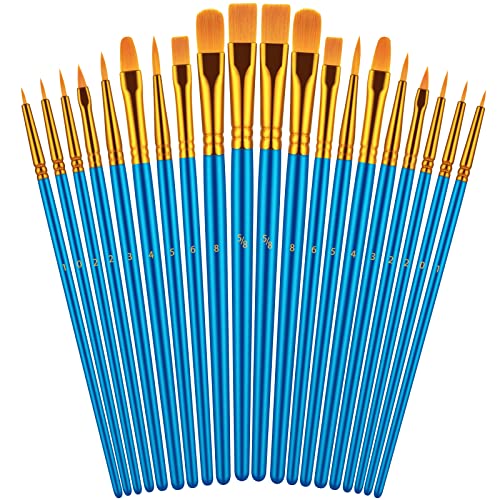
A 20-piece set in blue handles, listed for acrylic, oil and watercolor. The brush count is generous. Check the shape list: sets this size often include several similar sizes of the same shape.
To buy this product, click here.
Aroic Acrylic Paint Brush Set

A 15-piece nylon hair set for acrylic, oil, watercolor, face and rock painting. A budget-friendly pick with synthetic hair. Good for a beginner who wants one set to try several crafts as well as canvas.
To buy this product, click here.
Soucolor Acrylic Paint Brushes Set

A 20-brush set of round pointed tip brushes. Round tips are good for lines and detail but this set may lack large flats for backgrounds, so you may want to add one.
To buy this product, click here.
Rosmax Artist Paint Brushes

A set of 15 nylon brushes in different sizes with baby-blue handles. Nylon is suitable for acrylic, and the size range helps you find your preference. Handles are on the shorter side, which suits table painting.
To buy this product, click here.
Martcolor Paint Brushes Set For Acrylic Painting

A 16-piece nylon brush set that the listing says suits acrylic. A listed drawback is that it may not suit very heavy-body paint, so keep that in mind if you plan to paint thickly.
To buy this product, click here.
Bougimal 32 Pieces Paint Brush Set

A 32-piece set including round, filbert, flat, fan, angle and detail brushes. The widest shape variety among these listings. A large set, so you may take time to figure out which ones you actually use.
To buy this product, click here.
Complete Acrylic Paint Set

A starter kit with 12 acrylic colours, six brushes, three canvases, a palette knife and a sponge. It is a kit rather than only brushes, which makes it handy for a first afternoon of painting.
To buy this product, click here.
18 Piece Paint Brush Set

An 18-piece set with 15 acrylic brushes, a palette knife and two sponges. The sponges and knife add texturing options. The brushes should be washed carefully, as the listing notes.
To buy this product, click here.
Paint Brushes Set For Acrylic Painting

A 16-piece set for acrylic, oil and watercolor, also marketed for face and nail art, miniature detailing and rocks. A flexible set for crafty beginners, though small brushes dominate.
To buy this product, click here.
Brushes for Specific Beginner Projects
- Sky and sunset backgrounds: a large flat for laying in gradients, plus a clean, dry filbert for blending.
- Flowers and leaves: a filbert for petals, a round for stems and a small round for centres.
- Geometric designs: an angled flat and painter’s tape for crisp edges.
- Textured landscapes: a fan brush for foliage and grass, and an old flat for dry brushing.
- Lettering and outlines: a long-bristle liner or small round with thinned paint.
Caring for Acrylic Brushes So They Last
Acrylic punishes careless habits. Once paint dries in the hair or the ferrule, it forms a plastic film that is very hard to remove. These habits protect any brush.
- Never let paint dry on the brush. Rinse during breaks and wash at the end of the session.
- Do not stand brushes on their bristles. Resting in water bends the hair; lay them flat or hang them tip down.
- Keep paint out of the ferrule. Load paint on the first half of the bristles and wipe near the metal.
- Wash with mild soap. Work lather into the hair gently, then rinse until the water runs clear.
- Reshape and dry flat. Press the tip into a point or edge with your fingers and let it air-dry.
Simple Exercises to Learn Your Brushes
Spend your first session getting to know your tools. Paint a row of strokes with a flat brush: wide, narrow, edge only. Use a round brush to paint lines that go thick, then thin, by changing pressure. Try a filbert to blend two colours at a wet edge. Make a swatch page for your fan brush with grass and cloud textures. These exercises cost nothing, take 20 minutes, and show you how each shape behaves, which is more valuable than reading about it.
How Paint Thickness Changes Brush Choice
Fluid acrylic and heavy-body acrylic ask different things of a brush. Thin paint flows from soft or medium synthetic hair and suits washes, glazing and fine lines. Thick paint needs stiffer bristles, which push it around without bending. If a set is described as soft, it may flop under tube-thick paint, and a very stiff set can leave harsh marks in thin glazes. Beginners can solve this by thinning paint slightly with water or a medium, and by keeping one stiffer brush for thick passages.
Matching Brush Size to Canvas Size
A common beginner mistake is using small brushes on large canvases, which leads to slow, timid paintings. As a rule of thumb, choose the largest brush that can paint the shape you need. Block in the background with a big flat, build shapes with medium brushes and save the small rounds for last details. On an 8 x 10 inch canvas, a medium flat and a medium round do most of the work. On a larger canvas, add a bigger flat. For ideas on pairing brushes with paint, see the page on paint brushes sets for acrylic.
Understanding Brush Sizes and Numbers
Brush numbers are not standardised across brands, which confuses beginners. A size 8 round from one maker may be wider than another’s size 10. As a rough guide, small numbers such as 0 to 2 are for fine detail, 4 to 8 are mid-sized, and 10 and above are large for rounds. Flats are often sold by width in inches or millimetres, which is easier to judge. Shop listings sometimes show the bristle length and width in millimetres; if so, use those figures to compare. When a set does not list sizes, check the product images for a ruler or scale before buying.
Handle Length, Balance and Comfort
Short handles give control for detail work at a table, while long handles encourage stepping back and painting looser at an easel. Whichever you choose, check the balance: a brush that is heavy at the ferrule end can tire your hand. Handles with a smooth, sealed finish are easier to keep clean, since dried paint wipes off. Cheap handles sometimes shed varnish or paint flakes, which can end up in your painting, so inspect a set when it arrives and return it if the finish is rough.
Common Beginner Brush Mistakes
- Using one brush for everything. Matching the shape to the job saves frustration.
- Scrubbing paint in with the tip. Pressing hard splays the hair; let the paint do the work.
- Leaving brushes in water. The hair bends and the handle can swell.
- Buying many tiny brushes. Large and mid-sized brushes are more useful for early canvases.
- Ignoring the ferrule. Paint creeping into the metal makes the hair spread; wipe near the base regularly.
When to Upgrade From a Beginner Set
You will know it is time when you keep reaching for the same three brushes, when bristles splay despite good care, or when a particular technique feels held back. Replace worn brushes with higher-quality singles in your favourite shapes instead of a bigger set. Synthetic brushes made for professionals have better snap, shape retention and paint release, and a few of them outlast a drawer full of cheap ones.
Frequently Asked Questions
Which brushes should a beginner buy first for acrylics?
A medium flat, a medium round, a filbert and a small detail round cover most early work. Add an angled brush and a fan brush later.
Are synthetic brushes better for acrylic paint?
Yes for most beginners. Synthetic hair tolerates acrylic polymer, dries quickly after washing and costs less than natural hair.
How do I stop acrylic paint from ruining my brushes?
Rinse often, never let paint dry in the hair, keep paint out of the ferrule and wash with mild soap at the end of each session.
Is a big brush set worth it?
Not always. A set with 10 to 15 well-chosen shapes is plenty. Large sets often include many near-duplicates.
Can I use acrylic brushes for oil or watercolor?
Many synthetic sets are labelled for several paints. They work, but dedicated brushes for each medium usually perform better.
Choosing Acrylic Paint Brushes for Beginners
The best acrylic paint brushes for beginners are synthetic, include the core shapes and have at least one or two large sizes. Start with a modest set, learn what each shape does, wash your brushes promptly and replace worn ones with better singles over time. Use the descriptions above as a guide, and check each listing for the current shape list before you buy.