

PaintingProGuide is reader-supported. When you buy through links on this page we may earn an affiliate commission at no extra cost to you.
Acrylic is the most tutorial-friendly paint there is. It dries in minutes, so you can follow a lesson from start to finish in one sitting, and mistakes can simply be painted over. The challenge is choosing acrylic art tutorials that build skills rather than just producing a copy of someone else’s picture.
Below you will find a complete seascape tutorial, a set of technique drills that underpin almost every acrylic painting, a four-week learning plan, and six tutorial books from current listings, each with a different strength.
Quick answer: Begin with the seascape lesson and the eight technique drills on this page. Then pick a book that matches your goal: Acrylic Painting Step by Step (Tom Swimm) for a broad foundation, Secrets of Acrylic: Landscapes Start to Finish (Jerry Yarnell) for complete landscape projects, or Sea & Sky in Acrylics (Dave White) if water and skies are your favorite subjects.
Tutorial: Crashing Wave Seascape
Supplies: 9×12 canvas board; titanium white, ultramarine blue, phthalo or turquoise blue, a yellow, burnt sienna and a little black; a 1-inch flat, a medium filbert, a fan brush (or old splayed brush) and a small round.
1. Sky
Mix white with a touch of ultramarine and paint the top third, getting lighter toward the horizon. Add a few soft clouds with white and a hint of yellow, blending edges while wet.
2. Horizon and distant sea
Paint a straight horizon line with a darker mix of ultramarine and a little burnt sienna. Just below, paint the far sea in this deeper blue with horizontal strokes.
3. Mid-ground water
Move toward the viewer with a lighter, greener blue (blue plus a touch of yellow). Keep strokes horizontal, and leave a curved area unpainted or lighter where the wave will rise.
4. Wave body
For the curling wave, paint a translucent turquoise (phthalo or turquoise with white and a touch of yellow). Make it lighter at the top where light shines through.
5. Shadow under the curl
Add a darker blue under the lip of the wave. This contrast is what makes the wave look three-dimensional.
6. Foam and spray
Dab white with the fan brush along the crest and let it break into spray. Use a dry, stippling motion so foam looks airy rather than solid.
7. Foreground foam patterns
With the small round, drag thin, lacy lines of white across the foreground water, following the curve of the waves.
8. Final highlights
Add the brightest white on the very top of the crest and a few sparkles on the water. Step back and stop before overworking.
Eight Core Acrylic Techniques (With Drills)
- Gradient blending. Paint a strip that moves from dark blue to white. Goal: no visible bands.
- Wet-on-dry layering. Paint a red square, let it dry, then paint yellow stripes over it. Notice how opaque and transparent colors behave.
- Dry brushing. Wipe a brush almost dry and drag it across a textured canvas. Practice grass and wood grain.
- Glazing. Mix a little color into acrylic medium and glaze over a dry gray square. Watch the color shift without hiding the texture.
- Stippling. Dab a stiff brush or sponge to create foliage clusters in three values.
- Scumbling. Lightly scrub semi-opaque paint over a dry layer for haze and atmosphere.
- Palette knife. Lay a thick stroke and drag the edge for a crisp line, as in rocks or buildings.
- Sgraffito. Scratch into wet paint with the end of a brush to reveal the layer beneath, for grasses or texture.
Fill one canvas board with all eight drills. It becomes a reference you can glance at whenever a tutorial calls for a technique.
Troubleshooting Common Tutorial Problems
My blends look streaky. Acrylic may be drying before you finish. Work smaller areas, use more paint, mist lightly, or add a slow-drying medium. Blend with a clean, slightly damp brush.
My colors look muddy. Too much mixing on the canvas or too many colors in one area. Mix on the palette, use fewer colors, and let layers dry before adding new color on top.
The painting looks flat. Values are too similar. Darken the darkest areas and lighten the lightest; check with a black-and-white phone photo.
The wave or foam looks like a solid blob. Use less paint and a drier brush, and vary the size of the marks. Leave some gaps so the underlying color shows through.
Paint is drying on the palette. Put out less at a time and cover it between steps, or use a stay-wet palette.
My lines are shaky. Thin the paint slightly, load the brush fully, and pull lines in one confident movement while resting your hand on the table.
Most tutorial frustrations come from paint consistency and value, not talent. Fix those two and results improve quickly.
A Four-Week Learning Plan
| Week | Focus | Practice |
|---|---|---|
| 1 | Blending and values | Gradient drills, the seascape tutorial, a five-step gray value scale |
| 2 | Color mixing | Mix greens and browns from primaries; paint a simple landscape |
| 3 | Texture techniques | Dry brush, stipple and palette knife studies |
| 4 | Composition | Three small paintings of the same scene with different focal points |
Our Top Picks at a Glance
- Acrylic Painting Step by Step (Tom Swimm) — Best for a broad foundation in acrylic basics
- Secrets of Acrylic: Landscapes Start to Finish (Jerry Yarnell) — Best for complete landscape projects
- Sea & Sky in Acrylics (Dave White) — Best for water, waves and skies
- Learn to Paint in Acrylics with 50 Small Paintings (Mark Daniel Nelson) — Best for lots of small, finishable tutorials
- Compendium of Acrylic Painting Techniques (Gill Barron) — Best for looking up specific techniques
- Acrylics: Techniques and Tutorials for the Complete Beginner (Adrian Burrows) — Best for beginners wanting techniques and tutorials together
| Product | Best For | Key Spec | Key Strength | Price Tier |
|---|---|---|---|---|
| Acrylic Painting Step by Step (Tom Swimm) | A broad foundation in acrylic basics | Paperback, Artist’s Library series | Basics plus a range of special techniques | $ |
| Secrets of Acrylic: Landscapes Start to Finish (Jerry Yarnell) | Complete landscape projects | Paperback, Essential Artist Techniques | Start-to-finish landscape approach | $ |
| Sea & Sky in Acrylics (Dave White) | Water, waves and skies | Paperback, techniques and inspiration | Specialized seascape and sky focus | $$ |
| Learn to Paint in Acrylics with 50 Small Paintings (Mark Daniel Nelson) | Lots of small, finishable tutorials | Paperback, 50 projects | Small paintings you can finish and hang | $$ |
| Compendium of Acrylic Painting Techniques (Gill Barron) | Looking up specific techniques | Paperback technique reference | Many techniques gathered in one book | $ |
| Acrylics: Techniques and Tutorials for the Complete Beginner (Adrian Burrows) | Beginners wanting techniques and tutorials together | Paperback, Art Techniques series | Combined technique lessons and projects | $ |
How We Chose
We selected these tutorial books from Amazon listings checked in October 2026, which provided titles, authors and formats. We describe each book based on its stated scope and have not worked through them ourselves. We looked for clear tutorial structure, a range of skill levels and subjects, and gave weight to books widely reviewed by Amazon buyers.
Criteria:
- Tutorial structure: step-by-step projects or technique lessons.
- Subject focus: general, landscape or sea and sky.
- Level: beginner to improving painter.
- Format and value: paperback guides in accessible price tiers.
Best Acrylic Art Tutorial Books Reviewed
1. Acrylic Painting Step by Step (Tom Swimm) — Best for a broad foundation in acrylic basics

Tom Swimm’s book, as its subtitle states, helps readers discover all the basics and a range of special techniques for creating their own masterpieces in acrylic. A step-by-step format combined with technique coverage makes it a natural first book.
It sits in the lowest price tier among these books, which makes it an easy addition to any beginner’s shelf.
Best suited for: Beginners wanting a well-rounded introduction.
Key features:
- Paperback
- Step-by-step format
- Basics and special techniques
- Artist’s Library series
Pros:
- Broad foundation
- Lowest price tier
- Covers techniques and projects
Cons and limitations:
- General coverage, less depth per subject
- Limited listing detail
Buying consideration: Read the techniques section first, then do each project twice.
2. Secrets of Acrylic: Landscapes Start to Finish (Jerry Yarnell) — Best for complete landscape projects

Jerry Yarnell’s book focuses on acrylic landscapes painted start to finish, per its title. Landscapes teach atmospheric perspective, color temperature and layering, making them one of the best subject areas for building general skill.
A start-to-finish structure suits learners who want to complete full paintings rather than isolated exercises.
Best suited for: Landscape lovers and painters who want full projects.
Key features:
- Paperback
- Landscape focus
- Start-to-finish projects
- Essential Artist Techniques series
Pros:
- Complete paintings
- Strong subject focus
- Low price tier
Cons and limitations:
- Landscape only
- Limited listing detail
Buying consideration: Paint each landscape at the same small size first, then choose your favorite to repeat on a larger canvas.
3. Sea & Sky in Acrylics (Dave White) — Best for water, waves and skies

Dave White’s book focuses on sea and sky in acrylics, offering techniques and inspiration according to its title. If the seascape tutorial above was your favorite, this is the logical next step: waves, reflections, clouds and light are specialized skills.
Its focused scope means more depth on those subjects than a general guide can offer.
Best suited for: Seascape painters, sky lovers and coastal art.
Key features:
- Paperback
- Sea and sky subjects
- Techniques and inspiration
- Acrylic focus
Pros:
- Deep subject focus
- Builds on beginner skills
- Inspiring subject matter
Cons and limitations:
- Narrow subject range
- Highest price tier among these books
Buying consideration: Paint from your own beach photos alongside the book so you learn to adapt techniques to real scenes.
4. Learn to Paint in Acrylics with 50 Small Paintings (Mark Daniel Nelson) — Best for lots of small, finishable tutorials
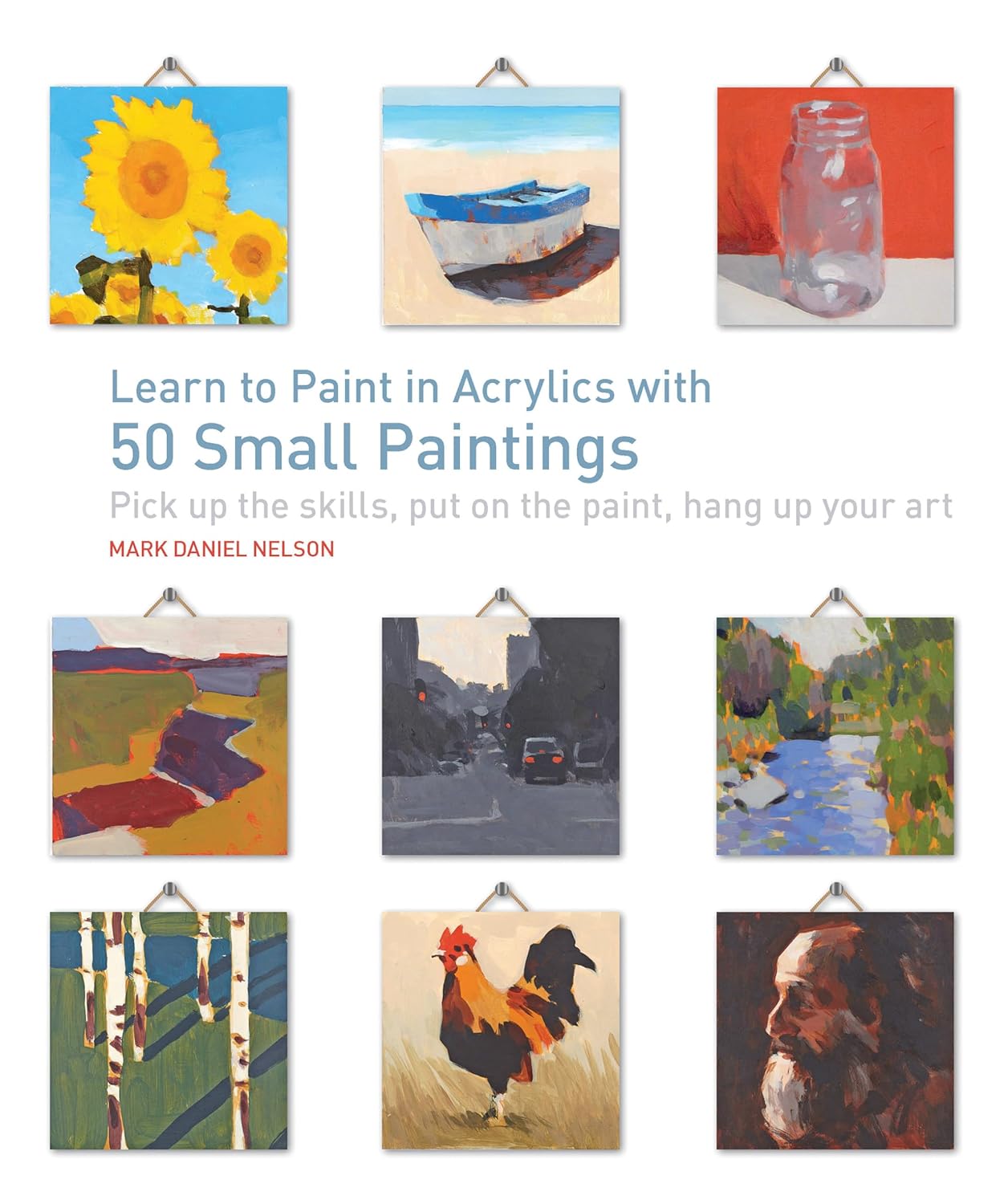
With 50 small paintings, Nelson’s book is built around frequent wins. Its subtitle summarizes the approach: pick up the skills, put on the paint, hang up your art. Small tutorials are especially good for acrylic, where quick drying makes one-session paintings practical.
It complements subject-specific books by offering variety.
Best suited for: Busy learners, daily painters and anyone who loses motivation on big projects.
Key features:
- Paperback
- 50 small projects
- Skill-building progression
- Display-ready results
Pros:
- High project count
- Builds a painting habit
- Variety of subjects
Cons and limitations:
- Small scale only
- Mid price tier
Buying consideration: Set a goal of two small paintings a week and you will finish the book in about six months.
5. Compendium of Acrylic Painting Techniques (Gill Barron) — Best for looking up specific techniques

Barron’s compendium is a reference, not a course. When a tutorial asks for a glaze, a scumble or a textured ground, a compendium shows how. It pairs naturally with the technique drills on this page.
Keep it within reach of your painting table.
Best suited for: Painters who want a technique reference to support any tutorial.
Key features:
- Paperback
- Technique compendium
- Reference format
- Acrylic focus
Pros:
- Wide technique coverage
- Useful for years
- Low-mid price tier
Cons and limitations:
- Not a project book
- Requires self-direction
Buying consideration: After each tutorial, look up one technique you struggled with and practice it on scrap.
6. Acrylics: Techniques and Tutorials for the Complete Beginner (Adrian Burrows) — Best for beginners wanting techniques and tutorials together

Burrows’ book pairs techniques with tutorials for complete beginners, per its title. Learning a technique and immediately applying it in a full project is one of the most effective ways to make skills stick.
It is a budget-friendly companion to any of the subject books above.
Best suited for: Complete beginners and self-learners.
Key features:
- Paperback
- Techniques plus tutorials
- Complete beginner focus
- Art Techniques series
Pros:
- Balanced structure
- Low price tier
- Beginner friendly
Cons and limitations:
- Limited listing detail
- General scope
Buying consideration: Use it alongside the four-week plan above, matching each week’s focus to the relevant chapter.
Buying Guide: Choosing Acrylic Art Tutorials
Match tutorials to your goal
General foundations, landscape projects, seascapes or small daily paintings each call for different books and lessons.
Look for explanation, not just steps
The best tutorials explain why a color or stroke is used, so you can apply it elsewhere.
Mix projects and drills
Projects keep you motivated; drills build specific skills. Use both.
Keep supplies simple
Most tutorials use a limited palette. Buying the exact colors a tutorial lists removes guesswork.
Repeat favorite tutorials
Painting the same lesson twice shows real progress and builds confidence.
Build a small reference library
Two or three well-chosen books, one general, one subject-specific and one technique reference, cover most needs. Adding more rarely helps as much as painting more.
Paint from life too
Tutorials teach process; observation teaches seeing. Combine them.
More Acrylic Ideas to Try
For projects that go from practice to decor, see our DIY wall art ideas using acrylic paint and the step-by-step guide to making DIY wall art with acrylic. For quick wins, browse simple acrylic painting ideas for beginners.
Common Mistakes to Avoid
- Following too many tutorials at once. Finish one, then repeat it.
- Skipping drills. Techniques practiced alone transfer to every painting.
- Fighting fast drying. Work in sections, mist your palette, or use a retarder.
- Copying colors exactly without understanding. Learn which mixes create them.
- Overworking wet paint. Let layers dry and build up instead.
- Comparing to the instructor. Compare to your own previous attempts.
FAQs
What are the best acrylic art tutorials for beginners?
Start with tutorials that teach blending, layering and values, like a simple seascape or sunset, and combine them with technique drills. A broad book like Tom Swimm’s Acrylic Painting Step by Step is a good companion.
How long does it take to learn acrylic painting from tutorials?
Many beginners see clear improvement within a few weeks of regular practice. A structured plan, such as two or three sessions a week, speeds progress.
Are tutorial books worth it compared to free videos?
Books provide structure and reference you can return to. Videos show brush motion in real time. Many learners use both.
What subjects should I paint first in acrylic?
Skies, seascapes and simple landscapes are excellent first subjects because they teach blending, layering and atmospheric depth with few colors.
Which acrylic techniques should I learn first?
Gradient blending, wet-on-dry layering, dry brushing and glazing cover most beginner needs. Stippling, scumbling, palette knife and sgraffito add texture and variety.
How do I keep acrylic paint workable during a tutorial?
Put out small amounts, mist the palette with water, use a stay-wet palette or add a retarder medium to slow drying.
Final Recommendation
Work through the seascape tutorial and the eight drills first. Then choose Tom Swimm’s Acrylic Painting Step by Step for foundations, Jerry Yarnell’s Secrets of Acrylic for landscapes, or Dave White’s Sea & Sky for water and skies. Add Mark Daniel Nelson’s 50 Small Paintings for frequent finishable projects, keep Gill Barron’s Compendium as a reference, and use Adrian Burrows’ guide as a budget all-rounder.


One Comment