

PaintingProGuide is reader-supported. When you buy through links on this page we may earn an affiliate commission at no extra cost to you.
A good painting tutorial gives a child two things at once: a clear path to a picture they are proud of, and enough freedom to make it their own. Too rigid, and kids feel like they are copying. Too vague, and they freeze in front of a blank page. The best painting tutorials for kids break a project into a few simple steps, use materials families already have, and leave room for silly colors and happy accidents.
This guide covers both free and printed options. First, how to choose tutorials by age and medium, plus a handful of free step-by-step guides on our site. Then six painting books on Amazon, from Bob Ross lessons for kids to a 52-project mixed-media lab and a first watercolor book for preschoolers. The listings for these books give titles, authors and formats rather than page-by-page details, so we describe each by its stated focus.
Quick answer: For a confidence-building first book, Painting with Bob Ross for Kids offers simple-to-follow landscape lessons inspired by the famous TV painter. For creative variety, Paint Lab for Kids contains 52 painting and mixed-media adventures. For the youngest painters, My First Watercolor Painting: Jungle Adventure Edition is designed for ages 3 to 7.
Our Top Picks at a Glance
- Painting with Bob Ross for Kids — Best for landscape lessons and confidence
- Paint Lab for Kids by Stephanie Corfee — Best for creative variety and mixed media
- How to Paint with Acrylics: An Art Book for Kids — Best budget acrylic introduction
- My First Watercolor Painting: Jungle Adventure Edition — Best for ages 3 to 7
- Learn to Draw and Paint by Devorah Benedict — Best for drawing plus painting step by step
- Kids Painting: Materials and Set-Up Guide — Best for parents and teachers leading lessons
| Product | Best For | Key Spec | Key Strength | Price Tier |
|---|---|---|---|---|
| Painting with Bob Ross for Kids | Landscapes | Paperback, Bob Ross Inc. | Simple-to-follow lessons | $ |
| Paint Lab for Kids | Creative exploration | Paperback, 52 projects | Mixed media variety | $$ |
| How to Paint with Acrylics | Acrylic basics | Paperback, Rockridge Press | Low cost | $ |
| My First Watercolor: Jungle | Preschoolers | Paperback, ages 3 to 7 | Animal subjects | $ |
| Learn to Draw and Paint | Drawing and painting | Paperback, step by step | Animals, faces, objects | $ |
| Kids Painting Guide | Adults teaching kids | Paperback | Materials and set-up | $$ |
How We Chose
We have not taught from every page of these books. Picks are based on the Amazon listing details checked in October 2026 (title, author, publisher, stated age range and format), how well each book’s stated focus suits a particular age or goal, and how widely each title is reviewed by Amazon buyers. We describe each book by its stated subject rather than guessing at contents.
- Age fit: stated or clearly implied age ranges.
- Step-by-step structure: lessons kids can follow.
- Medium: acrylic, watercolor, mixed media or drawing plus paint.
- Variety: number of projects and subjects.
- Adult support: guidance for parents and teachers.
How to Pick a Painting Tutorial for Your Child
Match the age
Ages 3 to 5 do best with big shapes, few steps and plenty of freedom. Ages 6 to 8 enjoy recognizable results like animals and simple landscapes in four to six steps. Ages 9 to 12 can handle layering, blending and longer projects with techniques such as wet-on-wet watercolor or dry brushing.
Match the medium
Watercolor tutorials teach water control and soft blending. Acrylic tutorials produce bold, opaque results on canvas or rocks. Mixed-media tutorials combine paint with collage, oil pastels or markers, which keeps restless kids engaged.
Look for flexibility
The best tutorials suggest a result but encourage kids to change colors, add details or invent backgrounds. Praise the choices they make, not just how close they get to the example.
Consider who is guiding
Some books speak directly to kids; others are written for parents or teachers. If you are running a class or a group, a guide with set-up and materials advice saves time.
Free Step-by-Step Tutorials on PaintingProGuide
Before buying a book, try a few free lessons together. Our rock painting tutorial is a favorite for outdoor-loving kids, the beginner watercolor painting tutorial covers brush control and water, and the watercolor pencils tutorial is a great bridge between drawing and painting. For quick wins with younger kids, try the easy ladybug painting tutorial or the easy dinosaur painting for kids.
Best Painting Tutorial Books for Kids Reviewed
1. Painting with Bob Ross for Kids — Best for landscape lessons and confidence
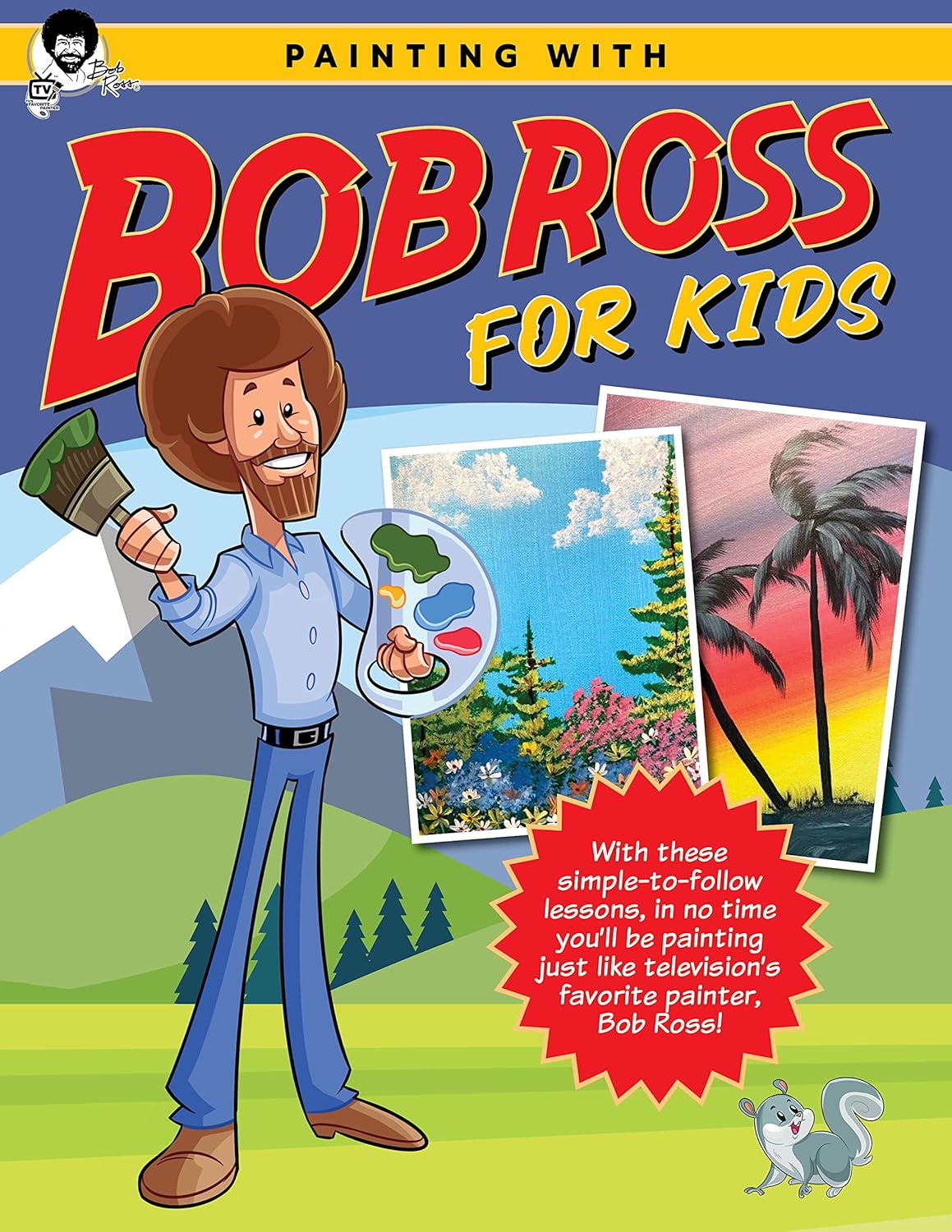
Bob Ross’s gentle, encouraging style made landscape painting feel possible for millions of adults, and this kids’ version from Bob Ross Inc. brings that approach to young painters. Its subtitle promises simple-to-follow lessons so kids can paint like the television painter.
Landscapes are a great subject for children because there is no single “right” tree or cloud, and small mistakes become happy accidents, the idea Bob Ross was famous for. Expect mountains, trees, skies and water as typical subjects.
Best suited for: Kids around 7 and up who like nature scenes and need a confidence boost.
Key features:
- Author: Bob Ross Inc.
- Format: paperback
- Focus: simple landscape lessons for kids
Pros:
- Encouraging approach
- Forgiving subjects
- Well-known name kids may recognize
Cons and limitations:
- Landscape focus only
- Listing does not specify medium details
Buying consideration: Watch a classic Bob Ross episode together first to set the mood.
2. Paint Lab for Kids by Stephanie Corfee — Best for creative variety

Paint Lab for Kids by artist Stephanie Corfee is subtitled 52 Creative Adventures in Painting and Mixed Media for Budding Artists of All Ages, and is part of the popular Lab for Kids series. A project per week for a year is a nice way to frame it.
Mixed-media projects keep things fresh and teach that paint can be combined with other materials. Because the book addresses budding artists of all ages, it works for siblings of different ages painting together.
Best suited for: Families and homeschoolers who want a year of varied projects.
Key features:
- Author: Stephanie Corfee
- Format: paperback
- 52 projects
- Painting and mixed media
Pros:
- Lots of variety
- Suits a range of ages
- Part of a well-known series
Cons and limitations:
- Mid price tier
- May need more varied supplies
Buying consideration: Pick one project a week and keep finished pieces in a portfolio folder.
3. How to Paint with Acrylics: An Art Book for Kids — Best for a budget acrylic introduction

Rockridge Press’s How to Paint with Acrylics is framed as an art book for kids and sits in the lowest price tier here. Acrylic is a practical first paint for school-age kids: bright, opaque and quick-drying.
A focused acrylic book helps kids learn mixing, layering and brush control in one medium before branching out.
Best suited for: School-age kids starting with acrylic paint.
Key features:
- Publisher: Rockridge Press
- Format: paperback
- Focus: acrylic painting for kids
Pros:
- Low price tier
- Single-medium focus
- Good first art book
Cons and limitations:
- Acrylic only
- Listing gives limited detail on projects
Buying consideration: Use washable kids’ acrylic or tempera for easier cleanup.
4. My First Watercolor Painting: Jungle Adventure Edition — Best for ages 3 to 7

This first watercolor book by Maple & Moss is designed for kids ages 3 to 7, with jungle animals such as tigers, monkeys and parrots. Its title describes fun and easy watercolor painting.
Animal themes hold young attention well, and watercolor is forgiving for little hands because colors blend on their own. It is a sensible first book for preschoolers and early elementary kids.
Best suited for: Preschoolers and early elementary kids trying watercolor.
Key features:
- Author: Maple & Moss
- Format: paperback
- Ages 3 to 7
- Jungle animal subjects
Pros:
- Age-specific
- Engaging animal theme
- Low price tier
Cons and limitations:
- Watercolor only
- Older kids may outgrow it quickly
Buying consideration: Use thick paper or watercolor pads so pages do not buckle.
5. Learn to Draw and Paint by Devorah Benedict — Best for drawing plus painting

Devorah Benedict’s book is a step-by-step drawing book for kids that teaches how to create animals, faces and objects, then paint them. Combining drawing and painting is helpful because many kids feel stuck at the sketch stage.
Once a child can draw a simple cat or face with confidence, painting it becomes much more fun.
Best suited for: Kids who want to draw their own subjects before painting.
Key features:
- Author: Devorah Benedict
- Format: paperback
- Step-by-step drawing and painting
- Animals, faces and objects
Pros:
- Builds drawing confidence
- Range of subjects
- Low price tier
Cons and limitations:
- Less focus on painting techniques
- Listing gives limited medium details
Buying consideration: Pair it with a simple watercolor or tempera set.
6. Kids Painting: Teach Young Kids How to Paint, Materials and Set-Up Guide — Best for parents and teachers

Spramani Elaun’s guide is aimed at the adult in the room, covering how to teach young kids to paint, along with materials and set-up. That focus is useful for parents new to art, preschool teachers and anyone running a painting club.
Good set-up, from table covers to how much paint to put out, makes the difference between a joyful session and a stressful one.
Best suited for: Parents, preschool teachers and group leaders.
Key features:
- Author: Spramani Elaun
- Format: paperback
- Focus: teaching young kids, materials and set-up
Pros:
- Practical for adults
- Covers set-up as well as lessons
- Useful for groups
Cons and limitations:
- Not a kid-facing project book
- Mid price tier
Buying consideration: Read it before your first group session, then use kid-facing books for projects.
Buying Guide: How to Choose Painting Tutorials for Kids
Check the age range
Choose books that state an age range matching your child, or that address all ages.
Pick one medium to start
Watercolor or washable tempera for young kids; acrylic for school-age kids.
Look for step-by-step structure
Clear steps build confidence; open-ended prompts build creativity. A mix is ideal.
Consider subjects
Animals, landscapes and faces are popular. Choose themes your child already loves.
Plan supplies
Mixed-media books may need extra materials. Check before starting.
Add adult guidance
For groups or very young children, a teaching guide helps adults set up and pace lessons.
Beginner Techniques Every Tutorial Should Teach
Color mixing
Mixing primaries into secondaries is the first “magic trick” of painting. A tutorial that asks kids to mix their own green for leaves teaches more than one that supplies green.
Light to dark
In watercolor, kids paint light areas first and add darker layers on top. In acrylic, they can block in dark shapes and add light highlights. Either way, layering is a key idea.
Brush handling
Using the tip for lines, the side for broad strokes and dabbing for texture gives kids control. Good tutorials name the stroke for each step.
Wet-on-wet and wet-on-dry
Dropping paint onto wet paper makes soft blooms; painting on dry paper makes crisp edges. Showing both helps kids understand watercolor rather than fight it.
Finishing touches
Small white highlights, black outlines or a few dots of a contrasting color often turn a good painting into a great one. Kids love this final step.
Building a Painting Routine at Home
A regular, low-pressure routine works better than occasional big projects. Pick one afternoon a week as painting time, keep a small box of supplies ready, and let kids choose the tutorial from a book or our site. Display finished work on a rotating gallery wall, and date the back of each painting. Over a few months, kids can flip back through their folder and see real progress, which motivates them more than any reward.
Running a Kids’ Painting Session
- Cover the table, set out water cups and paper towels, and dress kids in smocks.
- Show the finished example, then put it aside so kids are not tempted to copy exactly.
- Demonstrate one step at a time and pause while everyone catches up.
- Encourage personal touches: different colors, extra animals, invented backgrounds.
- Leave time to clean brushes together and lay paintings flat to dry.
- Finish with a quick show-and-tell so every child gets praise.
Basic Supplies for Following Tutorials
Most kids’ tutorials need only a short list: a set of washable watercolors or tempera, a few round and flat brushes in small and medium sizes, thick paper or a watercolor pad, two water cups (one for rinsing, one for clean water), paper towels, a palette or paper plate, and a smock. Acrylic projects add canvas boards or smooth rocks. Keep everything in one bin so painting time starts in minutes rather than with a search for supplies.
Common Mistakes to Avoid
- Choosing tutorials too advanced for the child’s age.
- Correcting color choices instead of celebrating them.
- Using thin printer paper for watercolor, which buckles and tears.
- Running sessions too long for young attention spans.
- Putting out too much paint at once, which leads to muddy mixing and waste.
- Skipping cleanup routines, which ruins brushes.
FAQs
What is a good first painting tutorial for kids?
Simple subjects with few steps, like a ladybug, a sunny landscape or a rock critter. Books like Painting with Bob Ross for Kids and My First Watercolor Painting are good starting points.
What age can kids follow painting tutorials?
Many kids can follow simple three- or four-step tutorials from around age 4, with adult help. Longer, technique-based lessons suit ages 8 and up.
Should kids start with watercolor or acrylic?
Watercolor and washable tempera are easiest for young kids. Acrylic suits school-age kids who want bold, lasting results.
How long should a kids’ painting lesson be?
Twenty to thirty minutes for preschoolers, and up to an hour for older kids. Stop while they are still having fun, so they look forward to the next session.
Are painting books better than videos for kids?
Books let kids work at their own pace and revisit steps. Videos show motion. Many families use both.
How do I keep kids from getting frustrated?
Choose age-appropriate projects, demonstrate each step, and praise effort and personal choices rather than accuracy.
Final Recommendation
For a confidence boost with forgiving subjects, start with Painting with Bob Ross for Kids. Families who want a year of variety will love Paint Lab for Kids, and preschoolers get the gentlest start with My First Watercolor Painting. The Rockridge acrylic book is a low-cost introduction to bold paint, Devorah Benedict’s book helps kids who get stuck at drawing, and the Kids Painting guide supports the adults leading the lessons. Mix in our free tutorials and you will have months of painting fun.
Above all, keep it playful. The goal is not a perfect copy of the example but a child who looks forward to the next painting session and is proud to show what they made.




