Finding the best acrylic paint for plastic models hinges on vibrancy, adhesion, and smooth application.
Imagine finally settling down with your latest plastic model kit, eager to see it come to life. Yet, the paints you've used before seemed inadequate, either fading quickly or not adhering well. That's where quality acrylic paints make a difference. They offer vibrant colors, excellent coverage, and a smooth finish that transforms your model into a stunning piece of art. In this detailed review, I’ll explore top acrylic paints to help you achieve the perfect look for your plastic models.
Why Acrylic Works Well for Plastic Models
Hobbyists paint plastic kits with enamels, lacquers and acrylics, and each has fans. Acrylics have become a common choice, particularly for people painting at home, for a few practical reasons. They clean up with water or a dedicated thinner, they have a milder smell than many solvent-based paints, and they dry quickly enough to allow multiple thin layers in one session. They also tend to be gentle on styrene plastic, which can be damaged by some strong solvents.
The trade-off is that acrylic paint needs the right preparation. Plastic is smooth and can be slightly oily from the molding process, so without cleaning and priming the paint may bead up, rub off or chip at the edges of parts. The guidance below covers what to look for in a paint and how to get a durable finish.

Nicpro 18 Colors Model Paint…
【Premium Acrylic Model Paints】 Professional-quality acrylic miniature paints designed for model kits, plastic models, miniatures, scale figures, dioramas, and other hobby projects. Formulated for brush application with a smooth, even…

55PCS Acrylic Paint Set of…
🎨Safety guarantee & High quality- Made of premium paint material, conforming to ASTM D-4236 and EN71 standards,HissiCo acrylic paint set is in rich pigment, creamy, non toxic and safe for…

Testors Acrylic Paint Set Primary,…
This product is manufactured in united states Acrylic paint set Primary – 6 colors
Nicpro 18 Colors Model Paint Set
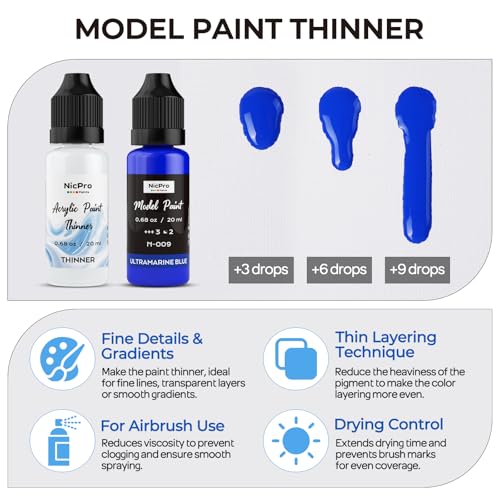
The Nicpro 18 Colors Model Paint Set is a versatile option, offering both brush and airbrush compatibility. This set includes 20ml paints that are ready to use, making it perfect for beginners and artists alike looking to paint models, figures, and crafts.
One standout feature is the included thinner, which ensures the perfect consistency for detailed work, whether you’re painting miniatures or larger models. These paints provide rich pigmentation with colors that are neither too glossy nor too matte.
Pros:
- Includes 18 varied colors for diverse projects
- Compatible with brush and airbrush
- Comes with a thinner for ideal consistency
- Rich pigmentation for vibrant results
- Non-toxic and eco-friendly
Cons:
- 20ml bottles may not last for large projects
- Doesn’t include brushes
My Recommendation
The Nicpro set is ideal for artists seeking a comprehensive paint set with various colors and flexibility in application. It’s perfect for both beginners learning to control paint consistency and experienced modelers requiring vivid color diversity. This product is certainly among the best acrylic paint for plastic models due to its non-toxic formula and ease of use.| Best for | Why |
| Beginners | Ease of use and included thinner |
| Detail work | Compatible with brushes and airbrushes |
| Eco-conscious artists | Non-toxic, eco-friendly formulation |
55PCS Acrylic Paint Set of 36 Colors
This expansive acrylic paint set features 36 vibrant colors, each stored in a substantial 60ml bottle. It includes 12 different brushes, making it suitable for various styles of painting on canvas, wood, and crafts.
The pigmentation doesn’t fade over time, ensuring lasting vibrancy for your model masterpieces. This all-in-one package is perfect for artists at any level, offering a wide range of hues and painting accessories.
Pros:
- Includes 36 rich colors
- Comes with 12 versatile brushes
- Non-toxic, safe for all ages
- Large 60ml bottles for extended use
- Fade-resistant pigments
Cons:
- Bulky package may be cumbersome
- Brushes may not be professional quality
My Recommendation
This 55-piece set is best for those looking to dive deep into model painting with a complete toolkit in hand. It’s particularly suited for beginners or seasoned artists wanting to explore a vast palette. Thanks to its non-toxic composition and broad color range, it stands out as a contender for the best acrylic paint for plastic models.| Best for | Why |
| Comprehensive projects | Includes brushes and a variety of colors |
| Long usages | Large bottle sizes |
| Vibrant and lasting colors | Fade-resistant pigmentation |
Testors Acrylic Paint Set Primary
The Testors Acrylic Paint Set offers primary colors, essential for anyone looking to mix custom shades. Known for their trustworthy quality, these paints are a go-to choice for model enthusiasts.
This set excels in offering a straightforward approach to coloring, with each hue designed to provide solid coverage and easy blending. Whether for educational purposes or creative fun, it’s a practical choice for users at any level.
Pros:
- Includes essential primary colors
- Easy mixability for custom shades
- Reliable brand in the modeling community
- Good coverage and smoothness
- User-friendly for beginners and experts
Cons:
- Limited color variety
- No additional tools or brushes included
My Recommendation
The Testors Acrylic Paint Set is a great choice for those who love working with basic and custom-mixed shades. With its reliable quality and ease of use, this set is perfect for hobbyists and educators exploring the best acrylic paint for plastic models.| Best for | Why |
| Basic color needs | Includes all primary colors |
| Custom color creation | Mixable for unique hues |
| Trusted brand value | High-quality pigments |
Testors Acrylic Value Finishing Paint Set

Designed specifically for finishing touches, the Testors Acrylic Value Finishing Paint Set offers varied colors that add depth and professionalism to your models. This set is particularly useful for highlighting and detailing.
It provides balanced opacity and coverage, enhancing the final look of any project. If adding the final finesse is your goal, this paint set could be your go-to choice.
Pros:
- Ideal for detailed finishing touches
- Offers good balance of opacity
- Enhances professional appearance
- Works well with various paint types
- Reliable for consistent quality
Cons:
- Not for primary application
- Limited color selections
My Recommendation
This Testors set is aimed at modelers focused on achieving polished and detailed finishes. It excels in providing the nuanced touches needed for professional-looking results, making it a top pick among the best acrylic paint for plastic models for that extra detail work.| Best for | Why |
| Detail finishing | Enhanced color depth |
| Professional results | Quality and consistency |
| Artistic detailing | Perfect for fine touches |
Testors Acrylic Auto Truck Paint Sets

This set targets the auto-truck model enthusiast, focusing on providing precise colors for realistic vehicle finishes. It’s formulated to withstand outdoor elements, making it a great choice for display pieces.
The Testors Acrylic Auto Truck Paint Set features colors that replicate authentic vehicle tones, designed to mimic real auto shades vividly and durably. Its reliability makes it a preferred choice for realistic model enthusiasts.
Pros:
- Realistic auto and truck model finishes
- Durability enhanced for outdoor conditions
- Authentic and vivid shades
- Consistently reliable color replication
- High-quality finish suitable for collectors
Cons:
- Limited to auto-specific colors
- Requires precision for best results
My Recommendation
If you are passionate about creating authentic vehicle models, the Testors Auto Truck Set should be your choice. It excels in emulating true vehicle tones, making it an essential pick among the best acrylic paint for plastic models specializing in auto themes.| Best for | Why |
| Vehicle enthusiasts | Authentic auto colors |
| Outdoor displays | Durable, weather-resistant formulation |
| Collectors | Quality for lasting showcases |
What to Look for in the Best Acrylic Paint for Plastic Models
- Pigment fineness: Finer pigments produce smoother coats and preserve small details such as panel lines and rivets.
- Opacity: Higher opacity covers in fewer coats, which prevents buildup. Some colors, such as yellows and reds, are naturally less opaque and benefit from a light primer underneath.
- Consistency: Paint that is ready to brush or can be thinned easily for an airbrush saves time and guesswork.
- Finish range: Check whether the set includes matte, satin and gloss, or whether you will need to add a clear coat to adjust the sheen.
- Color range: Sets with primary colors are very flexible for mixing. Subject-specific sets, such as automotive colors, give you accurate shades with less work.
- Bottle design: Dropper bottles or tubs with good seals reduce waste and stop paint drying out.
Craft Acrylics Versus Dedicated Model Acrylics
Large multi-color craft sets are attractive for their price and variety. They can be a sensible way to learn, especially for broad areas or terrain bases. They differ from paints made for models in some ways: pigments may be coarser, finishes can be more uneven, and the paint may need thinning to avoid visible brush strokes. Dedicated model paints are generally designed for fine detail and smooth results, and some are made to be airbrushed straight from the bottle or with minimal thinning.
| Feature | General craft acrylic | Model-oriented acrylic |
|---|---|---|
| Best for | Practice, large areas, bases | Detail work, consistent finish |
| Detail preservation | Needs careful thinning | Usually designed for fine detail |
| Color variety | Often very wide | Often includes model-specific shades |
| Airbrush use | Usually requires thinning and testing | Often formulated for it |
| Cost per color | Frequently lower | Can be higher |
How to Prepare Plastic Model Parts for Acrylic Paint
- Remove parts carefully. Cut parts from the sprue with sprue cutters and leave a small nub to trim afterward.
- Clean up seams and nubs. Use a hobby knife and fine sanding sticks to smooth mold lines and attachment points.
- Wash the parts. Use warm water with a small amount of dish soap, rinse and let them dry. This removes mold-release agents and finger oils.
- Prime. A thin coat of primer evens out color, helps paint grip and reveals flaws you can fix before painting.
- Plan the build order. Decide which sub-assemblies to paint before gluing together, such as cockpit interiors or engines that become hard to reach later.
Step-by-Step: Painting a Plastic Model with Acrylics
- Start with the lightest colors on larger areas. Thin the paint slightly and apply in two or three light coats rather than one heavy one.
- Let each coat dry fully. Rushing can lift the previous layer, and thick paint can obscure detail.
- Mask carefully. Use low-tack masking tape for hard edges, press the edges down and remove slowly after the paint has dried enough.
- Paint details with a fine brush. Use a size that fits the feature, and load only a little paint at the tip.
- Add shading and weathering. Washes, dry brushing and pencil marks bring out panel lines and give depth.
- Protect the finish. Apply a clear coat that suits your paint. Test it on a spare part first, because some clear coats can react with certain paints.
Brush Painting or Airbrushing Plastic Models?
Brush painting is the entry point for most hobbyists. It requires little equipment, is easy to clean up and works well for details. The challenge is keeping large areas free of streaks, which comes from thin coats, good brushes and patience. Airbrushing creates smooth, even coats and subtle gradients, particularly useful for vehicles and aircraft. It involves an investment in equipment, a ventilated space and practice, plus attention to thinning and cleaning. Many modelers use both: airbrush for base coats and brush for fine work. If you only have a set of ready-to-brush paints, start with brush techniques and learn them well.
Common Problems When Painting Plastic Models
Paint that peels or rubs off
Often caused by oils on the surface or skipping primer. Wash parts, prime and avoid handling painted areas until they are fully dry.
Visible brush strokes
Thin the paint slightly, use a softer brush and apply several light layers. Avoid going back over areas that are beginning to dry.
Clogged details
Thick paint fills recesses. Use less paint per coat, and clean tools frequently. If paint has already filled a detail, a damp swab can sometimes lift it while it is still wet.
Uneven or chalky finish
This can come from overworked paint, very dry conditions or incompatible clear coats. A gloss coat can even out the surface before applying a final matte.
Paint drying on the palette
Acrylic dries fast. Use a wet palette or a retarder recommended by the maker, and mix small amounts at a time.
Tools That Make Acrylic Model Painting Easier
- A selection of fine and medium brushes, preferably synthetic, for acrylics.
- A palette, such as a ceramic tile or a wet palette, for mixing small quantities.
- Low-tack masking tape and cutting tools for clean paint lines.
- A holder or clamp so you can paint without touching the part.
- Good light and magnification if your eyesight needs support.
- Clean water, lint-free wipes and a brush cleaner for maintenance.
FAQs Of best acrylic paint for plastic models
What surface preparation is needed for acrylic paint on plastic models?
Proper surface preparation is crucial for acrylic paints. Start with cleaning the model to remove dust or oils. Lightly sand the surface to create a texture for the paint to adhere to, then apply a primer to ensure the paint sticks properly.How do I make custom colors with acrylic paints?
Custom colors can be achieved by mixing different shades of acrylic paints in a palette. Start with small quantities to achieve the desired hue, adjusting by adding more of one color as needed. Test the mix on a spare piece of material to ensure it dries to the preferred shade.Why is acrylic paint preferred for plastic models?
Acrylic paint is preferred due to its vibrant color range, quick drying time, and ease of use. It adheres well to primed plastic surfaces and provides a durable, smooth finish. Acrylics are also non-toxic and water-based, making them safe for users of all ages.Caring for Your Paints and Finished Models
Close bottle lids tightly after each session and wipe threads to keep them from sticking. Store paints upright at a moderate temperature away from direct sunlight and avoid freezing, which can ruin acrylic paint. Shake or stir before use to remix pigment. For finished models, keep them in a dust-free spot, such as a display case, away from strong sunlight, and dust gently with a soft brush. Handle models by solid parts rather than delicate details, and leave them to cure for the time the paint maker suggests before handling heavily.
Final Verdict: Which Should You Buy?
Choosing the best acrylic paint for plastic models depends on your specific needs. Whether it's vibrant versatility, long-lasting vividness, or realistic vehicle finishes, each of these options brings something unique to enhance your creative projects.
The Nicpro and Testors sets are standout selections, offering both beginners and seasoned modelers the tools needed for detailed and beautiful finishes.aanse to enhance your creative projects.
Each product brings unique strengths, with the Nicpro and Testors sets offering reliable choices for vibrant finishes.