PaintingProGuide is reader-supported. When you buy through links on this page we may earn an affiliate commission at no extra cost to you.
Plastic is one of the hardest craft surfaces to paint because it is smooth, slick and often slightly flexible. Ordinary craft acrylic can look fine when it dries and then scratch off with a fingernail a week later. The best paint for plastic DIY projects is either a paint formulated for plastic, or a good acrylic used over a properly prepared surface and protected with a sealer.
This guide covers both routes using paints from our October 2026 Amazon check: FolkArt’s dedicated Paint for Plastic line, plus three general acrylic options that list plastic among their surfaces and work well with the right prep. We also walk through cleaning, scuffing, priming and curing, because that process matters more than the brand on the bottle.
Quick answer: For plastic crafts that will be handled, the FolkArt Paint for Plastic 12-Piece Kit is the best choice: nine satin colors made for plastic, three flat brushes, and clear instructions on drying between coats and a 30-day full cure. Need just one color, like black for a base coat? The single FolkArt Paint for Plastic in Black Olive uses the same indoor/outdoor formula. For a wider palette on lightly used plastic decor, the Artkey 24-Color Acrylic Set lists plastic among its surfaces and works well over a primer.
Our Top Picks at a Glance
- FolkArt Paint for Plastic Kit, 9 Colors and 3 Brushes — Best overall paint for plastic crafts
- FolkArt Paint for Plastic, Black Olive, 2 oz — Best single color for plastic base coats
- Artkey Acrylic Paint Set, 24 Colors, 2 oz — Best general acrylic set for primed plastic
- TMOL Acrylic Paint Set, 24 Colors with 12 Brushes — Best acrylic set with brushes for mixed surfaces
- Apple Barrel Vibrant Spectrum Collection, 16 Colors — Best budget matte craft paint for low-wear decor
| Product | Best For | Key Spec | Key Strength | Price Tier |
|---|---|---|---|---|
| FolkArt Paint for Plastic Kit | Toys, planters, decor that gets handled | 9 x 2 oz satin colors, 3 flat brushes | Made for plastic, 30-day cure guidance | $$ |
| FolkArt Plastic, Black Olive | Base coats and outlines | 2 oz, indoor and outdoor formula | Same plastic-specific formula | $ |
| Artkey 24 Colors | Primed plastic decor | 24 x 2 oz, semi-gloss | Lists plastic, labeled bottles | $$ |
| TMOL 24 Colors | Mixed craft projects including plastic | 24 x 60 ml, 12 brushes | Brushes included, ASTM D4236 | $$ |
| Apple Barrel 16 Colors | Foam and low-wear decor | 16 x 2 oz, matte | Made in USA, inexpensive | $$ |
How We Chose
These picks come from the Amazon listing details and specifications checked in October 2026, judged on whether each paint is formulated for or explicitly lists plastic, the finish and cure information provided, and how widely each product is reviewed by Amazon buyers. We did not run adhesion tests on plastic ourselves. Because plastic adhesion depends heavily on preparation, we ranked plastic-specific paint first and general acrylics after, with honest notes about where a primer and sealer are needed.
- Formulated for plastic: paint designed to bond to slick surfaces ranks highest.
- Clear instructions: stated recoat time, cure time and primer or sealer advice.
- Finish: satin or semi-gloss tends to suit plastic objects better than chalky matte.
- Indoor and outdoor use: important for planters, garden decor and toys.
- Safety labeling: water-based, non-toxic, with clear notes like not food safe.
Why Plastic Is Hard to Paint
Paint sticks by soaking slightly into a surface or gripping microscopic texture. Plastic offers neither: it is non-porous, often coated with mold-release agents from manufacturing, and some types, such as polyethylene and polypropylene (common in tubs, bottles and outdoor furniture), are notoriously low-energy surfaces that most paints struggle to grip.
That is why plastic projects follow a recipe: remove grease, add texture, use a paint or primer that bonds to plastic, build thin coats, and give the paint time to cure. Skip one step and you usually find out when the paint peels in a strip.
Best Paint for Plastic DIY Projects Reviewed
1. FolkArt Paint for Plastic Kit — Best Overall Paint for Plastic Crafts

FolkArt’s Paint for Plastic is a water-based acrylic line made specifically for plastic. This 12-piece kit contains nine 2 oz colors, Shaved Ice, Pink Lemonade, Dragon Fruit, Tangy Orange, Pineapple Pop, Lime Twist, Blue Spritz, Grape Soda and Black Olive, plus three flat brushes in half-inch, three-quarter-inch and one-inch widths. It dries to a satin finish.
What makes the listing useful is its instructions: dry one hour between coats, allow a full 30 days to cure, and use primer and sealer for added protection on heavily used plastics. It is also clearly labeled not food safe. Those details tell you how to get durable results rather than promising miracles.
Best suited for: Painting plastic planters, toys, storage bins, figurines and decor items that will be handled.
Key features:
- 9 colors in 2 oz bottles, satin finish
- 3 flat brushes: 1/2, 3/4 and 1 inch
- Water-based, non-toxic, not food safe
- 1 hour between coats, 30-day full cure
- Primer and sealer recommended for heavy use
Pros:
- Formulated specifically for plastic
- Clear recoat and cure guidance
- Satin finish suits plastic objects
Cons:
- Bright, summery palette may not suit every project
- Only nine colors
- Long full cure before heavy handling
Buying consideration: Treat the 30-day cure seriously: painted pieces can be displayed after a day or two, but avoid scrubbing or heavy handling until they fully cure.
2. FolkArt Paint for Plastic, Black Olive — Best Single Color for Plastic Base Coats

If you only need one color, or want a dark base coat under brighter colors, this single 2 oz bottle of FolkArt Paint for Plastic in Black Olive uses the same indoor and outdoor formula as the kit. The listing details are sparse beyond color and size, but the product line’s purpose is the same.
A dark base coat is a common technique for plastic figurines, model scenery and upcycled containers, because it hides the original plastic color and makes later highlights stand out.
Best suited for: Base-coating plastic figures and containers, outlining and covering bright original plastic colors.
Key features:
- 2 oz bottle, Black Olive
- FolkArt Paint for Plastic formula
- Indoor and outdoor use
- Matte finish listed
Pros:
- Plastic-specific formula
- Inexpensive single color
- Good base for dry-brushing
Cons:
- Listing has few details
- One color only
- Matte finish listed, unlike the satin kit
Buying consideration: For figurines, base coat in Black Olive, then dry-brush lighter colors so raised details pop.
3. Artkey 24-Color Acrylic Set — Best General Acrylic Set for Primed Plastic

Artkey’s set provides 24 colors in 2 oz (59 ml) bottles with tightly sealed caps and color names on each bottle. It lists plastic along with canvas, fabric, wood, ceramic, rock, metal and plaster, dries to a semi-gloss finish and is described as non-toxic, intended for ages 12 and up.
General acrylic sets like this give you far more color choice than the plastic-specific line. On plastic, use them over a plastic-bonding primer and finish with a clear sealer, and they work well for decor pieces that are not handled heavily.
Best suited for: Decorative plastic items where you need many colors, such as painted ornaments, signs and displays.
Key features:
- 24 colors in 2 oz bottles
- Semi-gloss finish
- Lists plastic among surfaces
- Labeled bottles, non-leaking caps
Pros:
- Wide palette
- Semi-gloss suits plastic objects
- Good value per ounce
Cons:
- Not formulated specifically for plastic
- Needs primer and sealer for durability
- Ages 12+
Buying consideration: Scuff the plastic lightly and prime first; acrylic over bare, glossy plastic is likely to scratch off.
4. TMOL 24-Color Acrylic Set with 12 Brushes — Best Acrylic Set with Brushes for Mixed Surfaces
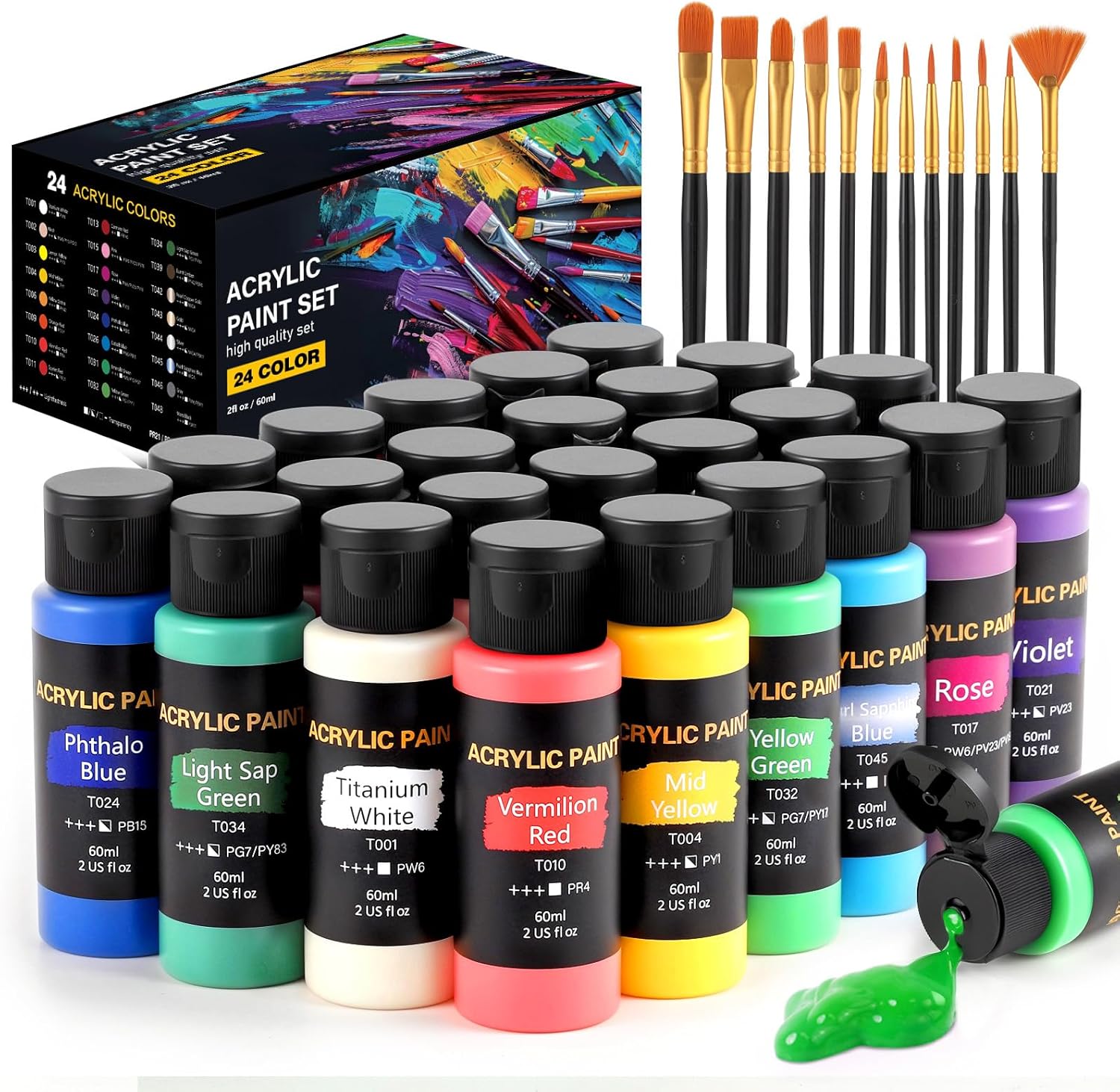
TMOL’s kit includes 24 colors in 60 ml bottles and 12 brushes, making it a ready-to-go option if you are painting a mix of surfaces in one project, for example a plastic planter with a wooden stand. The listing includes plastic among canvas, wood, rocks, glass, fabrics, metal and ceramic, and states ASTM D4236 conformance and soap-and-water cleanup.
As with any general craft acrylic, plastic success depends on preparation. The included brushes save you a separate purchase for small projects.
Best suited for: Crafters painting multi-material projects who want paint and brushes in one box.
Key features:
- 24 colors in 60 ml bottles
- 12 brushes
- Lists plastic, wood, glass, metal and more
- ASTM D4236, non-toxic
Pros:
- Brushes included
- Versatile across surfaces
- Fast drying for layering
Cons:
- Not plastic-specific
- Needs primer on slick plastic
- Finish not specified
Buying consideration: Use the flat brushes for smooth base coats on plastic and keep coats thin to avoid peeling.
5. Apple Barrel Vibrant Spectrum Collection — Best Budget Matte Craft Paint for Low-Wear Decor
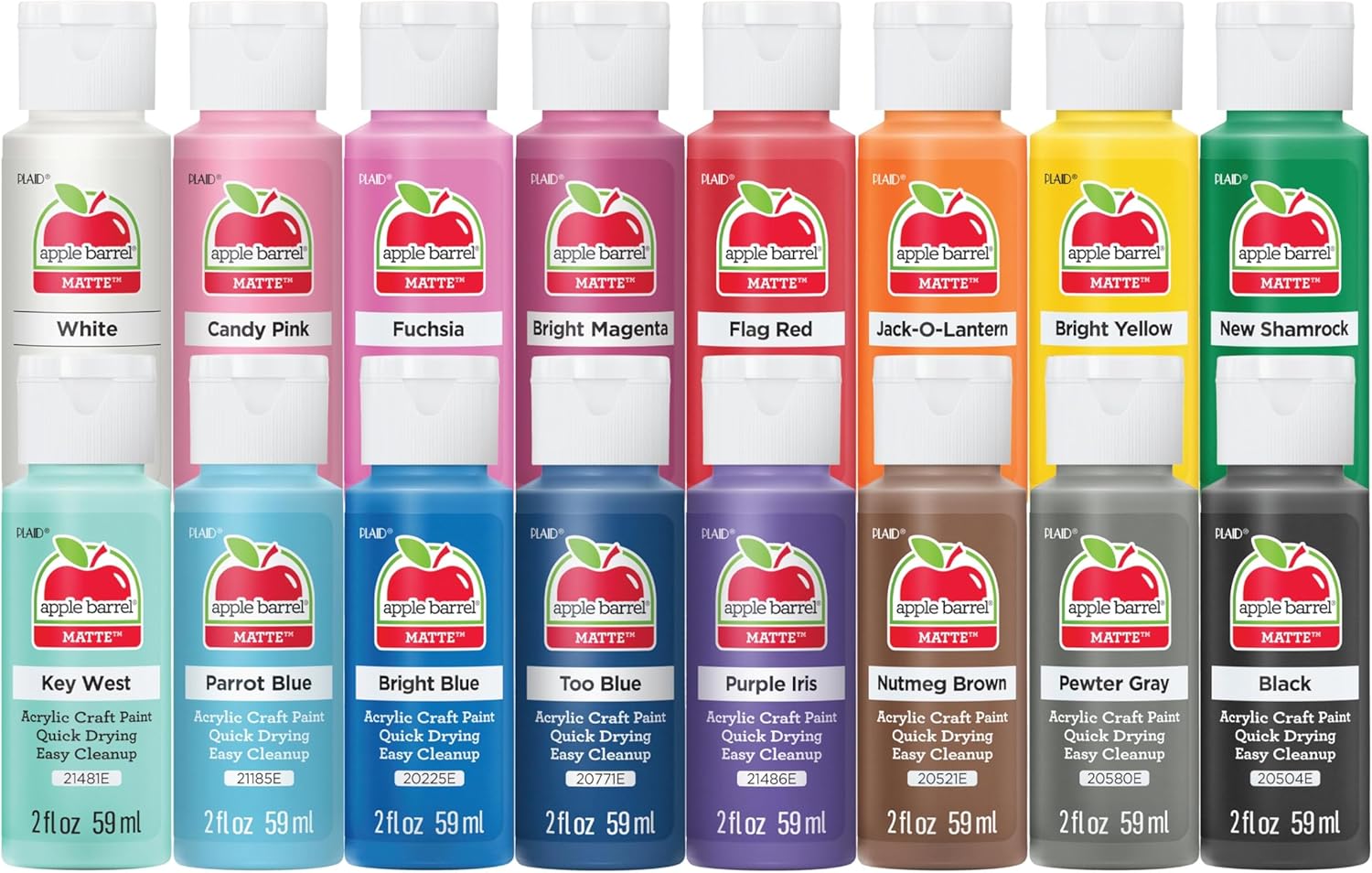
Apple Barrel’s 16-bottle set includes white, black, flag red, jack-o-lantern, bright blue, candy pink, nutmeg brown, bright yellow, new shamrock, purple iris, too blue, fuchsia, key west, pewter grey, bright magenta and parrot blue, each in 2 oz bottles. It dries matte and is made in the USA. The listed surfaces include wood, Styrofoam, plaster and terra cotta rather than hard plastic.
That makes it a good fit for foam crafts and for plastic decor that will mostly sit on a shelf, applied over primer and finished with a sealer. It is not the right choice for toys or anything that will be gripped and scrubbed.
Best suited for: Foam crafts, party decor and plastic pieces that will be displayed rather than handled.
Key features:
- 16 colors in 2 oz bottles
- Matte finish
- Brush, stamp, stencil or sponge
- Made in the USA
Pros:
- Very affordable
- Classic craft palette
- Works on foam surfaces
Cons:
- Hard plastic not listed
- Matte finish shows scuffs
- Requires primer and sealer on plastic
Buying consideration: Seal matte craft paint on plastic with a clear acrylic sealer to protect it from scuffs and moisture.
How to Paint Plastic So It Lasts
- Clean thoroughly. Wash with warm soapy water, rinse, dry, then wipe with rubbing alcohol to remove oils and mold-release agents.
- Scuff the surface. Lightly sand with fine sandpaper or a sanding sponge to give the paint something to grip, then wipe away dust.
- Prime if needed. Use a primer designed for plastic, especially with general craft acrylics or on heavily used items.
- Apply thin coats. Several thin coats bond and cure better than one thick coat.
- Wait between coats. FolkArt recommends one hour; other paints vary.
- Seal. A clear acrylic sealer protects color from scratches and moisture.
- Let it cure. Acrylic feels dry quickly but reaches full hardness over days to weeks; FolkArt states 30 days for its plastic paint.
Which Plastics Take Paint Best?
Plastic is not one material. Many items carry a recycling code inside a small triangle, which tells you what you are working with. Use it as a guide to how much preparation you will need.
| Code / plastic | Common craft items | How it takes paint |
|---|---|---|
| 1 PET | Clear bottles, clamshell packaging | Fair with cleaning, scuffing and primer |
| 2 HDPE | Milk jugs, sturdy tubs, some planters | Difficult; slick and flexible, needs a plastic-bonding primer |
| 3 PVC | Pipes, some toys and figures | Good after cleaning and light sanding |
| 4 LDPE | Squeeze bottles, soft lids | Poor; flexes and sheds paint |
| 5 PP | Food containers, outdoor chairs, storage bins | Difficult; use specialty primer and expect wear |
| 6 PS | Foam, rigid craft shapes, model kits | Good; avoid solvent sprays on foam, which can melt it |
| 7 Other (incl. ABS, acrylic) | Figurines, toy bricks, acrylic sheets | Generally good with prep |
If an item has no code, try a small test patch on the underside. Paint it, let it dry for a day, then press a piece of tape over it and pull it off. If the paint lifts with the tape, the surface needs more preparation or a dedicated primer before you paint the whole piece.
Buying Guide: How to Choose Paint for Plastic DIY Projects
Plastic-specific or general acrylic
Plastic-specific paint bonds better with less fuss. General acrylics give more colors but need primer and sealer.
Think about handling
Toys, bins and planters get handled and need the most durable approach. Decorative items on a shelf can get by with simpler methods.
Know your plastic
Hard plastics like ABS and acrylic accept paint more readily than flexible polyethylene or polypropylene, which may need a specialty primer.
Finish
Satin and semi-gloss look natural on plastic and resist scuffs; matte can look chalky and show wear.
Indoor or outdoor
Outdoor plastic faces sun and rain. Choose paint labeled for outdoor use and seal it.
Food and mouth contact
Craft paints are not food safe. Do not paint food-contact surfaces or toys young children may chew.
More DIY Painting Projects
If you are planning your first craft upcycle, start with our overview of what DIY painting projects are and how to plan one. The same prep-prime-paint-seal method applies to outdoor pieces like a painted birdhouse.
Common Mistakes to Avoid
- Painting straight onto glossy plastic without cleaning or scuffing.
- Applying one thick coat, which peels in sheets.
- Handling or washing pieces before the paint has cured.
- Painting flexible plastic that bends, which cracks rigid paint.
- Using craft paint on cups, plates or utensils.
- Skipping sealer on outdoor planters.
FAQs
What kind of paint sticks to plastic?
Paint formulated for plastic, such as FolkArt Paint for Plastic, bonds best. General acrylic paint can work over a plastic-bonding primer with a sealer on top.
Do I need to prime plastic before painting?
For general craft acrylic, yes. For plastic-specific paint, priming is optional but FolkArt recommends primer and sealer for heavily used items.
How long does paint take to cure on plastic?
It may be dry to the touch within an hour, but full cure takes much longer. FolkArt states 30 days for its plastic paint.
Can I use regular acrylic paint on plastic?
Yes, for decorative items, if you clean, scuff, prime and seal. Without prep, it is likely to scratch or peel.
How do I stop paint peeling off plastic?
Degrease with alcohol, sand lightly, use a primer for plastic, apply thin coats and seal.
Is painted plastic safe for kids’ toys?
Craft paints are labeled non-toxic but not food safe. Avoid painting toys young children may put in their mouths.
Final Recommendation
For plastic projects that will be handled, start with the FolkArt Paint for Plastic kit and follow its recoat and cure instructions; add single bottles like Black Olive for base coats. When you need more colors for decorative plastic, Artkey’s 24-color set and TMOL’s 24-color set with brushes work well over a primer with a clear sealer on top.
Apple Barrel’s Vibrant Spectrum set is a budget option for foam crafts and shelf decor. Before you commit to a big project, paint a test patch on the underside and try the tape test after a day; it takes a few minutes and tells you whether your prep is good enough. Whichever paint you choose, cleaning, scuffing, thin coats and patience will matter more than any label.