

PaintingProGuide is reader-supported. When you buy through links on this page we may earn an affiliate commission at no extra cost to you.
“Professional quality” on an oil paint box can mean almost anything. What actually separates artist oils from hobby sets is measurable: how much pigment is in the tube, whether each color uses the real pigment or a cheaper “hue” substitute, how clearly the maker labels lightfastness and transparency, and how the paint handles straight from the tube. The best oil paints for artists are the ones that give you that information and back it up with consistent, pigment-rich color.
This guide explains what to look for in artist oils, then compares six options sold on Amazon: Gamblin’s artist-grade introductory set, Winsor & Newton’s large 200 ml titanium white, two large-tube 50 ml sets from Paul Rubens and PHOENIX, and two broad budget sets for sketching and practice. We also cover where it is worth spending more and where student paint is perfectly fine.
Quick answer: For true artist-grade color, the Gamblin Artist Oil Colors Introductory Set is the strongest pick: nine 37 ml tubes from an established American artist-oil maker. Every painter should also own a large white, and Winsor & Newton Winton Titanium White 200 ml is labeled opaque, AA permanence and ASTM I lightfastness. If you want many colors in big tubes for a lower cost, the Paul Rubens 20 x 50 ml set is the value choice.
Our Top Picks at a Glance
- Gamblin Artist Oil Colors Introductory Set, 9 x 37 ml — Best artist-grade oil paint set
- Winsor & Newton Winton Oil, Titanium White 200 ml — Best large white for every palette
- Paul Rubens Oil Paint, 20 x 50 ml — Best value large-tube set
- PHOENIX Studio Oil Paint Set, 20 x 50 ml — Best alternative large-tube studio set
- Magicfly Oil Paint Set, 40 x 18 ml — Best wide palette for exploration
- RoseArt Premium Oil Paint, 24 Colors — Best budget sketching set
| Product | Best For | Key Spec | Key Strength | Price Tier |
|---|---|---|---|---|
| Gamblin Artist Oil Intro Set | Serious painters | 9 x 37 ml artist oils | Artist-grade pigment richness | $$$ |
| Winton Titanium White 200 ml | Every palette | 200 ml, opaque, ASTM I | Big, clearly labeled white | $$ |
| Paul Rubens 20 x 50 ml | Value with big tubes | 20 colors, 50 ml, linseed oil | Large volume per color | $$$ |
| PHOENIX Studio 20 x 50 ml | Studio practice | 20 colors, 50 ml | Tinting strength per listing | $$$ |
| Magicfly 40 x 18 ml | Exploring color | 40 colors incl. metallics | Very wide range | $$ |
| RoseArt Premium 24 | Sketching, practice | 24 colors | Lowest cost | $ |
How We Chose
We compared these paints using their Amazon listing details and specifications, checked in October 2026, how closely each matches what artists need from oil paint, and how widely each product is reviewed by Amazon buyers. We have not painted with these products for this guide. Where a listing gives specific ratings, such as transparency or lightfastness codes, we report them; where it does not, we say so.
- Pigment quality and labeling: clear pigment, lightfastness and permanence information.
- Tube size and value: artists use a lot of paint, especially white.
- Handling: consistency suited to brush and knife work.
- Maker reputation: established artist-paint makers ranked higher for core colors.
- Fit by role: serious work, studio practice, sketching.
What Makes an Oil Paint “Artist Grade”
Pigment load
Artist oils carry more pigment and less filler. You see it in tinting strength: a small amount of an artist-grade blue changes a pile of white much more than a student blue does. Higher pigment load means cleaner mixes and paint that goes further.
Real pigments, not just hues
Expensive pigments like cadmiums and cobalts are often replaced by “hue” mixtures in student lines. Hues can be perfectly usable, but they mix differently. Artist lines usually use the named pigment and price colors in series accordingly.
Labeling
Look for the pigment code (for example PW6 for titanium white or PB29 for ultramarine), a lightfastness rating such as ASTM I or II, and a transparency symbol. The Winton white below is a good example of clear labeling even in a value line.
Series pricing is a useful clue here. Artist lines price colors by the cost of the pigment, so a cadmium or cobalt costs noticeably more than an earth. A set where every color costs the same is usually using hues for the expensive ones.
Binder oil
Most oils use linseed oil, which dries relatively quickly and forms a strong film. Some whites and pale colors use safflower or poppy oil to reduce yellowing, with slower drying. Walnut oil is used by some makers as an alternative. Each affects drying time and handling.
Consistency
Artist oils range from stiff and buttery to soft and creamy, depending on maker. Neither is better; it depends on whether you favor impasto or smooth blending.
Best Oil Paints for Artists Reviewed
1. Gamblin Artist Oil Colors Introductory Set, 9 x 37 ml — Best for serious painters

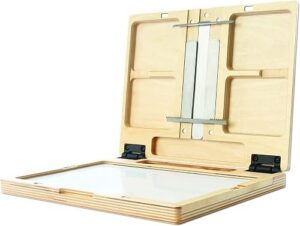
Gamblin is a well-established American maker of artist oils, and this introductory set packs nine 37 ml tubes of its artist line. The listing describes luscious, intense, pigment-rich colors that last, American made and sustainably produced, and mentions a handcrafted birch wood panel. The details list blue, ivory and white among the colors.
Nine artist-grade tubes is enough to build a real working palette, and 37 ml is the standard artist tube size. It is the only set here from an established artist-paint line, which is why it ranks first for serious work.
Best suited for: Committed painters who want genuine artist-grade paint and a starting palette they can expand color by color.
Key features:
- 9 artist oil colors, 37 ml each
- Gamblin Artist Oil line
- American made per listing
- Birch wood panel mentioned in listing
Pros:
- True artist grade
- Pigment-rich color
- Easy to replace individual colors later
Cons and limitations:
- Highest price tier
- Only nine colors
- Listing gives limited per-color detail
Buying consideration: Check the exact color list on the listing before buying, and plan to add a large white separately.
2. Winsor & Newton Winton Oil Color, Titanium White, 200 ml — Best for every palette

White is the color every oil painter runs out of first, often by a wide margin. This 200 ml tube is labeled Series 1, color code 644, opacity O (opaque), permanence AA (extremely permanent) and lightfastness ASTM I (excellent).
Titanium white is bright, opaque and strong. Pairing an artist-grade color set with a large, reliable white is a common way to control costs without compromising your palette.
Best suited for: All oil painters, whatever set they use.
Key features:
- 200 ml tube
- Opaque (O)
- Permanence AA
- Lightfastness ASTM I
Pros:
- Huge tube at low cost per ml
- Clear labeling
- Reliable brand
Cons and limitations:
- Student-grade line
- Very opaque, which can chalk mixes if overused
Buying consideration: For delicate mixes, use small amounts of titanium white; its strength can wash out color quickly.
3. Paul Rubens Oil Paint, 20 Colors x 50 ml — Best for value with big tubes

Paul Rubens offers 20 colors in 50 ml tubes, larger than standard 37 ml artist tubes. The listing describes high pigmentation with good covering power and tinting strength, refined linseed oil, a buttery consistency and excellent lightfastness, with colors chosen for landscape, seascape, portrait and still life.
For painters working large or painting frequently, more paint per tube matters. This set is a cost-effective studio supply, though it does not print per-color pigment or rating details in the listing.
Best suited for: Frequent painters, large-format work and studio practice on a budget.
Key features:
- 20 colors, 50 ml each
- Refined linseed oil
- High pigmentation per listing
- Buttery consistency
Pros:
- Large tubes
- Good value
- Broad palette
Cons and limitations:
- Per-color pigment information not shown in listing
- Not an established artist line
Buying consideration: Make a color chart with white tints to learn each color’s strength and transparency.
4. PHOENIX Studio Oil Paint Set, 20 x 50 ml — Best for studio practice

PHOENIX’s studio set also provides 20 colors in 50 ml tubes. The listing describes high color saturation, strong tinting strength and good permanence from finely ground pigments, thick and creamy consistency, and EN 71 and ASTM D-4236 certification.
It positions itself for beginners and amateurs learning color mixing, which is a fair description of a studio-grade paint.
Best suited for: Studio practice, color mixing study and larger paintings where volume matters.
Key features:
- 20 colors, 50 ml each
- Thick, creamy consistency
- EN 71 and ASTM D-4236 per listing
Pros:
- Large tubes
- Good for impasto and texture
- Clear safety conformance
Cons and limitations:
- Not artist grade
- Per-color details limited
Buying consideration: Compare its color list with Paul Rubens; choose the set whose colors match the palette you actually use.
5. Magicfly Oil Paint Set, 40 x 18 ml — Best for exploring color

Magicfly’s set includes 40 colors in 18 ml tubes, including metallic gold and silver, plus two extra white tubes. The listing notes ASTM D-4236 conformance, thick consistency and good coverage.
Forty ready-made colors are useful for exploration and decorative work, though most artists end up using a smaller palette.
Best suited for: Hobbyists and students who want a very wide range of colors to try.
Key features:
- 40 colors, 18 ml each
- Metallic gold and silver
- Extra white tubes
- ASTM D-4236 per listing
Pros:
- Huge range
- Metallics included
- Extra white
Cons and limitations:
- Small tubes
- Student quality
- More colors than most painters need
Buying consideration: Use it to discover your favorite colors, then buy those in artist grade.
6. RoseArt Premium Oil Paint, 24 Colors — Best for budget sketching

RoseArt’s set offers 24 colors, described in the title as maximum strength pigmented oils for casual to professional artists. The listing provides limited detail beyond the title.
At the lowest price tier here, it suits color sketches, quick studies and practice where you do not want to worry about wasting paint.
Best suited for: Sketching, practice studies and casual painting.
Key features:
- 24 oil colors
- Budget price tier
Pros:
- Lowest cost
- Good for practice
Cons and limitations:
- Limited product information
- Not artist grade
Buying consideration: Keep practice and final paintings separate: sketch with budget paint, finish with better paint.
Buying Guide: How to Choose Oil Paints as an Artist
Grade by role
Use artist grade for whites, key colors and finished work; student or studio grade for underpaintings, sketches and practice.
Read the label
Pigment codes, lightfastness and transparency ratings tell you how a color will behave and last.
Tube size
Buy white in 150 to 200 ml or larger. 37 to 50 ml is fine for most colors.
Limited palette first
A carefully chosen set of eight to twelve colors produces more harmonious work than a 40-color box.
Binder and drying
Linseed oil dries faster; safflower and poppy oils yellow less but dry slower. Choose based on your working method.
Consistency
Stiff paint suits impasto and knife work; softer paint suits blending and glazing with medium.
Safety
Some pigments, such as cadmiums and cobalts, require careful handling. Avoid ingestion and wash hands after painting.
Building an Artist Palette Color by Color
Many experienced painters never buy another large set after their first one. Instead, they replace tubes individually as they run out, upgrading the colors that matter most. A practical core palette to build toward looks like this:
| Color | Common Pigment | Why It Earns a Place |
|---|---|---|
| Titanium white | PW6 | Strong, opaque white for most mixes |
| Cadmium yellow light or a hue | PY35 or alternatives | Clean warm-to-neutral yellow |
| Yellow ochre | PY42 / PY43 | Natural earth for skin, landscapes and neutrals |
| Cadmium red light or a hue | PR108 or alternatives | Opaque warm red |
| Quinacridone rose or alizarin-type crimson | PV19 or similar | Cool, transparent red for purples and glazes |
| Ultramarine blue | PB29 | Warm blue for skies, shadows and darks |
| Phthalo blue or cerulean | PB15 / PB35 | Cool blue for greens and clear skies |
| Burnt sienna | PBr7 | Warm transparent earth for toning and glazing |
| Burnt umber | PBr7 | Dark earth for drawing, shadows and mixed darks |
Pigment codes vary slightly between makers, so treat the column as a guide rather than a rule. The habit worth building is reading the code on every tube you buy. Two paints both called “crimson” can contain completely different pigments and behave very differently in mixes.
A sensible upgrade path is to start with a studio or student set, then replace white first, followed by your two or three most used colors, with artist-grade tubes. Within a year of regular painting, most of your palette is artist grade, and you have spent money only on colors you actually use.
Common Questions About Oil Paint
Choosing paint often raises practical safety and handling questions. We answer the most common ones in separate guides: is oil paint flammable, is oil paint waterproof, and is oil painting hard to learn. To put your palette to work, our step-by-step still life guide is a good first project.
Common Mistakes to Avoid
- Buying a huge set of small tubes. You will run out of the colors you use and keep the ones you do not.
- Skimping on white. Buy the biggest tube you can.
- Ignoring labels. Hues and fugitive pigments behave differently.
- Mixing brands without testing. Consistency and drying vary.
- Assuming “professional” on the box means artist grade. Check the line and labels.
- Overusing titanium white. It can chalk mixes; use it sparingly in delicate color.
FAQs
What is the difference between artist and student oil paint?
Artist paint generally has more pigment, uses real pigments instead of hues, and labels lightfastness and transparency more clearly. Student paint is cheaper and fine for practice.
Which oil paint brand is best for artists?
Established artist lines such as Gamblin Artist Oil Colors are reliable choices. The best brand depends on your preferred consistency and palette.
Is it worth buying artist grade oil paint?
For whites, key colors and finished work, yes. For underpainting and practice, student grade is often enough.
What size tube of white should I buy?
At least 150 to 200 ml, since white is used in most mixes.
How do I know if an oil paint is lightfast?
Look for ASTM I or II ratings or the maker’s permanence rating on the tube or listing.
Can I mix oil paint brands?
Yes, oil paints are generally compatible. Test consistency and drying, and follow fat over lean.
Final Recommendation
For artist-grade work, choose the Gamblin Artist Oil Colors Introductory Set and add a Winton Titanium White 200 ml. For big tubes on a budget, the Paul Rubens and PHOENIX 50 ml sets serve studio practice and larger paintings. Use Magicfly to explore color and RoseArt for quick, low-cost sketches.




2 Comments