

PaintingProGuide is reader-supported. When you buy through links on this page we may earn an affiliate commission at no extra cost to you.
A paint brush restorer is a soaking solution or conditioner that softens dried paint trapped in the bristles and helps a stiff, misshapen brush regain its shape. It is the step you take when ordinary cleaning has failed: acrylic has hardened near the ferrule, the tip has splayed, or an old brush feels like a stick. Restorers fall into two groups, and knowing which one you need saves money. Dissolving restorers break down dried paint. Conditioning restorers reshape and soften brushes that are clean but tired.
Quick answer: For brushes with dried-on acrylic or oil, U.S. Art Supply Brush Cleaner and Restorer is the best restorer here: a soaking solution designed to soften dried paint so you can work it out. For fine detail brushes that are clean but have lost their point, Vallejo Brush Restorer or Trekell Brush Restorer and Preserver condition and reshape bristles. For one product that cleans and preserves after every session, The Masters Brush Cleaner and Preserver remains the classic.
What a Brush Restorer Can and Cannot Do
It can
- Soften paint that has partly or fully dried in the bristles so it can be combed or rinsed out.
- Loosen buildup near the ferrule that makes bristles splay outward.
- Condition synthetic and natural hair so it feels softer and forms a point again.
- Extend the useful life of brushes that would otherwise be thrown away.
It cannot
- Regrow bristles that have broken off or been cut.
- Fix a loose ferrule or cracked handle.
- Reliably save a brush whose bristles are permanently bent from years of standing on its tip.
- Instantly dissolve thick, fully cured acrylic; that may take several soaks.
How to Restore a Paint Brush, Step by Step
- Assess the damage: is the problem dried paint, a splayed tip, or both?
- Remove loose paint: flex the bristles gently and rinse in warm water.
- Soak only the bristles: suspend the brush in restorer so the solution reaches the ferrule but the handle stays dry. A clip or a brush holder across the jar helps.
- Wait: minutes for fresh buildup, hours for older dried paint. Follow the product’s directions; some suggest overnight for fully dried acrylic and oil.
- Work the paint out: comb from ferrule to tip with an old toothbrush, a fine comb or your fingers. Never pull bristles outward.
- Repeat if needed: stubborn brushes may need a second soak.
- Wash: clean with brush soap and water to remove restorer and loosened paint.
- Condition and reshape: apply a conditioner, form the tip with your fingers, and let the brush dry flat or bristles down.
Reshaping tips
- Synthetic bristles with a bent tip: dipping briefly in hot (not boiling) water can relax synthetic fibers, then reshape and let cool.
- Natural hair: avoid hot water, which can damage hair; use conditioner and reshape gently.
- Holding the shape: a little brush shaper, conditioner or diluted gum arabic can hold the point while the brush dries; rinse before the next use.
- Splayed flats: wrap the damp bristles in a strip of paper towel to dry in the right shape.
Why Brushes Need Restoring in the First Place
Most ruined craft brushes fail for the same few reasons, and knowing them helps you avoid needing a restorer at all.
- Acrylic drying in the ferrule: acrylic dries fast, and paint that creeps up to the base of the bristles hardens there first. As it builds up, it pushes the bristles apart.
- Standing brushes in water: resting a brush on its tip in a water jar bends the bristles and soaks the handle.
- Using good brushes for glue and sealers: Mod Podge, PVA glue and varnish are harder to remove than paint.
- Scrubbing technique: dry-brushing and stippling with soft brushes wears and splays them.
- Drying upright while wet: water runs into the ferrule and weakens the glue.
Prevention routine
Rinse brushes every few minutes during acrylic sessions, keep paint on the front two-thirds of the bristles, wash with a brush cleaner at the end of every session, reshape the tip and dry flat. Keep a separate set of cheap brushes for glue, sealer, glitter and texture paste. A preventive cleaner used consistently will save more brushes than any restorer.
When to Restore and When to Replace
| Problem | Restore? | Notes |
|---|---|---|
| Dried paint in the bristles | Yes | Soak in a restorer; may need several rounds |
| Splayed tip from buildup at the ferrule | Usually | Remove the buildup and bristles often fall back into shape |
| Hooked tip on a synthetic brush | Often | Hot water and reshaping |
| Missing or broken bristles | No | Repurpose for texture or glue |
| Loose ferrule | Partly | Re-glue the ferrule; restorer will not help |
| Worn-down detail brush | No | Retire it to stippling or texture work |
Detail brushes are the ones most worth saving. If you are not sure which sizes deserve rescue, our guides to using a liner brush for detail work and choosing a brush size for detailed acrylic work explain which brushes do the most work in a craft kit.
Our Top Picks at a Glance
- U.S. Art Supply Brush Cleaner and Restorer, 4 oz — Best for dried-on paint
- Vallejo Brush Restorer, 2.87 fl oz — Best for miniature and detail brushes
- Trekell Brush Restorer and Preserver, 4 oz — Best conditioning restorer
- The Masters Brush Cleaner and Preserver, 2.5 oz — Best everyday clean-and-preserve
- Green Piece Paint Brush Cleaner and Restorer, 18 oz — Best natural, citrus-based option
| Product | Best For | Key Spec | Key Strength | Price Tier |
|---|---|---|---|---|
| U.S. Art Supply Restorer | Dried acrylic and oil | 4 oz soaking solution | Also cleans airbrushes and tools | $ |
| Vallejo Brush Restorer | Miniature and detail brushes | 2.87 fl oz, soak a few minutes | Restores shape and fine point | $ |
| Trekell Restorer and Preserver | Conditioning and reshaping | 4 oz liquid conditioner, unscented | Non-toxic, non-flammable per listing | $ |
| The Masters, 2.5 oz | Everyday care | Solid cleaner and preserver | Oils, acrylics, watercolor, varnish | $ |
| Green Piece Restorer | Natural option | 18 oz, fruit extracts and minerals | Cleans wet or dry paint | $$ |
How We Chose
These restorers were compared using Amazon listing details checked in October 2026, focusing on whether each product is designed to dissolve dried paint, condition and reshape bristles, or both; which paints and brush types it suits; and how clearly it explains its use. We also considered how widely each product is reviewed by Amazon buyers. We have not tested these restorers; details come from the listings. A contractor-style brush and roller cleaner and a smaller size of The Masters were left out of the main picks.
- Restoration type: dissolving, conditioning or both.
- Paint coverage: acrylic, oil, watercolor, gouache, ink.
- Brush safety: suitable for synthetic and natural hair.
- Directions: clear soaking and reshaping guidance.
- Safety: non-toxic, low-odor claims.
Best Paint Brush Restorers for Painting Crafts Reviewed
1. U.S. Art Supply Brush Cleaner and Restorer, 4 oz — Best for Dried-On Paint

U.S. Art Supply’s solution is designed to restore brushes with dried-on acrylic, oil, gouache, inks and water-based paints. The directions are to soak brushes as needed, then remove the softened residue with a wipe, knife or toothbrush. The listing says it cleans paint within minutes to hours for dried paint, with longer soaks for brushes loaded with fully dried acrylic and oil.
It also cleans airbrushes: spray it through between color changes, or soak affected parts overnight for dried paint, without soaking the whole airbrush.
Best suited for: Crafters with brushes they were about to throw away because of dried paint.
Key features:
- 4 oz bottle
- For dried acrylic, oil, gouache, inks
- Soak-and-comb method
- Also for airbrushes and tools
Pros:
- Targets dried paint specifically
- Clear directions
- Low price tier
Cons and limitations:
- Fully dried paint may need long or repeated soaks
- Not a conditioner on its own
- Small bottle for big rescues
Buying consideration: Follow the soak with brush soap and a conditioner to replace oils the solution removes.
2. Vallejo Brush Restorer, 2.87 fl oz — Best for Miniature and Detail Brushes
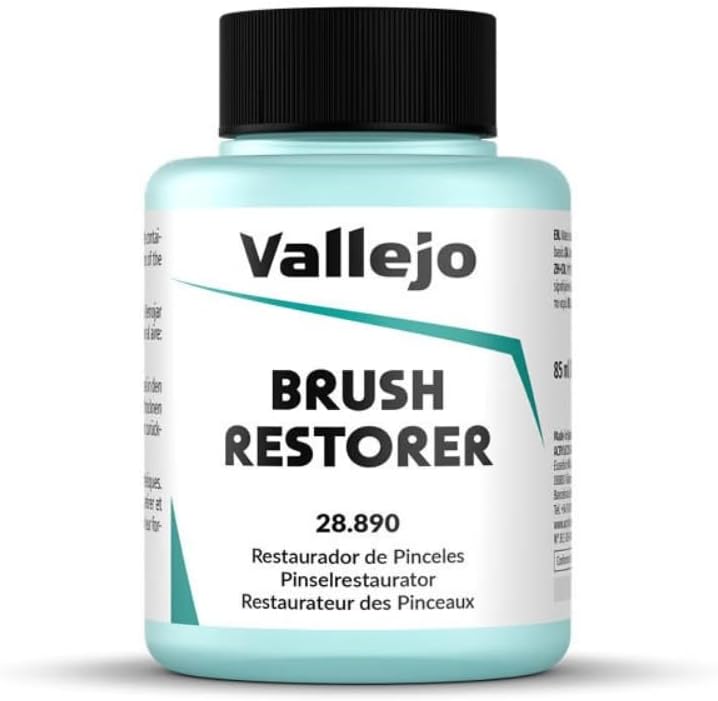
Vallejo, a major miniature paint brand, makes this restorer for brushes used with acrylics, watercolors, gouache and other water-based paints. The listing says to soak the brush for a few minutes, remove it and let it air dry, and that the conditioning formula helps restore flexibility and the original shape and fine point.
It is compatible with sable, synthetic and mixed-fiber brushes, and is aimed at painters who rely on fine detail brushes that become stiff, frayed or misshapen.
Best suited for: Miniature painters and crafters with fine detail brushes.
Key features:
- 2.87 fl oz bottle
- Short soak, then air dry
- For sable, synthetic and mixed fibers
- Water-based paints
Pros:
- Focused on shape and point
- Quick routine
- Trusted hobby brand
Cons and limitations:
- Water-based paints only
- Small bottle
- Not designed for heavy oil buildup
Buying consideration: Restore detail brushes as soon as the point starts to fail rather than waiting for them to become unusable.
3. Trekell Brush Restorer and Preserver, 4 oz — Best for Conditioning and Reshaping

Trekell’s liquid restorer conditions and reshapes natural and synthetic brushes. The recommended routine is to wash first with brush soap and water, then dip the clean bristles into the solution, massage it in with your fingers, shape by hand or with a brush shaper, and let dry.
The listing describes it as low-vapor, non-toxic, biodegradable, water-soluble, non-flammable and non-abrasive. This unscented version is noted as not fully odorless. Trekell says its supplies are produced in the USA.
Best suited for: Painters who want to keep good brushes in top shape between sessions.
Key features:
- 4 oz liquid
- Conditions and reshapes
- For acrylic, watercolor and oil brushes
- Non-toxic, non-flammable per the listing
Pros:
- Excellent for maintaining expensive brushes
- Simple dip-and-shape routine
- Low-vapor formula
Cons and limitations:
- Not a paint dissolver; clean first
- Mid price tier
- Mild scent even in unscented version
Buying consideration: Use it after every deep clean on your best detail brushes to keep the point sharp.
4. The Masters Brush Cleaner and Preserver, 2.5 oz — Best for Everyday Care

The Masters is General Pencil Company’s long-established cleaner and preserver. The listing says it removes oils, acrylics, watercolors, stains and varnishes in one step and suits sable, bristle and synthetic brushes.
It is preventive rather than a soak-style restorer: using it regularly stops buildup forming, which is the best way to avoid needing a restorer in the first place. The 1 oz size listing adds that letting it sit on a brush for up to several hours can lift old dried paint.
Best suited for: Every painter, as a regular cleaning and preserving step.
Key features:
- 2.5 oz solid cleaner
- Cleans and preserves in one step
- Oils, acrylics, watercolor, varnish
- Safe for natural and synthetic hair
Pros:
- Prevents buildup
- Works across media
- Long-lasting
Cons and limitations:
- Slower than soaking for heavy dried paint
- Solid format for large batches
- Mid price tier
Buying consideration: For a stubborn brush, work a lather into the bristles and leave it for an hour or two before rinsing.
5. Green Piece Paint Brush Cleaner and Restorer, 18 oz — Best for a Natural Option

Green Piece describes its 18 oz cleaner and restorer as made from fruit extracts and minerals, biodegradable and free of paint thinner or turpentine. The listing says it removes wet or dry acrylic, latex, oil and shellac and is safe to use on hands.
It also keeps brushes soft and conditioned, according to the listing, and doubles as a cleaner for tools, desks and paint stains on clothes. It has a citrus scent and is made in the USA.
Best suited for: Crafters who want a natural, solvent-free restorer and multipurpose cleaner.
Key features:
- 18 oz bottle
- Fruit extracts and minerals
- Wet or dry paint
- Safe for hands per the listing
Pros:
- Large bottle
- Solvent-free
- Multipurpose cleaner
Cons and limitations:
- Highest price tier
- Citrus scent not for everyone
- Bold claims; test on one brush first
Buying consideration: Test on an inexpensive brush before soaking your best natural-hair brushes.
Buying Guide: How to Choose a Paint Brush Restorer
Dissolve or condition
Dried paint needs a dissolving restorer. A clean brush with a lost point needs a conditioner. Many painters keep one of each.
Paint type
Check that the restorer covers the paint in your brushes: acrylic, oil, gouache, ink or watercolor.
Brush type
Natural hair is more delicate than synthetic. Choose products that state they are safe for sable and natural fibers.
Soaking time
Older, harder paint needs longer soaks. Plan for overnight soaks for badly neglected brushes.
Odor and safety
Non-toxic, low-odor, water-soluble formulas are easier to use at home and with kids nearby.
Value
Small bottles suit occasional rescues. Daily painters benefit from larger bottles or a preventive cleaner like The Masters.
Common Mistakes to Avoid
- Soaking the whole brush, which swells the handle and loosens the ferrule.
- Pulling bristles outward while combing out paint.
- Using hot water on natural hair.
- Skipping the wash after a restorer soak, leaving residue in the bristles.
- Expecting one soak to remove years of buildup.
- Using a harsh paint stripper meant for house painting tools on fine art brushes.
FAQs
Can you restore a paint brush with dried acrylic paint?
Often, yes. Soak the bristles in a restorer designed for dried paint, then comb the softened paint out from ferrule to tip. Older paint may need several soaks.
How long should I soak a brush in restorer?
Follow the product directions. Fresh buildup may take minutes; dried acrylic or oil can take hours or an overnight soak.
How do I fix a splayed paint brush?
Remove any paint buildup at the ferrule with a restorer, wash, then reshape and let it dry wrapped in paper or with a brush shaper. Synthetic tips can be relaxed with a brief hot-water dip.
Is a brush conditioner the same as a restorer?
Not exactly. Restorers often dissolve dried paint; conditioners soften and reshape clean bristles. Some products do both.
Can I use household cleaners to restore brushes?
Mild soap works for routine cleaning, but harsh household or contractor cleaners can damage fine brushes. Use art-specific restorers for good brushes.
When should I throw a brush away?
When bristles are missing or broken, the ferrule is loose and cannot be re-glued, or the shape will not return after restoration. Old brushes can still be used for glue or texture.
Final Recommendation
Use U.S. Art Supply Brush Cleaner and Restorer for brushes with dried paint, Vallejo Brush Restorer for miniature and detail brushes, and Trekell to condition and reshape good brushes after cleaning. Keep The Masters on hand to prevent buildup in the first place, and choose Green Piece if you want a natural, solvent-free option. With a good restorer and a steady cleaning habit, most craft brushes can be kept in service far longer than you might expect.




