Choosing the right paint brush set can improve your acrylic painting experience. The right paint brush sets for acrylics help you create smooth strokes and fine details easily.
Acrylic painting needs brushes that hold paint well and keep their shape. Different brush shapes and sizes serve different painting needs. Sets with wooden handles and synthetic bristles offer durability and comfort. Some sets include extra tools like palette knives and sponge for more effects.
Whether you paint on canvas, fabric, or wood, quality brushes make a big difference. This guide covers top paint brush sets that fit beginners and professionals. These sets also work well for oil and watercolor painting. Find brushes that match your style and skill level for the best results in your acrylic art projects.
Top Paint Brush Sets for Acrylics
Why Choose Specialized Sets?
Specialized paint brush sets for acrylics are designed to enhance your painting techniques by providing the right tools for the medium. These sets often include a variety of brush shapes and sizes to accommodate different styles and preferences.
paint brushes Set Of 24 Pieces Wooden Handles Brushes

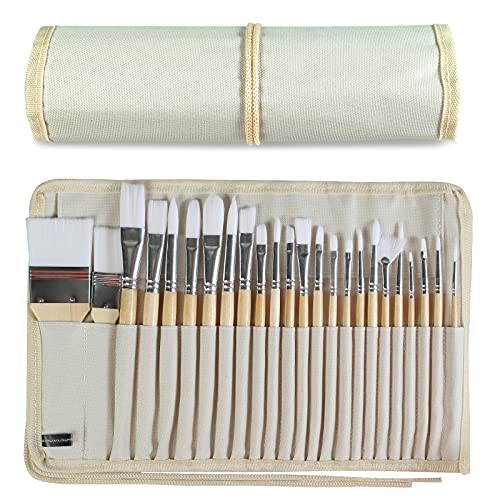
The Paint Brushes Set of 24 Pieces with Wooden Handles and a Canvas Brush Case is ideal for both beginner and professional artists who work with oil, acrylic, and watercolor painting. If you are looking for a comprehensive, versatile, and durable brush set to enhance your creative projects, this set by KEVIN&SASA CRAFTS is designed to meet your artistic needs.
Pros and Cons of the 24-Piece Set
Pros:
- Includes 24 brushes in various shapes and sizes, providing versatility for different painting techniques.
- Durable wooden handles offer comfort and control during extended use.
- Comes with a canvas brush case for organized storage and easy transportation.
- Suitable for multiple mediums: oil, acrylic, and watercolor paints.
- Compact and lightweight design with dimensions 9.6 x 3.9 x 2.0 inches and weighing only 1.0 pound.
Cons:
- Brushes may require careful cleaning to maintain quality over time.
- Multicolor bristles might not appeal to those preferring a uniform look.
- The set may be overwhelming for absolute beginners due to the variety of brush types.
Features of the KEVIN&SASA CRAFTS Set
This 24-piece paint brush set from KEVIN&SASA CRAFTS offers a wide range of brush types, including flat, round, filbert, and detail brushes, allowing artists to experiment with different strokes and textures. The wooden handles are ergonomically designed to provide a comfortable grip, reducing hand fatigue during long painting sessions. Additionally, the inclusion of a canvas brush case keeps all brushes organized and protected, making it convenient for artists who travel or attend classes.
The brushes are crafted to work seamlessly with oil, acrylic, and watercolor paints, ensuring versatility for various art projects. This means users can switch between mediums without needing separate brush sets. The lightweight and compact dimensions make it easy to handle and store, while the quality materials ensure durability and longevity. Overall, this set is a reliable choice for artists seeking professional-level tools that enhance precision and creativity in their work.
To buy this product, click here.
Why Acrylic Is Hard on Brushes
Acrylic paint is liquid plastic. Once it dries in the heel of a brush, inside the ferrule where you cannot see it, it sets solid and forces the hairs permanently apart. This is why acrylic painters go through brushes faster than oil painters, and why a brush that looks fine from the outside can suddenly stop holding an edge. The damage happened weeks earlier, out of sight.
The second issue is abrasion. Acrylic is often worked on a textured, absorbent surface and scrubbed rather than laid on, which wears the tips. Natural hair does not cope well with either problem. Modern synthetic filaments were developed in large part for acrylic and they handle both: they are unaffected by the paint chemistry, they resist abrasion and they keep their spring.
Choosing Brushes for Acrylic Painting
Firm synthetics for heavy body paint
Heavy body acrylic holds the mark of the brush, so you want enough stiffness to move it and enough spring to keep the shape. Stiff synthetic filaments, sometimes sold as bristle substitutes, are the workhorse for this.
Soft synthetics for fluid work and glazing
Fluid acrylics, glazes and smooth blending need a softer head that does not leave stroke marks. Soft synthetic mops, rounds and flats do this without the maintenance burden of sable.
Larger sizes than you think
Acrylic dries fast, so covering an area quickly is a real advantage. Most beginners work far too small. A large flat or a wide hake speeds up the underpainting enormously and improves the finished result by keeping it from being overworked.
Synthetic sable blends for detail
For fine work, a good synthetic sable blend comes to a point almost as well as natural sable and survives acrylic. It is the sensible compromise for detail brushes that will see daily use.
Keep separate brushes for gesso and texture
Gesso, modelling paste and heavy gels destroy brushes quickly. Keep a cheap set for them. It costs very little and it doubles the life of the brushes you care about.
Cleaning Routine That Actually Works for Acrylic
Rinse the brush the moment you put it down, every time, not at the end of the session. Keep a pot of water on the table purely for parking brushes, resting on a rack so the tip never touches the bottom. Those two habits prevent most acrylic brush deaths.
At the end of a session, wash with lukewarm water and a mild soap or a brush cleaner, working the lather into the base of the hairs until no colour comes out. If acrylic has already hardened, a dedicated acrylic brush restorer will sometimes soften it enough to comb out; ordinary solvents will not, and hot water sets it harder. Reshape while damp and dry flat or hanging bristles down so water does not run into the ferrule.
Frequently Asked Questions
What kind of brush is best for acrylic paint?
Synthetic filaments. They are unaffected by acrylic chemistry, resist abrasion and keep their spring, while natural hair is damaged by acrylic drying inside it.
Why do my acrylic brushes splay out?
Because paint has dried in the heel of the ferrule where you cannot see it, forcing the hairs apart. Wash the base of the hairs, not just the tip, and rinse the brush as soon as you put it down.
Can I save a brush with dried acrylic in it?
Sometimes, with a dedicated acrylic brush restorer that softens the film enough to comb out. Ordinary solvents do not work and hot water sets the acrylic harder.
Should I use the same brushes for gesso and painting?
No. Gesso, pastes and heavy gels wear brushes out quickly. Keep a cheap set for them and your painting brushes will last far longer.