
PaintingProGuide is reader-supported. When you buy through links on this page we may earn an affiliate commission at no extra cost to you.
An encaustic palette is not a plastic tray. Encaustic paint is pigmented beeswax, usually mixed with damar resin, and it is solid at room temperature. To paint with it, you need a heated surface that keeps the wax molten while you mix and load your brush. So the best wax palette for encaustic painting is a flat, evenly heated metal surface with reliable temperature control, or, for some methods, a small temperature-controlled iron that acts as both palette and painting tool.
This guide explains what makes a good encaustic palette, the main setups painters use, and which supplies on Amazon fit each approach. The Amazon results for this search were mostly wax, mediums and starter kits rather than dedicated heated palettes, so we focus on the kits and materials that genuinely support a wax palette workflow, and we say clearly where you will need to source the heated surface separately.
Quick answer: For beginners who want everything in one box, the Encaustic Art Starter Kit is the most complete pick because it includes a temperature-dial painting iron that melts wax directly, so you do not need a separate hot palette to start. If you plan to work with brushes on a traditional heated palette, the R&F Encaustic Starter Kit gives you pigmented paints and tools to use on it. Add a 1-pound bag of R&F or Jacquard encaustic medium for glazing and building layers.
Our Top Picks at a Glance
- Encaustic Art Starter Kit with Painting Iron — Best all-in-one kit with its own heat source
- R&F Encaustic Starter Kit 1941 — Best starter paints for a traditional heated palette
- Mercurius Encaustic Art Wax, 16 Block Colors — Best wax color set for iron, stylus or hotplate
- R&F Handmade Paints Encaustic Medium, 1 lb — Best medium for transparency and layering
- Jacquard Encaustic Medium, 1 lb Bag — Best easy-to-measure pellet medium
- Jacquard Dorland’s Wax Medium with Palette Knife — Best no-heat cold wax alternative
| Product | Best For | Key Spec | Key Strength | Price Tier |
|---|---|---|---|---|
| Encaustic Art Starter Kit | Complete beginner setup | Iron, 16 wax blocks, 40 cards, stylus | Temperature dial on the iron | $$$ |
| R&F Encaustic Starter Kit | Brush painting on a hot palette | Pharmaceutical grade beeswax paints | Includes Ampersand Encausticbord | $$$ |
| Mercurius 16 Wax Blocks | Expanding your colors | Melting point about 149°F | Works with iron, stylus or hotplate | $$ |
| R&F Encaustic Medium | Glazing and layering | Beeswax and damar, 1 lb | Extends colors and aids hardening | $$ |
| Jacquard Encaustic Medium | Measured batches | Pellets, 1 lb | Easy to portion on the palette | $$ |
| Dorland’s Wax Medium | Wax look without heat | 4 oz plus palette knife | Mixes with oils and pigments | $$ |
What a Wax Palette for Encaustic Painting Actually Is
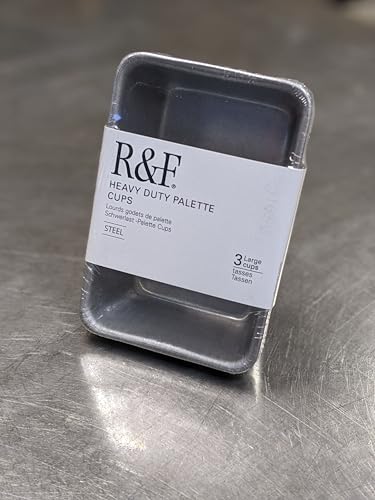
In encaustic painting, the palette does two jobs. It is your mixing surface, and it is the heat source that keeps your paint liquid. Most painters use a flat aluminum or steel plate heated from below. Cakes of encaustic paint sit in small metal tins on the plate or are melted directly on its surface, and brushes rest on the plate between strokes so the wax in the bristles stays soft.
A good heated palette has four characteristics:
- Even heat: no hot spots that scorch wax while other areas stay solid.
- Adjustable temperature: encaustic suppliers commonly recommend working around 200°F and warn against going much higher, because overheated wax and resin can smoke and degrade.
- A flat, durable surface: anodized aluminum is common because it heats evenly and cleans easily.
- Enough area: room for tins of color, a mixing zone and a spot to rest brushes.
Dedicated encaustic palettes are made by specialist suppliers. Many painters start with a thermostatically controlled electric griddle or pancake pan and a surface thermometer, adding a sheet of aluminum on top if needed. Whatever you use, keep it dedicated to art; never return it to cooking.
Three Ways to Set Up an Encaustic Palette
Hot palette with brushes
This is the traditional studio setup. Paint cakes melt in tins on the heated plate, you mix on the open surface, and you apply wax with natural-bristle brushes. Each layer is then fused with a heat gun or torch so it bonds to the layer below. It suits painters who want brush marks, layered glazes and larger panels.
Painting iron as palette
Some systems replace the palette with a small, temperature-controlled iron. You touch a wax block to the hot soleplate, the wax melts onto it, and you glide the iron across card or board. Colors mix right on the iron. It is compact and beginner-friendly, and it is the method used by the Encaustic Art kit below.
Cold wax: no heated palette at all
Cold wax medium is a soft, paste-like wax that you mix with oil paint on an ordinary palette using a palette knife. It is not true encaustic, but it gives a waxy, matte, layered look without heating equipment. It suits painters who cannot set up ventilation and heat in their space.
How We Chose
We did not melt or paint with these products. The selection reflects the Amazon listing details and specifications checked in October 2026, how well each product supports a heated wax palette or a practical alternative, and how widely each product is reviewed by Amazon buyers. We excluded a plastic acrylic mixing palette that appeared in the results, because plastic is not suitable as a heated encaustic surface.
- Compatibility with heat: products made for encaustic or for a defined alternative method.
- Completeness: whether a beginner can start with what is in the box.
- Wax quality signals: stated beeswax grade, resin content and origin.
- Melting behavior: stated melting point or method of use.
- Value for the amount of wax: using price tiers rather than exact prices.
Best Supplies for Your Encaustic Wax Palette Reviewed
1. Encaustic Art Starter Kit with Painting Iron — Best All-in-One Kit

This is the only product here that includes its own heat source. The Encaustic Art kit contains a painting iron with a temperature dial, created specifically for this line, plus 16 wax blocks, 40 heavy 300gsm cards, a booklet and a scribing tool. The iron effectively becomes your palette: you melt wax directly on the soleplate and mix colors there.
The wax is hand-poured in Germany and described as non-toxic, with no resins, and the listing says ventilation is not required. The 300gsm cards are described as non-absorbent and wipeable.
Best suited for: complete beginners, small-format work and painters who want to try encaustic without building a hot-palette setup.
Key features:
- Temperature-controlled painting iron
- 16 wax blocks
- 40 heavy 300gsm cards
- Scribing tool and booklet
- German hand-poured wax, no resins
Pros:
- Everything needed to start
- No separate heated palette required
- Compact enough for a kitchen table
Cons:
- Iron technique differs from brush encaustic
- Card format limits size
Buying consideration: If you later move to brushes and panels, you will still need a dedicated heated palette.
2. R&F Encaustic Starter Kit 1941 — Best Paints for a Traditional Hot Palette

R&F is a long-established American encaustic paint maker, and this starter kit is built around its handmade paints. The listing says it is assembled with pure pharmaceutical grade beeswax, includes vividly pigmented palette colors and the tools needed to begin, and features Ampersand’s Encausticbord, a panel made for encaustic.
The listing does not specify that a heated palette is included, so plan to supply your own heated surface. Once you have one, this kit gives you quality paints and a proper painting support to start building layers.
Best suited for: painters committed to brush-based encaustic who will set up a heated palette.
Key features:
- Pharmaceutical grade beeswax paints
- Palette colors and starter tools
- Ampersand Encausticbord included
- Made in the USA
Pros:
- Respected encaustic paint maker
- Includes a rigid encaustic panel
- Instructions for beginners
Cons:
- Heated palette not listed as included
- Listing does not detail the number of colors
Buying consideration: Budget for a heated palette, a thermometer and a heat gun alongside this kit.
3. Mercurius Encaustic Art Wax, 16 Block Colors — Best Wax Color Set

Mercurius’ 16-block set is a basic color selection of hand-poured German wax blocks sized to hold in your hand. The listing says they are made for use with an iron, stylus or hotplate, and lists a melting point of about 149°F (65°C) with no mixing needed.
That relatively low melting point means the blocks melt quickly on a hot surface. The listing describes the wax as non-toxic and safe with or without ventilation.
Best suited for: painters using the iron method who want more colors, or anyone adding wax blocks to a hotplate setup.
Key features:
- 16 pigmented wax blocks
- Melting point about 149°F
- For iron, stylus or hotplate
- Hand-poured in Germany
Pros:
- Lower price tier than full kits
- Handheld block size
- Melts quickly
Cons:
- No heat source included
- Different formulation from resin-based encaustic paints
Buying consideration: Pairs naturally with the Encaustic Art iron kit; mixing with resin-based paints may give different hardness.
4. R&F Handmade Paints Encaustic Medium, 1 lb — Best Medium for Layering

Encaustic medium is the unpigmented base of encaustic paint: beeswax plus damar resin. R&F’s 1-pound bag uses pure USP beeswax and damar, which the listing says extends colors and allows hardening. It is used to create transparency, for glazing and for collage and sculptural applications.
On a heated palette, you melt medium in its own tin and mix it into colors to make them more transparent, or brush it on as clear layers between colors.
Best suited for: painters building translucent layers and embedding collage.
Key features:
- USP beeswax and damar resin
- 1 lb bag
- For transparency, glazing and collage
- Made in the USA
Pros:
- Core encaustic material
- Damar helps the surface harden
- Use as much or as little as needed
Cons:
- Requires a heated palette
- Ventilation advisable when heating resin
Buying consideration: Keep a dedicated tin of medium on your palette so it is always ready to clear or extend colors.
5. Jacquard Encaustic Medium, 1 lb Bag — Best Pellet Medium
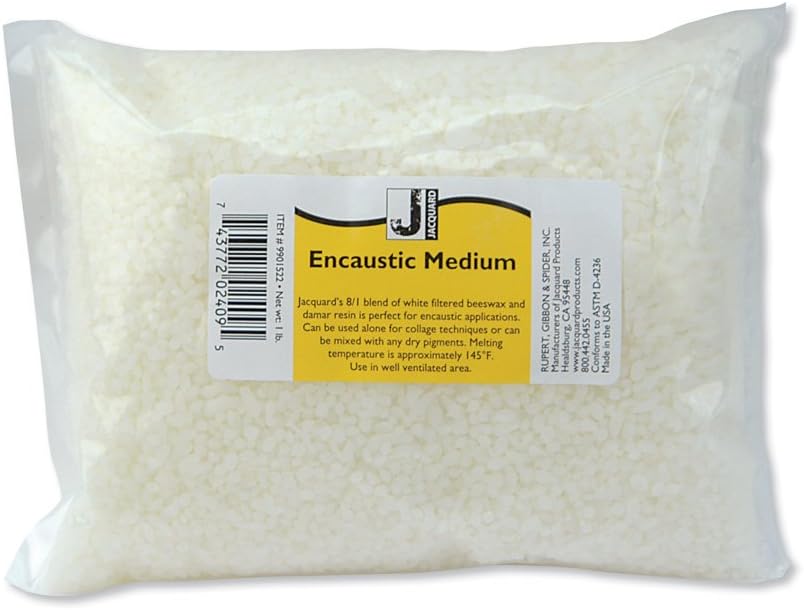
Jacquard’s medium is a blend of beeswax and damar resin in pellet form. Pellets are easy to measure out, which matters on a heated palette where you want to melt just enough for a session without overfilling tins.
The listing says it can be mixed with any encaustic paints and is intended for encaustic applications. The 1-pound bag weighs 1.06 pounds.
Best suited for: painters who prefer measured pellets over breaking chunks off a block.
Key features:
- Beeswax and damar resin blend
- Pellet form
- 1 lb bag
- Mixes with encaustic paints
Pros:
- Easy portioning
- Melts evenly in tins
Cons:
- Requires a heated palette
- Listing is brief on resin ratio
Buying consideration: Either this or the R&F medium covers the same role; choose based on form and availability.
6. Jacquard Dorland’s Wax Medium with Palette Knife — Best No-Heat Alternative

If a heated palette is not practical in your space, cold wax is the closest alternative. This bundle pairs Jacquard’s 4 oz Dorland’s Wax Medium with a Moshify palette knife. The listing describes it as a cold wax medium that mixes with oil paints, powdered pigments, colored sands and dyes.
It is also described as a sealer that protects watercolor paintings against water and humidity, and as a way to add richness to oil paintings. You mix it on an ordinary palette with the knife, no heat required.
Best suited for: painters who want a wax look without heated equipment.
Key features:
- 4 oz cold wax medium
- Palette knife included
- Mixes with oils and dry pigments
- Doubles as a protective sealer
Pros:
- No heated palette needed
- Versatile across media
- Lower equipment cost
Cons:
- Not true encaustic
- 4 oz goes quickly on larger works
Buying consideration: Choose this if heat and ventilation are the barriers; choose true encaustic if you want fused, luminous layers.
Buying Guide: How to Choose an Encaustic Palette Setup
Heat control
Temperature control is the most important feature. A thermostat dial is the minimum; a surface thermometer lets you confirm what the dial claims. Commonly recommended working temperatures sit around 200°F.
Surface material
Anodized aluminum and steel are the usual choices. They heat evenly and wipe clean while warm. Avoid plastic, glass or nonstick coatings not rated for continuous heat.
Palette size
Measure how many colors you want available at once. Allow room for tins of paint, a tin of medium, a mixing area and a brush rest.
Tins and containers
Small metal tins keep colors separate and make cleanup easier. You can also melt directly on the palette for quick mixing.
Brushes
Use natural-bristle brushes, such as hog or other natural hair. Synthetic bristles can melt or deform on a hot palette. Keep brushes dedicated to encaustic, since wax does not wash out.
Ventilation and safety
Even when products are described as safe without ventilation, good airflow is wise whenever you heat wax and resin. Never leave a heated palette unattended, and keep a fire extinguisher nearby.
Fusing tools
Each layer of encaustic must be fused with heat to bond. A heat gun is the most common tool; a torch or iron also works depending on technique.
Palette Care and Related Guides
Encaustic palettes are cleaned while warm by wiping with paper towels, then a little clean medium. For general palette care, read our guide on how to clean a painting palette. If you also paint in acrylic, our explainer on what a wet palette is covers the opposite problem: keeping paint from drying rather than keeping it melted.
Common Mistakes to Avoid
- Using a plastic palette. Plastic can warp or melt and is not suitable as a heated encaustic surface.
- Overheating wax. Smoking wax is too hot. Lower the temperature and check with a thermometer.
- Using synthetic brushes. They can melt; use natural bristles.
- Skipping fusing. Unfused layers can separate and flake.
- Painting on flexible supports. Encaustic can crack on flexible canvas; use rigid panels or heavy cards.
- Reusing cooking appliances for food. Once used for wax and pigments, a griddle is art equipment only.
FAQs
What do I use as a palette for encaustic painting?
A heated metal surface with temperature control, often anodized aluminum. Many beginners start with a thermostatic griddle and a thermometer. Iron-based methods use the iron itself as the melting surface.
What temperature should an encaustic palette be?
Many encaustic suppliers recommend working around 200°F and avoiding temperatures much above that. Check the instructions from your paint manufacturer.
Can I use a regular paint palette for encaustic?
No. Encaustic paint is solid at room temperature and must stay molten, so it needs a heated surface. A regular palette works only for cold wax medium.
Do I need ventilation for encaustic painting?
Good ventilation is recommended when heating wax and resin. Some products, like the Encaustic Art wax, are described as not requiring ventilation, but airflow is still a sensible precaution.
What is the difference between encaustic and cold wax?
Encaustic uses heated, molten wax that is fused between layers. Cold wax is a soft paste mixed with oil paint at room temperature. Cold wax needs no heated palette.
Is an encaustic starter kit worth it?
For beginners, yes. Kits like the Encaustic Art and R&F starter kits provide compatible materials so you can learn the process before investing in a full studio setup.
Final Recommendation
If you want to start encaustic with the fewest extra purchases, the Encaustic Art Starter Kit is the clear choice because its temperature-controlled iron takes the place of a heated palette. If you prefer brush-based encaustic on panels, pair a dedicated heated palette with the R&F Encaustic Starter Kit, and add R&F or Jacquard medium for glazing. Use the Mercurius blocks to expand an iron-method palette. And if heat is not an option in your home, Dorland’s cold wax medium delivers a wax finish with nothing more than a knife and an ordinary palette.




