PaintingProGuide is reader-supported. When you buy through links on this page we may earn an affiliate commission at no extra cost to you.
The da Vinci Maestro name sits at the top of da Vinci’s brush range. According to the listing, the Maestro designation denotes the highest quality winter male Kolinsky red sable hair from the Tobol River region in eastern Siberia, and the brushes are handmade at the da Vinci factory in Germany. That is a serious claim, and serious brushes come at a serious price tier, so the questions worth asking are who actually benefits from them and what you give up by choosing something cheaper.
This da Vinci Maestro review focuses on the Maestro Series 10 four-brush watercolor set, sizes 3/0, 2/0, 1 and 2, and compares it with two Golden Maple Kolinsky sable sets aimed at detail and miniature painters. Only three products in our data fit this query, so the rest of the page covers Kolinsky sable itself, small-round sizing and care.
Quick answer: The da Vinci Maestro Series 10 set is the pick for watercolor, gouache and illustration artists who need an extra-sharp point and quick snap at the tip in very small rounds, and who will care for natural sable properly. If you paint miniatures or models and need detail brushes plus drybrushes, the Golden Maple 7-piece Kolinsky and goat hair set is more practical. For a low-cost trio of Kolinsky detail rounds in sizes 00, 0 and 1, choose the Golden Maple 3-piece.
Our Top Picks at a Glance
- da Vinci Maestro Series 10 Kolinsky Red Sable, 4-Brush Set — Best for fine watercolor and illustration detail
- Golden Maple Kolinsky Sable Miniature Brushes, Size 00, 0, 1 — Best budget Kolinsky detail rounds
- Golden Maple Kolinsky Sable and Goat Hair Miniature Set, 7 Pieces — Best for miniature and model painters
| Product | Best For | Key Spec | Key Strength | Price Tier |
|---|---|---|---|---|
| da Vinci Maestro Series 10 | Watercolor and illustration | Rounds 3/0, 2/0, 1, 2; Kolinsky red sable | Extra-sharp point; handmade in Germany | $$$ |
| Golden Maple Kolinsky 3-pc | Budget detail | Rounds 00, 0, 1; Kolinsky sable | Protective tubes | $$ |
| Golden Maple 7-pc Miniature | Miniatures and models | Kolinsky 2/0, 1, 2, 4 + goat drybrushes 3, 5, 6 | Detail and drybrush in one | $$ |
How We Chose
We have not painted with these brushes. Our assessment is based on the Amazon listing details and specifications checked in October 2026, on how well each set’s hair, shape and sizes fit the fine detail work people buy da Vinci Maestro brushes for, and on how widely each product is reviewed by Amazon buyers. Claims about hair origin and point quality are the makers’ descriptions.
Criteria:
- Hair type: Kolinsky sable for spring, water capacity and a fine point.
- Point and shape: round brushes that come to a sharp tip.
- Size range: very small rounds for detail.
- Construction information: where and how the brushes are made.
- Intended medium: watercolor, gouache, acrylic or miniature paints.
Da Vinci Maestro Reviewed
1. da Vinci Maestro Series 10 Kolinsky Red Sable Watercolor Set 5536a2 — Best for Fine Watercolor Detail

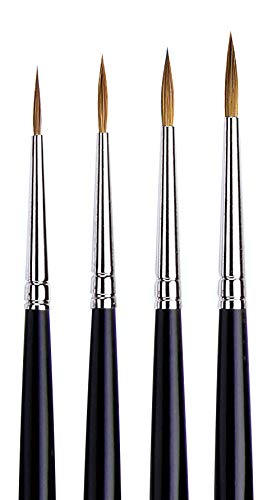
The set contains four Series 10 rounds in sizes 3/0, 2/0, 1 and 2. The listing describes European-style shaping with an extra-sharp point and the fastest action at the tip, and names watercolors, gouache, illustration, animation and rendering as uses. The hair is described as the highest quality winter male Kolinsky red sable from the Tobol River region, and the brushes as handmade from raw material to finished brush by skilled artisans at the da Vinci factory, with certified green manufacturing in Germany.
European-style rounds tend to be slimmer at the belly than the fuller round shape many watercolorists use for washes. That shape, together with the small sizes, tells you what this set is for: lines, details, small passages of color, lettering and rendering, not broad washes. Size 2 is the largest brush in the set.
Best suited for: watercolor and gouache painters, botanical and scientific illustrators, and animators or renderers who need a precise point in small sizes.
Key features:
- Four Series 10 European rounds: 3/0, 2/0, 1 and 2
- Maestro-grade Kolinsky red sable hair
- Extra-sharp point with fast action at the tip
- Handmade in Germany; black handles
Pros:
- Top-tier hair specification from a dedicated brush maker
- Very small sizes for precise detail
- Suited to watercolor, gouache and illustration
- Handmade construction described in detail
Cons and limitations:
- Highest price tier in this comparison
- No brush large enough for washes
- Natural sable needs careful cleaning and storage
- Not designed for acrylic, which is hard on natural hair
Buying consideration: Buy this set if detail work is central to your painting and you will use the brushes with watercolor or gouache. If you need a single larger round for washes as well, budget for it separately.
Who the Maestro Is Not For
Beginners still learning brush control will not get full value from a top-grade sable set; a good synthetic round teaches the same skills at a fraction of the cost. Painters who mostly use acrylic should also think twice, because fast-drying acrylic binder is hard on natural hair and can ruin a fine point if it dries in the brush.
And if your watercolor style is loose and wash-based, four tiny rounds will not change your paintings much. A larger round or mop would serve you better.
Alternatives Worth Comparing
2. Golden Maple Kolinsky Sable Miniature Paint Brushes, Size 00, 0, 1 — Best Budget Kolinsky Detail Rounds

Golden Maple’s three-piece set offers Kolinsky sable round-point brushes in sizes 00, 0 and 1. The listing describes a crisp point maintained during use, enough color capacity in the belly to lay down a flowing stroke, and suitability for acrylic, watercolor, gouache, miniatures, detailing, craft and models. The brushes come with protective tubes, and the listing advises a gentle wash with warm soapy water before first use to remove loose hairs.
It covers a similar size band to the Maestro set at a much lower price tier, which makes it a sensible way to find out whether Kolinsky detail brushes suit your work.
Best suited for: detail painters on a budget, miniature painters and anyone testing Kolinsky brushes before investing more.
Key features:
- Three Kolinsky sable rounds: 00, 0 and 1
- Crisp point with color-carrying belly per listing
- Protective tubes included
- Listed for acrylic, watercolor, gouache and miniatures
Pros:
- Much lower price tier than Maestro
- Protective tubes guard the tips
- Covers the core detail sizes
Cons and limitations:
- No information on hair grade or origin beyond Kolinsky
- Smaller set than the Maestro
Buying consideration: A practical first step into sable detail brushes. Keep them away from heavy acrylic use to protect the point.
3. Golden Maple Kolinsky Sable Miniature Brushes and Drybrushes, 7 Pieces — Best for Miniature and Model Painters

This Golden Maple set mixes two brush types. The listing names four detail sizes, 2/0, 1, 2 and 4, made of Kolinsky sable, plus three goat hair drybrushes in sizes 3, 5 and 6. The drybrushes are meant for applying a little paint to raised surfaces to highlight textures like sand, rocks, fur, hair and armor edges, a core technique in miniature and model painting.
The listing also notes that two kinds of packaging ship at random, so the box you receive may vary.
Best suited for: tabletop miniature, model and figurine painters who need both detail and drybrush tools.
Key features:
- Four Kolinsky sable detail brushes: 2/0, 1, 2, 4
- Three goat hair drybrushes: 3, 5, 6
- Listed for miniatures, crafts, ceramics, enamel and models
- Brush width 0.2 inches per listing details
Pros:
- Detail and drybrush in one set
- Slightly larger detail sizes than the 3-piece
- Low price tier for seven brushes
Cons and limitations:
- Packaging varies
- Drybrushing wears brushes quickly by design
- Not aimed at watercolor painters
Buying consideration: If you paint miniatures, this set fits your workflow far better than the Maestro. Keep the sable brushes for detail and let the goat drybrushes take the abuse.
Maestro vs Golden Maple: The Real Differences
On paper, all three products offer Kolinsky sable in small round sizes, so it is fair to ask what the price gap buys. Based on the listings, the differences come down to information and intent.
Da Vinci specifies the grade (winter male hair), the origin (the Tobol River region), the shape (European-style Series 10 rounds) and the manufacture (handmade in Germany). Golden Maple describes Kolinsky hair, a crisp point and protective tubes, but does not specify grade, origin or where the brushes are made. That does not mean the Golden Maple brushes are poor; it means you are buying with less documented detail.
Intent differs too. The Maestro set is built for watercolor, gouache and illustration. The Golden Maple sets are pitched at miniatures, models and mixed use, including acrylic. If you paint miniatures with acrylic model paints, the lower price tier of Golden Maple makes their eventual wear far easier to accept.
What Makes Kolinsky Sable Special
Kolinsky sable comes from the tail hair of a weasel species, not a true sable. It is prized for three properties. Each hair tapers to a fine point, so a well-made round forms a sharp tip. The hair has strong spring, snapping back to shape after each stroke. And the belly holds a lot of liquid, letting you paint a long line or small area without reloading.
Synthetic fibers have improved a great deal and are excellent value, but many watercolorists still prefer sable for the way it releases paint gradually. That said, the difference matters most to experienced painters who already have strong brush control.
What Each Size in the Maestro Set Does
Four small rounds can look interchangeable in a product photo, but in use they have distinct jobs.
Size 3/0
The smallest brush in the set is for the finest marks: eyelashes, whiskers, stamen tips, hairline highlights and tiny lettering serifs. It carries very little paint, so it works best with fluid watercolor or slightly thinned gouache and short strokes.
Size 2/0
A touch larger, it handles fine lines that need a little more paint, such as veins on leaves, rigging on boats or thin branches. Many illustrators find 2/0 more practical than 3/0 for everyday detail because it holds enough color to finish a line in one pass.
Size 1
Size 1 bridges detail and small areas. It can lay down a small petal, a window or a shadow shape and still come back to a point for the edge. It is often the most used brush in a set like this.
Size 2
The largest brush here fills small passages of color, softens edges with a damp tip and paints controlled glazes over small areas. It is still a detail brush by watercolor standards, so pair it with a larger round for washes.
Building a Detail Kit Around the Maestro
Most painters do not need every brush to be top grade. A practical approach is to spend on the brushes where point quality matters most, the small rounds, and save on the brushes that do broad work. The Maestro set covers the detail end; a mid-size synthetic or blended round and a flat or mop for washes complete a watercolor kit.
For gouache, the same logic applies, with a small flat added for crisp edges. For illustrators working on hot-press paper, the Maestro sizes 1 and 2 may handle most of the inking-style work, with the smaller sizes reserved for final accents. If you also paint with acrylic, keep a separate set of synthetic detail brushes for that medium so the sable stays reserved for water media.
Buying Guide: How to Choose a Da Vinci Maestro Brush or Alternative
Match the Size Range to Your Work
The Maestro set’s 3/0 to 2 sizes are for detail. Botanical illustrators, miniaturists and renderers will use all four; landscape watercolorists may use only the 1 and 2. Make sure the sizes fit your subjects.
Consider Your Medium
Sable suits watercolor and gouache best. Acrylic can be used carefully with thorough rinsing, but dried acrylic in a sable brush is very hard to remove. Oils and solvents are also hard on natural hair.
Point Shape
European-style rounds, like Series 10, are slimmer and suited to lines and detail. Fuller-bellied rounds hold more water for washes. Choose based on whether you need precision or capacity.
Value Versus Grade
A top-grade brush lasts a long time when cared for, which offsets some of its cost. A budget Kolinsky brush is a good way to test whether sable suits you before you invest.
Storage and Protection
Fine points are easily damaged. Protective tubes, like those with the Golden Maple 3-piece, or a brush roll or upright holder help prevent bent tips.
Your Skill Level
If you are still learning control, a good synthetic is a more forgiving and cheaper teacher. Upgrade when you notice your brush, not your hand, is limiting the result.
How to Care for Kolinsky Sable Brushes
- Before first use, rinse in lukewarm water to remove the protective gum some makers apply to shape the tip.
- During painting, rinse gently and never scrub the tip against the bottom of the water jar.
- After painting, wash with mild soap or a brush soap, rinse thoroughly and reshape the point with your fingers.
- Dry flat or tip-up, never tip-down.
- Store dry brushes so nothing presses on the hair; keep them away from moths in long-term storage.
- Avoid letting acrylic dry in the hair and avoid harsh solvents.
Using Small Rounds Well
Tiny rounds reward good technique more than any other brush. Our guide to using a liner brush for detail work covers loading and line control that carry over directly. To choose sizes for different areas, see what size brush to use for detail work, and to make any fine brush last, read how to keep paint brushes from shedding.
Common Mistakes to Avoid
- Using sable for acrylic without rinsing constantly. Dried acrylic ruins the point.
- Leaving brushes standing in water. It bends the tip and loosens the ferrule.
- Scrubbing paint off the palette with a detail brush. Use an old brush for mixing.
- Buying tiny brushes for wash work. Small rounds are for detail; you still need larger brushes.
- Storing damp brushes in closed tubes. Let them dry fully first.
- Expecting a top-grade brush to fix technique. Practice with good synthetics first if you are new.
FAQs
Is the da Vinci Maestro worth it?
For watercolor and gouache painters who rely on fine detail and will care for natural hair, the Maestro’s top-grade Kolinsky hair and extra-sharp point justify the price tier. For beginners and acrylic painters, cheaper brushes make more sense.
What sizes are in the da Vinci Maestro Series 10 set?
The 5536a2 set includes rounds in sizes 3/0, 2/0, 1 and 2.
Where are da Vinci Maestro brushes made?
The listing says they are handmade at the da Vinci factory in Germany, with certified green manufacturing.
Can I use Kolinsky sable brushes with acrylic paint?
You can with great care, rinsing constantly and never letting paint dry in the hair, but acrylic shortens the life of natural hair. Synthetic brushes are better for regular acrylic use.
What is the difference between the Maestro and cheaper Kolinsky brushes?
Da Vinci specifies hair grade, origin and handmade construction. Budget Kolinsky listings, like Golden Maple, describe the hair as Kolinsky but give fewer details about grade and manufacture.
What are drybrushes used for?
Drybrushes apply a small amount of paint to raised surfaces to highlight texture, a common technique in miniature and model painting.
Final Recommendation
Choose the da Vinci Maestro Series 10 set if you paint detailed watercolor, gouache or illustration and want top-grade Kolinsky rounds in very small sizes. Look after them and they will reward you.
If you are testing whether Kolinsky detail brushes suit you, the Golden Maple 00, 0 and 1 set is an inexpensive start. Miniature and model painters should pick the Golden Maple 7-piece set for its combination of sable detail brushes and goat hair drybrushes.