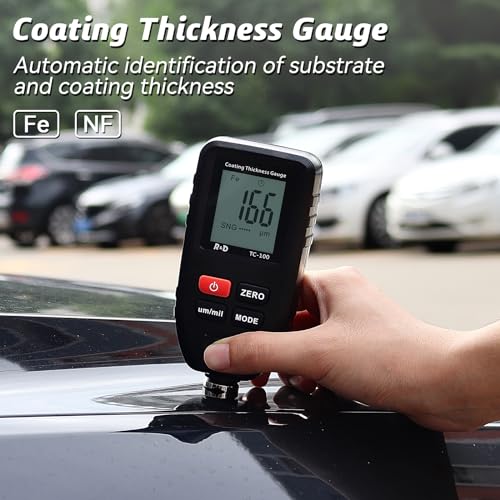
A digital paint thickness gauge measures coating depth to reveal hidden repairs fast.
You walk up to a shiny used car. The paint looks perfect. But your gut says something is off. Maybe there was body work. Maybe filler hides under a fresh respray. A digital paint thickness gauge gives you the truth in seconds. No guesswork. No drama. It reads paint depth in mils or microns. It helps you spot panels that were repainted or repaired. If you buy, trade, appraise, or detail cars, this tiny tool pays for itself fast.
Car Paint Coating Thickness Meter (Black)
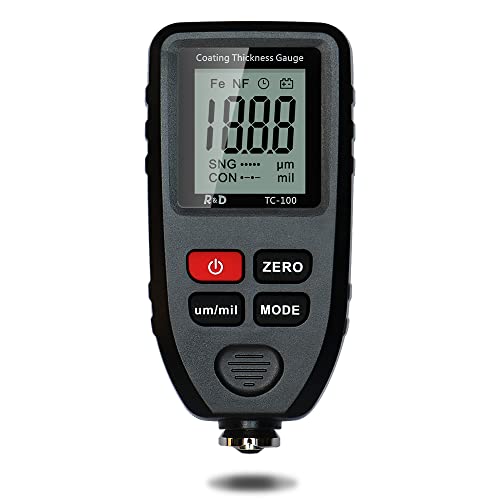
This compact digital paint thickness gauge is built for quick checks. It fits in a small pocket. The display is easy to read. The controls are simple. New users can learn it in minutes.
It is a handy pick for used car buyers. It helps you check doors, hoods, and fenders for respray. It also helps spot body filler and heavy clear coat. It reduces risk and speeds up decisions.
Pros:
- Small and light, easy to carry to auctions or lots
- Simple buttons and clear screen for fast use
- Reads in microns or mils for flexible work
- Good for spot checks across a whole car
- Quick power-on and quick reading response
- Budget-friendly way to start testing cars
- Helps reveal filler or respray on steel panels
Cons:
- Fewer advanced features than pro meters
- Likely limited support for some mixed metals
- Basic accuracy may not suit high-end appraisals
My Recommendation
If you are new to car checks, start here. This digital paint thickness gauge is simple and direct. It shines for quick used car visits and trade-ins. It is also great as a backup meter for pros. You can run it fast over each panel and move on.
It is best for budget shoppers and casual buyers. The tool keeps things simple. It cuts stress when time is short. For deep, high-precision work, consider a higher-end model.
| Best for | Why |
|---|---|
| First-time used car buyers | Easy to learn and quick to read |
| Budget-minded shoppers | Affordable way to spot respray and filler |
| Quick lot inspections | Fast checks across many panels in minutes |
Paint Thickness Gauge CM-205FN

The CM-205FN is built for serious car checks. It reads paint depth from 0 to 1500 μm. The resolution is 0.1 μm. Stated accuracy is ±(3% + 2 μm). That is solid for appraisals and detailed inspections.
It auto-detects ferrous and non-ferrous metals. That helps on modern cars with steel and aluminum parts. The backlit LCD makes it easy to see in low light. It works well in shops and on the road.
Pros:
- 0.1 μm resolution for fine detail
- 0–1500 μm range covers thin and thick coatings
- Auto Fe/NFe detection saves time between panels
- Backlit display for night or garage work
- Accuracy spec suits professional review work
- Fast readings with stable results
- Clear menu and readable digits
- Great balance of precision and ease of use
Cons:
- Costs more than basic meters
- More features may mean a short learning curve
- May require careful handling to preserve accuracy
My Recommendation
This digital paint thickness gauge is a strong pick for pros. I like it for appraisers, body shops, and detailers. It gives you the data you need with less fuss. The auto metal detection is a big time saver.
If you look at many cars a week, get this. It is precise without feeling complex. It also helps prove your findings to clients. The backlit screen is a nice touch for all-day work.
| Best for | Why |
|---|---|
| Professional appraisals | High resolution and reliable accuracy |
| Shops and detail studios | Auto substrate detection speeds inspections |
| Frequent buyers and traders | Backlit display and fast workflow |
TESMEN TCG-2001 Paint Thickness Gauge
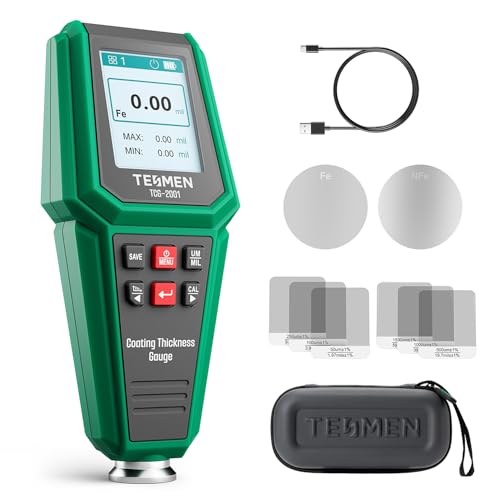
The TESMEN TCG-2001 focuses on smart display features. It uses a 4-way backlit color screen. It also shows a data bar graph. That makes trends easy to see at a glance.
The unit adds a limit alarm. Set a threshold and get alerts. That helps you scan a car fast. You can move and check dozens of points in a few minutes.
Pros:
- Color screen is bright and easy to read
- Data bar graph shows changes panel to panel
- Limit alarm highlights suspect readings fast
- Simple setup for used car buyer workflows
- Good for scanning large areas quickly
- Helpful visual cues reduce note taking
- Portable and friendly for first-time users
- Great for quick yes/no decisions on-site
Cons:
- Color display may use more battery
- Alarm setup may need a short learning curve
- Not aimed at lab-grade precision tasks
My Recommendation
I like this for buyers who want clear visuals. The limit alarm helps with speed. The bar graph shows where paint build jumps. That is key for finding repaired spots fast. This digital paint thickness gauge is great for lots, auctions, and mobile checks.
If you hate fiddly menus, you will like it. It keeps the view clean and bold. It works well as a main tool for quick decisions. It also pairs well with a precise backup meter.
| Best for | Why |
|---|---|
| Auction days | Limit alarm speeds go/no-go calls |
| New car flippers | Color screen and graph show patterns fast |
| Mobile inspections | Bright display works in varied light |
Paint Thickness Gauge CM-224 Auto

The CM-224 Auto is aimed at advanced users. It detects Fe, Al, and Fe+Zn. That covers steel, aluminum, and galvanized panels. It helps on modern cars with mixed materials.
It ships factory calibrated. The resolution is 0.1 μm. The display is large and backlit. It is a robust choice for daily use in shops or on the road.
Pros:
- Supports Fe, Al, and Fe+Zn substrate detection
- Factory calibration saves setup time
- 0.1 μm resolution for fine detail
- Large backlit LCD for easy viewing
- Great for modern mixed-metal vehicles
- Good match for pro appraisals and audits
- Stable readings for repeat checks
- Designed for frequent field use
Cons:
- Higher cost than basic models
- More features than casual users may need
- May feel larger in a small pocket
My Recommendation
If you need broad metal support, choose this. It reads steel, aluminum, and galvanized panels. That suits 2026 models and older mixed builds. This digital paint thickness gauge gives you calm, clear data. It is my pick for serious buyers and appraisers.
It reduces doubt when panels change materials. It also saves time with factory calibration. If you want one meter for many car types, this fits well. It earns its keep in daily work.
| Best for | Why |
|---|---|
| Mixed-material vehicles | Handles Fe, Al, and Fe+Zn panels |
| Professional inspections | High resolution and stable readings |
| Dealers and appraisers | Factory-calibrated and fast to deploy |
FAQs Of digital paint thickness gauge
What does a digital paint thickness gauge measure?
It measures coating thickness on metal panels. It shows values in microns or mils. It helps spot repaints and filler.
How do I use it on a car?
Turn it on. Place the probe flat on a clean panel. Take several readings on each panel and compare them.
What readings mean a repaint?
There is no single number. Look for big jumps between panels. Very high numbers may suggest filler or heavy paint build.
Does it work on aluminum?
Many models do. Check for Fe/NFe or Al support. The CM-205FN and CM-224 Auto handle mixed metals well.
How often should I calibrate a meter?
Check calibration before major jobs. Follow the maker’s guide. Store the gauge clean and dry for stable results.
Final Verdict: Which Should You Buy?
Pick the right digital paint thickness gauge for your work. For budget checks, the Car Paint Coating meter is fine. For speed and visuals, go TESMEN TCG-2001. For precision, go CM-205FN.
Need broad metal support in 2026 and beyond? The CM-224 Auto stands out. It is my pro pick for mixed-metal cars.