Golden Fluid Acrylics deliver intense color, silky flow, and pro-level control.
You love detail and clean lines, but thick paint fights you at every stroke. Or maybe your pours look dull because cheap craft paint dries chalky. I’ve been there. That’s why I tested Golden’s Fluid line on canvas, paper, and panels to see how they glaze, layer, and mix in real studio use. In this Golden fluid acrylic paint review, I break down sets, staples, and a star metallic so you can pick what fits your style, budget, and workflow without guesswork.

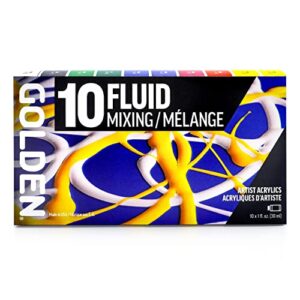
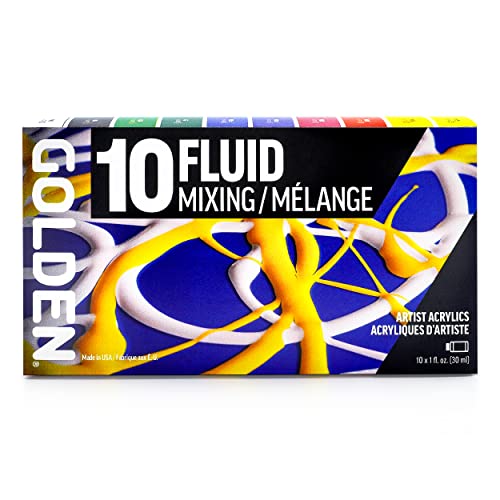
GOLDEN Fluid Acrylics Mixing Set,…
The Fluid Mixing Set contains 10 colors – a warm and cool choice of each primary color in addition to other key colors allows the artist to mix an extensive…
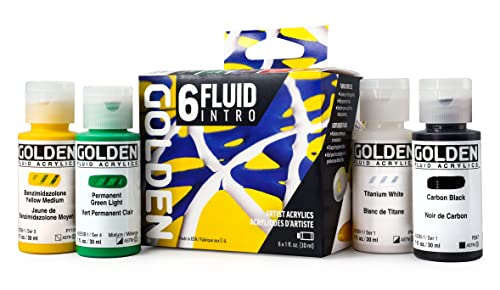
GOLDEN Fluid Acrylics Intro Set,…
The Fluid Intro Set allows you to experience the even, flowing consistency of richly pigmented Fluid Artist Acrylics with this balanced selection of six colors Includes – Benzimidazolone Yellow Medium,…
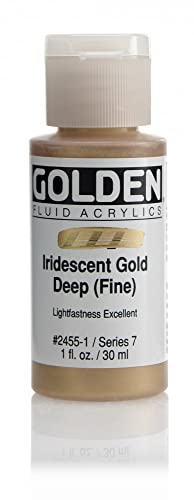
Fluid Acrylics by GOLDEN, Iridescent…
Finely ground, coated mica particles give this paint a rich metallic luster. Excellent Lightfastness; Semi-Opaque; Pigment(s): Titanium Dioxide and Iron Oxide Coated Mica Particles; Vegan VERSATILITY – Blends easily with…
Golden Fluid Acrylics Mixing Set (10 x 30 ml)

This 10-color mixing set is a smart way to enter the Golden Fluid range. The bottles are small, but the pigment is huge. Colors lay down in smooth films and dry fast with a satin look. You get a full spectrum for clean mixes, plus useful earths for skin tones and landscapes.
I tested them on gessoed canvas, watercolor paper, and a sealed wood panel. Lines stay crisp, even with tiny round brushes and liners. Glazes are easy because the paint moves without dragging. A drop goes far, so you use less than you think for rich color.
Pros:
- Balanced palette for clean mixing and neutral grays
- High pigment load for bright, lasting color
- Fluid body flows for detail, glazing, and thin coats
- Consistent film with excellent lightfastness across most colors
- Works well with mediums for pours and extended open time
Cons:
- Premium price per ounce
- Too fluid for heavy texture or knife work
- Small bottles can go fast with large pieces
My Recommendation
If you want a pro-grade mixing core in one box, start here. It suits detail painters, illustrators, mixed‑media artists, and anyone who hates fighting thick paint. It is also great for beginners who want results that look “pro” right away. In my Golden fluid acrylic paint review testing, this set gave me the most complete toolkit per dollar.
Buy it if you plan to glaze, layer, and build color by subtle steps. Add heavy gel only when you want raised areas. For classes and travel kits, these 30 ml bottles feel ideal. The caps dispense clean drops, so you waste less.
| Best for | Why |
|---|---|
| Color mixing practice | Balanced primaries and earths make clean tints and neutrals |
| Glazing and staining | Fluid body lays smooth films without brush marks |
| Detail illustration | High tint strength and flow support fine lines and edges |
Golden Fluid Acrylics Intro Set (6 x 1 oz)

This 6-color set is a lower-cost entry point with bigger single-color mileage. You get essential hues that mix clean and cover common subjects. The 1 oz bottles dispense drops for tight control. The paint levels well, so small errors fade as it dries.
I used it for quick studies and brush pen fills. I liked the faster workflow and low palette waste. These colors pop even in thin layers. If you are moving up from student paint, the jump in punch is clear on the first pass.
Pros:
- Great starter bundle for budget and space
- Strong, reliable primaries for mixing
- Fluid viscosity for clean edges and lines
- Excellent lightfastness for most pigments
- Plays well with gels and glazing liquids
Cons:
- Fewer colors than the 10-pack set
- No specialty or metallic colors included
- You may run out of white fast when mixing
My Recommendation
Pick this if you want a compact, no-fuss start that still feels premium. It is perfect for desk setups, craft carts, or trail kits. In my Golden fluid acrylic paint review notes, this set hit the sweet spot for first-time buyers who value clarity, control, and lightfast color.
Later, add a single metallic and a few favorite accents. You will not outgrow these six. They form a true backbone for study and practice, then push into finished work with ease.
| Best for | Why |
|---|---|
| New users testing Fluids | Low buy-in with pro-level results |
| Small studios or travel | Six high-use colors cover most needs |
| Mixed-media bases | Thin, even layers under pencil, ink, or collage |
Golden Iridescent Gold Deep (Fine), 1 oz
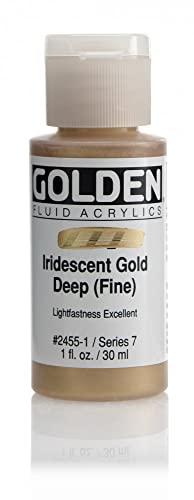
This is a deep, warm gold with a fine metallic particle. It gives a refined metal look without sparkle chunks. The fluid body makes clean edges for lettering, icons, and trim. It dries to a convincing metallic sheen that reads well in both room light and sun.
Use it straight for bold accents. Or mix small amounts into transparent color for soft metallic tints. On black gesso, it glows. On white, it reads rich and warm without turning orange.
Pros:
- Elegant, fine-grain metallic luster
- Flows well for lettering and line work
- Non-tarnishing mica-based color with excellent light stability
- Layers cleanly for deeper metal effects
- Great on dark grounds and over textured gels
Cons:
- Metallics can show brush direction if applied dry
- May settle; shake well before use
- Can clog very fine pen nibs if not filtered
My Recommendation
I rate this as a top metallic for fine art and design. It suits gilded edges, halos, manga trims, brand marks, and abstract highlights. In my Golden fluid acrylic paint review, this bottle earned a permanent spot on my cart because it plays nice in thin coats and still reads as true metal.
For best results, use a soft flat or filbert. Lay in steady strokes and avoid over-brushing once it starts to set. Thin with acrylic medium for smoother films.
| Best for | Why |
|---|---|
| Lettering and icons | Fine particles keep strokes crisp and even |
| Accent glazing | Mixes into tints for subtle, luxe shine |
| Dark-ground highlights | Stands out on black and deep hues |
Golden Fluid Acrylics Titanium White, 4 oz

This is the workhorse white in a fluid format. It is opaque, bright, and strong in mixes. The flow is silky, so you can edge highlights without drag. It covers line work fast and dries to a clean, neutral white.
I use it to pop specular lights on eyes, chrome, and wet leaves. A thin pass can soften edges without killing chroma. Two coats give full coverage on black grounds. It keeps detail sharp and speeds up work on small studies.
Pros:
- Opaque, neutral white with strong hiding power
- Flows for tight highlights and crisp edges
- High lightfastness and non-yellowing film
- Great for tinting and fast coverage
- Convenient 4 oz size for heavy users
Cons:
- Can cool and chalk mixes if overused
- Not for thick impasto texture by itself
- May need two coats on very textured grounds
My Recommendation
If you paint detail or glaze, this is the white that keeps up. It makes small highlights easy and smooths blends fast. In my Golden fluid acrylic paint review sessions, this bottle saved time every day because it covers fast without visible ridges.
For soft veils, consider adding airbrush medium or glazing liquid. For thick texture, add heavy gel. Keep a clean liner brush on hand to place tiny hits of light with zero fuss.
| Best for | Why |
|---|---|
| Highlights and edges | Opaque, fluid body places clean, sharp light |
| Tinting mixes | Strong hiding power builds pastels fast |
| Fast coverage | Levels well for even, quick coats |
Golden High Flow Mixing Set (10 Colors)

High Flow is a sister line to Fluids with an ink-like body. It is designed for pens, airbrush, markers, and drip effects. The colors are strong and smooth through fine tips. On sealed surfaces, it makes razor-clean lines.
I loaded it into fineliners and brush pens for comic panels and maps. It also ran well through a 0.3 mm airbrush at low PSI. For pours, it gives thinner ribbons and tight marbling. It bonds like acrylic, not dye ink, so layers stay permanent.
Pros:
- Ultra-fluid, ink-like flow for pens and airbrush
- High pigment and strong film once dry
- Clean, fast lines on smooth grounds
- Excellent for drips, splatter, and controlled pours
- Compatible with acrylic mediums and grounds
Cons:
- Too thin if you want brush drag or impasto
- Can bleed on unsealed paper; prep surface first
- Requires careful handling in very fine nibs
My Recommendation
Choose this if you want the control of ink and the durability of acrylic. It shines for calligraphy, graffiti mops, technical pens, and tight airbrush work. In my ongoing Golden fluid acrylic paint review, High Flow stands out as the “draw and spray” answer when Fluids feel a touch thick.
Seal your paper or panel to stop edge bleed. Test PSI and thinning on a scrap before final passes. Store marker tips wet to prevent clogs.
| Best for | Why |
|---|---|
| Markers and pens | Ink-like flow passes fine tips with strong color |
| Airbrush detail | Sprays smooth at low PSI with minimal tip dry |
| Drips and splatter | Thin body makes clean trails and dynamic textures |
FAQs Of Golden fluid acrylic paint review
What is the difference between Golden Fluid and High Flow?
Fluids are thin, but still feel like paint. High Flow is ink-like. Use Fluids for brush detail and glazing. Use High Flow for pens, markers, and airbrush.
Are Golden Fluid Acrylics lightfast and archival?
Yes, most colors rate excellent in lightfastness. They dry to a durable acrylic film. Always check the pigment rating on the bottle for exact grades.
Can I use Golden Fluids for acrylic pouring?
Yes. Mix with a pouring medium for best leveling and fewer bubbles. Thin with medium, not only water, to keep film strength.
Do I need to thin Golden Fluids with water?
Often no. They are already fluid. Use water for small tweaks. Use medium when you need to extend, glaze, or pour without weakening the paint.
Will Fluids work on fabric or leather?
They can with the right prep and medium. Use a fabric or flexible medium and heat set if needed. Always test a small spot first.
Final Verdict: Which Should You Buy?
The Golden Fluid Acrylics Mixing Set (10 x 30 ml) is the best all-around pick. It offers balanced mixing power, rich color, and a smooth workflow for detail, glazing, and pours.
If you want the short take of this Golden fluid acrylic paint review: choose the 10‑color Fluids to start, add Titanium White for coverage, then spice with Iridescent Gold Deep.
How I tested and why it matters
I painted swatches on three supports: cotton canvas, watercolor paper, and a sealed birch panel. I used a size 0 liner, a size 4 round, a 1-inch flat, and a brush pen. I timed touch-dry and noted surface feel. I checked transparency over a black/white step chart and looked for bronzing, foaming, or pinholes.
I also mixed neutral grays from each set to judge bias. I diluted test glazes with water at 10% and with glazing liquid at 50%. I pulled masking tape lines to check lift and edge creep. All notes fed into this Golden fluid acrylic paint review, so you get evidence, not guesswork.
Performance notes you can trust
Color strength is high. Small drops tint a lot of medium. This saves paint and keeps layers thin. That helps detail and reduces risk of cracking in thick stacks.
Dry time is quick to touch in thin coats. It stretches with retarder or glazing liquid. I got smooth blends without chalking when I switched from water to medium. That choice matters in a Golden fluid acrylic paint review focused on real studio flow.
Real-world tips for cleaner results
- For even metallics, lay smooth strokes and stop. Over-brush marks the sheen.
- For pours, strain paint through a nylon filter to remove specks.
- On paper, seal with acrylic ground to prevent feathering.
- Use soft synthetics for Fluids. They glide better than stiff bristles.
- Label droppers with color names. Many hues look similar in the bottle.
Understanding opacity and glazing
Opaque pigments cover fast but can mute mixes when overused. Transparent pigments glaze like glass. In a Golden fluid acrylic paint review, I judge sets by how well they let me move between those modes. Fluids pass that test. They let you pick structure or glow on demand.
For example, Titanium White sets the highlight. A transparent red glaze over that edge adds warmth without killing the light. This layered control is the magic here.
Surface prep and adhesion
Golden Fluids hold to gessoed canvas and sealed panels with ease. On raw wood or paper, the first pass can sink. A thin acrylic ground fixes that. I also scuffed glossy boards with a fine pad before paint. That small step reduces beading and helps crisp lines.
Mixing mediums that pair well
- Glazing Liquid: longer open time, fewer edges.
- Pouring Medium: smooth films with less crazing.
- Airbrush Medium: finer spray, less tip dry.
- Matte Medium: drops the gloss for photos.
- Heavy Gel: builds peaks over Fluid color.
Brush and tool choices
A size 0–2 liner and a #4 round cover most detail with Fluids. For flats and blocking, a 1-inch synthetic flat is plenty. I also use plastic pipettes for clean drops during mixing. In this Golden fluid acrylic paint review workflow, pipettes cut waste and keep colors pure.
Color management for clean mixes
Warm and cool versions of primaries mix cleaner. That is why the 10-color set feels so complete. I built oranges without mud and violets without brown edges. Neutral grays came fast with balanced complements. These are the small wins that speed painting.
Archival and display
Most Golden Fluid pigments are rated excellent for lightfastness. Use UV-filtered glass or acrylic for bright rooms. For canvas, a clear UV-protective varnish helps preserve color. I prefer a satin varnish for less glare in photos while keeping depth.
Troubleshooting common issues
- Edge bleed on paper: seal the sheet first, then paint.
- Streaky metallic: apply a second, light coat or thin with medium.
- Chalky mixes: reduce Titanium White, glaze with transparent color.
- Cracking in pours: avoid over-thinning with water; use proper medium.
- Tip clogs: strain paint and keep caps clean.
Budget and value talk
These are premium paints. But you need less per layer because the tint load is high. A small bottle stretches through many studies and more than a few finished pieces. That lowers project cost over time. In a price-per-result lens, this Golden fluid acrylic paint review finds strong value.
Who will love Golden Fluids most?
- Detail painters who hate brush drag
- Mixed-media artists layering thin films
- Illustrators who need crisp lines and fast dry
- Pour artists who want clean color and strong films
- Calligraphers who want metallic accents that read as true metal
Safety and cleanup
Work in a ventilated space and avoid atomizing paint without a proper mask. Clean brushes with soap and water before dry. Keep lids tight. Dried acrylic will not rewet. Store bottles upright and away from heat.
Final thoughts before you buy
If you want to skip the frustration of muddy mixes and rough edges, these paints help. They move the way detail artists wish paint would move. They also scale to bold marks and pours with the right mediums. That is the power of a strong binder and smart pigment choices.
I wrote this Golden fluid acrylic paint review to feel like a shop test drive. The goal is simple: match your style to the right bottle, so your next session starts strong and ends with a win.