Have you ever started a painting only to wonder, “How long will this acrylic paint take to dry?” Knowing the drying time can save you frustration and help you plan your next steps perfectly. Whether you’re working on a quick project or a detailed masterpiece, understanding how acrylic paint dries can make all the difference.
You’ll discover the factors that affect drying time and get practical tips to speed up or slow down the process—so your painting turns out just the way you want. Keep reading to master your acrylic paint drying time and take control of your creative flow.
Drying Time Basics
Acrylic paint dries faster than many other paints. Usually, it feels dry to touch within 15 to 30 minutes. But the full drying time changes depending on several things. Understanding these basics helps you plan your painting better.
Drying means water in the paint evaporates. This leaves behind a solid layer of color. How fast this happens depends on the paint and the environment.
Factors Affecting Drying
Temperature and humidity in the room affect drying time. Warm and dry air speeds up drying. Cold or humid air slows it down. Good air flow helps paint dry faster too.
Paint brand and formula also matter. Some acrylic paints dry quicker because of their ingredients. Always check the label for drying time info.
Surface Type Impact
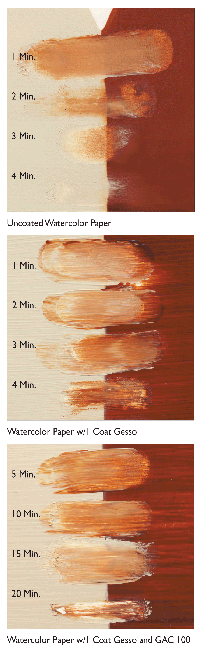
Different surfaces absorb paint differently. Porous surfaces like paper soak paint quickly. This helps paint dry faster. Non-porous surfaces like plastic keep paint wet longer. The paint sits on the surface and takes more time to dry fully.
Surface texture also plays a role. Rough surfaces hold paint in small pockets. This can slow drying compared to smooth surfaces.
Paint Thickness Role
Thicker paint layers need more time to dry. Thin coats dry in minutes. Thick coats may take hours or even days. Always apply paint in thin layers for faster drying. Multiple thin layers create better results than one thick layer.
Drying starts at the surface and moves inward. Thick paint traps moisture inside. This makes drying slower overall.
Typical Drying Stages
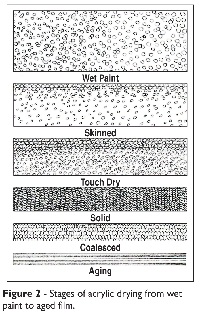
Acrylic paint dries in several stages. Each stage shows a different level of dryness. Knowing these stages helps you handle your artwork better. It also tells you how long to wait before the next step. The drying time depends on the paint thickness and the environment.
Touch Dry Phase
The touch dry phase happens first. The paint feels dry to your finger. It usually takes 10 to 30 minutes. At this point, the paint is still soft underneath. You can touch it gently without smudging. But it is not ready for heavy handling or painting over.
Handle Dry Phase
Next is the handle dry phase. The paint feels dry enough to hold or move. This phase takes about 1 to 2 hours. The surface is firm and does not stick. You can carefully move the canvas or add more layers. It still needs more time to harden fully.
Fully Cured Stage
The fully cured stage is the last step. It can take 1 to 3 weeks to reach. The paint becomes hard and strong. It is ready for framing, cleaning, or varnishing. At this stage, the paint will not damage easily. Patience pays off for the best results.
Environmental Influences
Environmental factors play a big role in how fast acrylic paint dries. These factors change the paint’s drying time by affecting how water and solvents evaporate. Knowing these can help you plan your painting better and avoid delays.
Temperature Effects
Temperature has a strong effect on drying speed. Warm air helps paint dry faster by speeding up evaporation. Cold temperatures slow down this process, making the paint stay wet longer. Ideal room temperature is around 70°F (21°C) for quick drying.
Extreme heat can cause the paint to dry too fast. This may lead to cracks or uneven surfaces. Keep the painting area at a steady, moderate temperature for best results.
Humidity Levels
Humidity means how much moisture is in the air. High humidity slows down drying because the air is already full of water. Paint stays wet longer in these conditions. Low humidity helps paint dry faster by pulling moisture away quicker.
Try to paint in a dry place. Avoid painting on rainy or very humid days. Use a dehumidifier if needed to control moisture in the room.
Airflow Importance
Good airflow helps paint dry evenly and faster. Moving air carries moisture away from the paint’s surface. Without airflow, moisture stays near the paint and slows drying.
Use fans or open windows to improve air circulation. Avoid strong drafts that can blow dust onto your painting. Gentle airflow is best for smooth drying.
Tips To Speed Up Drying
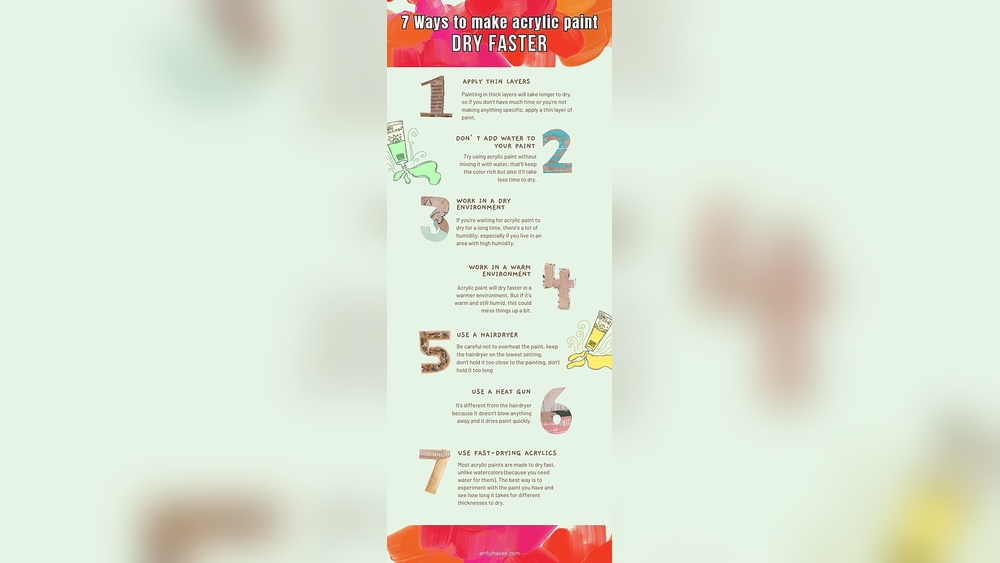
Speeding up acrylic paint drying saves time and improves workflow. Simple steps can make a big difference. These tips help your paint dry faster without losing quality.
Using Fans And Heaters
Air circulation helps paint dry quickly. Place a fan near your painting to increase airflow. Keep the fan on low to avoid dust settling on wet paint.
Heaters also speed drying by raising the room temperature. Set a heater nearby but not too close to prevent paint cracking. Warm, dry air dries acrylic paint faster.
Thin Layers Application
Applying paint in thin layers reduces drying time. Thin coats dry faster than thick, heavy ones. Multiple thin layers build color and texture without long waits.
Let each layer dry before adding the next. This method prevents smudging and uneven drying. Patience with thin layers leads to better results.
Choosing Fast-dry Paints
Some acrylic paints dry faster than others. Look for paints labeled “fast-dry” or “quick-dry.” These formulas are designed to dry in minutes.
Using fast-dry paints helps complete projects faster. They work well for small paintings and quick touch-ups. Check product details before buying.
Common Drying Issues
Acrylic paint dries fast but can face some common issues. These problems affect the final look and feel of your artwork. Understanding these issues helps you fix them early. Avoid wasting time and paint.
Cracking And Peeling Causes
Cracking happens when paint dries too fast or is too thick. Thick layers shrink and crack as they dry. Peeling occurs if the paint does not stick well. This happens on dirty or oily surfaces. Using too much water can weaken the paint layer. Cold or humid weather also causes cracking and peeling.
Sticky Or Tackiness Problems
Sticky paint means it is not fully dry. This happens if the air is too humid. Thick paint layers take longer to dry and stay tacky. Using too much paint medium slows drying. Poor ventilation traps moisture and keeps paint sticky. Touching the paint too soon can ruin the surface.
Color Changes During Drying
Colors often look different when wet than dry. Paint can darken or lighten as it dries. Some colors become dull or lose brightness. This change happens because water evaporates from the paint. Adding too much water changes color tone. Always test colors on a small area first.
Credit: justpaint.org
Drying Times By Project Type
Drying time for acrylic paint varies by project type. Different surfaces and paint layers affect how fast it dries. Understanding these differences helps plan your work better. Here is a guide for common project types and their drying times.
Canvas Painting
Canvas usually soaks up paint quickly. Thin layers dry in 15 to 30 minutes. Thick layers or heavy brushstrokes take longer. Wait at least 24 hours before adding more paint or varnish. This ensures the paint sets well and won’t peel.
Crafts And Models
Small crafts and models use thin paint coats. These dry fast, often within 10 to 20 minutes. Multiple layers need longer drying time between coats. Avoid touching the surface until fully dry to prevent smudging.
Outdoor Surfaces
Outdoor projects take longer to dry due to weather and surface texture. Rough or porous surfaces absorb more paint and slow drying. Expect drying times from 1 hour up to 24 hours. Drying is faster in warm, dry weather and slower in cold or humid conditions.
Storage And Cleanup Advice
Knowing how to store acrylic paint and clean your tools helps keep your supplies fresh. Proper care saves money and makes painting easier next time. Clean brushes stay soft and ready to use. Leftover paint needs safe disposal to protect the environment.
Proper Paint Storage
Keep acrylic paint in a cool, dry place. Avoid direct sunlight and heat. Seal paint containers tightly to stop air from drying paint. Use airtight lids or plastic wrap under caps. Store paint upside down to create a tight seal. Check paint before use to ensure it is still good.
Cleaning Brushes And Tools
Clean brushes quickly after use to avoid hardened bristles. Rinse brushes in warm water until paint runs clear. Use mild soap to remove paint stuck in bristles. Shape the brush and let it dry flat or hanging. Avoid leaving brushes soaking in water for long. Proper cleaning extends the life of your tools.
Disposal Of Leftover Paint
Do not pour leftover paint down the drain. Check local guidelines for paint disposal rules. Dry out small amounts of paint by leaving lids off in a safe place. Use kitty litter or sand to speed drying for larger amounts. Once dry, dispose of paint with regular trash if allowed. Responsible disposal helps keep the environment safe.
Credit: justpaint.org

Credit: novacolorpaint.com
Frequently Asked Questions
How Long Does Acrylic Paint Take To Dry Completely?
Acrylic paint usually dries to the touch within 20-30 minutes. Complete drying and curing take 24-48 hours, depending on thickness, humidity, and temperature. Thicker layers extend drying time, while warm, dry conditions speed it up.
What Factors Affect Acrylic Paint Drying Time?
Drying time depends on paint thickness, humidity, temperature, and airflow. Thicker paint layers take longer to dry. Higher humidity slows drying, while warm temperatures and good ventilation speed it up.
Can I Speed Up Acrylic Paint Drying Time?
Yes, you can speed drying by using thin layers, increasing airflow, and applying heat. Use a fan or heater to reduce drying time. Avoid thick layers for faster results.
Is Acrylic Paint Dry To Touch Or Fully Dry In 30 Minutes?
Acrylic paint is usually dry to the touch within 20-30 minutes. However, it is not fully cured and can still smudge. Full curing takes 24-48 hours for durability.
Conclusion
Acrylic paint dries fast, usually within 20 to 30 minutes. Thick layers or humid conditions can slow drying time. Thin coats dry quicker and are easier to work with. Waiting a full day ensures the paint sets well. Keep your workspace dry and warm to help drying.
Knowing drying times helps plan your painting process better. Experiment with your paint to see what works best. Patience brings better results and a smoother finish.