Quick answer: To paint a line art piece for your wall, choose a simple subject such as a single-line face, botanical stem or abstract figure, paint a smooth background and let it dry, then transfer your design lightly with pencil or graphite paper. Trace the line with a long-bristled liner brush or an acrylic paint marker, using fluid paint thinned to the consistency of ink and moving your whole arm for smooth curves. Keep the line weight consistent or vary it intentionally, then add optional color blocks and varnish.
Line art is minimal by design. A few confident strokes on a clean background can look elegant on a bedroom wall, above a desk or in a hallway gallery. The style rewards control more than technical drawing skill, which makes it approachable for beginners and satisfying for experienced painters who want something fast and modern. Knowing how to paint a line art piece for a wall comes down to preparation, the right tool and smooth arm movement.
This guide covers choosing a design, the best tools for clean lines, a step-by-step process, and ways to add color or mixed media for a more personal piece.
What Counts as Line Art?
Line art uses lines as the main visual element, with little or no shading. Common styles include:
- Continuous line: One unbroken line forms the entire image, such as a face or a pair of hands.
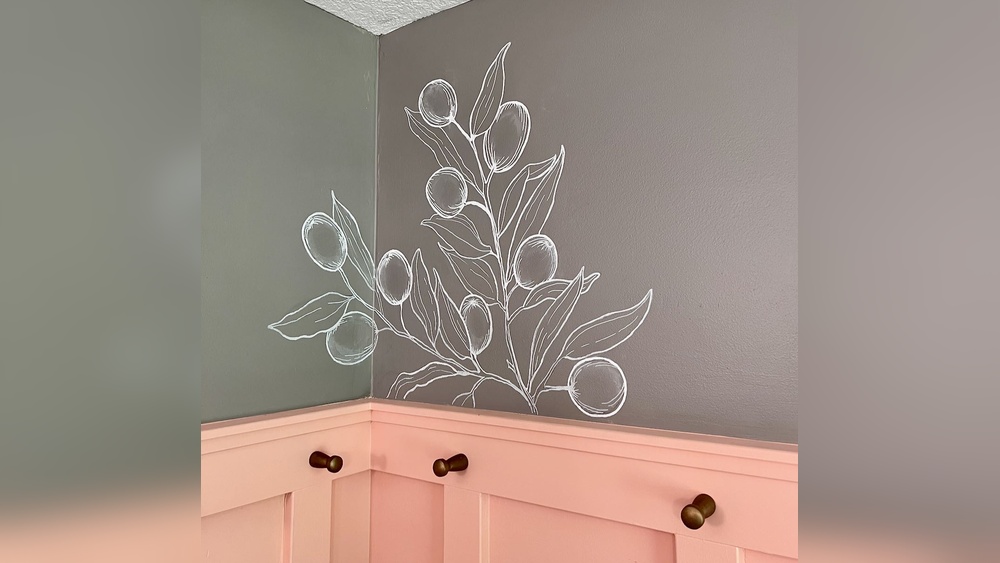
- Botanical line art: Outline drawings of leaves, stems and flowers.
- Abstract figures: Simplified body shapes, often with organic curves.
- Line art with color blocks: Lines layered over soft shapes of color that do not align exactly.
- Architectural or map line art: Clean outlines of buildings, skylines or city streets.
Tools for Clean Lines
| Tool | Line quality | Control | Best for |
|---|---|---|---|
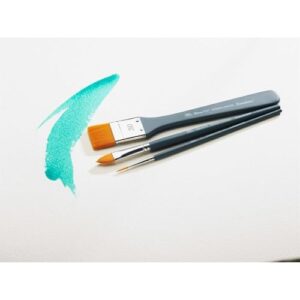
| Liner or rigger brush (sizes 0 to 2) | Expressive, can vary in thickness | Requires practice | Flowing curves, botanical stems |
| Acrylic paint marker (fine or medium tip) | Consistent, crisp | Very easy | Faces, continuous line designs, beginners |
| Round brush (size 2 to 4) | Thick to thin with pressure | Moderate | Bold, calligraphic lines |
| Ruling pen or dip pen with ink | Very fine and precise | Moderate | Architectural line art on paper or panel |
Paint and marker quality strongly affect line art. Thin, low-pigment paint may need multiple passes, which leads to wobbly, doubled lines. Opaque fluid acrylics and quality paint markers deliver a solid line in one pass. For guidance on paints that suit both backgrounds and fine detail, see our roundup of the best paints for wall art.
Other Supplies
- Canvas, gessoed panel or heavy paper (smoother surfaces give cleaner lines)
- Background paint in a neutral or soft color
- Pencil, eraser and graphite transfer paper
- Printed design or sketch at full size
- Fluid acrylic or high-flow acrylic for brush lines
- Mahl stick or a ruler to steady your hand
- Optional: soft colors for blocks, gold leaf or metallic paint, varnish
How to Paint a Line Art Piece for Wall: Step-by-Step
Step 1: Choose or Draw Your Design
Simple designs look best. A face in profile, two leaves on a stem, a reclining figure or a few overlapping circles all work. Draw the design on paper several times until the line feels natural. If you want a continuous line, practice tracing it without lifting your pencil.
Scale the final drawing to your canvas size. You can enlarge a sketch with a photocopier, a printer set to tile across multiple pages, or the grid method.
Step 2: Prepare a Smooth Background
Canvas texture can make lines bumpy. For smoother lines, apply two or three coats of gesso and sand lightly between coats with fine sandpaper. Then paint the background. Warm whites, soft beige, pale sage, blush and light gray are popular. Dark backgrounds with white or gold lines look striking in modern rooms.
Let the background dry completely, ideally several hours.
Step 3: Transfer the Design
Place graphite transfer paper face down on the canvas, lay your drawing on top, and trace the lines with a pencil or stylus. Use light pressure so the transfer lines are faint and easy to cover. Alternatively, rub the back of your drawing with soft pencil graphite to make a homemade transfer sheet.
Step 4: Prepare the Paint
For brushwork, thin fluid acrylic with a little water or flow improver until it flows like ink but still covers the background. Test on scrap paper. Paint that is too thick drags and breaks; paint that is too thin looks transparent and streaky.
For markers, prime the tip on scrap paper until paint flows evenly.
Step 5: Paint the Lines
Load the liner brush fully, roll it to a point, and place it at the start of a line. Move your whole arm from the shoulder, not just your wrist, for long, smooth curves. Keep a steady speed; slowing down creates wobbles. Pause only at natural breaks in the design, like where a line changes direction sharply.
Turn the canvas as you go so you are always pulling the brush toward you or across your body comfortably. Rest your hand on a mahl stick or a book if needed.
Step 6: Fix Mistakes
Let mistakes dry, then paint over them with the background color using a small brush. Repaint the line once dry. Because line art is so minimal, small corrections are almost invisible once covered.
Step 7: Add Color Blocks (Optional)
A popular modern variation places soft, organic shapes of color behind or near parts of the line drawing, often slightly offset. Paint these before the lines if you want the lines on top, or after for a looser, layered look. Muted terracotta, mustard, sage and blush are common choices.
Step 8: Finish
Erase any visible transfer lines once the paint is fully dry. Apply a matte or satin varnish to protect the surface. A thin floating frame in black or natural wood suits line art well.
Line Art Design Ideas
- Single-line face, two faces kissing, or a face with closed eyes
- Hands holding a flower
- Monstera, olive branch, eucalyptus or fern outlines
- Abstract female figure with a color-block background
- Coffee cup, wine glass or kitchen herbs for kitchen walls
- Mountain outline or wave line for a minimalist landscape
- Pet portrait as a single continuous line
Botanical line pieces pair well with softer organic paintings. Our tutorial on painting pampas grass wall art makes a good companion piece for a neutral gallery wall.
Mixed Media Art Piece Variations
Line art adapts well to mixed media. Some ideas for a mixed media art piece built around lines:
- Collage background: Glue torn paper, book pages or textured tissue to the canvas with matte medium, seal, then paint lines over it.
- Gold leaf accents: Apply gold leaf to one color block or a section of the line.
- Embroidery on canvas: Stitch part of the line with thread for texture.
- Texture paste: Create raised shapes with modeling paste before painting the lines.
- Charcoal or pencil: Combine painted lines with softer drawn lines for depth.
Seal collage and paste layers with a coat of acrylic medium before painting so the lines sit cleanly on top.
Choosing Between Kits and Individual Supplies
Many large drawing and art sets bundle colored pencils, charcoal, pastels and brushes. These sets can be useful for sketching and testing line art designs on paper. For the final painted piece, though, the tools that matter most are a good liner brush, a quality paint marker and opaque paint. A small palette knife set can help mix and apply texture paste in mixed media versions. You do not need a large kit to make professional-looking line art.
Warm-Up Drills for Steadier Lines
Line art depends on muscle control, and a few minutes of warm-up on scrap paper before painting makes a visible difference.
- Long parallel lines: Paint ten horizontal lines across a sheet, trying to keep each the same thickness and spacing.
- Ovals and spirals: Paint continuous loops from the shoulder. Aim for smooth, even curves with no flat spots.
- Taper strokes: Press down at the start of a stroke and lift gradually, creating a line that goes from thick to hairline. This is the core skill for varied line weight.
- Design rehearsal: Paint your actual design once or twice on paper at full scale. The final canvas becomes a repeat performance rather than a first attempt.
Troubleshooting Line Problems
| Problem | Cause | Fix |
|---|---|---|
| Line skips or breaks | Paint too thick or brush underloaded | Thin paint slightly; reload fully before long strokes |
| Line is see-through | Paint too thin or low pigment | Use opaque fluid acrylic or a paint marker |
| Blobs at line ends | Brush paused while touching canvas | Lift the brush while still moving |
| Marker leaves puddles | Over-primed tip | Blot on scrap paper before touching the canvas |
| Wobbly long curves | Wrist movement, slow speed | Move from the shoulder at a steady pace |
Line Weight: Consistent vs Varied
Line weight is the thickness of a line, and it changes the mood of the piece.
- Consistent weight: Modern, graphic and clean. Markers make this easy.
- Varied weight: More expressive and calligraphic. Thick lines suggest shadow or weight; thin lines suggest light or distance. Control this with brush pressure.
A simple rule for varied lines: make lines thicker where forms overlap or sit in shadow, and thinner on edges facing the light.
Common Mistakes
- Painting from the wrist. Causes short, shaky strokes. Use your arm.
- Paint too thick. Lines break and skip. Thin to an ink-like flow.
- Textured canvas. Bumpy lines. Gesso and sand first.
- Too many details. Line art relies on simplicity.
- Retracing a line multiple times. Creates doubled edges. Commit to one pass and fix later.
- Dark transfer lines. They show through light paint.
Line Art on Paper vs Canvas
Line art does not have to be painted on canvas. Heavy hot-press watercolor paper or bristol board gives an extremely smooth surface, which makes fine lines easier, especially with ink or a ruling pen. Paper pieces need a mat and a glazed frame for protection, which adds a polished gallery look. Canvas, on the other hand, can hang frameless and is less fragile in busy rooms. For large statement pieces over 24 inches, a gessoed wood panel combines a smooth surface with rigidity, so lines stay crisp and the surface will not flex when moved.
Display Ideas
Line art looks great in sets of two or three. Hang pairs above a bed or a console table, or create a gallery wall mixing line art with photographs and small abstract paintings. Keep frames consistent for a cohesive look. White or cream backgrounds work in bright rooms; darker backgrounds with light lines suit moody or modern spaces.
FAQs
What is the best brush for painting line art?
A liner or rigger brush in sizes 0 to 2. Its long bristles hold enough paint for long, continuous strokes. For beginners, an acrylic paint marker offers easier control and consistent lines.
How do you paint smooth lines on canvas?
Use a smooth, gessoed surface, thin your paint to an ink-like consistency, load the brush fully and move from your shoulder at a steady speed. Rest your hand on a mahl stick for extra stability.
Can I use paint markers for line art wall decor?
Yes. Acrylic paint markers produce crisp, opaque lines and are very beginner-friendly. Apply them over fully dry backgrounds and seal the finished piece with varnish.
What is a mixed media art piece?
A mixed media piece combines more than one material, such as paint with collage, ink, charcoal, texture paste or fabric. Line art works well layered over textured or collaged backgrounds.
How do I transfer a design to canvas for line art?
Use graphite transfer paper between your printed design and the canvas, then trace lightly. You can also rub graphite on the back of your drawing to make your own transfer sheet.
What colors work best for line art?
Black or charcoal lines on warm white are classic. White or gold lines on navy, black or deep green look dramatic. Muted color blocks such as terracotta, sage and blush add warmth.
Final Thoughts
Line art proves that a painting does not need complex shading to look striking. Practice your design on paper, prepare a smooth surface and trust a single confident line. For opaque paints and backgrounds that keep lines crisp, browse our recommendations for acrylic and craft paints suited to minimalist wall art.