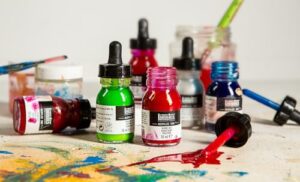
Quick answer: No, Liquitex Basics is not artist quality. It is Liquitex’s student-grade acrylic line, made to be affordable for practice, classes and hobby painting. It typically uses lower pigment loads and more hue (substitute) pigments than Liquitex’s professional Heavy Body and Soft Body lines. That said, Basics is a well-regarded student paint, water-based, easy to handle and perfectly capable of producing finished paintings.
Liquitex is one of the best-known acrylic brands, so it is easy to assume every tube under that name is professional grade. People searching “is Liquitex Basics artist quality” usually want to know whether they are getting a top-tier paint at a bargain price, or whether there is a meaningful difference from the professional range.
This guide explains what separates student and artist acrylics, where Liquitex Basics fits, what that means for color, coverage and longevity, and when Basics is the smarter buy.
Student Grade vs Artist Grade Acrylics
Paint manufacturers usually offer at least two tiers. The labels vary, but the differences follow a familiar pattern.
| Factor | Student grade | Artist (professional) grade |
|---|---|---|
| Pigment concentration | Lower; more filler or extender | Higher; stronger color per drop |
| Pigment choice | More hues (substitutes for costly pigments) | More single-pigment, traditional colors |
| Price | Uniform or low pricing across colors | Priced by pigment cost (series pricing) |
| Tinting strength | Weaker; colors lighten quickly with white | Stronger; small amounts tint a lot |
| Coverage and opacity | Often needs more coats | Typically better coverage |
| Color range | Smaller | Larger, including specialty colors |
| Lightfastness | Many colors good; check ratings | Generally high; ratings commonly listed |
Neither tier is “bad.” Student paint exists so people can learn, practice and paint large areas without spending a lot. Artist paint exists for painters who need maximum color strength and pigment purity.
Is Liquitex Basics Acrylic Artist Quality? Where It Fits
Liquitex describes Basics as its student or entry-level line. The professional range sits above it, including Heavy Body Acrylic, Soft Body Acrylic and Acrylic Ink. Basics is designed to offer the brand’s handling and consistency at a lower cost, which typically means a lower pigment load and the use of hue colors in place of some expensive pigments.
You can often spot this on the tube. A color labeled with the word “hue,” such as a cadmium hue, uses substitute pigments to approximate the look of a more costly pigment. That is standard practice for student lines across many brands.
In short: Basics is a quality student paint from a professional brand, not an artist-grade paint sold cheaply. If you are weighing up a large set, our overview of Liquitex Basics acrylic and its full tube set explains what you get for the price.
How to Tell If Any Acrylic Is Artist Quality
Brand names alone do not tell you the grade. The tube label and the manufacturer’s color chart give better clues.
- Look for the line name. Brands usually separate tiers clearly, using words like “professional,” “artists’,” “student,” “studio” or “basics.”
- Check the pigment code. Many labels list Colour Index codes such as PB29 (ultramarine blue) or PW6 (titanium white). Single-pigment colors with standard codes are common in artist lines.
- Watch for “hue.” A color name followed by “hue” uses a substitute pigment. This is common in student paints and sometimes appears in artist lines too.
- Look at series pricing. Artist lines often price colors by series, with costly pigments like cadmiums and cobalts in higher series. Student lines often keep prices uniform.
- Check lightfastness ratings. Ratings such as ASTM I or II, or a manufacturer’s star or plus system, indicate how well colors resist fading.
- Test tinting strength. Mix a pea-sized amount of a color with a fixed amount of white. Stronger paints keep their color in the mix; weaker paints turn pale quickly.
These checks help you compare any two paints, not just Liquitex lines, and make it easier to decide where higher-grade paint will actually make a visible difference.
Is Liquitex Basics Acrylic Paint Water Based?
Yes. Like all acrylic paints, Liquitex Basics is water based. The pigment is held in an acrylic polymer emulsion that is thinned and cleaned with water while wet. Once dry, the paint forms a flexible, water-resistant film that cannot be rewetted with water.
Practical implications:
- Clean brushes with water and mild soap before paint dries.
- You can thin it with water for washes, but heavy dilution weakens the film; use an acrylic medium when you want lots of flow.
- It can be mixed with other water-based acrylics, including Liquitex professional colors and acrylic mediums.
- It dries quickly, often within minutes in thin layers.
Is Liquitex Acrylic Paint Good?
Liquitex has a long history in acrylics and is widely used by students, hobbyists and professionals. The professional lines are well regarded for consistency and color range. Basics is commonly recommended as a dependable student option. Within its tier, it is generally considered one of the more consistent choices, particularly compared with very low-cost craft acrylics.
How Liquitex Basics Compares With Other Paint Types
| Paint type | Typical body | Pigment strength | Best use |
|---|---|---|---|
| Craft acrylic (bottles) | Thin, fluid | Low | Crafts, decor, kids’ projects |
| Liquitex Basics | Medium-to-heavy, creamy | Moderate | Learning, practice, studies, hobby paintings |
| Artist heavy body | Thick, buttery | High | Professional work, impasto, glazing |
| Artist soft body / fluid | Creamy to pourable | High | Smooth blends, detail, glazing |
Basics has a body that holds brushstrokes reasonably well, which makes it versatile for many techniques without needing medium.
What the Differences Mean When You Paint
Color mixing
Because student paints carry less pigment, mixtures with white lighten faster and may look slightly chalky compared with artist paints. Hue colors can also mix a little differently from the single pigments they imitate. For learning color theory, Basics works well; for precise color matching, artist paint is more predictable.
Coverage
Some Basics colors, especially transparent or lighter ones, may need two coats to cover a dark area. Opaque colors like titanium white and many earth tones cover well.
Glazing
Glazing relies on strong, clean pigment diluted with medium. Student paint can glaze, but the color thins out sooner. Artist paints usually give richer glazes.
Impasto
Basics has enough body for light texture. For heavy impasto, adding a gel medium helps it hold peaks and stretches the paint.
Longevity
Lightfastness is about pigment, not grade alone. Many Basics colors have good lightfastness ratings, but you should check the label or the manufacturer’s color chart if the work will hang in bright light for years.
Cost Versus Value
Price per tube is only part of the picture. Because artist paint carries more pigment, a small amount can go further in mixes, especially when tinting with white. Student paint is cheaper upfront but you may use more of it to reach the same color intensity or coverage. For beginners who are experimenting, wiping off and repainting often, the lower upfront cost of Basics usually wins. For painters who already know which colors they rely on, a few artist-grade tubes can be good value over time.
Who Should Use Liquitex Basics?
- Beginners learning brush control, color mixing and composition.
- Students in classes where many supplies are needed at once.
- Hobby painters who paint regularly and want reasonable quality without professional prices.
- Experienced painters doing studies, underpaintings, large backgrounds or experiments.
- Teachers and workshops needing consistent sets for groups.
When to Upgrade to Artist Quality
Consider stepping up when:
- You notice colors looking weak or chalky in mixes.
- You are selling paintings or taking commissions and want maximum lightfastness and pigment purity.
- You rely heavily on glazing or transparent layering.
- You need specific single-pigment colors that student lines do not offer.
Many painters upgrade selectively. They buy artist-grade versions of the colors they use most or the ones where pigment strength matters most, such as primary colors and white, and keep student paint for backgrounds and practice.
Mixing Basics With Professional Acrylics
Because both are water-based acrylics, Basics can be mixed with professional acrylics and acrylic mediums from Liquitex and most other brands. This lets you build a palette that balances cost and quality. A common approach is to use artist-quality white, which you use in large quantities in many mixtures, alongside student colors, or the reverse depending on your priorities.
Getting the Best Results From Liquitex Basics
- Work in thin layers and build up. Two thin coats look better than one thick, streaky coat.
- Use an underpainting. A toned ground reduces how many coats you need for coverage.
- Use mediums instead of lots of water. A gloss or matte medium increases flow while keeping the film strong.
- Keep paint moist. A stay-wet palette or misting bottle prevents waste as acrylic dries.
- Varnish finished work. An acrylic varnish evens out sheen and adds protection.
- Check labels. Look at pigment information and lightfastness ratings for colors you use most.
How to Use Liquitex Acrylic Medium With Basics
Acrylic mediums change how paint behaves without weakening it. With Basics, they are especially useful:
- Gloss or matte medium: extends paint, increases transparency for glazes and adjusts sheen. Mix in small amounts, around 10 to 25 percent, and increase as needed.
- Gel medium: adds body for texture and impasto; start around 1 part gel to 1 part paint.
- Slow-dri or retarder: extends working time for blending; follow the label limits closely, since too much can leave paint tacky.
- Pouring medium: turns paint into a pourable consistency for fluid art.
A Simple Starter Palette Using Basics
You do not need dozens of colors to learn. A compact palette teaches mixing better than a huge set, and you can add convenience colors later. A versatile starting point:
- Titanium white (buy a larger tube; you will use the most of it)
- A warm yellow and a cool yellow
- A warm red and a cool red or magenta
- Ultramarine blue and a phthalo or primary blue
- Burnt umber or burnt sienna
- Optional: yellow ochre and a black
With these colors you can mix greens, purples, oranges and a wide range of neutrals. If one color consistently disappoints in mixes, that is the one to upgrade to an artist-grade tube first.
Common Misconceptions About Student Paint
“Student paint is only for kids”
Student lines are aimed at learners of any age and at anyone who wants affordable paint for practice. Adults and professionals use them widely.
“Finished paintings need artist paint”
You can create finished, frameable work with student paint. The main trade-offs are color strength and, for some colors, lightfastness, both of which you can check on the label.
“All colors in a student line are equally weak”
Not true. Some colors, especially earth pigments and white, can perform close to their professional equivalents because the pigments are inexpensive to begin with.
Liquitex Basics in Sets
Basics is sold in individual tubes and in sets of various sizes. Sets are a cost-effective way to get a broad palette, especially for beginners who are still discovering which colors they use most. Larger sets include many convenience colors, which save mixing time but are not strictly necessary for learning. For a closer look at one of the larger options, our guide to the Liquitex Basics acrylic 48-tube set covers its color range, value and who it suits.
FAQs
Is Liquitex Basics student grade?
Yes. Liquitex positions Basics as its student or entry-level acrylic line, below the professional Heavy Body and Soft Body ranges.
Is Liquitex Basics acrylic paint water based?
Yes. It is a water-based acrylic that cleans up with water when wet and dries to a flexible, water-resistant film.
Can professionals use Liquitex Basics?
Many professionals use student paints for studies, underpaintings and large backgrounds, while relying on artist-grade paints for key colors.
Is Liquitex Basics better than craft paint?
Generally, yes. Basics typically has more pigment and a heavier body than inexpensive craft acrylics, which makes it better for painting on canvas.
Is Liquitex Basics lightfast?
Many colors have good lightfastness ratings, but it varies by color. Check the tube label or the manufacturer’s color chart.
Can you mix Liquitex Basics with Liquitex Heavy Body?
Yes. Both are water-based acrylics and can be mixed freely, along with acrylic mediums.
Final Thoughts
Liquitex Basics is not artist quality, and it is not trying to be. It is a reliable student acrylic that offers good handling and broad color choice at a price that encourages practice. For learning, studies and hobby painting, it is a strong choice; upgrade selected colors when your work demands more pigment strength. To see if a large set suits you, read our review of the Liquitex Basics 48-color acrylic paint set.