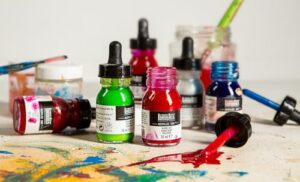
Quick answer: Paint conditioner is an additive that improves how paint flows and levels without simply watering it down. It reduces brush and roller marks, extends working time and helps paint spread smoothly. In arts and crafts, water-based (latex) paint conditioners are especially popular in acrylic pouring, where they thin paint while keeping it cohesive and help create cells, and artist-grade flow improvers and pouring mediums do a similar job with formulas designed for artwork.
If you have watched an acrylic pouring video, you have probably heard someone mention their “conditioner” or “pouring medium” as casually as their paint. Paint conditioner sounds technical, but the idea is simple: it makes paint behave better. Knowing what is paint conditioner, how it differs from water, mediums and retarders, and how much to use will help you get smoother brushwork and more predictable pours.
What Is Paint Conditioner?
A paint conditioner is a liquid additive mixed into paint to change its handling. It typically contains resins, surfactants or other flow agents. Unlike plain water, which thins paint by diluting its binder, a conditioner is designed to make paint more fluid while keeping it strong enough to form a good film.
Paint conditioners were developed for decorating paints, where the goal is a smooth finish without visible brush marks. Crafters and artists adopted them because the same properties, better flow and longer working time, are useful on canvas, wood and in fluid art.
What Paint Conditioner Does
- Improves flow and leveling. Paint spreads more evenly and brush marks settle out as it dries.
- Extends open time. Paint stays workable longer, making blending easier and reducing lap marks.
- Thins without weakening as much. It reduces viscosity while helping maintain the paint film, unlike large amounts of water.
- Reduces drag. Brushes glide more smoothly.
- Helps fluid art. In acrylic pouring, it helps colors flow, layer and form cells while limiting muddy mixing.
Types of Paint Conditioner
| Type | Works with | Typical use in crafts |
|---|---|---|
| Water-based (latex) paint conditioner | Acrylic and latex paints | Acrylic pouring, smoothing craft paint on wood and furniture projects |
| Oil-based paint conditioner | Oil-based enamels and alkyd paints | Improving flow of enamel paint on crafts and models |
| Artist acrylic flow improver | Artist acrylics | Smooth brushwork, staining, airbrush, fine lines |
| Artist pouring medium | Artist and craft acrylics | Fluid art with archival-quality results |
Household water-based conditioners are popular in fluid art because they are affordable and widely available. Artist-grade pouring mediums cost more but are formulated with artwork in mind, often aiming for clarity, flexibility and resistance to crazing. For a comparison of options, see our guide to the best paint conditioners for smooth craft finishes.
Paint Conditioner vs Other Additives
| Additive | Main job | Effect on paint film | When to use |
|---|---|---|---|
| Water | Thin paint | Weakens it if overused | Small adjustments, washes |
| Paint conditioner | Improve flow and leveling | Generally maintains film when used as directed | Smooth finishes, acrylic pouring |
| Retarder | Slow drying | Can stay tacky if overused | Blending, wet-in-wet acrylic |
| Flow improver | Reduce surface tension | Minimal when used sparingly | Staining, smooth flat color, fine lines |
| Acrylic medium | Extend paint, change sheen or body | Adds binder; strengthens | Glazing, thinning, texture |
| Thinner or solvent | Thin oil-based paint | Weakens if overused | Oil paint and enamel |
Is paint conditioner the same as paint thinner?
No. Thinners reduce viscosity by adding solvent (or water for water-based paint). Conditioners are formulated to improve flow and leveling while helping the paint keep its integrity. Using a conditioner usually gives a smoother result than adding the same amount of thinner.
How to Use Paint Conditioner for Brush Painting
For smoother craft projects, such as painted wooden signs, furniture makeovers or flat backgrounds on canvas:
- Read the label. Recommended amounts vary by product and paint type.
- Start small. Add a modest amount, often in the range of a few percent up to around 10 to 20 percent of paint volume for many decorating conditioners, then adjust.
- Stir gently, rather than shaking, to avoid air bubbles.
- Test on scrap to check flow, coverage and drying.
- Apply in thin, even coats with a quality synthetic brush.
- Allow extra drying time, since conditioners may extend it.
How to Use Paint Conditioner for Acrylic Pouring
Acrylic pouring is where paint conditioner gets most of its attention among crafters.
What you need
- Acrylic paints (craft or artist grade)
- Water-based paint conditioner or pouring medium
- Plastic cups and stir sticks
- Canvas or panel, raised on cups or a rack
- Plastic sheeting or a tray for drips
- Gloves
- Optional: silicone oil for extra cells, a heat torch, a level
Basic mixing method
- Measure paint into a cup.
- Add conditioner. A frequently used starting point is about one part paint to one to two parts conditioner, but ratios vary with paint thickness and product, so treat this as a test ratio.
- Stir slowly and thoroughly until smooth.
- Add water a little at a time if needed until the mix flows like warm honey or heavy cream. A common check is to lift the stir stick and watch the paint drizzle: it should form a thin stream that briefly mounds before leveling.
- Let mixes rest for several minutes, or longer, so bubbles rise.
- Pour using your chosen technique: flip cup, dirty pour, puddle pour, swipe or tree ring.
- Tilt the canvas to spread paint to the edges.
- Dry flat and level, covered from dust, for at least a day or two. Thick pours can take longer to fully cure.
Consistency matters more than the exact ratio
Different paints arrive at different thicknesses, so two colors may need different amounts of conditioner and water. Aim for all colors to share a similar consistency. If one is much thicker, it will sit on top or refuse to flow; if one is much thinner, it will sink and muddy.
Making Cells With Paint Conditioner
Cells form when colors of different densities and surface tensions push through each other. Conditioner helps paint flow enough for this to happen. Many pourers add a few drops of silicone oil to some or all colors, and briefly pass a heat torch over the surface after pouring to bring cells up. Be aware that silicone can cause problems with varnishing later, so clean the surface thoroughly after curing before applying a finish.
Pouring Techniques and How Conditioner Helps Each
| Technique | How it works | Consistency tip |
|---|---|---|
| Dirty pour | Layer several colors in one cup, then pour onto the canvas | Keep all colors at the same consistency so layers stay distinct |
| Flip cup | Layered cup is flipped onto the canvas and lifted | Slightly thicker mixes help prevent colors blending into mud |
| Puddle pour | Colors poured into each other in concentric puddles | Medium consistency lets rings spread without merging |
| Swipe | A base color is swiped over poured colors with a card or paper towel | The swipe color should be slightly thinner than the others |
| Tree ring | A layered cup is moved in small circles while pouring | Even consistency gives clean, distinct rings |
Across all of these, conditioner’s job is the same: let the paint travel across the surface while each color keeps its identity. Without it, paint thinned only with water tends to blend into murky tones and is more likely to crack as it dries.
Finishing and Varnishing a Pour
Pours need time and care before they are finished.
- Let the piece cure fully. Surface-dry pours can still be soft underneath. Many pourers wait at least a few days, and longer for thick pours, before varnishing.
- Remove silicone residue if you used silicone oil. Gently wipe the surface with a soft cloth and a little mild dish soap and water, or a cleaner recommended by your varnish maker, then rinse and let it dry.
- Choose a varnish compatible with acrylic, such as a water-based polymer varnish or a pour-on resin for a glassy finish.
- Apply in thin coats in a dust-free space, following the product’s instructions for drying between coats.
Varnish protects the surface from dust and UV, deepens colors and gives a consistent sheen, which matters if you plan to sell or display pours.
Paint Conditioner vs Pouring Medium
| Feature | Household water-based conditioner | Artist pouring medium |
|---|---|---|
| Cost | Lower | Higher |
| Formulated for | Decorating paints | Artwork |
| Cells | Often encourages cells | Varies; some are designed for smooth, cell-free pours |
| Crazing resistance | Variable | Often a design goal |
| Archival qualities | Not usually stated | Often stated |
| Best for | Practice, decor, high-volume pours | Work you want to sell or keep long term |
Many crafters practice with an affordable conditioner and switch to an artist pouring medium for pieces they plan to sell or gift. The top paint conditioner picks for crafters include both budget and artist-grade choices.
Troubleshooting
| Problem | Likely cause | Fix |
|---|---|---|
| Cracking or crazing as it dries | Too much water, too thick a pour, or fast drying | Use less water, more conditioner or medium; dry in a stable, draft-free room |
| Muddy colors | Over-mixing during pouring, or mixes too thin | Thicken slightly; pour and tilt less |
| No cells | Mixes too thick or similar density | Thin slightly; try silicone and a quick torch pass |
| Paint slides off canvas entirely | Mix too thin | Add more paint; reduce water |
| Lots of bubbles | Vigorous stirring | Stir slowly; let mixes rest; torch lightly |
| Tacky surface after days | Too much conditioner or retarder, or humid conditions | Allow more curing time; adjust the next batch |
Keeping a Pouring Notebook
Because results depend on paint brand, conditioner, room temperature and humidity, a simple log speeds up learning. For each pour, note the colors and brands, the paint-to-conditioner ratio, how much water you added, any silicone, the technique, and the room conditions. Add a photo of the dried result. After a handful of pours, patterns appear, and you can repeat your best results on purpose.
When Not to Use Paint Conditioner
- When you want visible, textured brushstrokes or impasto.
- For watercolor or gouache, which use different additives such as gum arabic.
- With oil paints unless the conditioner is specifically made for oil-based paint.
- When the product label says it is incompatible with your paint.
Safety and Cleanup
- Work in a ventilated area, especially with oil-based conditioners.
- Wear gloves for pouring; it gets messy.
- Don’t pour leftover paint down the drain. Let it dry in cups or on plastic and dispose of it with household trash according to local rules.
- Clean water-based conditioner from tools with soap and water before it dries.
- Keep products away from children and pets, and follow label warnings.
Common Mistakes
- Using only water instead of conditioner for pours, which can weaken the paint and cause cracking.
- Ignoring consistency differences between colors.
- Adding too much conditioner, leading to slow drying or a weak film.
- Drying pours on an uneven surface, so paint drifts to one side.
- Varnishing over silicone residue without cleaning first.
FAQs
What does paint conditioner do?
It improves flow and leveling, extends working time and reduces brush marks, helping paint go on smoothly without simply diluting it.
Can I use paint conditioner with acrylic paint?
Yes. Water-based conditioners are commonly used with acrylic paints, especially for acrylic pouring. Check the label for compatibility.
What is the ratio of paint to conditioner for pouring?
A common starting point is about one part paint to one to two parts conditioner, then adjusting with water to reach a honey-like consistency. Ratios vary by paint and product.
Is paint conditioner the same as pouring medium?
They do similar jobs. Pouring mediums are formulated specifically for artwork, while many conditioners were designed for decorating paints.
Can I use water instead of paint conditioner?
For small adjustments, yes. For pouring or large amounts of thinning, water alone can weaken the paint film and increase cracking.
Does paint conditioner change the color?
Most dry clear and have little effect on color, though thinning paint can make colors slightly less intense. Test on scrap.
Final Thoughts
Paint conditioner is a quiet helper: it makes paint flow, level and stay workable so your craft projects look smoother and your pours behave more predictably. Start with the label’s guidance, test on scrap, and adjust consistency rather than chasing a perfect ratio. To pick a conditioner or pouring medium for your next project, browse our best paint conditioners for painting crafts and compare options by finish and budget.