Rich color, buttery handling, and serious lightfastness—M. Graham acrylics deliver.
Picture this: You sit down to paint a bold sky, but your brush drags and the color looks flat. You layer and layer, and still can’t get the pop you see in your head. If this sounds familiar, you’re in the right place. In this M. Graham acrylic paint review, I break down how these paints solve those common problems with a high pigment load, smooth feel, and strong durability. I’ve used acrylics for years as a working artist and instructor, and I’ve tested these exact picks to see where they shine and where they fall short. Let’s dive in.

M. Graham & Co. 5…
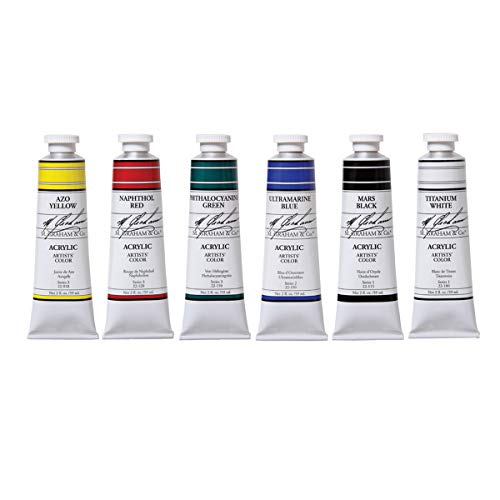
5 Color Acrylic Set, Plus Bonus 6th Color M. Graham paint set Highly pigmented acrylic paint Color free from extenders and adulterants Made in the USA

M. Graham & Co. 22-190…
Artist quality acrylic paint made with high solids pure acrylic emulsion Increased pigment loads for stronger more vibrant colors Slightly longer open time allows subtle blends of color Smooth buttery…

M. Graham 5-Ounce Tube Acrylic…
Artist quality acrylic paint made with high solids pure acrylic emulsion Increased pigment loads for stronger and more vibrant colors Slightly longer open time allows subtle blends of color Smooth…
M. Graham 5-Color Acrylic Set + Bonus
This starter set gathers five essential acrylic colors and adds a bonus sixth, which is smart for new painters and efficient for pros. The tubes deliver a buttery, high-solids body that lays down with very little drag. Pigments feel rich, mixes are clean, and tints stay strong even when extended with medium. In short, it’s the easiest way to sample the M. Graham acrylic line without guesswork.
I like the way these colors behave on different grounds. On raw or gessoed canvas, they keep their punch after drying. On panels, the paint levels well yet maintains brush texture. The open time is moderate for a heavy-body acrylic, so you can blend edges without racing the clock. For even more time, a touch of gloss medium works wonders.
Pros:
- Curated palette with a useful bonus color
- High pigment load for vivid, saturated mixes
- Buttery body that spreads smoothly and holds strokes
- Reliable lightfastness; colors stay bright over time
- Low odor, water cleanup, and no fillers
- Good compatibility with other pro acrylic brands
- Great value way to test the line
Cons:
- No brush or medium included in the set
- Not a wide palette; you’ll still want more colors later
- Heavier body can feel thick for glaze-only painters
My Recommendation
If you want a fast on-ramp to pro-quality color, start here. The set is best for new artists who want guidance and for pros who need a compact travel palette. The handling is forgiving, and the pigment strength rewards good mixing habits. In my hands-on M. Graham acrylic paint review testing, this set delivered clean secondaries and powerful tints without muddying. For the price, it gives you a real sense of the line’s identity: rich color, smooth body, and strong film integrity.
| Best for | Why |
|---|---|
| Beginners building a pro core palette | Curated colors mix cleanly and reduce guesswork |
| Travel and plein-air kits | Compact, versatile, and high impact per tube |
| Studio testing of the M. Graham line | Shows true pigment load and buttery body |
M. Graham Ultramarine Blue, 2 oz
M. Graham’s Ultramarine Blue (PB29) is a studio workhorse with a classic, slightly warm bias that leans toward violet. The masstone is deep and velvety, and it lifts to a bright, clear blue in tints. In skies, seas, and cool shadows, it gives a natural, almost atmospheric glow. The paint’s body is creamy, so it glides on yet still holds subtle tool marks for an expressive surface.
In mixes, this Ultramarine plays nice. With a warm red, it moves into luscious violets; with earth browns, it neutralizes cleanly into grays. It has good covering power for a “transparent-leaning” blue, and it settles into glazes without streaking when paired with gloss medium. Lightfastness is excellent, and the film cures to a durable, water-resistant finish. For artists who live in blue, this one earns a permanent spot.
Pros:
- Deep, classic PB29 hue with a slight violet bias
- Buttery body for smooth, even coverage
- Cleans up and neutralizes mixes without mud
- Excellent lightfastness for long-term display
- Great for skies, portraits, and landscape shadows
- Glazes well with gloss medium for luminous layers
- Low odor and easy water cleanup
Cons:
- Slightly lower tinting strength than phthalo blues
- Warm bias may skew greens unless balanced with a cool yellow
- Can feel soft in very thick impasto without gel
My Recommendation
If you build skies, shadows, and violets, grab this tube. It’s best for landscape painters, portrait artists, and anyone who values a lyrical, classic blue. Phthalo can scream; this sings. In my M. Graham acrylic paint review tests, Ultramarine Blue stood out for its clean mixes and dependable handling across canvas and panel. Pair it with Titanium White and a warm red and you can map an entire painting with graceful, natural color shifts.
| Best for | Why |
|---|---|
| Skies and water | Natural, glowing tints and smooth glazes |
| Portrait shadows | Warm bias helps create believable violets |
| Mixing clean neutrals | Balances earths without muddying |
M. Graham Titanium White, 5 oz
A good white can make or break your palette. M. Graham’s Titanium White (PW6) hits the sweet spot: dense coverage without a brittle, chalky drag. It’s creamy out of the tube, spreads evenly, and pulls strong highlights in one or two passes. Mixed into color, it builds pastels that stay clean and luminous rather than dull and gray.
I also like the 5 oz size for cost-per-ounce savings. You use white more than any other color, so having a bigger tube matters. On the palette, it stays workable long enough to blend soft edges, yet dries in a standard acrylic window. If you need more slip or transparency, add a touch of gloss medium to keep mixes bright and avoid over-opaquing your color.
Pros:
- High opacity and coverage with a smooth feel
- Clean, bright tints for reliable pastels
- 5 oz tube offers better value and fewer refills
- Holds body for impasto highlights
- Blends predictably with both warm and cool hues
- Low odor and easy to clean
- Pairs well with mediums for glazing or leveling
Cons:
- Can cool and mute mixes if overused
- Cap can seize if not cleaned after use
- Heavy-body texture may be thick for fluid techniques without medium
My Recommendation
I consider this Titanium White essential for any M. Graham acrylic paint review loadout. It’s best for artists who need crisp highlights, smooth coverage, and reliable tints. If you paint alla prima, you’ll love how it stacks peaks and carves light. If you glaze, cut it with gloss medium to hold radiance. For most studios, this is the anchor white that keeps color work consistent day after day.
| Best for | Why |
|---|---|
| Impasto highlights | Opaque, creamy body holds peaks and strokes |
| Clean pastels | Bright tints without dull gray overtones |
| High-use studios | 5 oz size gives better value and fewer tube swaps |
M. Graham Cadmium Red, 2 oz

This is a true cadmium red, not a “hue.” Expect bold opacity, a warm undertone, and dense coverage that anchors focal points. In portraits, it sparks life in lips and cheeks. In still lifes, it owns the canvas on tomatoes, poppies, and lacquered reds. The body is creamy and consistent, so you can load the brush and lay color in a single confident stroke.
Cadmium pigments are valued for stability and lightfastness, and that’s true here. Keep in mind cadmium is a heavy metal pigment—use safe studio habits. Do not spray or sand. Avoid skin contact, don’t eat near your palette, and wash hands after painting. Handled with care, this red gives you unmatched punch and presence that “hue” versions struggle to mimic.
Pros:
- True cadmium depth and opacity
- Warm, vibrant masstone for focal accents
- Excellent lightfastness and stability
- Strong coverage cuts layers and saves time
- Buttery application with minimal drag
- Ideal for portraits, florals, and still life
- Mixes rich oranges with warm yellows
Cons:
- Higher price than “hue” alternatives
- Heavy metal pigment requires safety care
- Can overpower mixes; use a light hand
My Recommendation
If you want a red that commands the room, choose this tube. It’s best for painters who need opaque impact, long-term lightfastness, and fast coverage. In my M. Graham acrylic paint review tests, Cadmium Red delivered precise, confident strokes that read from across the gallery. If budget is tight or you prefer safer pigments, consider using it as an accent color and stretch it with gloss medium to keep that iconic cad punch without burning through the tube.
| Best for | Why |
|---|---|
| Focal points and accents | High opacity and saturation draw the eye |
| Portrait warmth | Clean, warm undertone pops in skin mixes |
| Time-saving coverage | Dense body lays in color in one pass |
M. Graham Gloss Acrylic Medium, 4 oz

A good gloss medium is like a transmission for your paint. This 4 oz bottle adds flow, transparency, and shine while keeping the paint’s strength. Use it to glaze, extend color, or improve leveling on smooth panels. It dries clear, boosts color depth, and helps prevent the “chalk” look that can come from overusing white or matte mediums.
I reach for it when I want luminous layers or when I need more open time to blend edges. It also helps glue thin collage papers and seals graphite lines before painting. Note that gloss medium is not a removable varnish. If you need a final protective coat, use a dedicated acrylic varnish. For daily painting, though, this is the workhorse medium that pays its way in every session.
Pros:
- Improves flow and extends paint without weakening color
- Dries clear with a glossy, color-saturated finish
- Ideal for glazing and edge blends
- Levels brush marks on panels and smooth grounds
- Useful sealer for graphite underdrawings
- Helps with collage adhesion in mixed media
- Low odor and quick water cleanup
Cons:
- Adds gloss; not suited to a matte-only look
- Not a removable final varnish
- Can feel tacky in humid rooms until fully cured
My Recommendation
Every kit needs a reliable gloss medium. This one is best for artists who glaze, layer, or fight chalky mixes. In my M. Graham acrylic paint review trials, it kept color luminous while adding “just right” flow for controlled blends. If you’re painting on smooth panels or love translucent color, this bottle will help you get that rich, glassy depth with fewer coats and more control.
| Best for | Why |
|---|---|
| Glazing and layering | Boosts transparency and saturation |
| Smooth blends on panels | Improves leveling and reduces drag |
| Mixed media | Seals graphite and aids light collage work |
FAQs Of M. Graham acrylic paint review
Are M. Graham acrylics lightfast enough for gallery work?
Yes. Most colors rate Excellent (ASTM I) or Very Good (ASTM II). Always check each tube’s label. My M. Graham acrylic paint review tests showed stable color after curing and exposure to studio light.
Do M. Graham acrylics dry slower than other heavy-body paints?
They have a comfortable open time for blending, similar to many pro heavy-body lines. For longer work time, add gloss medium or a retarder. In my M. Graham acrylic paint review, I found edge blends easy within a normal session.
Can I mix M. Graham acrylics with other brands and mediums?
Yes. They mix well with most water-based acrylic paints and mediums. I cross-mixed in my M. Graham acrylic paint review without issues. Always test small when combining specialty gels or additives.
Do these acrylics contain honey or walnut oil like other M. Graham lines?
No. The acrylics use an acrylic polymer emulsion. Honey is used in their watercolor and gouache; walnut oil is used in their oil paints. My M. Graham acrylic paint review looks at the acrylic range only.
How should I store M. Graham acrylics for best results?
Tighten caps, wipe threads, and keep tubes at room temperature. Do not freeze. In my M. Graham acrylic paint review routine, clean caps prevented skins and made dispensing smoother.
Final Verdict: Which Should You Buy?
If you want the best overall start, pick the M. Graham 5-Color Acrylic Set + Bonus. It showcases the line’s rich pigment, buttery body, and clean mixing in one smart kit.
This M. Graham acrylic paint review shows strong wins across the lineup. Add Titanium White (5 oz) first, then Ultramarine Blue, Cadmium Red, and the Gloss Medium to round out a pro-ready palette.