
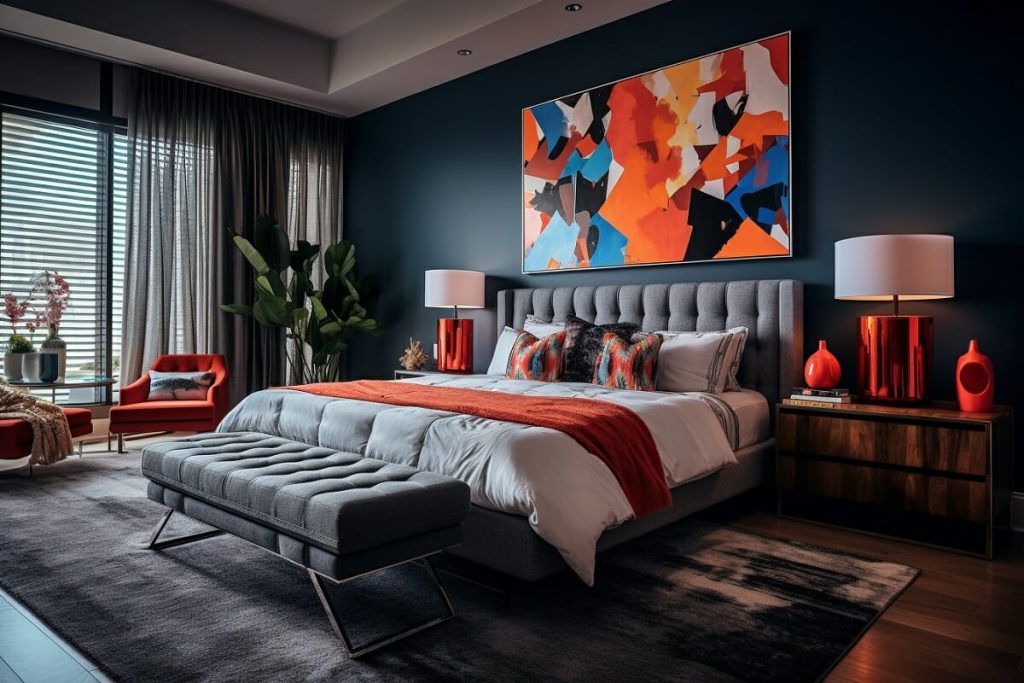
Quick answer: The most effective painting ideas for a bedroom are a calming color scheme (soft blues, sage greens, warm whites or deep moody tones), a painted headboard shape or accent wall, two-tone walls split at chair-rail height, a color-drenched room where walls, trim and ceiling share one shade, a painted ceiling, and a few pieces of your own canvas art above the bed. Choose an eggshell or matte finish, test large samples in both daylight and lamp light, and keep strong colors behind the bed where they frame rather than overwhelm.
The bedroom is the room where color has the most direct effect on how you feel at the start and end of every day. A fresh coat of paint, a painted feature behind the bed or a canvas you made yourself can change the entire mood without new furniture. Good painting ideas for a bedroom start with how you want the room to feel, then use color, placement and finish to get there.
This guide covers color schemes by mood, painted wall techniques from simple to ambitious, step-by-step instructions for a painted headboard, finish and lighting advice, and ideas for painting your own bedroom artwork. If you enjoy refreshing your space through the year, our seasonal painting ideas include small canvases and decor projects you can rotate as the seasons change.
Start With the Mood You Want
Color associations are partly personal and cultural, so treat the table below as a starting point rather than a rule. Many people find that softer, less saturated colors feel more restful in a bedroom than bright, high-contrast ones.
| Mood | Color families | Pairs well with |
|---|---|---|
| Calm and airy | Soft blue, blue-gray, pale aqua | White bedding, light wood, linen |
| Grounded and natural | Sage, olive, eucalyptus green | Rattan, oak, terracotta accents |
| Warm and cozy | Warm white, oatmeal, mushroom, clay | Wool throws, brass lamps, walnut |
| Romantic | Blush, dusty rose, mauve | Cream, gold, velvet |
| Moody and enveloping | Navy, charcoal, forest green, aubergine | Brass, white bedding, warm lighting |
| Bright and energizing | Butter yellow, coral, sky blue | White trim, natural fibers |
How Light Changes Color
- North-facing rooms receive cooler, indirect light. Warm-leaning colors can keep them from feeling chilly.
- South-facing rooms get warm, bright light. Cool colors balance the warmth; warm colors glow.
- East-facing rooms are bright and warm in the morning, cooler later.
- West-facing rooms are cooler in the morning and warm in the evening.
- Lamp light in the evening is warm and yellowish. Bedrooms are used heavily at night, so always check samples under your actual bulbs.
Painting Ideas for Bedroom Walls
1. Painted Headboard
Paint a rectangle, arch or rounded shape behind the bed in a contrasting color. It acts as a headboard, adds a focal point and costs only a quart of paint.
2. Classic Accent Wall
Paint the wall behind the bed a deeper or bolder color than the rest. Keep the other walls neutral so the accent stands out without overpowering the room.
3. Two-Tone Walls
Paint the lower third or half of the walls in a deeper shade and the upper portion lighter, divided by a crisp horizontal line or a strip of molding. This grounds the room and feels tailored.
4. Color Drenching
Paint walls, trim, doors and sometimes the ceiling in the same color, or very close shades. The effect is enveloping and calm, and it makes small bedrooms feel cohesive rather than chopped up.
5. Painted Ceiling
A soft blue, blush or even a deep color on the ceiling creates a canopy effect. Pale tints of the wall color are a subtle way to start.
6. Arched Niche or Window Frame
Paint an arch around a window or a reading nook to define the space.
7. Color-Blocked Corners
Paint geometric shapes that wrap around a corner, such as a large circle half on each wall, for a modern look.
8. Ombre Wall
Blend from a deeper shade near the floor to a light shade at the ceiling. It requires blending while wet but creates a dreamy, sky-like effect.
9. Vertical Stripes
Wide tone-on-tone stripes in the same color with different sheens (matte and satin) feel subtle and elegant.
10. Hand-Painted Mural
Mountains, abstract shapes, botanical vines or soft clouds painted across the wall behind the bed. Keep palettes muted for a restful result.
11. Painted Wainscot Look
Create the look of panel molding with painted rectangles in a slightly darker shade, outlined with thin lines.
12. Painted Door or Closet
Paint the bedroom door or closet doors in an accent color as a smaller-scale statement.
Step-by-Step: Painted Arch Headboard
You need: pencil, tape measure, level, string, painter’s tape, small angled brush, mini roller and tray, quart of paint in your accent color.
- Size it. Make the arch slightly wider than the bed frame, about 4–8 inches on each side, and tall enough to rise 18–30 inches above the top of the mattress or existing headboard.
- Mark the center. Measure the bed’s center and draw a faint vertical line with a level.
- Draw the arc. Tie string to a pencil. Pin the other end on the center line at the height where the curve should start. Use a string length equal to half the arch width and swing a semicircle.
- Draw the sides. Use a level to draw vertical lines from each end of the arc down to the floor or baseboard.
- Tape. Tape the outside of the straight lines. For the curve, use short overlapping tape pieces or paint freehand with an angled brush.
- Seal edges. Brush the base wall color along tape edges to prevent bleeding.
- Paint. Cut in edges with the brush, then roll the interior. Apply two coats.
- Remove tape while the final coat is slightly damp.
- Style. Center the bed in the arch and hang a lamp or small art piece within the shape.
Choosing Paint Finish for Bedrooms
| Finish | Look | Washability | Best use |
|---|---|---|---|
| Flat / matte | Velvety, hides imperfections | Lower (improved in many modern formulas) | Adult bedrooms, ceilings |
| Eggshell | Soft low sheen | Good | Most bedroom walls |
| Satin | Gentle glow | Very good | Kids’ and teen rooms, trim in color-drenched rooms |
| Semi-gloss | Shiny | Excellent | Trim, doors |
Bedroom Color Schemes That Work
Soft Coastal
Pale blue-gray walls, white trim, sandy linen bedding and pale wood. Add a navy throw for depth.
Earthy Sage
Sage green walls, cream bedding, terracotta pillows and oak furniture. Calming and natural.
Moody Navy
Deep navy on all walls or behind the bed, white bedding, brass lamps and warm bulbs. Cozy at night.
Warm Neutral Layers
Oatmeal walls, mushroom trim, cream bedding and walnut accents. A tonal palette that feels quiet and sophisticated.
Romantic Blush
Dusty rose walls, deeper mauve headboard arch, white bedding and gold accents.
Forest Retreat
Deep green walls, natural wood, cream textiles and plants for a cabin-like feel.
Painting Your Own Bedroom Artwork
Painted walls set the backdrop; artwork adds personality. Painting your own art lets you match colors exactly to the room.
- Abstract in your wall palette: use the wall color, a deeper shade and one accent on a large canvas.
- Soft landscapes: misty mountains or seascapes in muted tones above the bed.
- Botanical diptych: two tall panels flanking the bed, each with a single leaf or stem.
- Line art figures: minimalist black line drawings on white canvas for modern bedrooms.
- Textured neutral canvas: palette-knife texture paste painted in cream or white for subtle dimension.
As a rule of thumb, art over a bed looks balanced when it spans about two-thirds of the bed’s width and hangs 8–12 inches above the headboard.
Ideas for Specific Bedrooms
Small Bedrooms
Light colors and color drenching can make small rooms feel more cohesive. Painting the ceiling a lighter tint of the wall color softens edges. A painted headboard saves floor space compared with a bulky frame.
Teen Bedrooms
Teens often enjoy bolder murals, color blocking and personal art. Letting them choose colors within a few agreed options gives ownership. Our list of painting ideas for teenagers has creative projects for that age group.
Guest Rooms
Neutral or soft colors suit most guests. A painted headboard or a single artwork adds character without being too personal.
Rental Bedrooms
If painting is restricted, paint large canvases or panels instead and lean them behind the bed as a removable headboard.
How to Test Paint Colors Properly
Most disappointing paint jobs come from choosing a color off a small chip under store lighting. A short testing routine prevents that.
- Narrow to three candidates. More than that becomes confusing.
- Use large swatches. Paint sample boards or poster board at least 12×12 inches, ideally larger, with two coats.
- Move them around. Tape each board on the wall behind the bed, next to a window and in the darkest corner.
- Check at three times of day. Look in the morning, mid-afternoon and at night with lamps on.
- Compare against fixed elements. Hold samples next to flooring, bedding, curtains and wood furniture.
- Live with them for two or three days. First impressions often change.
Painting samples on boards rather than directly on the wall also avoids old sample patches showing through the final coats.
Small Painted Details With Big Impact
Not every bedroom refresh needs a full repaint. Smaller painted projects can shift the mood in an afternoon:
- Paint the inside of a bookshelf or alcove in an accent color.
- Paint a nightstand or dresser to match a painted headboard shape.
- Paint picture frames in a unified color for a cohesive gallery wall.
- Paint a narrow stripe at picture-rail height around the whole room.
- Paint window trim a soft contrasting color instead of white.
How to Prep and Paint a Bedroom
- Move furniture to the center and cover it.
- Remove outlet covers and switch plates.
- Fill holes, sand smooth and wipe walls clean.
- Tape trim and ceiling edges.
- Prime patches or dramatic color changes if needed.
- Cut in edges with a brush, then roll walls in sections using a W pattern.
- Apply a second coat after the recommended drying time.
- Remove tape, replace covers and ventilate the room before sleeping in it. Low-VOC paints reduce odor but airing out remains wise.
Common Bedroom Painting Mistakes
- Choosing from a tiny chip. Test large samples on multiple walls.
- Ignoring night lighting. Bedrooms are used in lamp light; colors can look very different.
- Too many accent walls. One focal point is usually enough.
- Stark white in a north-facing room. It can look gray and cold; warmer whites help.
- Skipping primer for big color changes. Dark-to-light transitions often need extra coats.
- Sleeping in a freshly painted room immediately. Ventilate first.
FAQs
What is the most relaxing color to paint a bedroom?
Many people find soft blues, sage greens and warm neutrals relaxing because they are low in saturation. The best choice also depends on your light and personal associations, so test samples in your room.
Should I paint an accent wall in my bedroom?
An accent wall behind the bed creates a natural focal point. Keep other walls neutral and choose a color that complements your bedding and furniture.
What paint finish is best for a bedroom?
Eggshell is the most common choice, offering a soft look with good washability. Matte is popular in adult bedrooms for its velvety appearance, while satin suits kids’ rooms that need frequent cleaning.
Can I paint my bedroom a dark color?
Yes. Dark colors like navy, charcoal and forest green create a cozy, enveloping feel, especially with warm lighting and lighter bedding. They work in small rooms too, particularly when color-drenched.
How do I paint a headboard on the wall?
Mark a rectangle or arch slightly wider than the bed with a level and string, tape the edges, seal the tape with base color, and paint two coats of your accent color.
What art size should go above a bed?
Aim for artwork about two-thirds the width of the bed, hung 8–12 inches above the headboard. A pair of panels can work if they span similar width together.
Final Thoughts
Decide how you want your bedroom to feel, test colors in your own light, and choose one strong idea such as a painted headboard, color drenching or a mural. Add a few pieces of your own artwork in the same palette to make the room unmistakably yours.
For small canvases and decor projects you can rotate through the year, explore our best seasonal painting projects and keep your bedroom feeling fresh in every season.




