Quick answer: Paint looks streaky when the pigment is spread too thin to cover evenly, when brushstrokes are laid in different directions or over paint that has started to dry, or when the paint itself is a low-pigment or transparent color that was never going to cover in one coat. The fixes are to use more paint and less water, apply two or three thin coats in the same direction, let each coat dry before the next, choose opaque pigments for flat areas, and work on a primed, non-absorbent surface.
A streaky layer of paint is one of the first frustrations people meet with a brush in hand. The color looks fine on the palette, then dries on the canvas or paper as a patchy haze with visible brush lines, lighter bands where the bristles ran out, and darker bands where strokes overlapped. If you have asked yourself why does my paint look streaky, the cause is almost always one of a short list, and most of them come down to coverage, timing and surface.
This guide goes medium by medium, since streaks in acrylic, watercolor and gouache have different causes, then finishes with the habits that prevent them. Low-quality student paints are a frequent culprit, and if you suspect that is the issue, the guide to beginner paint sets with good pigment load explains what to look for in a starter set.
First, Identify the Kind of Streak
Look closely at the dry paint. The pattern tells you the cause.
- Parallel lighter and darker bands following the brush direction: the paint is too thin or the brush is running dry mid-stroke. Coverage problem.
- Crisscross lines where strokes overlap in different directions: you are brushing over paint that has begun to set, or changing stroke direction. Timing and technique problem.
- Translucent patches where the underlayer or white ground shows through evenly: the pigment is transparent or weak. Paint quality or color choice problem.
- Hard-edged lighter bands in a watercolor wash: the wash dried in sections while you worked (backruns and drying lines). Water and speed problem.
- Dull chalky streaks in a dark color: too much white or water added, or a matte medium drying unevenly.
- Streaks only on the first layer, with later layers fine: an absorbent or unprimed surface drank the binder.
Why Acrylic Paint Looks Streaky
Cause: too much water
Acrylic thinned with more than about 25 to 30 percent water loses its ability to form a continuous film. The binder is spread so thin that pigment settles in the brush tracks and leaves gaps. Fix: use paint closer to tube consistency for flat areas, and thin with an acrylic medium (glazing, flow or matte medium) instead of water when you want it looser. Mediums add binder; water only subtracts it.
Cause: brushing over paint that has begun to dry
Acrylic skins over in a few minutes, faster in a warm or dry room. Dragging a brush through a half-dry layer lifts and smears it, leaving ridges and bare lines. Fix: work in sections small enough to finish while wet, use a mister to keep the surface workable, or add a retarder or slow-drying medium. If an area has started to set, leave it, let it dry fully, and recoat.
Cause: expecting one coat to cover
Even good acrylics in opaque colors often need two coats over a contrasting ground; thin student paints may need three or four. Fix: plan on two coats. Let the first dry completely (it will look streaky; ignore it), then apply the second in the same direction. Most streaking vanishes with the second coat.
Cause: transparent or low-pigment colors
Some pigments are inherently transparent: quinacridones, phthalos, dioxazine purple, many yellows and hansa colors. Student-grade paints also replace costly pigments with less of a cheaper one and more filler. Neither covers in a flat, even layer. Fix: for flat areas, choose opaque pigments (titanium white, cadmium or cadmium-hue reds and yellows, most earth colors, mars black, cobalt teal) or mix a touch of white or an opaque color into a transparent one. Save transparent colors for glazing over a dry opaque base.
Cause: the wrong brush
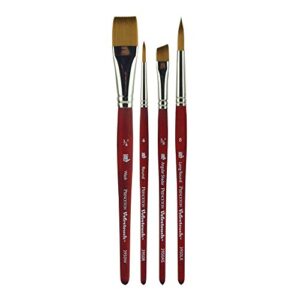
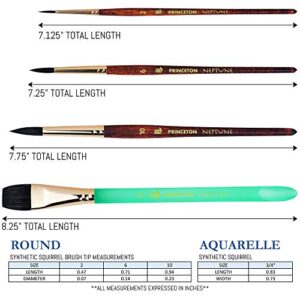
Stiff, cheap bristle brushes leave deep tracks in acrylic, and small brushes run dry quickly on a big area. Fix: use a soft synthetic flat or filbert for smooth areas, as wide as the shape allows, and load it fully before each stroke.
Cause: an absorbent surface
Raw canvas, unprimed wood, cardboard and paper soak up the binder from the first coat, so the pigment sits chalky and uneven on top. Fix: prime with two coats of gesso, sanded lightly, or seal the surface with a coat of matte medium before painting.
Why Watercolor Looks Streaky
Streaks in watercolor are usually not a pigment problem but a water-flow problem.
- Uneven wetness. A flat wash needs the whole area to dry at the same rate. If part of it dries first, the next stroke creates a hard line (a drying line or “backrun”). Fix: tilt the board about 15 degrees, mix more wash than you think you need, load the brush generously, and keep a bead of wet paint along the bottom edge that you pick up with each new stroke. Work quickly and do not go back.
- Scrubbing. Going back over a drying wash to “fix” it lifts pigment and leaves streaks. Fix: let it dry, then glaze another even wash over the top; two light washes look smoother than one worked-over wash.
- Too little paint in the mix. A wash that is nearly all water deposits pigment unevenly as it dries. Fix: mix a stronger wash and test it on scrap.
- Paper that is too thin or hot-pressed. Thin paper buckles and pools; smooth paper dries fast and shows every stroke. Fix: use 140 lb cold-press paper for flat washes and stretch or tape it.
- Granulating pigments. Some colors (ultramarine, cerulean, many earth colors) separate into texture by design. That is granulation, not a fault; use non-granulating pigments if you want a smooth wash.
Why Gouache and Tempera Look Streaky
Opaque water media streak when the paint is either too thick (it drags and leaves brush texture) or too thin (it goes translucent and patchy). The sweet spot is the consistency of heavy cream. Other causes:
- Rewetting the layer below. Gouache stays water-soluble, so a wet second coat can lift the first. Fix: let the first layer dry fully, use a lightly loaded brush, and lay the second coat with minimal passes.
- Old or separated paint. Gouache that has dried in the tube or separated into binder and pigment covers unevenly. Fix: mix thoroughly on the palette with a drop of water until uniform.
- Cheap poster paint. Low pigment load means streaks. Two coats or a better paint are the only fixes.
Why Is My Paint Streaking on the Second Coat Too?
If streaks persist after two careful coats, the problem is usually one of these:
- The paint is a transparent pigment. Check the tube for a transparency symbol (an empty square usually means transparent; a filled square means opaque). Switch to an opaque color or underpaint with white.
- The paint is heavily diluted. Try it straight from the tube on a scrap.
- The surface is still absorbing. Add a gesso coat.
- Brush direction is changing between coats. Keep every coat parallel.
- The room is too warm or dry and the paint sets before leveling. Mist the surface or add retarder.
Technique for a Streak-Free Flat Area
- Prime the surface and let it dry.
- Mix enough paint for the entire area, at tube consistency or slightly thinned with medium. Running out and remixing mid-area causes a visible seam.
- Use the widest soft flat brush the shape allows.
- Load the brush fully, then lay paint in overlapping parallel strokes, each starting in the wet edge of the last.
- Do not go back into drying paint. If you miss a spot, leave it for the next coat.
- Let the coat dry completely.
- Apply a second coat in the same direction. For very flat color, a third.
- Finish with a light “tipping” pass: an almost-dry brush dragged lightly in one direction to level the surface while the final coat is still wet.
Streaks Caused by Sheen Rather Than Color
Sometimes the color is even but the surface still reads as streaky under a lamp. This is a sheen problem, not a coverage problem. Acrylics dry glossier where the paint is thick and more matte where it is thin, so a layer with uneven thickness reflects light in bands. Mixing a matte medium into some strokes and not others, or using a gloss color next to a matte one, produces the same effect. To check, view the painting from an angle in raking light; if the streaks disappear when you look straight on, the issue is sheen.
The fix is a unifying topcoat. Once the painting is fully dry, apply a thin, even coat of acrylic varnish or an isolation coat of soft gel medium thinned with water across the entire surface. One consistent finish, whether gloss, satin or matte, hides thickness differences and makes the color read as a single plane. On works that will not be varnished, keeping the paint film at a similar thickness throughout, and adding the same medium to every mix, prevents the problem in the first place.
Watercolor has a related effect: heavily pigmented areas can dry with a slight bronzy sheen (sometimes called bronzing), especially with phthalo and some dark colors applied too strongly. Diluting the mix slightly or lifting excess with a damp brush while wet avoids it.
When Streaks Are Not a Problem
Visible brushwork is a style in its own right, and much expressive painting depends on it. Dry-brush streaking over a dry layer is how painters suggest wood grain, grass, hair, weathered surfaces and motion. Scumbling, where a light color is dragged thinly over a darker dry layer, is streaky by definition and gives atmospheric depth. The techniques above are for when you want a flat, even area; when you do not, the same causes become tools.
Preventive Habits
- Keep a spray bottle to mist acrylics and keep a palette workable.
- Mix more than you need; leftovers keep in a sealed container for a few days.
- Test consistency on scrap before touching the painting.
- Replace stiff, splayed brushes; they cause tracks no technique can fix.
- Choose paints with real pigment names on the label (for example, “PW6 titanium white” or “PR108 cadmium red”) rather than only marketing names. Pigment codes are a quick indicator of a paint’s covering power once you learn which are opaque.
- Work in moderate temperature and humidity; a fan or heater pointed at the easel dries paint before it levels.
FAQs
How do I stop acrylic paint from streaking?
Use paint at or near tube consistency, thin with medium rather than water, apply two coats in the same direction, let each dry completely, and use a soft wide synthetic brush on a primed surface.
Why does my paint look streaky when it dries but fine when wet?
Water-based paints lose volume as water evaporates, so a thin layer that looked continuous while wet shrinks and reveals gaps in coverage. A second coat solves this.
Does cheap paint streak more?
Generally yes. Student and craft paints contain less pigment and more filler, so they are more transparent and need more coats to cover evenly.
Why is my watercolor wash streaky?
Parts of the wash dried before you reached them, or you went back over a drying area. Mix more wash, tilt the board, keep a wet bead moving, and never scrub into a half-dry wash.
Can I fix a streaky layer without repainting the whole thing?
Often yes. Let it dry, then apply one more even coat of the same color in a single direction. For watercolor, a light glaze of the same color over the dry wash evens most streaks.
Which acrylic colors cover best without streaks?
Titanium white, cadmium and cadmium-hue reds and yellows, most earth colors such as yellow ochre and burnt sienna, mars black and cobalt teal are opaque. Phthalo, quinacridone and dioxazine colors are transparent and will streak as single coats.
Final Thoughts
Streaky paint is almost never a mystery once you look at the pattern: thin paint, drying paint, transparent pigment or a thirsty surface. Fix the one that applies, plan on two coats, and the problem largely disappears. If the paint itself is the weak link, a starter set with properly pigmented opaque colors removes the hardest variable; the comparison of starter paint kits that cover well in two coats explains how to judge pigment quality before buying, so your first flat areas look flat.