Creating art for your own walls is both fun and rewarding. Multi canvas wall art sets—where one image is split across two or more canvases—add style and drama to any room. They look professional but are easier to make than most people think.
Painting a multi canvas set lets you express your creativity and customize your space with colors and designs that match your taste. In this guide, you’ll learn everything you need to know to paint a multi canvas wall art set, from choosing your theme to hanging your finished work.
Even if you’re a beginner, you’ll get practical advice, clear steps, and helpful tips to make your project a success.
Understanding Multi Canvas Wall Art
Multi canvas wall art, sometimes called a canvas triptych or polyptych, is a single artwork divided across several canvases. These canvases are arranged close together or with small gaps, creating a bold visual effect. The most common set-ups use 2, 3, or 4 canvases, but you can use more for a larger wall or dramatic look.
People choose multi canvas sets because:
- They fill large wall spaces better than one canvas.
- The breaks between canvases add movement and interest.
- You can create a bigger impact with simple designs.
Many artists use landscapes, abstracts, or geometric patterns for these sets. But you can choose any subject you like.
Planning Your Multi Canvas Art
Before you pick up a paintbrush, good planning is key. This step often separates a messy project from a polished one.
Choosing Your Canvas Layout
Think about your wall’s size and the look you want. Some common arrangements include:
- Horizontal row: All canvases line up straight.
- Vertical stack: Good for narrow spaces.
- Grid: 4 or more canvases in a square or rectangle.
- Staggered: Canvases offset up and down for a playful look.
You can sketch your ideas on paper. Measure your wall, and plan for 1–3 inches of space between each canvas.
Selecting Canvas Sizes
The size and number of canvases affect the final look. For example, three 16×20 inch canvases create a medium-sized piece, while five 12×36 inch canvases fill a whole wall. Here is a simple comparison:
| Number of Canvases | Common Size (inches) | Best For |
|---|---|---|
| 2 (Diptych) | 18×24 | Small spaces |
| 3 (Triptych) | 16×20 | Sofas, beds |
| 4+ | 12×36 | Large walls |
Don’t be afraid to mix sizes for more dynamic designs. Just keep the style consistent.
Picking A Theme And Style
Some themes work especially well for multi canvas art:
- Continuous landscapes: Trees, mountains, or oceans stretching across canvases.
- Abstract lines or shapes: Color blocks, swirls, or splashes.
- Repeating patterns: Mandalas, geometric shapes.
Choose colors that match your room. If you’re unsure, neutral tones with one or two bright colors often look modern.
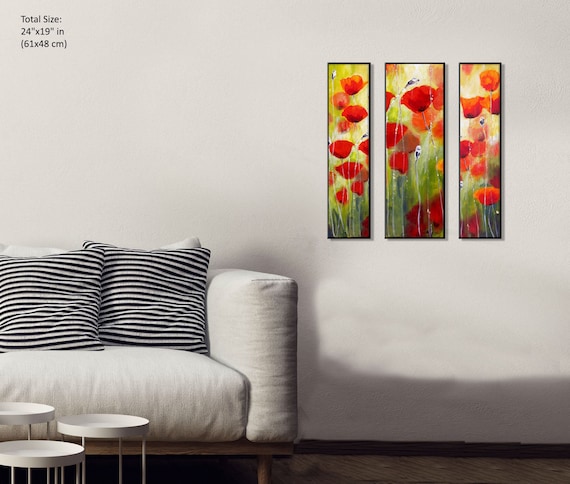
Credit: www.etsy.com
Gathering Materials And Tools
Having the right materials makes painting easier and your results better.
Basic Supplies
- Canvases: Pre-stretched, primed canvases are easiest for beginners.
- Acrylic paints: Fast-drying and forgiving. Choose artist-quality for best results.
- Brushes: A mix of flat and round brushes, plus a large brush for backgrounds.
- Palette: For mixing paints.
- Water cup: For cleaning brushes.
- Rags or paper towels: To wipe brushes and clean mistakes.
- Painter’s tape: To hold canvases together or mask edges.
- Pencil: For sketching designs.
- Varnish (optional): To protect your finished art.
Useful Extras
- Easel: Keeps canvases at eye level.
- Apron: Protects clothes.
- Drop cloth: Catches spills.
- Level: For hanging canvases straight.
Acrylic paints are popular because they dry quickly, are easy to clean up, and don’t have a strong smell.
Designing Your Artwork
A little design work before you paint leads to a better final result.
Sketching Your Image
Lay all your canvases side by side. Use a pencil to lightly sketch your design across the whole set. Make sure lines and shapes match up at each canvas edge. For more accuracy, tape canvases together at the back.
If you prefer, use tracing paper or a projector for complex images. Don’t press too hard with your pencil; heavy lines can show through paint.
Planning Color Placement
Plan which colors will go where, especially if your design crosses canvases. Painting similar colors on each canvas helps them blend together visually.
Here’s a simple color planning tip:
| Color | Where to Use | Effect |
|---|---|---|
| Neutral (gray, beige) | Backgrounds, large areas | Calm, modern look |
| Accent (red, yellow) | Small, repeated shapes | Energy and focus |
| Dark shades | Borders, outlines | Depth and contrast |
Many artists create a small practice painting on paper first. This helps test colors and ideas.
Painting Your Multi Canvas Set
Now comes the creative part. Painting a multi canvas set is like painting one big canvas, but with careful attention to where one ends and the next begins.
Setting Up Your Workspace
Arrange your canvases in the order you’ll display them. Most people paint all canvases at once so colors and brushstrokes match. Use painter’s tape to connect the backs if you want them perfectly aligned.
Make sure your area has good light. Put down a drop cloth for easy clean-up.
Painting The Background
Start with your largest brush. Paint the background color across all canvases. Blend the paint where canvases meet for a seamless look. Work quickly so the edges stay wet and blend easily.
Let the background dry before you move to details. Acrylics dry in about 15–20 minutes, but thicker layers may need more time.
Adding Main Elements
Paint the main shapes or lines next. Move from one canvas to the next, making sure lines match up at the edges. You can stand back and check your progress often.
Some tips:
- Use a ruler for straight lines across canvases.
- For curves, lightly sketch before painting.
- If you make a mistake, wipe it off quickly with a damp cloth.
Detailing And Layering
Add smaller details, highlights, and shadows last. Let each layer dry before adding the next. This prevents colors from mixing in unwanted ways.
For textures, try using sponges, palette knives, or even your fingers. These tools create different effects than brushes.
Finishing Touches
When you’re happy with your painting, let everything dry completely. Sign your name in a corner for a personal touch.
If you want to protect your art, brush on a thin layer of acrylic varnish. This adds shine and keeps colors bright.
Drying, Sealing, And Preparing To Hang
Once your painting is finished, proper drying and preparation will keep it looking great for years.
Drying Tips
Let canvases dry flat in a dust-free area. Avoid stacking them or placing objects on top. Acrylic paint is usually dry to the touch within an hour, but wait 24 hours before sealing or hanging.
Sealing Your Artwork
Varnishing is optional but recommended for a professional finish. Use a clear acrylic varnish and a clean brush. Apply thin, even coats. Let each coat dry before adding another.
Varnish protects from dust, light, and scratches. Don’t use spray varnish in small rooms—ventilation is important.

Credit: www.amazon.com
Hanging Your Multi Canvas Wall Art
Hanging a multi canvas set can be tricky, but it’s important for the final look.
Planning The Display
Lay your canvases on the floor in the correct order. Measure the total width and height, including spaces between canvases. Mark the wall with light pencil lines or painter’s tape.
If your set has three canvases, a good rule is to hang the center panel at eye level (about 57–60 inches from the floor).
Attaching Hanging Hardware
Most canvases come with a wire or sawtooth hanger. If not, buy a hardware kit and attach hangers to the back of each canvas, making sure they’re at the same height.
Spacing And Leveling
Use a level to keep each canvas straight. Leave equal space between canvases—usually 1–2 inches. For best results, get a friend to help hold the pieces while you check alignment.
Here’s a quick reference:
| Number of Canvases | Recommended Gap (inches) | Best Hanging Height (inches from floor) |
|---|---|---|
| 2–3 | 1–2 | 57–60 |
| 4+ | 1–1.5 | Center of arrangement at eye level |
When finished, step back and enjoy your new art. Small adjustments can make a big difference.
Common Mistakes And How To Avoid Them
Even experienced artists can make mistakes with multi canvas sets. Here are a few to watch for:
- Mismatched lines or shapes: Always line up canvases before painting. Tape the backs together for accuracy.
- Inconsistent colors: Mix enough paint for large areas at once. Write down color mixes if you need to make more.
- Rushing drying times: Let each layer dry fully to avoid smudges.
- Uneven hanging: Use a level and measure gaps carefully.
- Ignoring wall space: Plan your layout before painting so the set fits your wall.
A non-obvious tip: Paint the edges of your canvases to match the front or use a solid color. This makes the artwork look more finished, especially when viewed from the side.

Credit: www.walmart.com
Practical Tips For Beginners
If you’re new to painting or wall art, these extra tips can help:
- Start with a simple design—bold shapes and limited colors look modern and are easier to paint.
- Use student-grade acrylics to practice before using expensive paints.
- Take photos of your progress. This helps you see areas that need work.
- Don’t worry about perfection. Small flaws often add character.
- Hang your canvases temporarily with removable hooks to test positions before making holes.
Another insight: If you want to try a new style (like abstract or realism), multi canvas art is a low-risk way to experiment. You can always repaint one canvas if you don’t like it.
For more inspiration and professional examples, check out Tate’s Polyptych Art Guide.
Frequently Asked Questions
How Many Canvases Should I Use For My Wall?
The number depends on your wall size and design. Most home sets use 2–4 canvases. For large spaces, 5 or more can look impressive. Make sure the set fits your wall and isn’t too crowded or too small.
What Type Of Paint Is Best For Multi Canvas Art?
Acrylic paint is best for most people. It dries fast, is easy to clean, and works on primed canvas. Oil paint is also possible but takes much longer to dry and is harder to clean.
Can I Use Different Sizes Of Canvas In One Set?
Yes, you can mix sizes for a unique look. Just keep a balanced layout so the overall shape looks intentional. For beginners, using the same size is easier.
How Do I Make Sure My Lines Match Across Canvases?
Lay all canvases next to each other and tape the backs together. Sketch your design across the whole set before painting. Always check edges before painting lines or shapes.
Do I Need To Frame My Canvases After Painting?
No, framing is not required. Many people hang canvases “gallery wrapped” (edges painted or left white). Frames can add a formal look but are optional.
Painting your own multi canvas wall art set is a great way to bring color and personality to your space. With a little planning and creativity, you can make something beautiful and unique—no art degree needed. Enjoy the process, and let your wall become a gallery of your imagination.