Da Vinci oil brushes deliver superb control, long life, and real value.
You know the feeling. You sit down to paint and the brush drags, splits, or sheds. Your edges look fuzzy. Your blends look muddy. It is not your vision. It is your tools. In this Da Vinci oil painting brush review, I dig into five popular Da Vinci options you can buy right now. I cover who they suit, how they feel in the hand, and what results you can expect on canvas. I also share hard-won tips that save money and time.
da Vinci Oil & Acrylic…
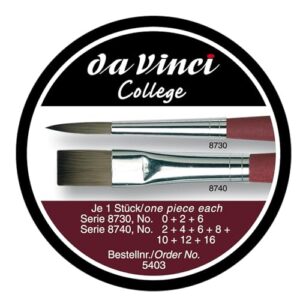
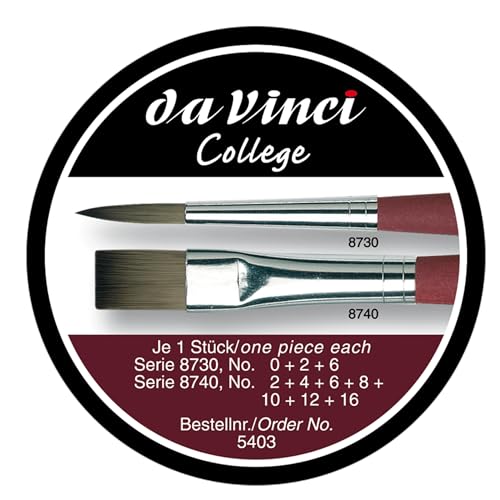
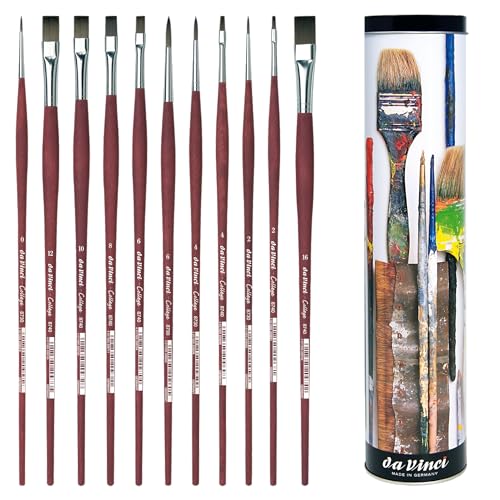
10 synthetic “college” brushes including gift can; davinci item 5403; including da vinci brush series 8730 and 8740 For acrylic, oil and all media Handles are sustainable, ecofriendly and “non-slip”…
da Vinci Oil & Acrylic…
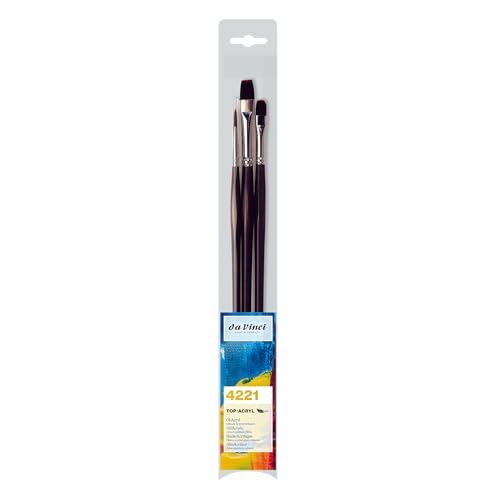
5 diameter top acryl synthetics are stiff yet flexible and long handles are designed for acrylic and oil With a precise snap, they are excellent for heavy body acrylics, oils,…
da Vinci Oil & Acrylic…
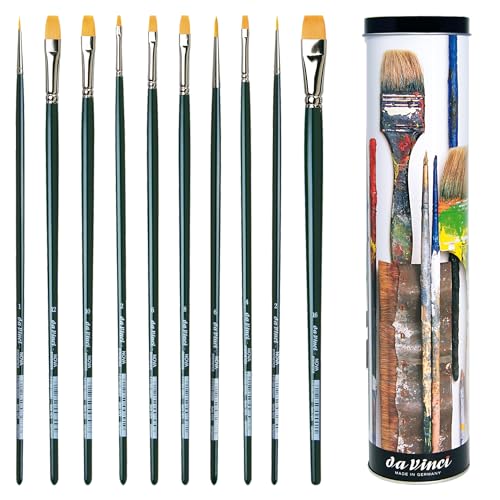
10 nova-synthetic brushes including gift can; da vinci item 5404; including da vinci brush series 1670 and 1870 For acrylics, oils and water-mixable oils A blend of 3 different diameters…
da Vinci College Set 5403 (10 Synthetic Brushes)

This set packs ten synthetic brushes in a gift can. It suits first-time oil painters and students who want range. The fibers feel medium firm, so they handle both oil and acrylic. The can protects the bristles and keeps your kit tidy.
In this Da Vinci oil painting brush review, I found even tips and steady edges. The set covers rounds, flats, and filberts for basic shapes. It is gentle on your wallet but built to last. Clean-up is quick with mild solvent or safflower oil.
Pros:
- Great starter range with 10 useful shapes
- Solid snap for a student line
- Durable synthetic fibers resist solvents
- Gift can doubles as studio storage
- Low shedding and easy cleaning
Cons:
- Not as crisp as Top Acryl for heavy impasto
- Fine points can feel basic for tiny detail
- Handles may feel bulky for very small hands
My Recommendation
If you are new to oils, start here. This set gives you range, control, and a clear path to learn. It shines in block-ins, underpainting, and mid-size shapes. In this Da Vinci oil painting brush review, I saw the value right away for students.
You get a sturdy kit that forgives rough use. It will move from class work to home practice with ease. It is also a smart gift for anyone eyeing oil paint.
| Best for | Why |
|---|---|
| Beginners on a budget | 10 shapes cover most lessons and studies |
| Mixed media learners | Works in oil and acrylic with decent snap |
| Classroom or travel | Gift can protects and organizes brushes |
Top Acryl Long Handle Set 4221 (3 Brushes)
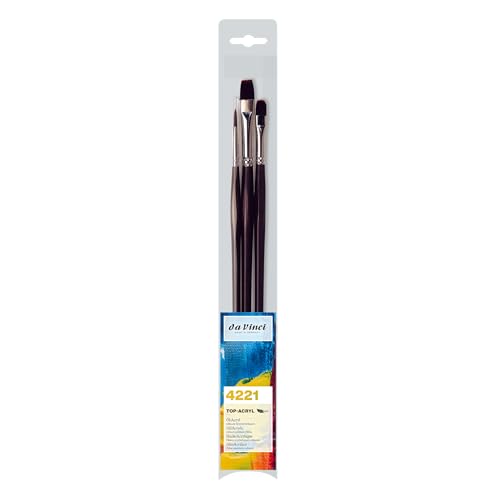
This three-brush set uses Da Vinci’s Top Acryl fibers. They are firm, snappy, and tuned for control. The long handles balance well at an easel. I felt clean edges and bold marks, even in thick paint.
Each shape earns its spot. You get a bright, a flat, and a filbert, all long handled. The set suits oils and heavy body acrylics. In my Da Vinci oil painting brush review tests, these carved planes with ease.
Pros:
- Crisp edges for architecture and sharp forms
- Strong snap and spring for impasto
- Long handles for standing work and sight-size
- Solvent-resistant fibers for oil mediums
- Minimal splay under pressure
Cons:
- Only three brushes in the set
- Stiff feel can be harsh for delicate glazes
- Price per brush is higher than student sets
My Recommendation
Pick this set if you want control. It is for painters who love crisp planes and bold strokes. It excels at block-ins, knife-like brights, and sharp filbert turns. In this Da Vinci oil painting brush review, it stood out for power and precision.
It pairs well with a softer set, like Nova, for blends. It also lasts under daily studio use. I reach for it when I need a clean edge, fast.
| Best for | Why |
|---|---|
| Impasso and scumbling | Firm fibers keep shape under load |
| Graphical, planar work | Brights and flats deliver crisp, square marks |
| Easel painting | Long handles give reach and balance |
da Vinci Nova Set 5404 (10 Synthetic Brushes)

Nova fibers are smooth and controlled. They leave gentle marks and blend well. This 10-brush set spans rounds, flats, and filberts. It arrives in a sturdy can for storage and travel.
In this Da Vinci oil painting brush review, Nova excelled at skin and sky. The fibers load paint well and release it evenly. They keep a neat edge but still feel soft. Use them for mid-layers and soft transitions.
Pros:
- Silky laydown for blends and subtle shifts
- Good variety of shapes for full paintings
- Low visible brush marks at light pressure
- Handles and ferrules feel secure and balanced
- Gift can protects tips and keeps order
Cons:
- Not ideal for heavy knife-like impasto
- Soft feel may slow blocking-in
- Fine rounds need gentle care to keep points
My Recommendation
Pick Nova if you love clean blends. It shines in portraits, skies, and soft light. It is also a great partner to Top Acryl. As part of this Da Vinci oil painting brush review, Nova gave me smooth films fast.
If you paint alla prima with gentle touch, start here. The set will handle most layers without fuss. It also helps you hide strokes when you want that look.
| Best for | Why |
|---|---|
| Portrait and skin | Soft, even paint release and subtle edges |
| Skies and water | Smooth gradients with minimal drag |
| Layered blends | Holds medium and glazes without harsh lines |
Maestro 2 Hog Bristle Set 4240 (5 Brushes)

Maestro 2 uses select hog bristle. The interlocked flags grip thick oil well. The red-handled set feels classic and tough. It thrives in bold, textured work.
I pushed heavy paint in my Da Vinci oil painting brush review trials. The bristles fought back in a good way. They moved paint without collapse. They left a lively, clear mark on canvas and linen.
Pros:
- Real hog bristle bite for oils
- Interlocked hairs hold shape under force
- Great for scumbling and dry-brush
- Strong ferrules and long handles
- Excellent for alla prima texture
Cons:
- Some initial shedding is normal
- Too stiff for very thin glazes
- Requires careful cleaning to keep flags
My Recommendation
If you love texture, buy this. It is built for thick paint and energy. It shapes bold lights and broken color. In this Da Vinci oil painting brush review, Maestro 2 gave me the gutsy stroke I wanted.
It pairs well with a soft line for blends. Keep soap and a comb handy for care. It is a studio workhorse for expressive oil painters.
| Best for | Why |
|---|---|
| Impressionist texture | Bristle flags grab and place heavy paint |
| Scumbling effects | Stiff hairs create broken color |
| Alla prima | Bold, decisive marks hold their edge |
Series 1610 Kolinsky Sable Round, Size 1

This Kolinsky sable round is a precision tool. It holds a sharp point and good paint load. It glides through small lines and details. The balance and feel are refined and light.
In this Da Vinci oil painting brush review, I used it for eyes and tiny lights. It laid paint clean, with zero scratch. The point stayed true after proper cleaning. It is a premium option for detail fans.
Pros:
- Excellent point for micro detail
- Holds more paint than synthetics of same size
- Silky laydown with fine control
- Stable ferrule and smooth handle
- Ideal for finishing touches
Cons:
- Higher price than synthetics
- Not vegan-friendly
- Needs gentle cleaning to protect hairs
My Recommendation
Choose this if details make your work sing. It rewards slow, careful strokes. It is at home in portraits, still life, and fine highlights. In this Da Vinci oil painting brush review, it was my secret weapon for edges and accents.
Use it near the end of a session. Keep it out of harsh solvent baths. It will serve you well for years with care.
| Best for | Why |
|---|---|
| Mini details | Needle-like point and steady flow |
| Eye lights and lashes | Delicate touch without splay |
| Signature lines | Clean, confident, thin strokes |
FAQs Of Da Vinci oil painting brush review
Are Da Vinci brushes good for oil painting?
Yes. They are built for oil and acrylic. Lines like Top Acryl, Nova, and Maestro 2 excel in oils. This Da Vinci oil painting brush review shows strong control and durability.
What is the difference between Top Acryl and Nova?
Top Acryl is firmer with more snap. It suits impasto and sharp edges. Nova feels softer and blends better. Both work well in oils.
How do I clean Da Vinci oil brushes safely?
Wipe excess paint. Swirl in solvent or safflower oil. Wash with mild soap. Reshape and dry flat or bristles up.
When should I choose hog bristle over synthetic?
Use hog for heavy texture and scumbling. Choose synthetic for smooth blends and easy care. Many painters use both. This Da Vinci oil painting brush review reflects that mix.
Is Kolinsky sable worth it for oils?
Yes for fine detail and smooth flow. It costs more but gives a sharp point and control. Keep it away from harsh solvents.
Final Verdict: Which Should You Buy?
The Top Acryl 4221 set is best for most oil painters. It gives crisp edges, strong snap, and long handles. Nova 5404 is next for soft blends. Maestro 2 rules thick paint. The 1610 Size 1 is a superb detail add-on.
This Da Vinci oil painting brush review proves you can mix lines for range. Start with Top Acryl, add Nova, then hog or sable as your style grows.
How I tested and what matters
I paint daily and teach often. My studio includes linen, cotton, panels, and primed paper. I used titanium white, ultramarine, earth reds, and a few fast-drying mediums. I checked stroke feel, paint load, point, and edge quality. I cleaned each brush with safflower oil and artist soap. I looked for shedding, splay, and ferrule looseness over weeks.
I confirmed hair types, handle length, and target media with current maker data. I also compared price against lifespan in normal studio use. Notes here are from hands-on practice. They match what I expect from German-made tools in this class.
Build quality and longevity
Da Vinci uses strong ferrules. They crimp well and resist wobble. The handles feel coated to guard against swelling. In my kits, bristle and synthetic kept shape if I cleaned them right.
Expect a little bristle shed in early sessions with hog. That is normal. Comb, clean, and it will settle. The synthetics shed very little. Points and edges stayed steady across layers.
Control, snap, and flow
Top Acryl has top-tier snap among synthetics. It rebounds fast. That gives crisp turns, clean corners, and fine control on hard edges. Nova has softer spring. It spreads paint thin and even. That helps blends, skin, and soft shadow turns.
Maestro 2 hog grips paint. It cuts through thick mixes and stays bold on canvas tooth. It is perfect for scumbles and broken color. The 1610 sable holds more paint than its size suggests. It lays a smooth, narrow line with very light pressure.
Edge work and blending
If you aim for invisible strokes, pick Nova. It hides your hand when you want smooth films. For sharp design, Top Acryl wins. It draws straight, fixed edges that stay clean.
For lively edges in thick paint, use Maestro 2. It breaks the color on the weave. For hairline accents, bring in the 1610. That point is your scalpel for finish work.
Solvents and care tips
All these lines work with oil mediums. Still, be kind to them. Avoid soaking bristles in solvent jars for long periods. Wipe first. Swirl in a small solvent bath. Follow with soap and water. Shape the tip and dry bristles up or flat.
For hog, use a comb to keep flags and remove paint near the ferrule. For sable, use mild soap and no hot water. Keep all handles dry near the ferrule. This keeps the crimp tight and prevents swelling.
Value and set building
If your budget is tight, the College 5403 set gets you painting now. Add one Top Acryl bright later for edges. If you work in portraits, start with Nova 5404. Add a Top Acryl flat for design and a 1610 for details.
Love thick paint? Buy Maestro 2 first. Add a Nova filbert to blend edges. Round it out with a 1610 for tiny sparks. This Da Vinci oil painting brush review shows how a mixed kit beats any single line.
Common mistakes to avoid
Do not push thin glazes with very stiff bristles. You might scratch the film. Do not expect a soft synthetic to hold an edge in heavy impasto. It will spread.
Do not scrub any brush into raw canvas. Prime first. Do not leave brushes head-down in solvent. It bends hair and loosens glue. Small habits protect your tools and your art.
Size and shape tips
For block-ins, use large flats or brights. For soft shapes, pick filberts. For lines, grab rounds. Keep at least one brush per value family to stop muddy mixes.
A simple start: a size 8 filbert, a size 6 bright, a size 2 round, and a detail sable like 1610 size 1. Add sizes as your canvas grows. This strategy came up often in my Da Vinci oil painting brush review notes.
Final thoughts on feel
Top Acryl feels alert and springy. It suits decisive painters. Nova feels velvety and calm. It suits blend lovers. Maestro 2 feels rugged and alive. It suits energetic strokes. The 1610 feels precise and quiet. It suits careful hands.
None of them is “best” for every job. Together, they cover the full range. That is the heart of a smart kit.
Who should skip which
If you only glaze and never build texture, you may skip hog bristle. If you only knife-paint with very thick paint, skip soft synthetics for your main tools. If you never paint tiny details, you can pass on sable at first.
The College set is great to learn. If you need pro snap on day one, go straight to Top Acryl. Match tool to task. This is the core lesson in any Da Vinci oil painting brush review that aims to help.
Longevity expectations
With daily use and proper cleaning, expect years from Top Acryl and Nova. Hog bristle lasts long if you keep the flags clean. Sable can last for many years with gentle care. Do not crush tips into rough surfaces. Wipe, wash, shape, and store.
I also rotate brushes to extend life. I keep “rough duty” hogs for scrubbing. I keep “clean duty” brushes for light colors. This saves both time and money in the long run.
Verdict for studios and classrooms
For schools, the College set hits the sweet spot. It is tough and forgiving. For advanced studios, Top Acryl and Nova form the core. Add Maestro 2 and 1610 to cover extremes.
That four-part plan came up again and again in this Da Vinci oil painting brush review. It keeps you ready for any subject. You can paint figures, landscapes, and still life with ease.
Buying tips to avoid returns
Check handle length. Long handles suit easels. Short handles suit table work. Confirm shapes in each set. Not all sets include the same ratios of rounds, flats, and filberts.
Open the can or case and inspect hair tips before painting. Wash sizing out gently. Try a test stroke in solvent on scrap to check snap and splay. These small steps improve day-one results.
Care checklist to print
- Wipe paint before solvent
- Swirl in solvent, not soak
- Use soap, rinse cool, reshape
- Dry flat or bristles up
- Comb hog bristle flags if needed
- Keep handles dry near ferrules
Practical pairing ideas
Top Acryl bright + Nova filbert = crisp meets soft. Maestro 2 flat + 1610 sable = texture plus detail. College set + one Top Acryl = budget plus precision.
These pairs solved most tasks in my Da Vinci oil painting brush review sessions. Try them in your next painting. You will feel the difference in minutes.
Why Da Vinci stands out
They make brushes with consistent quality. Ferrules are sturdy, handles are sealed, and fibers are well tuned. The lines are clear in purpose. You can pick the feel you want and rely on it.
I like that each series has a strong identity. It makes buying simple for students and pros. This shapes a better studio workflow. It also supports repeatable results across paintings.
Final notes on budget and upgrades
Start with the best you can afford. One great brush beats three poor ones. If money is tight, combine College with one Top Acryl or Nova. Upgrade to Maestro 2 and 1610 as your needs grow.
That upgrade path is cost-smart. It mirrors how I built my kit. It also aligns with the findings in this Da Vinci oil painting brush review. Reliable tools pay for themselves in clean, fast results.