

PaintingProGuide is reader-supported. When you buy through links on this page we may earn an affiliate commission at no extra cost to you.
“Ceramic painting” covers two very different hobbies. One is the paint-your-own-pottery style, where you decorate bisqueware with underglaze and a studio fires it in a kiln so you can eat off it. The other is decorative painting at home: refreshing a thrifted vase, personalizing a planter, painting a mug that will sit on a shelf holding pens. The best paints for ceramic painting depend entirely on which of these you are doing.
This guide focuses on the at-home, no-kiln route, which is what most people searching for ceramic paint on Amazon are after. Every product we found for this search is an acrylic paint or acrylic paint marker, so we review the six that fit decorative ceramics best, explain the prep and sealing that make acrylic stay put, and are clear about where these paints are not the right tool, including anything that touches food.
Quick answer: For decorative ceramics, the Caliart 36-color acrylic set is the most versatile pick, with a matte and metallic range and a surface list that includes ceramic, metal and plaster. For patterns and lettering on mugs and tiles, add the ARTISTRO 36 dual-tip acrylic paint markers, listed for ceramic and porcelain. On a budget, the KOLOR KINGDOM 24-color set is an inexpensive way to try it.
Our Top Picks at a Glance
- Caliart Acrylic Paint Set, 36 Colors — Best overall paint for decorative ceramics
- ARTISTRO 36 Dual-Tip Acrylic Paint Markers — Best for patterns and lettering on ceramics
- Nicpro Acrylic Paint Set, 24 Colors — Best semi-gloss finish for glazed pieces
- Shuttle Art Acrylic Paint Set, 36 Colors — Best color range with metallics
- KOLOR KINGDOM Acrylic Set, 24 x 12 ml — Best budget sampler set
- TMOL Acrylic Paint Set, 24 Colors — Best starter set with plenty of brushes
| Product | Best For | Key Spec | Key Strength | Price Tier |
|---|---|---|---|---|
| Caliart 36 Colors | Decorative ceramics | 36 x 2 oz, matte + metallic | Ceramic, metal, plaster listed | $$ |
| ARTISTRO Markers | Patterns, lettering | 36 markers, 1 mm + 1-5 mm tips | Ceramic and porcelain listed | $ |
| Nicpro 24 Colors | Glazed pieces | 24 x 2 oz, semi-gloss | Crack-resistant claim | $$ |
| Shuttle Art 36 Colors | Color variety | 36 x 2 oz, gloss, gold + silver | Broad surface list | $$ |
| KOLOR KINGDOM 24 | Trying the hobby | 24 x 12 ml + 3 brushes | ASTM D4236 and EN71-3 | $ |
| TMOL 24 Colors | Beginners | 24 x 2 oz + 12 brushes | Lots of brushes | $$ |
How We Chose
We did not paint ceramics with these products. Our picks rely on Amazon listing details and specifications checked in October 2026, how well each paint’s finish, surface list and format suit decorative ceramic work, and how widely each product is reviewed by Amazon buyers. A single 2 oz bottle of Apple Barrel black also appeared, but its listing names canvas, paper and wood rather than ceramic, so we left it out.
- Ceramic listed as a surface: by the seller, in bullets or details.
- Finish: gloss or semi-gloss blends better with glazed ceramics; matte suits bisque and terracotta.
- Coverage: creamy, pigmented paint that hides the ceramic beneath.
- Detail tools: markers and fine brushes for patterns.
- Safety labeling: ASTM D4236 and non-toxic claims.
Which Paint for Which Ceramic?
| Piece | Surface | Paint Approach | Food Contact? |
|---|---|---|---|
| Bisque from a craft store | Porous, unglazed | Acrylic bonds well; seal after | No, unless glazed and kiln fired |
| Thrifted glazed vase or mug | Slick, non-porous | Scuff-sand, clean with alcohol, prime, then acrylic | No |
| Porcelain | Very smooth, dense | Thin layers, markers for detail, seal | No |
| Terracotta planters | Very porous | Seal inside, matte acrylic outside | Not applicable |
| Functional dinnerware | Any | Underglaze and kiln firing, or a bake-cure paint labeled food-safe | Only with the right product |
For more background on choosing a paint type, see our explainer on what paint to use on ceramic, and if you are working on fine china, read can you use ceramic paint on porcelain.
Best Paints for Ceramic Painting Reviewed
1. Caliart Acrylic Paint Set, 36 Colors with 12 Brushes — Best for decorative ceramics

Caliart’s set is our top pick because its listing names the widest range of hard surfaces, including ceramic, metal, plaster and clay alongside canvas and wood. You get 36 colors in 2 oz bottles, including metallic gold and silver, plus 12 brushes. The finish is listed as matte and metallic.
Matte acrylic looks especially good on unglazed bisque and terracotta, where it gives a soft, pottery-like surface. On glossy glazed pieces, a gloss varnish over the top will blend the painted area with the surrounding glaze. The listing describes creamy paint with good coverage for large areas and fine details, crack and fade resistance, and ASTM D4236 conformance.
Best suited for: Hobbyists decorating vases, planters, figurines and bisque pieces for display.
Key features:
- 36 colors in 2 oz bottles
- Matte base with metallic gold and silver
- Ceramic, metal, plaster, clay listed
- 12 brushes
- Crack and fade resistance claims
Pros:
- Strongest hard-surface list in this roundup
- Matte suits bisque and terracotta
- Metallics for accents and rims
Cons and limitations:
- Needs primer on slick glazed surfaces
- Not food safe
- Matte surfaces mark easily until sealed
Buying consideration: Seal finished pieces with a clear acrylic sealer and keep them as decor; hand dust rather than wash.
2. ARTISTRO 36 Dual-Tip Acrylic Paint Markers — Best for patterns and lettering

Markers make ceramic decorating much easier for people who do not trust their brush hand. Each ARTISTRO marker has a 1 mm fine tip for lines and writing and a 1-5 mm dot tip for dots and patterns, with pre-activated tips that need no pumping. Ceramic and porcelain are both named in the surface list.
The listing includes a useful note: on glass, ceramic, metal and other non-porous materials, results vary and extra drying time helps durability. That is honest and worth following; let marker designs dry fully, then seal.
Best suited for: Personalizing mugs for display, tiles, plant pots and gifts with names, dots and doodles.
Key features:
- 36 colors
- 1 mm fine tip + 1-5 mm dot tip
- Pre-activated, no pumping
- Ceramic and porcelain listed
- Water-based acrylic
Pros:
- Precise control for text and patterns
- Lowest price tier
- Great for dot mandala designs
Cons and limitations:
- Thin coverage for large areas
- Can scratch off slick glaze if unsealed
- Not food safe
Buying consideration: Wipe the surface with rubbing alcohol before drawing; finger oils are the main reason marker lines bead or skip.
3. Nicpro Acrylic Paint Set, 24 Colors with 12 Brushes — Best for semi-gloss results on glazed pieces

Nicpro’s 24-color set includes 2 oz bottles, 12 brushes, a palette and a beginner’s guide. The listing describes a semi-gloss finish, crack and fade resistance and suitability for wood, rock, canvas, ceramic, fabric, glass, clay, leather and plastic, with glass named as a specific use.
A semi-gloss finish sits closer to the sheen of glazed ceramic than matte paint does, so painted areas look less like a patch on a shiny pot. The paint conforms to ASTM D4236.
Best suited for: Painters updating glazed thrift-store pieces where a satin sheen looks most natural.
Key features:
- 24 colors in 2 oz bottles
- Semi-gloss finish
- 12 brushes, palette and guide
- Ceramic and glass listed
- ASTM D4236
Pros:
- Sheen blends with glaze
- Includes beginner guidance
- Good value
Cons and limitations:
- No metallics listed
- Still requires prep on slick surfaces
- Not food safe
Buying consideration: Prime glazed ceramics with a bonding primer before painting for the best adhesion.
4. Shuttle Art Acrylic Paint Set, 36 Colors — Best for a wide color range with metallics

Shuttle Art provides 36 colors in 2 oz bottles, metallic gold and silver among them, along with 12 brushes and a palette. The listing names ceramic, glass, clay and plastic among supported surfaces and describes a gloss finish.
Gloss acrylic gives bright, glaze-like color on ceramic decor. It is a good choice for multicolor designs such as florals or folk art patterns where you want many ready-made shades.
Best suited for: Decorators who enjoy colorful, detailed designs on vases, ornaments and figurines.
Key features:
- 36 colors in 2 oz bottles
- Metallic gold and silver
- Gloss finish
- 12 brushes and palette
- ASTM D4236
Pros:
- Big palette
- Gloss finish looks bright
- Complete starter kit
Cons and limitations:
- Gloss shows brush marks on large flat areas
- Not food safe
- Needs sealer for durability
Buying consideration: Use a soft synthetic flat brush and thin coats to minimize brush marks on smooth ceramic.
5. KOLOR KINGDOM Acrylic Paint Set, 24 Colors x 12 ml — Best for a budget sampler

KOLOR KINGDOM’s set includes 24 colors in 12 ml tubes and 3 brushes. The listing describes premium consistency for blending, layering and texture, ASTM D4236 and EN71-3 certification, and suitability for ceramic, fabric, paper, wood, MDF and leather. The finish is gloss.
Small tubes are ideal if you only plan to paint a couple of pieces, or if you want to test the hobby before buying bigger bottles.
Best suited for: First-time ceramic decorators and gift crafters painting one or two items.
Key features:
- 24 colors in 12 ml tubes
- 3 brushes
- Gloss finish
- ASTM D4236 and EN71-3
- Ceramic listed
Pros:
- Lowest cost way to start
- Many colors in a small kit
- Tubes stay fresh longer than open bottles
Cons and limitations:
- Small quantities
- Only 3 brushes
- Tubes are slower to dispense
Buying consideration: Buy a larger bottle of white if you plan to cover big areas; it will run out first.
6. TMOL Acrylic Paint Set, 24 Colors with 12 Brushes — Best for beginners who need brushes
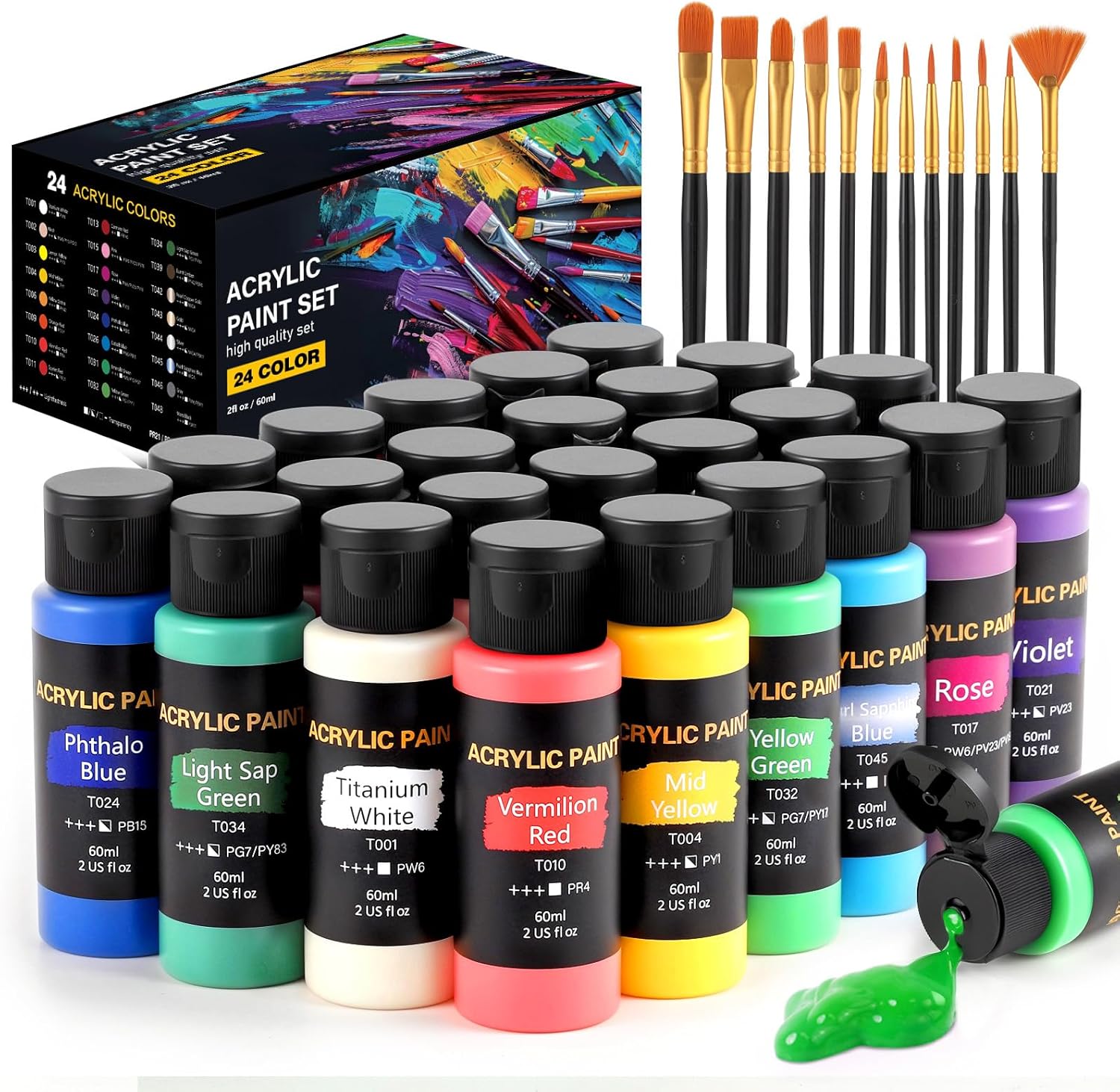
TMOL lists ceramic as a recommended surface along with canvas, wood and fabric. The set includes 24 colors in 2 oz bottles and 12 brushes, and conforms to ASTM D4236, according to the listing.
Twelve brushes give you a range of shapes for rims, stripes and fill. It is a simple, complete starting kit for decorative ceramic projects.
Best suited for: Beginners who need both paint and brushes for a first ceramic project.
Key features:
- 24 colors in 2 oz bottles
- 12 brushes
- Ceramic listed
- ASTM D4236
Pros:
- Complete kit
- Good brush selection
- Mid-size bottles
Cons and limitations:
- Finish not clearly specified
- No metallics
- Not food safe
Buying consideration: Practice your design on a cheap terracotta pot first; it is more forgiving than glazed ceramic.
Acrylic, Bake-Cure Enamel or Underglaze?
It helps to know the three main paint families for ceramics, even though only acrylics showed up in our product search. Craft acrylics are water-based, inexpensive and come in every color imaginable. They sit on top of the surface, so adhesion depends on prep and a sealer, and they are strictly decorative.
Bake-cure ceramic and glass paints are formulated to harden in a home oven at a temperature given on the label. Some brands state that their cured paint is dishwasher safe or suitable for surfaces that touch food, but this varies, and the instructions must be followed exactly. If you want to paint mugs that will actually be used, this category is where to look.
Underglazes and glazes are the potter’s route. They are applied to bisque and fired in a kiln, where they fuse into a glassy surface. This is how paint-your-own-pottery studios work, and it is the only way to get a truly permanent, food-safe finish on handmade ware. If you love decorating pottery, a local studio is a fun way to try it without owning a kiln.
Buying Guide: How to Choose Paints for Ceramic Painting
Decorative or functional?
Acrylic craft paints are for decorative pieces only. For anything that holds food or drink, use underglaze and kiln firing, or a bake-cure ceramic paint explicitly labeled food-safe after curing, and follow its instructions exactly.
Surface prep matters more than brand
Clean with soap, then rubbing alcohol. Lightly scuff glazed surfaces with fine sandpaper, and use a primer designed for glossy surfaces if the paint beads up. Bisque and terracotta need only dusting.
Finish and sheen
Matte acrylic suits bisque and rustic terracotta. Semi-gloss and gloss blend better with glazed pieces. A clear sealer lets you control the final sheen.
Brushes and markers
Soft synthetic brushes leave fewer marks on smooth ceramic. Markers give clean lines for lettering and dot patterns. Most projects benefit from both.
Sealing
Seal decorative pieces with a clear acrylic sealer or varnish. Note that sealing improves durability but does not make acrylic food safe or dishwasher safe.
Quantity
Ceramic decor uses little paint. Small 12 ml tubes or 2 oz bottles are enough for several pieces, except for base colors.
Step-by-Step: Painting a Decorative Ceramic Piece
- Wash the piece, dry it fully and wipe with rubbing alcohol.
- Scuff glazed areas lightly with fine sandpaper and wipe away dust.
- Prime glossy surfaces if your paint beads or slides.
- Paint the base color in thin coats, letting each dry.
- Add patterns with fine brushes or paint markers.
- Let the paint cure for at least 24 hours.
- Apply two thin coats of clear sealer in your chosen sheen.
Need inspiration? Browse our collection of ceramic painting ideas, from simple dot patterns to botanical designs. The same prep and sealing steps apply when you paint DIY ceramic tiles with patterns.
Common Mistakes to Avoid
- Painting dinnerware with craft acrylic: it is not food safe and will wear off in washing.
- Skipping degreasing: finger oils on glaze are the main cause of peeling.
- Thick coats on glossy surfaces: they slide, drip and peel; use thin layers.
- Putting painted pieces in the dishwasher: hand dust or wipe gently instead.
- Sealing too early: wait at least a day so the paint cures underneath.
- Ignoring the inside of planters: seal the interior so water does not lift exterior paint.
FAQs
Can you use acrylic paint on ceramic?
Yes, for decorative pieces. Clean and degrease the surface, prime slick glaze if needed, paint in thin coats and seal. Acrylic is not food safe and will not survive dishwashers.
What paint is food safe for ceramic mugs?
Only products labeled food safe after curing, such as kiln-fired underglazes and glazes, or specific bake-cure ceramic paints. Craft acrylics and acrylic paint markers are not food safe.
Do I need to seal acrylic paint on ceramic?
Sealing is strongly recommended. A clear acrylic sealer protects against scratches and moisture and lets you choose a matte, satin or gloss finish.
How do I make paint stick to glazed ceramic?
Wash, wipe with rubbing alcohol, lightly scuff with fine sandpaper and use a primer for glossy surfaces. Thin coats adhere better than thick ones.
Can you bake acrylic paint on ceramic?
Some people bake craft acrylic to harden it, but results vary and it does not make the paint food safe. Only bake products whose labels give baking instructions.
Are paint markers good for ceramics?
Yes, for decorative designs. Acrylic paint markers give precise lines and dots on ceramic and porcelain. Let them dry fully and seal for durability.
Final Recommendation
For decorative ceramics, the Caliart 36-color set is the most versatile paint in this roundup, and ARTISTRO dual-tip markers are the easiest way to add patterns and lettering. Choose Nicpro if you want a semi-gloss finish to match glazed pieces, Shuttle Art for a bigger glossy palette, KOLOR KINGDOM to try the hobby cheaply and TMOL for a complete starter kit with brushes. Whatever you pick, prep and seal carefully, and keep anything painted with acrylic away from food and the dishwasher.





One Comment