PaintingProGuide is reader-supported. When you buy through links on this page we may earn an affiliate commission at no extra cost to you.
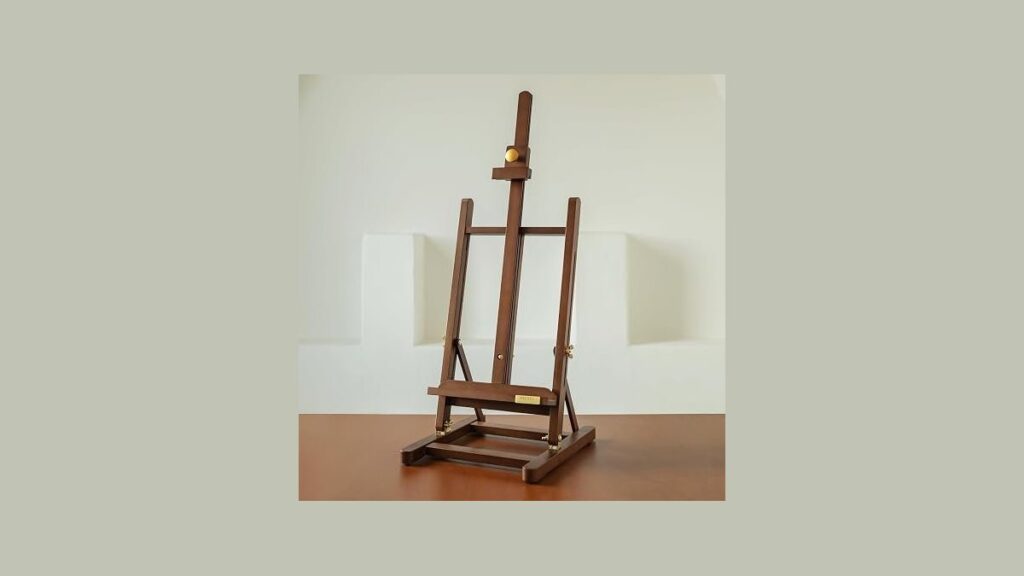
The MEEDEN tabletop easel most buyers land on is the MEEDEN Large H-Frame Drawing Board Easel, a beechwood desktop easel that tilts from 85 degrees (nearly vertical) all the way down to flat. That range is the reason it appeals to so many people: the same easel can hold a pastel portrait upright, a watercolor at a gentle slope, or a paint pour lying level.
This MEEDEN tabletop easel review is built from the product’s current Amazon listing. It covers what you get, how the adjustments work, which mediums and postures it suits, what the listing leaves unclear, and how to set it up so it genuinely helps your painting. Only this one MEEDEN tabletop model fit the query in the listings we checked, so the page goes deep on it rather than padding with unrelated easels.
Quick answer: The MEEDEN Large H-Frame tabletop easel is a strong pick for painters and illustrators who work seated at a desk and want one easel that adjusts from upright to flat. It suits watercolor, pastel, drawing, small acrylic and oil work, and paint pouring. It is not the right tool if you paint large canvases or want to stand; for that, a floor easel is the better buy.
Our Top Pick at a Glance
- MEEDEN Large H-Frame Drawing Board Easel (Beech) — Best for desk painters who need a full tilt range, from 85 degrees upright to flat
Where it fits best:
- Watercolor at a low angle
- Pastel and charcoal near vertical
- Small acrylic and oil canvases
- Paint pouring and drying flat
- Display of finished work, books or a tablet between sessions
| Product | Best For | Key Spec | Key Strength | Price Tier |
|---|---|---|---|---|
| MEEDEN Large H-Frame Tabletop Easel | Seated painting at a desk | Beech, 85° to flat, 5.06 lb | Full tilt range, adjustable tray height | $$$ |
How We Chose
We did not set up or paint with this easel for this review. Our assessment is based on the Amazon listing details and specifications checked in October 2026, on how well the easel’s materials, adjustment range and footprint fit the jobs people buy a MEEDEN tabletop easel for, and on how widely the product is reviewed by Amazon buyers. Claims such as “no shimmy or flex” are the maker’s own wording, and we label them that way.
We judged it on:
- Adjustment range: how far the angle and tray height move.
- Stability: base size, feet and material.
- Build: wood type, finish and hardware.
- Versatility: mediums and uses the design supports.
- Gaps: anything a buyer needs to verify before ordering.
MEEDEN Tabletop Easel Review
MEEDEN Large H-Frame Drawing Board Easel — Best for Seated, Multi-Medium Work

The easel is handcrafted from seasoned beechwood, hand-sanded smooth with rounded corners. MEEDEN says that when tilted up, the drawing board feels solid without shimmy or flex under drawing pressure. It weighs 5.06 pounds, which is heavy enough to stay put on a desk yet light enough to move between rooms or store on a shelf.
Adjustment is the core feature. The board angle runs from 85 degrees, close to vertical, down to fully horizontal. The bottom tray height also adjusts, which changes where your work sits relative to your eyes and arm. MEEDEN frames that as a way to change your drawing angle and posture and avoid neck and shoulder strain. A wood track and electroplated metal knobs handle the adjustments, and the listing says the knobs resist rust.
The base is described as large, with rubber feet to grip the table surface. The H-frame design, two parallel uprights on a rectangular base, is generally more stable than a tripod-style tabletop easel because the load spreads over a wider footprint.
MEEDEN also markets it as a display stand for artwork, framed photos, calendars and business cards, and as a book or tablet holder. That sounds like marketing filler, but it is practical: a tabletop easel that holds a reference book or tablet at eye level while you paint is genuinely useful.
Best suited for: watercolorists, pastel artists, illustrators, students and hobby painters who work seated and want one easel for several mediums.
Key features:
- Seasoned beechwood, hand-sanded, rounded corners
- Tilt from 85° vertical to horizontal
- Adjustable bottom tray height
- Large base with rubber feet
- Wood track and electroplated metal knobs
- 5.06 pounds
Pros:
- Full tilt range covers almost every medium
- Tray height adjustment helps posture
- H-frame base is more stable than a tripod tabletop design
- Doubles as a display or reading stand
Cons/limitations:
- The listing text does not state a maximum canvas or board size
- Exact dimensions are not given in the bullet points
- Seated use only; not a substitute for a floor easel
- Top price tier for a tabletop easel
Buying consideration: Before ordering, check the product photos and Q&A for the largest canvas it can hold and the overall footprint, then measure your desk. The listing text does not provide those numbers.
How to Use the Tilt Range by Medium
An easel that goes from upright to flat only helps if you know where to set it. These are common starting points; adjust to taste.
Watercolor: Low Angle, 10 to 30 Degrees
Watercolor needs gravity on your side, but gently. A slight tilt lets a wash bead downward evenly without running off the page. Too steep and you get drips; flat and the wash pools. The MEEDEN’s ability to sit at a low angle is one of its strongest features for watercolorists.
Paint Pouring and Drying: Flat
Pours must dry level or the paint migrates and leaves bare edges. Set the easel fully horizontal, check it with a small level, and leave the piece undisturbed. The same flat position works for drying wet watercolor washes you want to stay put.
Pastel and Charcoal: Near Vertical
Dry media shed dust. An upright angle lets dust fall away from the surface rather than settling into the work. Set the easel close to its 85-degree maximum, and place a tray or paper below to catch pastel dust.
Drawing and Illustration: 20 to 45 Degrees
A moderate angle brings the page closer to perpendicular with your line of sight, which reduces distortion compared with drawing flat on a desk. It also keeps your back straighter.
Acrylic and Oil: 60 to 80 Degrees
Upright painting avoids drips in thicker paint and helps you judge proportions. For small canvases at a desk, set the easel fairly steep and keep your palette on the table beside it.
Setting Up for Comfortable Seated Painting
Tabletop easels are often bought to relieve neck and shoulder strain from hunching over a flat page. A few setup habits make a big difference.
- Raise the work toward eye level. Use the adjustable tray height so the center of the piece sits closer to your eye line.
- Keep the easel square to your body. Twisting to reach a side-placed easel strains the back.
- Light from the side. Position a lamp or window so light falls across the work from the side opposite your drawing hand.
- Take breaks and change angles. A range of 85° to flat means you can shift between positions during long sessions.
- Protect the desk. A mat under the easel catches drips and keeps the rubber feet gripping.
Who This Easel Suits Best
Students and Beginners
A first easel should be forgiving and flexible. Because the MEEDEN adjusts across such a wide range, a beginner can try watercolor, drawing and acrylic without buying a different stand for each. MEEDEN itself notes the easel is popular with beginners and students.
Illustrators and Sketchbook Artists
Illustrators who work on paper or board at a desk benefit from a moderate tilt, which keeps proportions honest and reduces hunching. The easel can also hold a reference image or tablet when you switch to inking or digital work.
Watercolor and Gouache Painters
Low-angle control is the main draw. Being able to drop from 30 degrees to flat in the middle of a wash, to stop a bloom or level a pool, is a genuine working advantage.
Pastel and Charcoal Artists
Near-vertical positioning keeps dust falling away from the surface. For pastel, that alone can be reason enough to use an easel instead of a flat desk.
Painters in Small Spaces
Apartment painters and anyone sharing a room often cannot leave a floor easel standing. A tabletop easel that weighs about five pounds can live on a shelf and come out when needed.
Who Should Look Elsewhere
Painters who work on canvases larger than a desk can comfortably support, or who prefer standing and stepping back from the work, will outgrow any tabletop easel. Plein air painters need something built for travel; nothing in this listing suggests it is designed for outdoor use.
Using It as a Display and Reference Stand
Between painting sessions, a solid tabletop easel earns its place in other ways. Prop a finished piece on it to live with the painting for a few days; fresh eyes catch problems you missed while working. Use it to hold a reference photo, art book or tablet at eye level while you paint on a second surface. MEEDEN markets these uses directly, mentioning artwork, framed photos, calendars, business cards, books and tablets. For artists who sell at markets or show work in a home studio, a wooden easel also makes a tidier display than leaning work against a wall.
Tabletop Easel or Floor Easel?
A tabletop easel like the MEEDEN is the right choice when you paint seated, work small to medium sizes, share a room, or need to put everything away after each session. It is also a better fit for watercolor and pouring, which need low angles that many floor easels cannot reach.
A floor easel is the better choice when you paint large canvases, prefer to stand and step back, or use heavy paint with a lot of physical pressure. Many painters own both: a tabletop easel for studies, drawing and watercolor, and a floor easel for larger finished work.
Building a Compact Desk Studio Around It
A tabletop easel works best as the center of a small, organized station. Here is a simple layout that suits most right-handed painters (mirror it if you are left-handed):
- Easel centered in front of you, square to your chair, with the work raised toward eye level using the tray height adjustment.
- Palette on the right, close enough to reach without stretching across the easel.
- Water containers or solvent jar beyond the palette, away from the easel base so spills do not reach the wood.
- Brushes in a holder on the right side, tips up once dry.
- Lamp on the left, angled so light falls across the work without glare.
- Reference image or tablet on a second small stand or propped beside the easel.
- Paper towels within easy reach, because every medium needs them.
A chair with adjustable height pairs well with the tray adjustment. Between them, you can bring the center of the work to a comfortable level and avoid leaning forward for long periods. If you share the desk with a computer or other work, the easel’s roughly five-pound weight makes it easy to lift off and store when the session ends.
What the Listing Leaves Unclear
A fair review should flag gaps. The bullet points and details on the listing we checked do not include:
- The maximum canvas or board height and width
- Overall dimensions, open or folded
- Whether a drawing board panel is included or the easel holds your own board or canvas
- How the easel folds or stores
Product photos and the Amazon Q&A section usually answer these. Check them, and measure your desk and your typical canvas size, before buying.
Buying Guide: How to Choose a MEEDEN Tabletop Easel
Tilt Range
If you paint watercolor or pour, you need an easel that goes near flat. If you work in pastel, you want near vertical. The MEEDEN’s 85° to flat range covers both, which is uncommon in tabletop easels.
Stability
H-frame bases spread weight more evenly than tripod designs. Rubber feet stop sliding on smooth desks. At 5.06 pounds, this easel has enough mass to resist light pressure.
Canvas Size
Tabletop easels are designed for small to medium work. Confirm the maximum size this model holds before buying if you work on boards larger than about 16×20 inches.
Adjustable Tray Height
The ability to move the bottom tray changes where your work sits vertically. This matters for posture and for how much of the piece you can reach comfortably.
Wood and Hardware
Beech is a dense, durable hardwood often used for easels. Metal knobs that resist rust matter if you paint with water-based media and occasionally spill.
Desk Space
Measure your table. An H-frame tabletop easel needs room for the base plus space for your palette and water containers beside it.
Learn to Get More From a Tabletop Easel
Getting the angle and height right is half the benefit of any desk easel; our guide on how to use a tabletop easel correctly walks through it. A beech easel stays smooth and tight with simple care, covered in how to clean and maintain a wooden easel. If you are still comparing brands, see our roundup of the best tabletop easels for beginners.
Common Mistakes to Avoid
- Buying without checking maximum canvas size. The listing text does not state it.
- Painting watercolor too steep. Runs and drips follow; lower the angle.
- Working pastel flat. Dust settles into the work; go near vertical.
- Overtightening the knobs. Snug is enough; overtightening can wear wood tracks.
- Placing the easel off to one side. Keep it square to your body to avoid strain.
- Leaving wet media on the wood. Wipe spills promptly to protect the finish.
FAQs
Can the MEEDEN tabletop easel lie completely flat?
Yes. The listing says it adjusts from 85 degrees vertical to horizontal, which makes it usable for paint pouring and flat drying.
Is the MEEDEN tabletop easel good for watercolor?
Yes. Its ability to sit at a low angle suits watercolor washes, and MEEDEN lists watercolor among its intended uses.
What wood is the MEEDEN tabletop easel made of?
Seasoned beechwood, hand-sanded with rounded corners, according to the listing.
How heavy is it?
The listing gives an item weight of 5.06 pounds.
What size canvas does it hold?
The listing text does not state a maximum canvas size. Check product photos and the Q&A section before ordering.
Can I use it as a book or tablet stand?
Yes. MEEDEN markets it for displaying artwork and photos and as a book or iPad holder.
Final Recommendation
The MEEDEN Large H-Frame tabletop easel is a strong choice for seated painters who move between mediums. Its 85-degree-to-flat range and adjustable tray height solve real problems: watercolor that runs, pastel dust that settles, and necks that ache from bending over a flat desk.
- Buy it if: you paint or draw seated, work small to medium, and use watercolor, pastel, drawing media, pours or small canvases.
- Skip it if: you paint large or prefer to stand; a floor easel will serve you better.
- Before ordering: confirm the maximum canvas size and footprint in the photos and Q&A.