
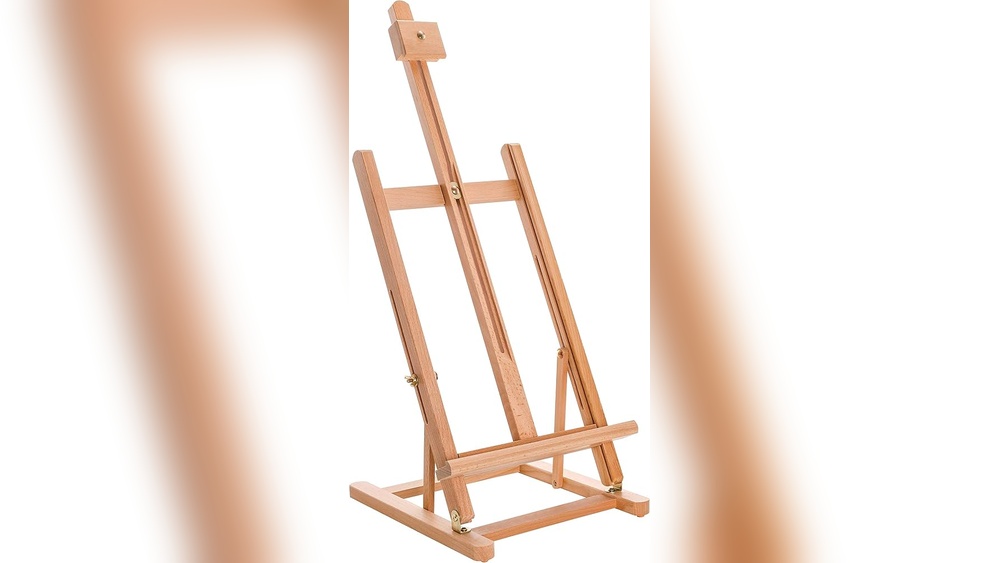
Quick answer: To use a tabletop easel correctly, place it on a stable table, raise the canvas so its center sits near your eye level, and tilt it to suit your medium: nearly upright for oil and acrylic, 10 to 30 degrees for watercolor. Clamp the canvas firmly, keep the easel’s weight centered, position light from the side opposite your painting hand, and sit or stand far enough back to reach the whole surface without leaning.
A tabletop easel looks simple, but small setup choices decide whether it feels steady and comfortable or wobbly and awkward. Many people use one with the canvas too low, the angle wrong for their medium, or the clamp barely gripping. Learning how to use a tabletop easel correctly fixes all of that in a few minutes.
This guide covers the main types, a step-by-step setup, the right angle and height for each medium, safety and stability, display use, and the mistakes that cause most frustrations.
Types of Tabletop Easel
Each design adjusts a little differently, so identify yours first.
| Type | How it adjusts | Strengths | Watch out for |
|---|---|---|---|
| H-frame tabletop | Sliding mast and clamp; often tilts | Very stable, holds larger canvases | Heavier, takes more table space |
| A-frame or tripod tabletop | Back leg sets the angle; ledge height may adjust | Light, folds flat, inexpensive | Less stable with heavy pressure |
| Box easel with storage | Lid lifts to an angle; drawer below | Built-in supply storage, portable | Canvas size limited by lid |
| Adjustable drafting style | Board tilts from flat to steep | Great for watercolor and drawing | May not hold stretched canvases |
| Display easel | Fixed or slight angle with a ledge | Shows finished work, signs, photos | Not designed for painting pressure |
If you have not bought one yet, our guide to the best tabletop easels for painting compares these styles side by side.
How to Use a Tabletop Easel Correctly: Step-by-Step
1. Pick a stable table
Choose a solid table that does not rock. A kitchen table, desk or workbench is fine; a wobbly folding table amplifies every brush stroke. Cover the surface with a plastic sheet or newspaper to protect it.
2. Place the easel near the front edge
Set the easel close enough that you can reach the canvas without stretching, typically a few inches back from the table edge. Too far back and you will lean forward; too close and the easel may tip if bumped.
3. Unfold and lock every joint
Open the legs or back support fully and tighten every knob. Partially opened legs are the most common cause of collapse. Give the easel a gentle push to confirm it stays put.
4. Set the canvas height
Aim for the center of the canvas to sit at or slightly below eye level when you are in your painting position. Looking straight ahead at the canvas reduces neck strain and gives a truer view of proportions. If the easel cannot go high enough, raise it on a sturdy box or books.
5. Set the angle for your medium
See the table in the next section. The general rule: the wetter the paint, the flatter the angle; the thicker the paint, the more upright.
6. Clamp the canvas securely
Rest the canvas on the bottom ledge and slide the top clamp down until it grips firmly. Center the canvas left to right so weight is balanced. For thin panels, make sure the clamp actually grips rather than resting on the edge.
7. Arrange supplies and light
Place your palette and water on the same side as your painting hand. Position a lamp on the opposite side, slightly above, so your hand does not cast shadows and wet paint does not glare.
8. Check your position
Sit or stand so you can reach every corner by moving your arm. You should be able to lean back and see the whole canvas at a glance.
Best Angle and Height by Medium
| Medium | Angle from vertical | Notes |
|---|---|---|
| Oil | Upright to about 15 degrees back | Accurate view; thick paint will not run |
| Acrylic | Upright to about 20 degrees back | Thin glazes may drip if too upright |
| Gouache | 20 to 45 degrees back | Small works; moderate tilt is comfortable |
| Watercolor | 60 to 80 degrees back (10 to 30 degrees from flat) | Washes flow gently without running |
| Pastel and charcoal | Upright or tilted slightly forward | Dust falls away instead of settling |
| Drawing with pencil | 30 to 60 degrees back | Comfortable for long sessions |
Height matters as much as angle. If you sit, a canvas center around 12 to 16 inches above the table often matches eye level, depending on your chair and the table height. If you stand at a counter, you may need the easel higher or raised on a box.
Working Distance and Viewing Habits
Tabletop easels put you closer to the canvas than a floor easel, which is great for detail but makes it easy to lose sight of the big picture. Painters working on floor easels often step back several feet between strokes; at a table, you need deliberate habits to get the same benefit.
- Lean back often: sit back in your chair every few minutes and look at the whole canvas.
- Move the easel: slide it to the back of the table occasionally to view the painting from farther away.
- Squint: half-closing your eyes simplifies the image into big value shapes and shows whether the composition reads.
- Use your phone: a quick photo shows the painting small, the way viewers often see it first.
A reasonable working distance for most seated painters is roughly an arm’s length from the canvas, close enough to reach comfortably without leaning, far enough to see most of a small canvas at once.
Painting Small vs Medium Canvases
Tabletop easels are at their best with canvases from about 5 by 7 to 16 by 20 inches. Small canvases are quick to finish and easy to clamp, which makes them ideal for daily studies. Medium canvases still fit most tabletop models but benefit from a heavier, H-frame style easel and a deeper table.
Sitting vs Standing With a Tabletop Easel
Tabletop easels are mostly used seated, but standing at a high counter or workbench is a great option for loose, energetic painting.
- Seated: better for detail and long sessions. Use a chair with back support and keep your feet flat.
- Standing: encourages painting from the shoulder and stepping back. Place the easel on a counter-height surface.
Switching between the two during long sessions reduces fatigue and keeps your view fresh.
Stability and Safety
- Respect weight limits. Many tabletop easels are designed for canvases up to a certain height, often listed by the maker. Larger or heavier canvases make them top-heavy.
- Keep weight centered. A canvas placed off-center can tip the easel sideways.
- Add grip. A non-slip mat under the feet prevents sliding on smooth tables.
- Brace for pressure. When pressing firmly, steady the easel or canvas edge with your other hand.
- Avoid table edges. Children and pets can knock easels placed too close to the edge.
Heavier hardwood models, such as many beech H-frame tabletop designs, tend to resist tipping better than lightweight A-frames. Our Mabef tabletop easel review discusses how heavier construction affects stability.
Using a Tabletop Easel With Storage
Box easels and tabletop easels with storage combine an easel with a drawer for paints and brushes.
- Lift the lid and lock it at the chosen angle using the support bar or knob.
- Slide the canvas holder to fit your panel and clamp it.
- Open the drawer for supplies, but keep heavy items toward the back so the easel does not tip forward.
- Close the drawer before folding the lid to avoid pinching brushes.
Clean paint from the drawer runners and lid hinges regularly so they keep moving smoothly.
Tabletop Easel for Kids
Tabletop easels are ideal for children because they bring the painting surface to a comfortable height at a regular table.
- Choose a lightweight easel with rounded edges and no pinch points.
- Set it lower than you would for an adult so the child’s arm is not raised high for long periods.
- Use washable paints and cover the table.
- Show children how to keep the canvas clamped and the easel centered.
- Supervise young children with folding mechanisms.
Large Tabletop Easels
Larger tabletop easels can hold bigger canvases but need extra care. Make sure the table is deep enough that the easel’s back leg sits fully on it. Clamp large canvases at both top and bottom, and lower the angle slightly to reduce top-heaviness. For canvases taller than the easel’s mast, a floor easel is usually safer.
Tabletop Easel for Display
Many tabletop easels double as display stands for finished paintings, photos, menus or signs.
- Set a slightly reclined angle, around 10 to 20 degrees back, for stability.
- Center the item on the ledge so it balances.
- Avoid direct sunlight, which can fade artwork over time.
- For heavier framed pieces, check that the ledge depth suits the frame thickness.
Display easels are not built for painting pressure, so use a dedicated painting easel for actual work.
Common Tabletop Easel Mistakes
- Canvas too low. You hunch, strain your neck and view the painting at a distorted angle.
- Wrong angle for the medium. Watercolor runs when too upright; oil looks distorted when too flat.
- Loose clamp. The canvas shifts or falls mid-stroke.
- Legs not fully open. The easel collapses under pressure.
- Too large a canvas. The easel becomes top-heavy and unstable.
- Light from the wrong side. Your hand casts shadows on the work.
- Sitting too close. You lose sight of the overall composition.
Care and Maintenance
Wipe paint off the ledge and clamp after each session, and keep knobs and sliding parts free of dried paint. Tighten loose hardware regularly. For wooden easels, a little paste wax on sliding parts keeps them moving smoothly, and paraffin rubbed on threads makes knobs easier to turn. Fold and store the easel in a dry place away from heat sources.
Tips for Better Results
- Step back or lean back every few minutes to see the whole canvas.
- Rotate the canvas upside down occasionally to check composition with fresh eyes.
- Use a mahl stick across the easel for steady detail work.
- Keep a rag clipped near the easel for quick cleanups.
- Photograph your painting to check proportions and values.
Tabletop easels from many makers follow the same basic principles. If you are comparing compact models, our Richeson tabletop easel review shows how different designs handle angle and height adjustment.
FAQs
What angle should a tabletop easel be for painting?
For oil and acrylic, upright or tilted slightly back. For watercolor, much flatter, about 10 to 30 degrees from horizontal. Pastel can be upright or tilted slightly forward to shed dust.
How high should a tabletop easel be?
Position the canvas so its center is at or slightly below your eye level in your painting position. Raise the easel on a box or books if needed.
What size canvas fits a tabletop easel?
It depends on the model. Many hold canvases up to around 16 to 24 inches tall. Check the maker’s maximum and avoid canvases that make the easel top-heavy.
How do I stop my tabletop easel from sliding?
Place a non-slip mat under it, make sure all legs are fully open and locked, and use a sturdy table. Keep the canvas centered to balance the weight.
Can I use a tabletop easel for watercolor?
Yes, if it tilts to a shallow angle. Adjustable or drafting-style tabletop easels work best because watercolor needs a nearly flat surface.
Is a tabletop easel good for kids?
Yes. Choose a lightweight model with rounded edges, set it at a comfortable height for the child and supervise use of folding parts.
Final Thoughts
Using a tabletop easel correctly comes down to a steady table, the right height, the right angle for your medium and a firmly clamped canvas. Add good lighting and regular breaks, and a small easel can be as comfortable and productive as a full studio setup.
If yours is too small, too wobbly or lacks the adjustments you need, compare options in our roundup of top-rated tabletop painting easels, which covers sizes, angles and storage features for different artists.


13 Comments