PaintingProGuide is reader-supported. When you buy through links on this page we may earn an affiliate commission at no extra cost to you.
Every paint set is educational in the loose sense that kids learn by making a mess. But some sets are noticeably better teachers. A spill-proof pot lets a 2-year-old practice dipping and wiping without flooding the table. A palette of primaries invites a 5-year-old to discover that blue and yellow make green. A canvas and easel give a 9-year-old the patience-building experience of finishing a real painting. The best educational painting sets for kids are the ones that match the skill your child is ready to build next.
This guide sorts seven sets by developmental stage, from mess-free toddler starters to a beginner acrylic kit with canvases. For each one, we explain what it teaches, what it does not, and how to turn painting time into a short, structured lesson at home or in a homeschool day.
Quick answer: For toddlers, the Crayola Spill Proof Paint Set is the best first teacher, with eight washable paints, brushes, trays and 40 activity pages. For preschoolers learning color mixing, the Jar Melo 24-color tempera bucket set gives plenty of hues and a self-contained palette and rinse cup. For kids ready for real canvases, the Inburit acrylic set with canvas panels and tabletop easel covers the step up.
Our Top Picks at a Glance
- Crayola Spill Proof Paint Set — Best first painting set for toddlers
- Jar Melo Kids Tempera Painting Set — Best for learning color mixing
- Inburit Acrylic Paint Set with Canvas — Best step-up kit for ages 8 and up
- TMOL 237-Piece Kids Art Set with Easel — Best for exploring many art media
- Crayola Washable Kids Paint Set (12ct) — Best classroom-style basic paints
- Crayola Color Wonder Magic Light Brush — Best mess-free cause-and-effect play
- JoyCat Paint with Water Book — Best for travel and fine motor practice
| Product | Best For | Key Spec | Key Strength | Price Tier |
|---|---|---|---|---|
| Crayola Spill Proof Set | Ages 2-4 | 8 washable paints, 3 brushes, 40 pages | Spill-proof jars | $$ |
| Jar Melo Tempera Set | Ages 4-8 | 24 tempera colors (15 ml each) | Bucket with palette lid and rinse cup | $$ |
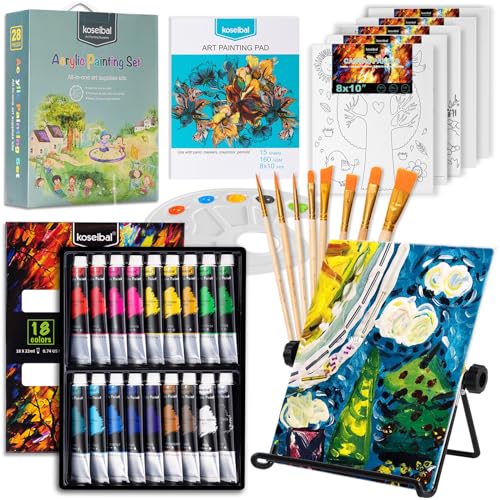
| Inburit Acrylic Set | Ages 8+ | 18 acrylics, 5 canvas panels 8×10, easel | Real canvases | $$ |
| TMOL 237-Piece Art Set | Ages 4-8 | Watercolor, oil pastels, crayons, easel | Many media in one case | $$ |
| Crayola Washable 12ct | Ages 3+ | 6 classic + 6 glitter washable paints | Familiar, washable | $ |
| Crayola Color Wonder | Ages 3+ | Light-up brush, 6 paints, 18 sheets | Paint only shows on special paper | $$ |
| JoyCat Paint with Water | Toddlers, travel | 20 pages with built-in paint | Water only, no pots | $ |
How We Chose
We did not trial these sets with children. The selections rely on Amazon listing details and specifications checked in October 2026, how well each set’s paint type, tools and included activities fit specific developmental stages, and how widely each product is reviewed by Amazon buyers.
- Skill target: grip and control, color recognition, color mixing, composition or patience.
- Age-appropriate format: spill-proof and mess-free for toddlers; tubes and canvas for older kids.
- Safety and washability: washable, non-toxic labeling and child-sized tools.
- Guided content: activity pages or outlines that structure learning.
- Room to grow: enough colors and surfaces to keep going after the first session.
What Kids Learn From Painting, by Age
| Age | Skills Painting Builds | Best Format |
|---|---|---|
| 2-3 | Grip, cause and effect, color names | Spill-proof pots, paint with water |
| 3-5 | Hand control, primary colors, simple mixing | Washable tempera, chunky brushes |
| 5-7 | Mixing secondaries, filling shapes, layering | Tempera sets, watercolor pans |
| 8-10 | Composition, light and dark values, planning | Acrylic on canvas panels |
| 10+ | Technique, blending, finishing a project | Acrylic with easel, larger canvases |
Best Educational Painting Sets for Kids Reviewed
1. Crayola Spill Proof Paint Set (8ct) — Best for first painting experiences

Crayola’s spill-proof set contains eight washable paints in reusable spill-proof jars, three kid-friendly brushes, two paint trays and 40 activity pages. The jars are designed so a tipped pot does not pour out, which removes the biggest source of toddler frustration and parent stress.
The 40 activity pages give structure. Instead of a blank sheet, a young child has a shape to fill, which builds hand control and color naming at the same time. The listing describes the paint as washable from most clothing and skin.
Best suited for: Ages 2 to 4, and parents introducing paint for the first time.
Key features:
- 8 washable spill-proof paints in reusable jars
- 3 kid-friendly brushes
- 2 paint trays
- 40 educational activity pages
Pros:
- Spill-proof design reduces mess
- Activity pages structure learning
- Washable paint
Cons and limitations:
- Only eight colors
- Watercolor-style paint is thin on heavy paper
- Outgrown quickly by school-age kids
Buying consideration: Teach the dip, wipe, paint rhythm from the first session. A child who learns to wipe a brush on the jar rim will waste less paint for years.
2. Jar Melo Kids Tempera Painting Set — Best for learning color mixing

Jar Melo includes 24 tempera colors in 15 ml containers plus three brushes, a palette and a storage bucket that also works as a wash bucket. The lid flips into a palette and the bucket bottom doubles as a rinse cup, so the whole studio is one container.
Tempera is thicker and more opaque than watercolor, which makes it a good medium for learning mixing: colors stay bright, and kids can see the result clearly. The listing describes it as washable, water-based and certified to ASTM D-4236 and CPSIA.
Best suited for: Preschoolers through early elementary kids ages 4 to 8.
Key features:
- 24 tempera colors, 15 ml each
- Palette lid and rinse-cup base
- 3 brushes
- ASTM D-4236 and CPSIA listed
Pros:
- Plenty of colors for mixing lessons
- Self-contained bucket for storage
- Opaque, bright coverage on paper
Cons and limitations:
- Paper not included
- Tempera can crack on flexible surfaces
- Small containers for big projects
Buying consideration: For a mixing lesson, hide everything except red, yellow, blue, black and white. Let kids discover the rest before showing them the full 24.
3. Inburit Acrylic Paint Set with Canvas — Best for ages 8 and up stepping up to canvas

Inburit is a genuine starter studio: 18 acrylic colors, eight assorted brushes, five 8×10 canvas panels, a 15-sheet painting pad, a palette and a multifunctional tabletop easel. That is enough for a child to practice on paper and then commit to a canvas.
Acrylic teaches lessons that kid paints do not: it dries fast, so layering is possible within minutes, and it is permanent, so planning matters. It is a natural next step for kids who have outgrown tempera.
Best suited for: Kids around 8 and older, tweens, and homeschool art units.
Key features:
- 18 acrylic colors
- 8 brushes in assorted shapes
- 5 canvas panels 8×10 and 15-sheet pad
- Tabletop easel and palette
Pros:
- Real canvases and an easel
- Pad for practice before canvas
- Enough brush variety to learn strokes
Cons and limitations:
- Acrylic stains clothing once dry
- Needs more supervision for younger kids
- Not washable like kid paints
Buying consideration: Have kids paint a small study on the pad first, then repeat it on canvas. It teaches planning and gives a better final piece.
4. TMOL 237-Piece Kids Art Set with Double-Sided Easel — Best for exploring many art media

TMOL packs many media into a single case: crayons, oil pastels, markers, watercolor and more, with a built-in double-sided trifold easel that holds paper at an angle. The listing states it is certified non-toxic and meets US safety standards for children’s art materials.
This is less a painting set and more an art sampler. Its educational value is breadth: kids learn how watercolor behaves differently from oil pastel or crayon, and can combine them, such as crayon resist under watercolor.
Best suited for: Ages 4 to 8 who are still discovering what they like.
Key features:
- 237 pieces including 24 crayons and 48 oil pastels
- Watercolor paints
- Double-sided trifold easel
- Portable organized case
Pros:
- Lots of media to experiment with
- Easel angle helps posture
- Organized case for storage
Cons and limitations:
- Paint is only one part of the kit
- Small amounts of each medium
- Quality varies by component
Buying consideration: Try a crayon-resist lesson: draw with white crayon, then paint over with watercolor and watch the drawing appear.
5. Crayola Washable Kids Paint Set (12ct) — Best for classroom-style basic paints

This Crayola set includes 12 washable paints: six classic colors and six glitter colors. The listing notes they wash from skin and most washable clothing and are suited to paper, fabric and plastic surfaces.
Crayola washable paint is the standard in many US classrooms, which is a quiet advantage at home: kids already know how it behaves, and lesson ideas from teachers transfer directly.
Best suited for: Ages 3 and up, classrooms and families who want a familiar basic set.
Key features:
- 6 classic washable colors
- 6 glitter washable colors
- Matte finish (classic)
- Suitable for paper, fabric, plastic
Pros:
- Trusted washability
- Glitter colors motivate reluctant painters
- Simple, no extras to lose
Cons and limitations:
- No brushes or paper listed
- Small volume per bottle
- Glitter can distract from mixing lessons
Buying consideration: Use the classic colors for learning and save glitter for the finishing touches, so kids practice mixing with the basics.
6. Crayola Color Wonder Magic Light Brush — Best for mess-free cause-and-effect play

Color Wonder paints only appear on Color Wonder paper, so walls, skin and clothes stay clean. This kit includes the Magic Light Brush, six Color Wonder paints and 18 sheets of special paper, and the brush lights up to show which color is loaded.
For young children, the light-up brush reinforces color naming and choice. The trade-off is that it is a closed system: the paints do not work on other paper, and it does not teach real paint handling.
Best suited for: Ages 3 and up, car-free rainy days, and households where mess is a dealbreaker.
Key features:
- Magic Light Brush unit
- 6 Color Wonder paints
- 18 sheets Color Wonder paper
- Paint only shows on special paper
Pros:
- Virtually mess-free
- Light-up color cue
- Good for younger siblings nearby
Cons and limitations:
- Requires proprietary paper refills
- Not real paint handling
- Limited colors
Buying consideration: Treat it as a bridge, not a destination. Once a child enjoys it, move to a spill-proof set for real color mixing.
7. JoyCat Paint with Water Coloring Book (Magical Pony) — Best for travel and fine motor practice

JoyCat combines paint, brush and book: each of the 20 pages has its own paint, and all a child adds is water. The paper is thick to prevent bleeding, and pages tear off along cut lines.
Paint-with-water books are excellent for fine motor practice because kids must control water, not just color. They also travel well, with nothing to spill except a small cup of water.
Best suited for: Toddlers and preschoolers, waiting rooms and car trips.
Key features:
- 20 pages with built-in paint
- Brush included
- Thick paper with tear-off lines
- Pony theme
Pros:
- Almost no mess
- Portable
- Low price tier
Cons and limitations:
- Pre-set colors only
- One-time use per page
- No mixing practice
Buying consideration: Give a nearly dry brush first so kids learn that too much water muddies the page.
Buying Guide: How to Choose Educational Painting Sets for Kids
Start from the skill, not the box
Ask what your child is working on. Grip and control? Choose chunky brushes and spill-proof pots. Colors and mixing? Choose primaries plus white. Patience and planning? Choose a canvas project. One clear goal makes the purchase easy.
Paint type by age
Paint with water and Color Wonder for ages 2 to 3. Washable tempera or watercolor for 3 to 7. Kid-grade acrylic on canvas from about 8, with supervision.
Moving up a medium too early leads to frustration; moving too late leads to boredom.
Look for primaries
Red, yellow and blue, plus black and white, are all a child needs to learn color theory. Sets with 24 colors are great, but make sure the primaries are there.
Tool quality matters
A brush that sheds or splays teaches nothing but frustration. Look for sets with a few brush shapes, like a flat and a round, and kid-sized handles.
Built-in structure
Activity pages, pre-drawn outlines and step guides turn painting into a lesson. Free painting matters too, so alternate.
Washability and safety
Look for washable and non-toxic claims and ASTM D-4236 labeling. Keep acrylic for older kids who understand it is permanent.
A 20-Minute Color Mixing Lesson
This works with tempera, washable paint or acrylic and suits kids from about 4.
- Put a dot of red, yellow and blue on a palette or paper plate.
- Ask the child to guess what yellow and blue will make. Mix and paint a swatch.
- Repeat with red and yellow, then red and blue. Label the three new colors.
- Add a dot of white to one color to make a tint, and a tiny dot of black to make a shade.
- Finish by painting a simple picture using only the colors you mixed.
The lesson teaches more than color. Kids practice prediction, observation and vocabulary, and the final picture gives them a reason to care about the result.
Guided Projects to Try
Short guided lessons reinforce what the sets teach. The easy ladybug painting tutorial practices filling shapes and adding dots, while our easy dinosaur painting guide introduces outlines and simple shading. For a hands-on 3D project, painted rock critters combine painting with planning a design.
Common Mistakes to Avoid
- Buying a 100-piece kit for a 3-year-old. Too many options overwhelm; start with a few colors.
- Correcting color choices. A purple dog is a creative decision, not a mistake.
- Skipping cleanup as a lesson. Rinsing brushes and closing lids teaches care for tools.
- Using thin printer paper. It buckles and tears. Use heavier paper or the pads included in kits.
- Starting acrylic too early. It stains and dries on brushes; wait until kids can follow cleanup steps.
- Never displaying work. Hanging paintings builds confidence and gives a reason to finish.
FAQs
What is the best educational paint set for a toddler?
A spill-proof washable set like the Crayola Spill Proof Paint Set, with chunky brushes and activity pages, is the best start for ages 2 to 4.
At what age can kids use acrylic paint?
Most kids can use kid-grade acrylic from about age 8 with supervision. Younger children do better with washable tempera or watercolor.
Is tempera or watercolor better for preschoolers?
Tempera is thicker and more opaque, so colors stay bright and mixing results are easy to see. Watercolor teaches water control but can look pale.
Are mess-free paint sets educational?
They help with color recognition and cause and effect, but they do not teach real paint handling. Use them as a bridge to regular paint.
How often should kids paint to build skills?
Two or three short sessions a week, around 15 to 30 minutes each, is plenty for young children.
What surfaces should kids paint on?
Heavy paper or activity pages for young kids, and canvas panels or mixed-media paper for older kids using acrylic.
Final Recommendation
Start toddlers with the Crayola Spill Proof Paint Set, which teaches brush control without floods. For preschool and early elementary color lessons, the Jar Melo tempera bucket set is the best teaching tool. Kids around 8 and up who are ready for real canvas work should move to the Inburit acrylic kit. Choose TMOL for broad media exploration, Crayola Washable for a classroom-familiar basic set, Color Wonder when mess is not an option, and JoyCat books for travel and fine motor practice.