
PaintingProGuide is reader-supported. When you buy through links on this page we may earn an affiliate commission at no extra cost to you.
Rocks are small, curved and gritty. That combination wears out brush tips faster than almost any other surface, and it means most of the painting on a rock happens with small brushes held close. The best paint brushes for painting rocks are inexpensive synthetic sets with a good spread of small sizes: a flat or two around a quarter to half inch wide for base coats, a handful of pointed rounds from about size 6 down to 2/0 for designs and lettering, and a few very fine tips for dots and outlines. Because the stone will grind them down, it is smarter to buy affordable multi-packs and replace them than to use fine artist brushes.
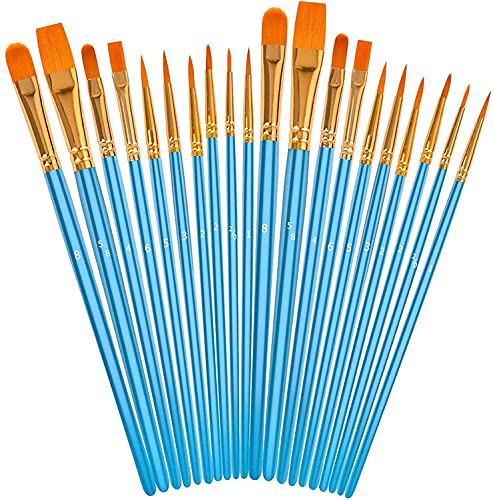
Quick answer: For most rock painters, the BOSOBO 20-piece round and flat brush kit is the best pick: two sets of 10 sizes with both round and flat tips, synthetic nylon and double-crimped nickel ferrules, sold specifically with rock, canvas and ceramic painting in mind. For extra fine pointed rounds, the Phinus 20-piece set reaches size 2/0 and mentions rock painting directly. For a starter kit with paint, the Nicpro 24-color acrylic set with 12 brushes includes 2 oz bottles and a palette.
What Makes Rock Painting Different
Abrasive surface
Even smooth river rocks have microscopic grit. It wears brush tips quickly, especially when you scrub paint into pits. Use cheaper brushes for base coats and save the finest tips for final details.
Curved, small area
Most painted rocks are palm-sized. You need small brushes that can follow curves and reach the edges without smudging the opposite side.
Porous stone
Many rocks absorb paint, so the first coat can look patchy. A base coat of white or a primer evens things out and makes colors brighter.
Dots and fine lines
Mandala and dot designs are popular. Dotting tools, the back end of a brush handle and fine rounds all make dots of different sizes.
Outdoor exposure
Kindness rocks and garden stones live outdoors, so they need a sealant after painting. Brushes do not change that, but the final clear coat matters as much as the paint.
Our Top Picks at a Glance
- BOSOBO 20-Piece Round and Flat Brush Kit — Best overall brushes for rock painting
- Phinus 20-Piece Pointed Round Brushes — Best for fine details and dots
- Soucolor 20-Piece Pointed Tip Brushes — Best alternative fine rounds
- Nicpro 24-Color Acrylic Paint Set with 12 Brushes — Best starter kit with paint
- DECYOOL 60-Piece Round and Flat Brushes — Best short-handle bulk pack for kids
- ONEXIZ 162-Piece Bulk Brush Set — Best for rock-painting parties and classrooms
- AROIC 10-Piece Paint Brush Set — Best small starter set
| Product | Best For | Key Spec | Key Strength | Price Tier |
|---|---|---|---|---|
| BOSOBO 20-Piece | All-round rock painting | 2 x 10 sizes, round and flat, nylon, double-crimped | Rounds and flats | $ |
| Phinus 20-Piece | Detail and dots | 20 pointed rounds, sizes to 2/0, nylon | Rock painting named | $ |
| Soucolor 20-Piece | Detail, budget | 20 pointed rounds, 10 sizes, nickel ferrules | Two of each size | $ |
| Nicpro Acrylic Set | Starter kit | 24 x 2 oz acrylics, 12 brushes, palette | Paint included | $$ |
| DECYOOL 60-Piece | Kids, groups | 30 round + 30 flat, short plastic handles | Short handles for control | $ |
| ONEXIZ 162-Piece | Parties, classes | 81 flats + 81 rounds, nylon | Huge quantity | $ |
| AROIC 10-Piece | First try | 10 brushes, 10 sizes, nylon | Lowest cost | $ |
How We Chose
We picked these from the Amazon listing details and specifications checked in October 2026, judging how well each set’s sizes, tip shapes and price suit painting small, curved, abrasive rocks, and how widely each product is reviewed by Amazon buyers. We have not painted rocks with these sets. Claims about shedding and paint quality are as stated by each maker.
- Small sizes from about 6 down to 2/0.
- Both rounds and flats for base coats and designs.
- Synthetic nylon that holds a point and cleans easily.
- Low cost per brush, since rocks wear tips.
- Rock painting named in the listing where possible.
Best Paint Brushes for Painting Rocks Reviewed
1. BOSOBO 20-Piece Round and Flat Brush Kit — Best for all-round rock painting

BOSOBO’s kit contains two packs of 10 sizes each, with round and flat tips, made of synthetic nylon with rust-proof nickel ferrules and double-crimped wooden handles. The listing names rock, ceramic, glass, canvas and model painting and describes the brushes as fine-tip miniature detail brushes that do not shed or flake.
Having both rounds and flats is what makes this set a good rock kit. Flats lay smooth base coats and stripes; rounds handle flowers, faces, letters and outlines. Two of each size means you can keep a clean brush for white and black, the colors used most for details.
Because the kit is inexpensive, it is easy to replace the sizes that wear down first.
Best suited for: Rock painters who want both rounds and flats in small sizes.
Key features:
- 20 brushes, 10 sizes x 2
- Round and flat tips
- Synthetic nylon
- Nickel ferrules, double-crimped
- Rock painting listed
Pros:
- Rounds and flats
- Two of each size
- Low price tier
Cons and limitations:
- Small sizes only
- Tips wear on rough stone
Buying consideration: Use the flats for base coats and keep the smallest rounds for final details.
2. Phinus 20-Piece Pointed Round Brushes — Best for fine details and dots

Phinus’s set includes 20 round-pointed brushes in 10 sizes down to 2/0, with synthetic nylon bristles, nickel rings and double-crimped wooden handles. The product title names miniature detailing and rock painting, and the listing mentions tight, small or tiny dots.
Fine rounds are essential for the details that make painted rocks look finished: eyes on animal rocks, small lettering on kindness rocks, and outlines around shapes.
Best suited for: Rock painters who do detailed designs, lettering and dot work.
Key features:
- 20 rounds, 10 sizes to 2/0
- Nylon
- Nickel ferrules
- Rock painting in title
Pros:
- Very fine tips
- Very low price tier
- Two of each size
Cons and limitations:
- Rounds only
Buying consideration: Thin paint slightly so it flows from the tip for crisp lines.
3. Soucolor 20-Piece Pointed Tip Brushes — Best for an alternative fine-round set

Soucolor’s 20 pointed brushes in 10 sizes have nickel ferrules and wooden handles, and the listing names rock painting and ceramics among uses. It says bristles become soft and fluffy again after cleaning and do not fall out.
It is a close equivalent to Phinus. Buying both gives you plenty of fine rounds to rotate as tips wear.
Best suited for: Painters who want spare detail rounds.
Key features:
- 20 brushes, 10 sizes
- Pointed tips
- Nickel ferrules
- Rock painting listed
Pros:
- Low cost
- Two of each size
Cons and limitations:
- Rounds only
Buying consideration: Wash promptly; acrylic dried in the ferrule spreads the tip.
4. Nicpro 24-Color Acrylic Paint Set with 12 Brushes — Best for a starter kit with paint

Nicpro’s set includes 24 acrylic colors in 2 oz bottles, plus 12 brushes and a palette. The listing describes creamy, blendable paint that is fast drying, waterproof and fade resistant, and conforms to ASTM D-4236.
For someone starting rock painting from scratch, a kit with paint and brushes is the simplest purchase. Two-ounce bottles last for many rocks, and 24 colors reduce mixing.
Best suited for: Beginners and families starting rock painting.
Key features:
- 24 acrylic colors, 2 oz each
- 12 brushes
- Palette
- ASTM D-4236 stated
Pros:
- Paint and brushes together
- Generous bottle size
- Wide color range
Cons and limitations:
- Included brushes are general purpose
- Higher price tier than brush-only sets
Buying consideration: Add a fine-round set for details; kit brushes are better for base coats.
5. DECYOOL 60-Piece Round and Flat Brushes — Best for kids and groups

DECYOOL’s bulk pack includes 30 round and 30 flat brushes with short plastic handles and synthetic nylon hair in aluminum ferrules. The listing says short handles give comfort and control and names classrooms among uses.
Short handles are well suited to rock painting, where you hold the rock in one hand and paint close with the other. Kids find them easier to control than long artist handles.
Best suited for: Kids, scout groups and rock-painting classes.
Key features:
- 60 brushes
- 30 round, 30 flat
- Short plastic handles
- Nylon hair
Pros:
- Short handles for control
- Bulk quantity
- Low cost
Cons and limitations:
- Limited sizes
- Basic quality
Buying consideration: Give each child one flat and one round, plus shared dotting tools.
6. ONEXIZ 162-Piece Bulk Brush Set — Best for parties and classrooms

ONEXIZ’s set contains 81 flats with a 0.59 inch edge and 81 rounds with 0.39 inch tips in triple-crimped nylon with aluminum ferrules.
Rock-painting parties and community kindness-rock events need lots of brushes. This pack keeps everyone supplied.
Best suited for: Large groups and events.
Key features:
- 162 brushes
- 81 flats + 81 rounds
- Nylon
- Aluminum ferrules
Pros:
- Huge quantity
- Low cost per brush
Cons and limitations:
- Only two sizes
- No very fine tips
Buying consideration: Supplement with a few fine rounds for detail-minded painters.
7. AROIC 10-Piece Paint Brush Set — Best for a first try

AROIC’s small set covers 10 sizes with nylon bristles, anti-rust nickel ferrules and wooden handles.
It is the least expensive way to try rock painting before investing in more brushes.
Best suited for: First-time rock painters.
Key features:
- 10 brushes
- 10 sizes
- Nylon
Pros:
- Lowest cost
- Range of sizes
Cons and limitations:
- Few brushes
Buying consideration: Use it to discover which sizes you reach for most.
Rock Painting Step by Step
- Choose smooth, flat rocks and scrub them clean. Let them dry completely.
- Apply a base coat of white or a primer with a small flat brush.
- Sketch the design lightly with pencil or chalk.
- Fill larger shapes with a flat or medium round.
- Add details with fine rounds, and dots with dotting tools or brush handles.
- Let the paint dry fully, then seal with a clear sealer, especially for outdoor rocks.
Choosing and Preparing Rocks
The rock affects how well any brush performs. Smooth, flat river rocks are the easiest surface: they need less paint, wear brushes more slowly and give cleaner lines. Rough or pitted stones soak up paint and fray tips quickly, so save them for bold, simple designs. Avoid crumbly sandstone, which can flake under paint. If you collect rocks outdoors, follow local rules; many parks and beaches prohibit removing stones, and craft stores sell bags of smooth rocks for painting.
Scrub rocks with warm soapy water and an old toothbrush, rinse and let them dry fully, ideally overnight, since moisture trapped in porous stone can lift paint later. A coat of white acrylic or a spray primer seals the surface, makes colors brighter and protects your fine brushes from the raw grit.
Sealing Painted Rocks
Sealing is what keeps a painted rock looking good. For rocks that stay indoors, a brush-on water-based varnish or a matte or gloss spray sealer is enough. For rocks placed outdoors, choose a sealer made for outdoor use and apply two or three thin coats, letting each dry fully. Brush-on sealers are best applied with a soft, clean flat brush you keep only for varnish; a brush that still holds traces of paint can smear colors. Spray sealers avoid brush marks but can make some marker inks run, so test first. Let sealed rocks cure for the time on the label before handling or placing them outside.
Brushes, Paint Pens or Dotting Tools?
Many rock painters combine all three. Brushes are best for base coats, blended backgrounds and shapes. Acrylic paint pens give crisp lines and lettering without the need for a steady brush hand. Dotting tools make perfectly round dots in graded sizes for mandala designs. If you are only buying one tool to start, a set of small brushes covers the most ground.
Popular Rock Painting Designs
- Kindness rocks: short messages lettered with a fine round or paint pen.
- Mandala dot rocks: rings of dots built outward from the center.
- Animals and bugs: ladybugs, owls, cats and fish shaped by the rock itself.
- Garden markers: vegetable or herb names with a simple illustration.
- Landscapes and night skies: small scenes with a moon or sunset.
Buying Guide: How to Choose Brushes for Painting Rocks
Small sizes
Most rock painting uses sizes from about 6 down to 2/0. Larger brushes are only useful for base coats on big garden stones.
Rounds and flats
Flats for base coats and stripes; rounds for shapes and details. A set with both saves you from buying them separately.
Durability and cost
Rocks wear tips quickly; inexpensive sets are practical. Expect to retire your finest brushes after a batch of rocks and promote slightly worn ones to base-coat duty.
Handle length
Short handles give better control close to the rock.
Synthetic bristles
Nylon holds a point and cleans easily with water.
Kits or separates
Kits with paint suit beginners; separate brush sets suit painters who already have paint.
Related Brush Guides
Make small brushes last longer with our guides on preventing shedding and drying brushes correctly.
Common Mistakes to Avoid
- Painting rocks without washing and drying them first.
- Skipping a base coat on porous stone.
- Using your best fine brush for base coats on rough rock.
- Leaving outdoor rocks unsealed.
- Letting acrylic dry in small brushes, which ruins the point.
- Painting both sides of a rock at once and smudging the wet side on the table; finish one side, let it dry, then turn it over.
- Using the same brush for sealer that you used for paint, which can drag color across the design.
FAQs
What size brushes are best for rock painting?
Small rounds from about 6 down to 2/0 plus a small flat for base coats.
Do I need special brushes to paint rocks?
No, inexpensive synthetic craft brushes work well; fine detail rounds help with designs.
What paint is best for rocks?
Acrylic craft paint is the most common choice, sealed with a clear coat afterward.
How do I make dots on painted rocks?
Use dotting tools, the end of a brush handle or a fine round.
Should I seal painted rocks?
Yes, especially if they will be outdoors.
Why do my brushes wear out on rocks?
Rock surfaces are abrasive and grind down tips; use cheaper brushes for base coats.
Final Recommendation
The BOSOBO 20-piece kit is the best all-round rock brush set thanks to its mix of rounds and flats. Add Phinus or Soucolor fine rounds for details. Beginners should start with the Nicpro paint and brush kit. For kids and groups, DECYOOL’s short-handled pack and ONEXIZ’s bulk set keep everyone painting, and the AROIC 10-piece set is the cheapest way to try.




