PaintingProGuide is reader-supported. When you buy through links on this page we may earn an affiliate commission at no extra cost to you.
Impasto is paint laid on thick enough to keep the mark of the brush or knife. That thickness asks three things of a canvas: tooth to grip heavy paint, strength to carry its weight, and stability so dried ridges do not crack when the support flexes. The best canvas for impasto is a heavy, coarse-textured surface such as coarse linen or jute, either on a deep, solid stretcher or glued to a rigid panel, paired with a medium that bulks up the paint without losing its sharp edges.
Quick answer: For oil impasto, the PHOENIX coarse-texture Belgian linen canvas (15 oz, 1.5 inch frame) is the premium choice; its pronounced weave is made for heavy paint and knife work. For a rigid, budget-friendly oil surface, the Creative Mark Vista jute oil-primed panels offer an extra coarse texture. Acrylic painters should pair a sturdy panel with U.S. Art Supply Impasto Gel Medium, while oil painters can bulk up color with Winsor & Newton Liquin Impasto.
Because impasto depends as much on the paint mixture and the ground as on the canvas, this guide includes two surfaces, two acrylic gels, an oil impasto medium and a textured gesso, all chosen from listings that fit the technique.
Our Top Picks at a Glance
- PHOENIX Coarse Texture Belgian Linen, 16×20, 2 Pack — Best premium canvas for oil impasto
- Creative Mark Vista Jute Oil-Primed Panels, 6×8 — Best rigid coarse panel for oils
- ESRICH 12×16 Canvas Panels, 3 Pack — Best budget rigid panel for acrylic impasto
- U.S. Art Supply Impasto Clear Gel Medium, 500 ml — Best acrylic impasto gel
- Handy Art Acrylic Gel Medium, 32 oz — Best large-tub acrylic gel
- Winsor & Newton Liquin Impasto Medium, 200 ml — Best impasto medium for oil
- Liquitex Professional Super Heavy Gesso, 8 oz — Best gesso for building a textured ground
| Product | Best For | Key Spec | Key Strength | Price Tier |
|---|---|---|---|---|
| PHOENIX Coarse Linen | Oil and acrylic impasto | 16×20, 15 oz Belgian linen, 1.5 in pine frame | Pronounced weave grips heavy paint | $$$ |
| Creative Mark Vista Jute | Rigid oil impasto | 6×8, 3 pack, 100% jute, triple oil-primed | Extra coarse texture | $ |
| ESRICH 12×16 Panels | Budget acrylic impasto | 3 pack, cotton, board core | Rigid support | $ |
| U.S. Art Supply Gel | Acrylic impasto | 500 ml tub, clear gel | Holds peaks and ridges | $$ |
| Handy Art Gel | Large acrylic projects | 32 oz, dries clear | Wide-mouth tub for knives | $$ |
| W&N Liquin Impasto | Oil impasto | 200 ml tube, semi-gloss, quick drying | Keeps crisp brush marks | $$ |
| Liquitex Super Heavy Gesso | Textured grounds | 8 oz, impasto gesso | Builds texture under paint | $$ |
How We Chose
We did not paint impasto on these surfaces or mix these mediums ourselves. Our picks are based on the Amazon listing details and specifications checked in October 2026, how well each product’s texture, weight, rigidity and handling claims fit impasto technique, and how widely each product is reviewed by Amazon buyers.
The criteria:
- Tooth: coarse weaves hold heavy paint and create broken color in dry-brush passages.
- Fabric weight and frame depth: heavier fabric and deeper frames carry more paint without sagging.
- Rigidity: panels prevent flexing that can crack thick dried paint.
- Medium behavior: gels and impasto mediums should hold peaks without slumping or leveling.
- Medium compatibility: oil-primed surfaces for oil only; acrylic grounds for acrylic or oil.
Best Canvas for Impasto Reviewed
1. PHOENIX Coarse Texture Belgian Linen, 16×20, 2 Pack — Best for oil and acrylic impasto

PHOENIX built this canvas around heavy paint. The listing describes 100% Belgian linen with a coarse, archival-quality weave, 15 oz heavy-duty weight, and an acrylic gesso priming that lets the natural linen texture and color show through. It is stretched on a 1.5 inch solid pine frame with back-stapled corners.
Each of those features serves impasto. The pronounced weave grips thick paint and knife strokes, and the listing specifically mentions impasto, abstract expressionism and dry brushing. Heavy linen is stiffer and more stable than light cotton, so it carries weight with less sag. The deep frame adds rigidity and gives the painting presence on the wall without a frame.
Linen also tends to be less reactive to humidity than cotton, which helps protect thick paint from the movement that leads to cracking over time.
Best suited for: Oil and acrylic painters doing serious impasto, knife painting and textured expressive work.
Key features:
- 16×20 inch, 2 pack
- 15 oz Belgian linen, coarse weave
- Acrylic gesso priming, linen color shows through
- 1.5 inch solid pine frame, back stapled
Pros:
- Made for heavy paint per listing
- Heavy, stable linen
- Deep frame for display
- Archival
Cons and limitations:
- Premium price tier
- Coarse weave fights fine detail
- Visible linen color changes the ground tone
Buying consideration: The natural linen shows through the priming, so plan your palette around a warm, mid-tone ground rather than bright white.
2. Creative Mark Vista Jute Oil-Primed Panels, 6×8, 3 Pack — Best for rigid oil impasto

Creative Mark describes these as flat panels covered in 100% jute and triple primed with a non-absorbent oil primer, for traditional oils, alkyds and water-mixable oils. The listing calls the texture extra coarse and ideal for dry brush and impasto.
A rigid panel is a safe home for thick oil paint: it never flexes, so dried ridges are protected from cracking. Jute has a bolder, more irregular weave than cotton, which suits rugged landscape and expressive work. Note that oil-primed surfaces are for oil-based paints only; do not use acrylic on them.
Best suited for: Oil painters who want small, rigid, textured surfaces for impasto studies and plein air.
Key features:
- 6×8 inch, 3 pack (other sizes available)
- 100% jute
- Triple oil-primed, non-absorbent
- For oils, alkyds and water-mixable oils
Pros:
- Extra coarse tooth
- Rigid panel protects thick paint
- Traditional oil ground
Cons and limitations:
- Not for acrylics
- Small size
- Coarse texture limits detail
Buying consideration: Oil primer is less absorbent than acrylic gesso, so paint stays workable longer on the surface; use that time for knife work.
3. ESRICH 12×16 Canvas Panels, 3 Pack — Best for budget acrylic impasto

ESRICH lists pure cotton panels with a smooth surface, acid-free primer and a sturdy board core that resists deforming and warping. The smooth surface is not what impasto purists want, but the rigid core matters more for heavy acrylic gel work, and you can add tooth with textured gesso.
At 12×16, the panels give enough room for bold knife painting at an accessible price, and three panels let you try different gel ratios.
Best suited for: Acrylic painters learning impasto who want rigid, affordable surfaces.
Key features:
- 12×16 inch, 3 pack
- Pure cotton
- Acid-free primer
- Sturdy board core
Pros:
- Rigid support
- Good size for knife work
- Low cost
Cons and limitations:
- Smooth surface has little tooth
- Priming detail limited
Buying consideration: Brush on a coat of textured or heavy gesso first to give the smooth panel more grip.
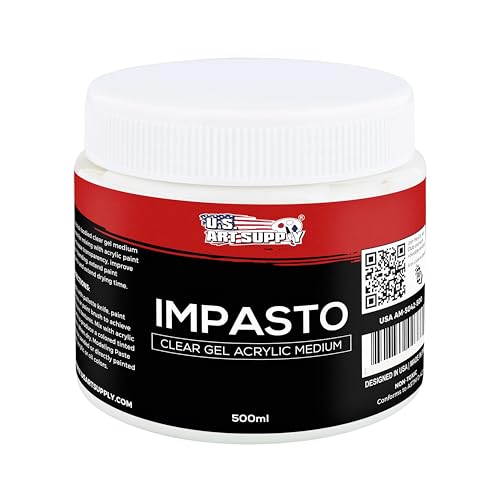
4. U.S. Art Supply Impasto Clear Gel Medium, 500 ml — Best for acrylic impasto

U.S. Art Supply describes this as an artist-quality clear gel designed to increase the body of acrylic paint for dramatic impasto. The listing says its thick consistency helps maintain peaks, ridges and expressive marks as the work dries, and that it dries clear when used alone, with transparency varying by thickness.
Gel medium is the key to acrylic impasto. Acrylic paint loses volume as it dries, and gel adds bulk so peaks stay crisp. Because it dries clear, it extends paint without diluting color as much as adding white would.
Best suited for: Acrylic painters who want thick, sculpted brush and knife marks.
Key features:
- 500 ml tub
- Clear acrylic gel
- Holds peaks and ridges
- Use alone or mixed with acrylic
Pros:
- Built specifically for impasto
- Dries clear
- Extends paint
Cons and limitations:
- Very thick layers dry slowly and may cloud slightly
- For acrylic only
Buying consideration: Start around one part gel to one part paint, then adjust; more gel means more body but a lighter color film.
5. Handy Art Acrylic Gel Medium, 32 oz — Best for large acrylic projects

Handy Art packs its gel in a 32 oz resealable, wide-mouth quart container that the listing says is ideal for palette knives and wide brushes. It is designed to increase the body and thickness of acrylic paint for impasto, goes on white and dries clear and transparent, preserving the color of your paint.
The listing also notes the product is AP certified non-toxic. A large tub makes sense for big impasto paintings or classes.
Best suited for: Acrylic painters working large or teaching impasto to a group.
Key features:
- 32 oz tub
- Goes on white, dries clear
- Increases body of acrylic
- AP certified non-toxic
Pros:
- Large volume
- Wide mouth for knives
- Dries transparent
Cons and limitations:
- Gloss finish may not suit every painting
- Large tub needs sealing between uses
Buying consideration: Scoop gel onto your palette with a clean knife rather than dipping a paint-loaded knife into the tub.
6. Winsor & Newton Liquin Impasto Medium, 200 ml — Best for oil impasto

Liquin Impasto is a quick-drying, semi-gloss medium for oil and alkyd paints. Winsor & Newton says it thickens slowly, extends tube color and retains crisp textures and brush marks without visible leveling. It speeds drying and resists yellowing. The maker notes it is not suitable as a varnish or final coat.
Thick oil paint can take a very long time to dry. A drying impasto medium shortens that wait and keeps the marks you make sharp.
Best suited for: Oil painters building thick, textured passages who want faster drying.
Key features:
- 200 ml tube
- Semi-gloss, quick drying
- Retains brush marks without leveling
- Resists yellowing
Pros:
- Crisp marks
- Faster drying for thick oil
- Extends tube paint
Cons and limitations:
- Not a varnish
- For oil and alkyd, not acrylic
Buying consideration: Keep layers built with alkyd mediums consistent; follow fat over lean as you build up thick passages.
7. Liquitex Professional Super Heavy Gesso, 8 oz — Best for building a textured ground

Liquitex describes this as an impasto acrylic gesso for preparing surfaces for acrylic and oil paint. It is lightweight, non-toxic, dries to a water-resistant, non-yellowing surface and is intermixable with Liquitex acrylic colors and mediums.
A heavy gesso lets you build texture into the ground itself, adding tooth to smooth panels or creating raised strokes that the final paint can catch on.
Best suited for: Painters who want to add tooth to smooth surfaces or sculpt texture into the ground.
Key features:
- 8 oz / 237 ml
- Super heavy impasto gesso
- For acrylic and oil
- Non-yellowing, water-resistant
Pros:
- Adds tooth to any surface
- Works under oil or acrylic
- Can be tinted
Cons and limitations:
- Small bottle for large panels
- Thick layers need drying time
Buying consideration: Apply with a stiff brush in crosshatched strokes for an even, toothy ground; use a knife for sculpted texture.
Buying Guide: How to Choose Canvas for Impasto
Tooth versus smooth
Coarse surfaces such as heavy linen and jute grip thick paint and create broken color when you drag a loaded brush across them. Smooth surfaces let the paint slide; they are fine for impasto highlights but not for heavy dry-brush work.
Rigid panel or stretched canvas
Thick paint is brittle once dry. A panel never flexes, so it is the safest support for heavy impasto. Stretched canvas works if it is heavy, tight and on a deep, sturdy frame, like the PHOENIX linen.
Oil or acrylic ground
Oil-primed surfaces are for oil paints only. Acrylic-primed surfaces accept acrylic and oil. Check the priming before you buy.
Mediums matter as much as the canvas
Acrylic impasto almost always needs a gel medium so peaks survive drying. Oil impasto benefits from an impasto or alkyd medium to speed drying and preserve marks. Avoid overthinning thick passages.
Weight and frame depth
Thick paint adds weight. Heavier fabric, deeper stretchers and sturdy hanging hardware keep a heavily painted canvas stable.
Drying and curing
Thick oil can stay soft inside for a long time. Plan for longer drying before varnishing, and follow the medium maker guidance.
Size
Impasto uses a lot of paint. Small panels are good for learning; large canvases need big tubes, big knives and a lot of gel.
Impasto Technique Basics
Load the knife generously. Impasto fails when paint is spread too thin. Scoop a clean, thick ribbon and place it with one confident stroke.
Do not overwork. Each pass flattens the ridges. Put the paint down and leave it.
Plan thick and thin. Keep shadows and backgrounds relatively thin and save the thickest paint for lights and focal points. The contrast makes the impasto read.
Use the direction of strokes. Strokes that follow the form, such as petals curving or waves rolling, add movement and depth.
Clean tools between colors to keep impasto colors crisp rather than muddy.
Related Guides
If a heavily painted stretched canvas gets damaged, the ripped canvas repair guide explains how to patch it from behind. Planning a textured composition? Gridding the canvas helps place your thickest passages where they count, and impasto pieces also look striking hung as a multi-canvas wall art set.
Common Mistakes to Avoid
- Using acrylic paint on an oil-primed panel.
- Building heavy impasto on a thin, slack canvas that flexes.
- Skipping gel medium in acrylic impasto, so peaks shrink as they dry.
- Varnishing thick oil impasto before it is dry throughout.
- Overworking strokes until the texture flattens.
- Making every area thick, which removes the contrast that makes impasto effective.
FAQs
What canvas is best for impasto?
Heavy, coarse-textured linen or jute, either on a deep, sturdy stretcher or mounted on a rigid panel. Rigid panels are the safest for very thick paint.
Can you do impasto on stretched canvas?
Yes, if the canvas is heavy and tight on a sturdy frame. For very thick paint, a panel reduces the risk of cracking.
Do I need a medium for impasto?
For acrylic, a gel medium helps peaks hold as the paint dries. For oil, an impasto medium speeds drying and preserves marks; some painters use straight tube paint.
How long does oil impasto take to dry?
Thick oil can take weeks or longer to dry throughout. Drying mediums shorten this. Wait until fully dry before varnishing.
Can I use acrylic gesso to add texture?
Yes. Heavy or super heavy gesso can be brushed or knifed on to create a textured ground for either acrylic or oil.
Is jute canvas good for impasto?
Jute has a coarse, irregular weave that grips paint well, which suits impasto and expressive work.
Final Recommendation
For oil or acrylic impasto on a premium surface, the PHOENIX coarse Belgian linen is the most suitable canvas here. Oil painters who prefer rigid surfaces should try the Creative Mark jute panels, while acrylic painters on a budget can use ESRICH panels with a coat of Liquitex super heavy gesso for tooth. Pair acrylic impasto with U.S. Art Supply or Handy Art gel, and oil impasto with Liquin Impasto, and let the thickness do the work.