PaintingProGuide is reader-supported. When you buy through links on this page we may earn an affiliate commission at no extra cost to you.
Portraits are unforgiving. A coarse weave breaks up soft transitions across a cheek, an absorbent ground makes skin tones look chalky, and the wrong proportions crowd a head against the edges. The best canvas for portraits is a tightly stretched, triple-primed cotton canvas with a fine to medium grain, in a size that lets the head sit at or slightly under life size, plus smooth panels for quick head studies.
Quick answer: The FROM ONE 11×14 Stretched Canvas 10-Pack is our top pick for portrait practice and finished heads: 10 oz triple priming, knot-free pine and a size that suits a single head. For a deeper, gallery-ready portrait, the PHOENIX 12×16 Gallery Canvas adds a 1.5 inch profile and 11 oz priming. For quick head studies, the Simetufy 8×10 Canvas Boards are an inexpensive, rigid choice.
The guide below explains how portrait size relates to canvas size, why surface smoothness matters for skin, and how to prepare a canvas for glazing and fine blending, followed by seven options matched to different portrait jobs.
Our Top Picks at a Glance
- FROM ONE 11×14 Stretched Canvas, 10 Pack — Best overall for portrait practice and finished heads
- PHOENIX 12×16 Gallery Canvas, 2 Pack — Best gallery-depth canvas for commissions
- ESRICH 11×14 Stretched Canvas, 2 Pack — Best small pack for a single portrait
- Simetufy 8×10 Canvas Boards, 12 Pack — Best for quick head studies
- Halobios 3-Size Stretched Canvas Pack — Best for testing portrait formats
- ArtSkills 11×14 Stretched Canvas, 2 Pack — Best budget stretched pair
- KINGART 24×36 Stretched Canvas, 2 Pack — Best for half-length and life-size portraits
| Product | Best For | Key Spec | Key Strength | Price Tier |
|---|---|---|---|---|
| FROM ONE 11×14 | Practice and finished heads | 10 pack, 10 oz triple primed, knot-free pine, mortise and tenon | Heavy priming, square frame | $$ |
| PHOENIX 12×16 Gallery | Commissions | 1.5 in profile, 11 oz triple gesso, medium grain | Gallery depth | $$ |
| ESRICH 11×14 | Single portrait | 2 pack, 8 oz gesso, 5/8 in pine | Low commitment | $ |
| Simetufy 8×10 Boards | Head studies | 12 pack, cotton, MDF core | Rigid, inexpensive | $ |
| Halobios 3-Size Pack | Trying formats | 5×7, 8×10, 11×14, 5/8 in profile | Three sizes | $ |
| ArtSkills 11×14 | Budget pair | 2 pack, cotton, white gesso | Affordable | $ |
| KINGART 24×36 | Half-length, life size | 2 pack, triple gesso, medium grain | Room for torso and background | $$ |
How We Chose
We did not paint portraits on these canvases. The picks are based on the Amazon listing details and specifications checked in October 2026, how well each canvas’s size, surface and priming fit portrait painting, and how widely each product is reviewed by Amazon buyers.
The criteria:
- Surface smoothness: fine to medium grain and heavy priming support soft skin transitions and small features.
- Priming weight: stated weights such as 10 or 11 oz signal a less absorbent ground for glazing.
- Size and proportion: 11×14 and 12×16 suit a single head; 24×36 suits half-length portraits.
- Frame build: tight stretch, square corners and, for commissions, a deeper profile.
- Study surfaces: cheap rigid panels for frequent head studies.
Best Canvas for Portraits Reviewed
1. FROM ONE 11×14 Stretched Canvas, 10 Pack — Best for portrait practice and finished heads

FROM ONE gives the most construction detail of any listing here. The canvases are 100% cotton duck, triple primed with 10 oz acid-free gesso, stretched over knot-free pine bars with mortise and tenon joints and a 5/8 inch profile. The listing also describes a dense weave designed to stop paint from showing through the back.
Heavy priming is the main portrait benefit. Skin is often built with thin glazes and soft blending, and a thirsty canvas pulls those layers in unevenly, making flesh look patchy. Knot-free pine and mortise and tenon joints help the frame stay square and the canvas stay tight, so the surface does not develop ripples as you work.
Eleven by fourteen is a classic portrait size: a head painted a little under life size fits comfortably with room for shoulders. Ten canvases let you paint a series of studies and still have surfaces left for finished work.
Best suited for: Portrait students working through a course and painters producing regular head-and-shoulders portraits.
Key features:
- 11×14 inch, 10 pack
- 100% cotton duck
- Triple primed with 10 oz acid-free gesso
- Knot-free pine, mortise and tenon joints
Pros:
- Heaviest stated priming among the 11×14 options
- Sturdy, square frame construction
- Good count for practice
- Classic portrait size
Cons and limitations:
- Single size
- Standard profile, not gallery depth
- Cotton rather than linen
Buying consideration: For the finest skin passages, sand the surface very lightly with fine-grit paper and wipe off the dust before painting.
2. PHOENIX 12×16 Gallery Canvas, 2 Pack — Best for commissions and gallery-ready portraits

PHOENIX lists a hand-stretched cotton canvas, back stapled onto 1.5 inch pinewood stretcher bars, with heavy duty 11 oz triple gesso priming on a medium grain. The listing says it holds more paint than studio grade canvas.
A deep 1.5 inch profile gives a portrait presence on the wall without a frame, and back stapling keeps the sides clean so you can paint them. The 12×16 size gives slightly more room around the head than 11×14, which is helpful for commissioned portraits that include a little background or a hand.
Best suited for: Portrait painters delivering commissions or exhibiting work without frames.
Key features:
- 12×16 inch, 2 pack
- 1.5 inch gallery pinewood frame
- 11 oz triple gesso, medium grain
- Back stapled
Pros:
- Gallery depth
- Heavy stated priming
- Clean sides for frameless hanging
Cons and limitations:
- Medium grain is not as smooth as fine linen
- Only two canvases
Buying consideration: Medium grain can show through thin glazes. If you paint very smoothly, add a thin coat of gesso before starting.
3. ESRICH 11×14 Stretched Canvas, 2 Pack — Best for a single portrait
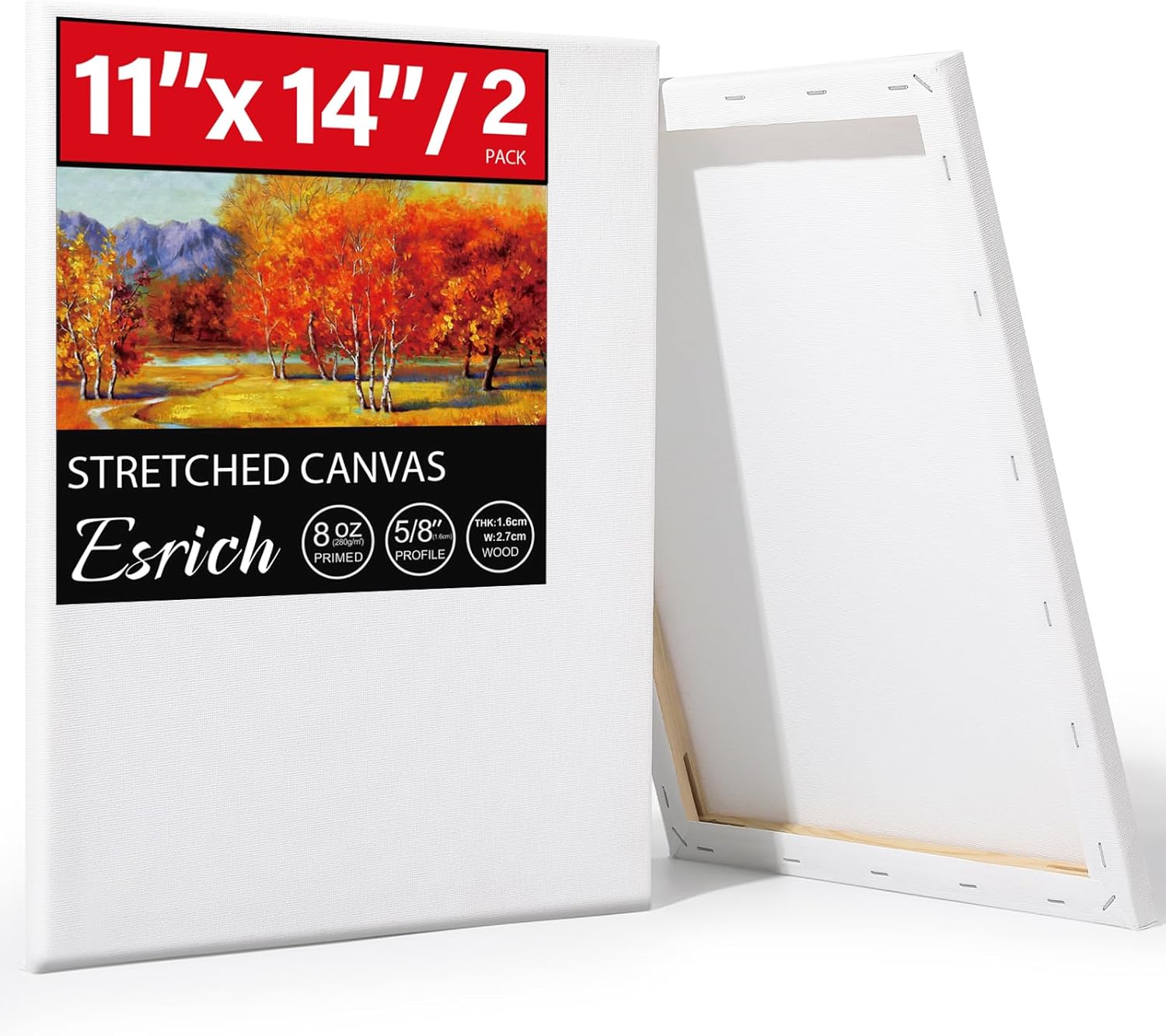
ESRICH offers two 11×14 cotton canvases pre-coated with 8 oz acid-free acrylic gesso and nailed to a 5/8 inch pinewood frame. It is a small, simple pack suited to one finished portrait and a spare.
The 8 oz priming is lighter than the FROM ONE and PHOENIX options, so it may benefit from an extra gesso coat if you glaze.
Best suited for: Painters who need one or two canvases for a single portrait or gift.
Key features:
- 11×14 inch, 2 pack
- 8 oz acid-free acrylic gesso
- 5/8 inch pinewood frame
- Suitable for oil and acrylic
Pros:
- Low commitment
- Classic portrait size
- Stated priming weight
Cons and limitations:
- Lighter priming than top picks
- Only two canvases
Buying consideration: A good choice for a gift portrait when you only need one surface.
4. Simetufy 8×10 Canvas Boards, 12 Pack — Best for quick head studies

Simetufy lists 100% cotton, acid-free panels over an MDF core, primed and ready to paint, with a surface that holds paint without absorbing it. For portrait painters, these are study surfaces: one-hour heads from life or photo, value studies and color tests for skin.
Regular studies are the fastest way to improve likenesses, and cheap rigid panels remove the pressure of wasting a good canvas. 8×10 fits a head slightly under life size if you crop tightly.
Best suited for: Portrait painters who want to do frequent timed head studies.
Key features:
- 8×10 inch, 12 pack
- 100% cotton, acid-free
- MDF core
- Pre-primed
Pros:
- Inexpensive per panel
- Rigid support
- Easy to store and frame
Cons and limitations:
- Priming coats not stated
- Small for anything beyond a head
Buying consideration: Tone the surface with a thin warm or neutral mid-tone first; it speeds up value judgments in skin.
5. Halobios 3-Size Stretched Canvas Pack — Best for testing portrait formats

Halobios packs one each of 5×7, 8×10 and 11×14 stretched canvases with a 5/8 inch profile, 100% cotton, pre-primed with non-toxic acid-free acrylic gesso. The listing describes a smooth surface that lets brushes and knives glide.
The mix lets you try a tiny head study, a small portrait and a standard portrait to see which scale suits your hand.
Best suited for: Beginners deciding which portrait size they like best.
Key features:
- 3 canvases: 5×7, 8×10, 11×14
- 100% cotton
- Acid-free acrylic gesso
- 5/8 inch profile
Pros:
- Three sizes to compare
- Smooth surface
- Low cost
Cons and limitations:
- Only one of each size
- Priming weight not stated
Buying consideration: Paint the same reference at all three sizes; the comparison teaches a lot about scale and detail.
6. ArtSkills 11×14 Stretched Canvas, 2 Pack — Best for a budget stretched pair
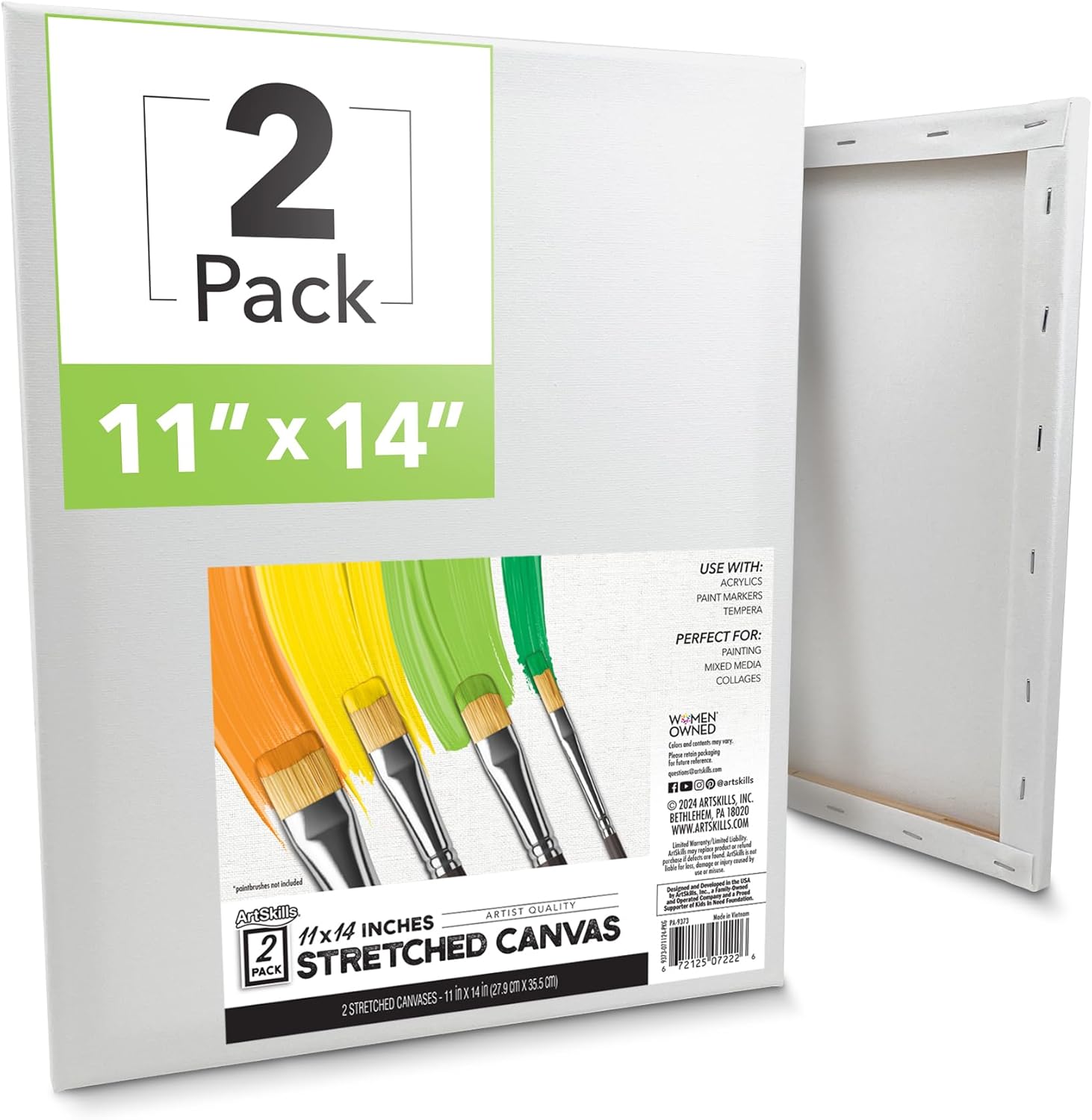
ArtSkills lists 100% cotton canvas stretched over a wood frame, primed with white gesso, at 11×14. The listing names landscapes, still life and portraits among uses and covers acrylic, oil, tempera and gouache.
It is a straightforward, inexpensive pair for practice portraits or a first attempt.
Best suited for: Beginners painting their first portraits.
Key features:
- 11×14 inch, 2 pack
- 100% cotton
- White gesso primed
- Wood frame
Pros:
- Affordable
- Classic portrait size
- Suits several media
Cons and limitations:
- Few construction details
- Priming weight not stated
Buying consideration: Add one coat of gesso for smoother skin blending.
7. KINGART 24×36 Stretched Canvas, 2 Pack — Best for half-length and life-size portraits
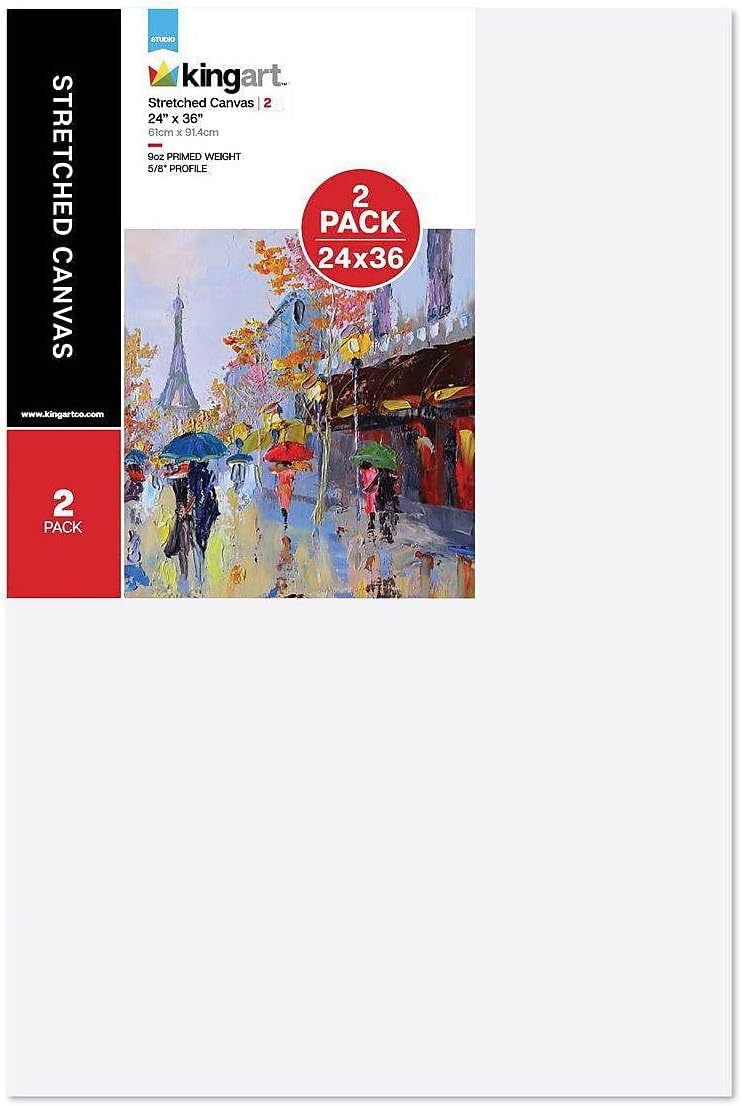
KINGART offers two 24×36 cotton canvases, triple gesso primed and acid free, medium grain, on back-stapled pine bars. This is the size for portraits that include the torso, hands or a setting, or for a head painted at life size with space around it.
Medium grain cotton is versatile, and triple priming gives a solid base, though very fine detail benefits from an extra sanded gesso layer.
Best suited for: Painters working on half-length portraits, double portraits or life-size heads.
Key features:
- 24×36 inch, 2 pack
- Triple gesso primed
- 100% cotton, medium grain
- Back stapled pine bars
Pros:
- Room for figure and setting
- Triple priming
- Clean edges
Cons and limitations:
- Overkill for a single head
- Needs a sturdy easel
Buying consideration: At this size, block in with large brushes and save small rounds for eyes and mouth at the very end.
Buying Guide: How to Choose Canvas for Portraits
Match canvas size to head size
A human head is roughly 9 inches tall. Painting it slightly under life size, around 7 to 8 inches, is common and comfortable. That fits an 11×14 or 12×16 with room for neck and shoulders. A life-size head with shoulders wants 16×20 or larger; half-length portraits want 24×36. Painting a head much larger than life can look unsettling, so be deliberate.
Choose a fine or medium grain
Skin, lips and eyes need soft transitions and small, precise marks. A coarse weave fights that. Fine linen is the classic portrait surface; triple-primed cotton is a good, more affordable alternative. You can always smooth a canvas with extra gesso and sanding.
Priming for glazing
Many portrait painters build skin with thin layers. Heavy priming keeps those layers on the surface, so colors stay luminous. Look for stated gesso weights, or add your own coats.
Tone the ground
Painting on bright white makes it hard to judge skin values. A thin wash of a warm mid-tone, such as burnt sienna or a neutral gray, gives you a middle value to work up and down from.
Portrait or landscape orientation
Most single-figure portraits use a vertical format. Double portraits and portraits with a setting may work better horizontally. Decide before you buy if you want a specific ratio.
Profile and presentation
Commissions often hang unframed; a gallery profile and clean back-stapled sides look finished. If the portrait will be framed, a standard 5/8 inch profile fits most frames.
Cotton or linen
Linen is stiffer, more stable and smoother at fine weaves, and it is the traditional choice for professional portraits. Cotton is more affordable and fine for most work. Practice on cotton, and consider linen for important commissions.
Preparing a Canvas for Portrait Painting
Even good pre-primed canvas benefits from a few minutes of preparation before a portrait. Start by checking the tension: press gently near the center; it should spring back without sagging. If the canvas is slack, tap in the keys if it has them, or mist the back lightly with water and let it dry.
Next, decide on smoothness. For a highly finished portrait, brush or roll on one or two thin coats of acrylic gesso, sanding lightly with fine-grit paper between coats and wiping off the dust. For a painterly portrait with visible brushwork, the existing grain is often fine.
Then tone the ground with a thin, even wash and let it dry. Finally, transfer your drawing. A grid helps with proportions when working from a photo; see our guide to gridding a canvas for painting for an accurate method that keeps features in the right place.
Related Guides
If a stretched portrait canvas gets punctured or torn, this ripped canvas repair guide covers patching from the back. And if you are painting a family series to hang together, see how to plan a multi-canvas wall art set so the portraits work as a group.
Common Mistakes to Avoid
- Choosing a canvas too small for the head and cropping the chin or forehead.
- Painting skin on coarse, lightly primed canvas and wondering why blends look grainy.
- Starting on bright white and misjudging skin values.
- Painting the head larger than life by accident, which looks distorted.
- Using only small brushes from the start, leading to overworked faces.
- Ignoring canvas tension; a slack canvas ripples under the brush.
FAQs
What size canvas is best for a portrait?
For a single head and shoulders, 11×14 or 12×16 is standard. For a life-size head, use 16×20. Half-length portraits suit 24×36 and larger.
Is linen better than cotton for portraits?
Fine linen is smoother and more stable, which is why many professionals use it. Triple-primed cotton is a good, affordable choice for most portrait work.
Should I sand canvas before painting a portrait?
Light sanding of extra gesso coats gives a smoother surface for skin and fine features. It is optional for painterly styles.
What color should I tone a canvas for portraits?
A warm mid-tone such as a thin burnt sienna wash, or a neutral gray, both work. They make it easier to judge skin values.
Can I paint a portrait on a canvas board?
Yes. Rigid panels are excellent for head studies and smaller portraits, and they are easy to frame.
How do I stop a portrait looking chalky?
Use a well-primed, non-absorbent ground, avoid mixing too much white into skin, and add warm colors in the shadows rather than gray.
Final Recommendation
Choose the FROM ONE 11×14 ten-pack for regular portrait work, with heavy priming and a solid frame at a classic size. Use the PHOENIX 12×16 gallery canvas for commissions you want to hang unframed, and keep a stack of Simetufy 8×10 boards for quick head studies. The ESRICH and ArtSkills pairs suit one-off portraits, the Halobios pack helps you find your preferred size, and the KINGART 24×36 pair is there when the portrait needs a full torso or a setting.