

PaintingProGuide is reader-supported. When you buy through links on this page we may earn an affiliate commission at no extra cost to you.
A paint brush conditioner does for bristles what hair conditioner does for hair: it leaves them soft, flexible and able to hold their shape. Paint, solvents and repeated washing strip natural oils from hair brushes and leave synthetic fibers stiff and frizzy. Conditioning after cleaning keeps the tip pointed, helps flats keep a crisp edge, and makes paint flow off the brush more evenly. For craft painters who rely on a few favorite detail brushes, it is one of the cheapest ways to make them last. Below you will find why bristles dry out, how to condition by bristle and paint type, and five conditioners that fit a craft painter’s routine.
Quick answer: For most crafters, Jo Sonja Brush Soap and Conditioner is the most practical choice: one 8 oz product that cleans acrylic, oil or lacquer and conditions natural and synthetic brushes. For a dedicated conditioning step on your best brushes, Trekell Brush Restorer and Preserver reshapes bristles after washing, and The Masters Brush Cleaner and Preserver is the time-tested clean-and-condition cake. Miniature painters should look at Vallejo Brush Restorer for fine points.
Why Brushes Need Conditioning
- Acrylic is drying: acrylic binder and frequent washing leave synthetic fibers rough and brittle.
- Solvents strip oils: mineral spirits remove the natural oils that keep hair brushes supple.
- Detergents leave residue: dish soap can leave a film and dry out bristles.
- Heat and sunlight: drying brushes on a sunny windowsill accelerates damage.
- Shape memory: conditioned bristles return to their original shape more readily.
Signs your brushes need conditioning
- The tip no longer comes to a point after rinsing.
- Bristles feel rough, straw-like or frizzy at the ends.
- A flat brush leaves ragged edges instead of a crisp line.
- Paint loads unevenly or drags rather than flowing off the brush.
- Bristles stay bent after you reshape them.
Conditioning by Paint Type
Acrylic
Acrylic is the hardest on brushes because it dries quickly and leaves a film. Rinse often during painting, wash with brush soap at the end, and condition synthetic brushes at least weekly. A soap-and-conditioner product fits this routine well.
Oil
Solvent cleaning removes paint but also dries bristles. After mineral spirits, wash with soap and water, then condition. Hog bristle brushes, in particular, split at the tips without regular conditioning.
Watercolor and gouache
These are gentler on brushes, but natural hair still benefits from occasional conditioning. Avoid harsh soaps; a mild brush soap and a conditioning step every few sessions is plenty.
Mixed media and crafts
Mod Podge, glue, glitter mediums and texture pastes are hard on bristles. Keep cheap brushes for these and condition your painting brushes separately.
Storing conditioned brushes long term
For brushes you will not use for weeks, clean, condition and shape them, then let them dry completely. Store them flat in a brush roll or upright in a holder with bristles up, protected from dust. Avoid sealed plastic bags for natural hair, which can trap moisture. Some painters leave a thin coat of conditioning soap in the bristles while stored to hold the shape, then rinse before painting.
Natural Versus Synthetic Bristles
| Bristle Type | Common Uses | Conditioning Needs |
|---|---|---|
| Sable and other natural soft hair | Watercolor, fine detail | Regular conditioning; avoid hot water and harsh soap |
| Hog bristle | Oil, heavy acrylic, texture | Condition after solvent cleaning to prevent splitting |
| Synthetic (nylon, taklon) | Acrylic, craft painting, all-round | Condition to reduce frizz and keep the point |
| Synthetic sable blends | Watercolor and acrylic detail | Gentle conditioning, reshaping |
A Brush Conditioning Routine
- Clean thoroughly first: conditioner works best on clean bristles. Wipe, rinse and wash with brush soap.
- Apply conditioner: dip, swirl in a cake or massage a small amount into the bristles with your fingers.
- Work it toward the ferrule: that is where bristles lose flexibility first.
- Reshape: form the tip into a point or a flat edge.
- Leave or rinse: some products are left in to dry and rinsed before painting; others are rinsed out right away. Follow the label.
- Dry flat or bristles down away from heat.
- Store clean and dry with tips protected.
Conditioner, restorer and cleaner: what is the difference?
These three product types overlap, which causes confusion. A cleaner or brush soap removes fresh paint. A restorer dissolves or softens dried paint so a neglected brush can be rescued. A conditioner softens and reshapes bristles that are already clean. Some products combine two or even all three roles. If your brushes are clean but frizzy, you need a conditioner; if they are stiff with dried paint, start with a restorer and condition afterward.
Simple home options
Some painters use a small amount of hair conditioner on synthetic brushes, rinsed out thoroughly before painting, and a drop of safflower or linseed oil for oil brushes being stored. These can work in a pinch, but residue can affect paint flow and adhesion, so rinse well and test on a scrap. Art-specific conditioners are designed to leave bristles soft without interfering with paint.
How often to condition
- Every session: for natural hair and expensive detail brushes.
- Weekly: for synthetic brushes used regularly with acrylic.
- After any solvent clean: for oil painting brushes.
- Before storage: condition and shape brushes you will not use for a while.
Shaping aids
After conditioning, a brush shaper or a tiny amount of soap left in the bristles holds the tip while the brush dries. For flats, slide a strip of paper over the damp bristles to keep the edge straight. Rinse the brush before you paint again.
Conditioning tips for detail brushes
Liners, small rounds and dotting brushes lose their usefulness the moment the tip splits. A drop of conditioner shaped to a point before drying keeps them crisp. If you rely on fine lines and dots, our guides to using a liner brush for detail work and painting dots with a round brush show why a sharp tip matters, and our breakdown of brush sizes for detailed acrylic work helps you decide which brushes deserve the most care.
Our Top Picks at a Glance
- Jo Sonja Brush Soap and Conditioner, 8 oz — Best two-in-one soap and conditioner
- Trekell Brush Restorer and Preserver, 4 oz — Best dedicated conditioner for good brushes
- The Masters Brush Cleaner and Preserver, 2.5 oz — Best classic clean-and-condition cake
- General’s Masters Brush Cleaner and Preserver (Lemon) — Best for reviving hardened oil brushes
- Vallejo Brush Restorer, 2.87 fl oz — Best for miniature and fine-point brushes
| Product | Best For | Key Spec | Key Strength | Price Tier |
|---|---|---|---|---|
| Jo Sonja Soap and Conditioner | Clean and condition together | 8 oz, acrylic, oil or lacquer | Natural or synthetic fibers | $ |
| Trekell Restorer and Preserver | Dedicated conditioning | 4 oz liquid, dip and massage | Low-vapor, non-flammable | $ |
| The Masters, 2.5 oz | Everyday care | Solid cake cleaner and preserver | Oils, acrylics, watercolor, varnish | $ |
| General’s Masters (Lemon) | Old oil brushes | Lemon-scented paste cleaner and preserver | Restores snap per the listing | $ |
| Vallejo Brush Restorer | Fine points | 2.87 fl oz soak | Restores flexibility and shape | $ |
How We Chose
We compared these conditioners using Amazon listing details checked in October 2026, focusing on whether each product conditions as well as cleans, which bristle types and paints it supports, how it is used, and how widely it is reviewed by Amazon buyers. We have not tested these products; descriptions come from the listings. A cleaner aimed mainly at rollers and wall-painting tools and a 1 oz size of The Masters were left out of the main picks.
- Conditioning action: softens, reshapes or preserves bristles.
- Bristle compatibility: natural, synthetic or both.
- Paint coverage: acrylic, oil, watercolor.
- Ease of use: cake, liquid or paste.
- Safety: non-toxic, low-odor formulas.
Best Paint Brush Conditioners for Painting Crafts Reviewed
1. Jo Sonja Brush Soap and Conditioner, 8 oz — Best for Cleaning and Conditioning Together

Jo Sonja is a long-standing name in decorative and craft painting, and its brush soap and conditioner is a two-in-one product that, according to the listing, cleans and preserves natural or synthetic fiber brushes and removes acrylic, oil or lacquer.
The 8 oz size lasts a long time for regular craft painting, and combining cleaning and conditioning in one step makes it more likely you will actually condition every time.
Best suited for: Craft and decorative painters who want one product for daily brush care.
Key features:
- 8 oz
- Soap and conditioner in one
- For natural or synthetic fibers
- Removes acrylic, oil or lacquer
Pros:
- Two steps in one
- Trusted craft painting brand
- Generous size
Cons and limitations:
- Minimal listing detail
- Not a soak-style restorer for dried paint
- Mid price tier
Buying consideration: Lather it into the bristles at the end of each session, rinse, reshape and dry flat.
2. Trekell Brush Restorer and Preserver, 4 oz — Best for Dedicated Conditioning

Trekell’s liquid is designed to condition and reshape natural and synthetic brushes. The routine is to clean the brush with soap and water first, then dip the clean bristles into the solution, massage it in with your fingers, shape by hand or with a brush shaper, and let dry.
The listing describes it as low-vapor, non-toxic, biodegradable, water-soluble, non-flammable and non-abrasive, with a mild conditioner scent even in the unscented version.
Best suited for: Painters who want to keep their best detail and watercolor brushes in top shape.
Key features:
- 4 oz liquid
- Dip, massage, reshape, dry
- For acrylic, watercolor and oil brushes
- Non-toxic, non-flammable per the listing
Pros:
- Purpose-made conditioning step
- Helps hold the point while drying
- Safe formula
Cons and limitations:
- Requires separate cleaning first
- Mid price tier
- Mild scent
Buying consideration: Use it on your best brushes after every deep clean, and on all brushes before long storage.
3. The Masters Brush Cleaner and Preserver, 2.5 oz — Best for Everyday Care

The Masters is a solid cake that cleans and preserves in one step, removing oils, acrylics, watercolors, stains and varnishes. It is suitable for sable, bristle and synthetic brushes, according to the listing.
Swirl a wet brush on the cake, lather in your palm, rinse and reshape. The preserving effect leaves bristles soft and helps them keep their shape. A smaller 1 oz size suits travel kits.
Best suited for: Painters who use several media and want simple, consistent brush care.
Key features:
- 2.5 oz cake
- Cleans and preserves
- Oils, acrylics, watercolor, varnish
- Sable, bristle and synthetic
Pros:
- Long track record
- Works across media
- Lasts a long time
Cons and limitations:
- Cake format slower for many brushes
- Not a deep-soak conditioner
- Mid price tier
Buying consideration: Leave a light lather in a brush overnight before storage to keep the shape.
4. General’s Masters Brush Cleaner and Preserver (Lemon) — Best for Reviving Old Oil Brushes

This version of General’s Masters cleaner and preserver is lemon scented and sold in paste form. The listing says it is a non-toxic, water-soluble compound that works on oils, acrylics or watercolors, and that even old, hardened oil paint brushes may be restored to their original snap and luster.
The lemon scent is a welcome change for painters who find solvent cleanup unpleasant.
Best suited for: Oil painters and crafters reviving tired bristle brushes.
Key features:
- Paste form, lemon scented
- Non-toxic, water-soluble
- Oils, acrylics, watercolors
- Restores snap per the listing
Pros:
- Pleasant scent
- Targets tired oil brushes
- Same trusted maker
Cons and limitations:
- Overlaps with the standard Masters
- Limited listing detail
- Mid price tier
Buying consideration: Work the paste into hog bristle brushes after solvent cleaning to keep them from splitting.
5. Vallejo Brush Restorer, 2.87 fl oz — Best for Fine Points
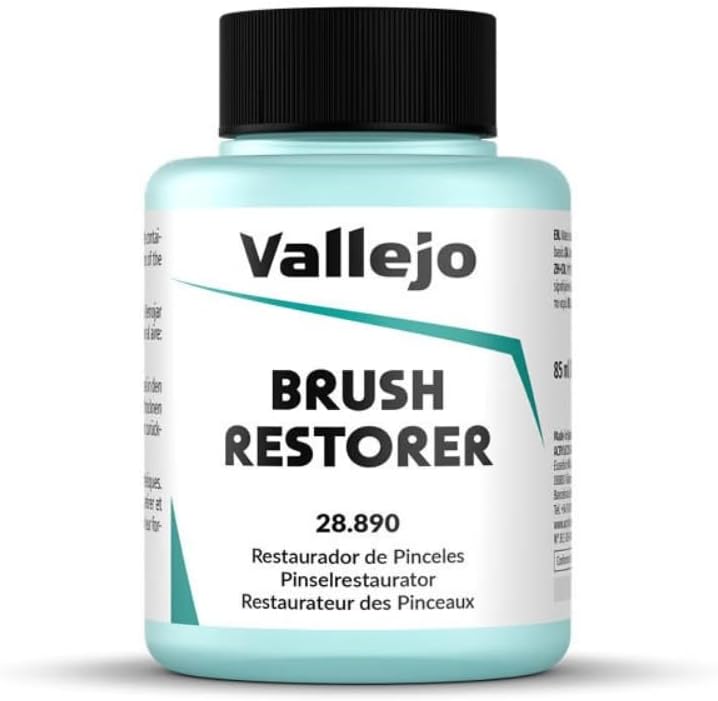
Vallejo’s restorer is a conditioning soak for brushes used with acrylics, watercolors, gouache and other water-based paints. Soak the brush for a few minutes, remove it and let it air dry; the listing says the formula helps restore flexibility and improve the shape and fine point.
It is compatible with sable, synthetic and mixed-fiber brushes, and is popular with miniature painters, whose brushes live and die by their tips.
Best suited for: Miniature painters and anyone with fine-point detail brushes.
Key features:
- 2.87 fl oz
- Short soak, air dry
- Sable, synthetic and mixed fibers
- Water-based paints
Pros:
- Focused on fine points
- Quick to use
- Trusted hobby brand
Cons and limitations:
- Water-based paints only
- Small bottle
- Not a daily cleaner
Buying consideration: Condition detail brushes as soon as the point begins to fray rather than waiting.
Buying Guide: How to Choose a Paint Brush Conditioner
Two-in-one or separate conditioner
Soap-and-conditioner products save time and encourage regular use. Dedicated conditioners give an extra step of care for valuable brushes.
Bristle type
Natural hair benefits most from conditioning. Choose products that state they are safe for sable and other natural fibers.
Paint type
Make sure the product suits your paint: acrylic, oil, watercolor or all three.
Format
Cakes and pastes are long-lasting and travel well. Liquids are faster for dipping several brushes.
Scent and safety
Low-odor, non-toxic, water-soluble formulas are easiest to use at home.
Value
A conditioner that keeps one good detail brush working for an extra year usually pays for itself.
Common Mistakes to Avoid
- Conditioning dirty brushes, which traps paint in the bristles.
- Using hot water on natural hair brushes.
- Leaving brushes standing in conditioner or water.
- Skipping reshaping, so bristles dry splayed.
- Drying brushes in direct sun or near heaters.
- Forgetting to rinse leave-in conditioner before painting, if the label calls for it.
FAQs
What does a paint brush conditioner do?
It softens bristles, restores flexibility and helps brushes keep their shape after cleaning, much like hair conditioner.
Can I use hair conditioner on paint brushes?
Some painters do, especially for synthetic brushes. Rinse it thoroughly so residue does not affect paint flow. Art-specific conditioners are formulated for bristles and paint.
How often should I condition my brushes?
Condition natural hair and detail brushes after every session, synthetic brushes about weekly with regular use, and oil brushes after every solvent clean.
Is brush soap the same as conditioner?
Not always. Some brush soaps include conditioners and clean and condition in one step; others only clean. Check the label.
Do synthetic brushes need conditioning?
Yes. Synthetic fibers become frizzy and stiff with acrylic use, and conditioning helps them hold a point.
Can conditioner fix a ruined brush?
It can help a stiff or slightly splayed brush, but it cannot replace missing bristles. Brushes with dried paint need a restorer first.
Final Recommendation
Use Jo Sonja Brush Soap and Conditioner for everyday two-in-one care. Add Trekell’s restorer and preserver for a dedicated conditioning step on your best brushes, keep The Masters on hand as a trusted all-media cleaner and preserver, and use the lemon-scented General’s Masters for tired oil brushes. Miniature painters should keep Vallejo Brush Restorer for fine points. A minute of conditioning at the end of each session is the simplest habit for keeping detail brushes sharp, and it costs far less than replacing them.




