
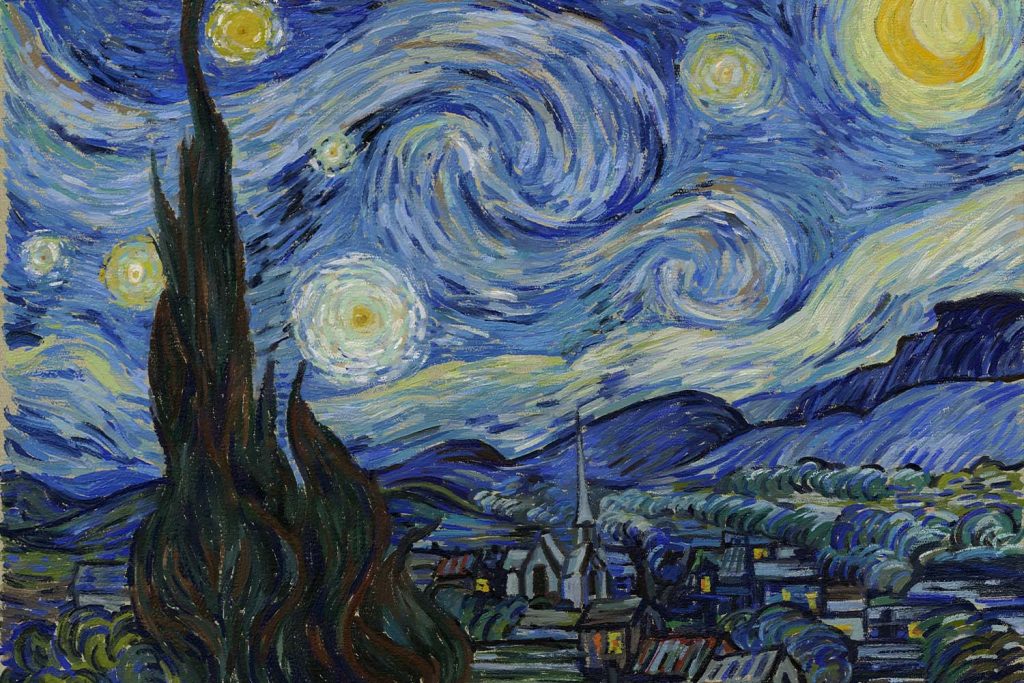
Quick answer: Oil paint was not invented on a single date. The oldest known oil paintings are Buddhist cave murals at Bamiyan, Afghanistan, dated to around the 7th century CE. Written European recipes appear by the early 12th century, and oil painting became the leading technique in Europe during the 15th century, when Flemish painters such as Jan van Eyck refined it. Pre-filled paint tubes, which made oil paint portable, arrived in 1841.
Ask when oil paint was invented and you will often hear “the 1400s, by Jan van Eyck.” That answer is tidy, memorable and not quite right. Oil paint grew over more than a thousand years, in several regions, through slow improvements to oils, pigments and drying methods. What happened in the 15th century was a breakthrough in how well the medium was used, not its first appearance.
This timeline walks through the key moments, from ancient drying oils to Bamiyan’s murals, medieval recipe books, the Flemish masters, the shift to canvas, and the paint tube that let painters leave the studio. Dates are given as precisely as the historical record allows, with uncertainty noted where it exists. For practical, present-day advice on working in the medium, see our hub for oil painting techniques and materials.
Oil Paint Timeline at a Glance
| Approximate date | Milestone | Why it matters |
|---|---|---|
| Ancient world | Drying oils such as linseed known and used for coatings and practical purposes | The raw ingredient existed long before oil painting |
| c. 7th century CE | Bamiyan cave murals, Afghanistan, painted with oil-bound pigments | Oldest known surviving oil paintings |
| Early 12th century | Theophilus Presbyter describes oil-based paint in De diversis artibus | Early European written recipe; notes slow drying |
| 13th–14th centuries | Oil used in parts of northern Europe for decorative work, glazes and some panels | Oil was known but not yet the main fine-art medium |
| c. 1400 | Cennino Cennini’s Il Libro dell’Arte includes oil painting instructions | Shows Italian workshops knew oil techniques |
| 1420s–1440s | Jan van Eyck and Early Netherlandish painters perfect layered oil glazing | Oil becomes a high-art medium |
| Later 15th century | Oil technique spreads to Italy; Antonello da Messina is linked with its arrival in Venice | Italian painters gradually move from tempera to oil |
| 16th century | Venetian painters such as Titian adopt canvas widely | Larger, lighter, more flexible paintings |
| 17th–18th centuries | Professional color merchants sell prepared paints, often stored in pig bladders | Artists rely less on grinding their own colors |
| 1841 | John Goffe Rand patents the collapsible metal paint tube | Paint becomes portable and stays fresh |
| 19th century onward | New synthetic pigments and industrial manufacturing | Brighter, more consistent and affordable colors |
Before Oil Paint: Drying Oils in the Ancient World
Linseed oil is pressed from flax seeds, and flax has been cultivated for thousands of years. Drying oils, the type that harden in air, were known in antiquity and used for things like protective coatings and varnishes. Ancient painters, however, mostly worked with other binders: egg, animal glue, plant gums and wax.
Encaustic, which uses hot wax as a binder, produced the remarkable Fayum mummy portraits in Roman Egypt. Egg tempera dominated panel painting for centuries. Oil existed as a material, but no one had yet built a painting tradition around it that we can clearly document.
c. 7th Century: The Bamiyan Cave Murals
The earliest known oil paintings come from caves near Bamiyan in central Afghanistan, the same valley famous for its giant Buddha statues destroyed in 2001. A scientific study published in 2008, using synchrotron-based analysis on samples from the cave murals, reported that some paint layers contained drying oils, likely from walnut or poppy seed.
The murals show Buddhist figures and decorative scenes and are generally dated to around the 7th century CE. That places oil painting in Asia several centuries before any comparable surviving European examples. It is a useful corrective to the common belief that oil paint was a purely European invention.
Early 12th Century: Medieval European Recipes
In Europe, one of the clearest early references comes from a monk known as Theophilus Presbyter. His treatise De diversis artibus (On Diverse Arts), usually dated to the early 1100s, describes grinding pigments with linseed oil for painting. He also complains that oil paint dries too slowly, which made it impractical for figure work that required many layers.
That complaint is the key to the whole timeline. Oil paint was known; it simply was not convenient. Before it could become a major art medium, painters needed ways to make the oil dry faster and handle better.
13th and 14th Centuries: Oil in Northern European Workshops
During the later Middle Ages, oil appears in various decorative and practical roles in northern Europe: on painted sculpture, shields, banners, and some panels and altar decorations. Scholars have identified oil-containing paint layers in some medieval works, though methods varied and many workshops still combined oil with tempera.
Improvements in this period likely included heat-treated oils and drying agents, often lead-based compounds, that made oil films set faster. Exact recipes differed from workshop to workshop, and much knowledge was passed on by apprenticeship rather than writing.
c. 1400: Cennino Cennini and Italian Workshop Knowledge
Cennino Cennini’s handbook, Il Libro dell’Arte, written around 1400, is famous as a guide to tempera and fresco technique. It also includes instructions for painting in oil on walls and panels and for preparing oil by cooking it or sun-thickening it. This shows that oil was known in Italian workshops before it became widespread there, even if tempera remained the preferred method.
1420s to 1440s: The Flemish Breakthrough
The turning point came in the Low Countries in the early 15th century. Painters in Bruges, Ghent and nearby cities, including Jan van Eyck, Robert Campin and Rogier van der Weyden, developed a refined oil technique built on thin, translucent glazes over a carefully prepared white ground.
This approach produced effects tempera could not easily match: glowing color, deep shadows, convincing textures of fabric, metal and skin, and subtle gradations of light. The Ghent Altarpiece, completed in 1432, and van Eyck’s Arnolfini Portrait, dated 1434, remain famous examples.
Giorgio Vasari, writing his Lives of the Artists in 1550, credited van Eyck with inventing oil painting. Modern historians see that as an exaggeration: van Eyck did not invent oil paint, but he and his contemporaries brought it to a level of control that changed European painting.
Later 15th Century: Oil Painting Spreads to Italy
Oil painting moved south over the following decades. Vasari tells a story of Antonello da Messina learning the technique from Flemish sources and bringing it to Venice in the 1470s. The details of that story are debated, but Antonello’s work in Venice is often linked to the growing adoption of oil there.
Italian painters did not switch overnight. Many used mixed techniques, starting with tempera underlayers and finishing with oil glazes. By around 1500, artists such as Leonardo da Vinci, Giovanni Bellini and Giorgione were working extensively in oil.
16th Century: The Move to Canvas
Early oil paintings were usually on wooden panels. In 16th-century Venice, painters such as Titian and Tintoretto increasingly worked on canvas. Venice’s damp climate was hard on frescoes, and canvas was lighter, cheaper for very large works, and could be rolled for transport.
Canvas also encouraged looser, more visible brushwork. Titian’s later paintings show thick, expressive strokes that would have been hard to achieve with the thin glazing of the Flemish panel tradition.
17th and 18th Centuries: Colourmen and Pig Bladders
For centuries, apprentices ground pigments into oil by hand using a stone slab and a glass or stone muller. Over the 17th and 18th centuries, specialist color merchants, often called colourmen, increasingly prepared and sold paints to artists.
Prepared paint was commonly stored in small pouches made from pig bladders, tied at the top. To use the paint, an artist pricked the bladder with a tack. The pouches were fragile, leaked, and could not be resealed well, so paint often dried out quickly once opened.
1841: The Paint Tube Changes Everything
In 1841, American portrait painter John Goffe Rand, working in London, patented a collapsible metal tube for storing paint. It could be squeezed, capped and reused, keeping paint fresh much longer.
The paint tube made oil painting truly portable. Painters could carry a full palette outdoors without grinding colors on site. That shift supported the rise of outdoor painting in the 19th century, including the work of the French Impressionists. If painting outdoors interests you, our guide to capturing soft fog and atmosphere in oil shows how modern painters handle the effects the Impressionists chased.
19th and 20th Centuries: New Pigments and Industrial Paint
The 19th century brought many new pigments, including synthetic ultramarine, cobalt blue, cadmium colors and later synthetic organic pigments. Industrial production made paint more consistent and affordable. Paint formulas also began including stabilizers and fillers to keep paint from separating in the tube.
The 20th century added alkyd mediums for faster drying, water-mixable oil paints, and improved lightfastness testing. Today’s oil paints are far more reliable than anything Theophilus or van Eyck had, but the basic idea, pigment bound in a drying oil, is the same.
When to Use Linseed Oil in Oil Painting Today
Linseed oil has been the backbone of oil paint for centuries, and it still has practical uses for painters now.
- As the paint binder: most tube oils already contain linseed oil, so you do not need to add any to paint straight from the tube.
- In later layers: under the fat-over-lean principle, upper layers should contain as much or more oil than lower ones. A small amount of linseed oil or a linseed-based medium can be added to later layers.
- For glazing: a linseed-based glazing medium helps create thin, transparent color layers, similar in spirit to the Flemish method.
- Not for early layers: keep underpaintings lean, thinned with a little solvent rather than oil, so they dry faster.
- Not in excess: too much oil can cause wrinkling, yellowing and slow drying.
Refined linseed oil is common for general use. Cold-pressed linseed is valued by some painters for handling. Stand oil, a heat-thickened linseed oil, levels brushstrokes and adds gloss. For a fuller look at oil mediums and how they fit into modern technique, see our oil painting guide covering styles, tips and supplies.
Common Myths About When Oil Paint Was Invented
- Myth: Jan van Eyck invented oil paint. He refined it. Oil paint existed for centuries before him.
- Myth: Oil painting began in Europe. The oldest known oil paintings are in Afghanistan.
- Myth: Oil paintings were always on canvas. Most early works were on wood panels; canvas became common in the 16th century.
- Myth: Painters always used tube paint. Tubes date only to 1841. Before that, paint was hand-ground or stored in bladders.
Why the Timeline Matters for Painters Today
Knowing the history explains why some oil painting rules exist. Fat over lean, slow drying, white grounds and thin glazes all have roots in workshop practice going back centuries. When you understand that van Eyck’s glow came from transparent layers over a bright ground, you can use the same principle with modern paint.
It also shows how much today’s painters gain from convenience. You can buy lightfast pigments in tubes, choose drying speeds with mediums, and paint outdoors without carrying a grinding slab. If you want to put that history into practice with a small project, our seashell oil painting tutorial uses layered color in a manageable way.
FAQs
When was oil paint invented?
There is no single invention date. The oldest known oil paintings date to around the 7th century CE in Bamiyan, Afghanistan. Oil became Europe’s main painting medium during the 15th century.
What are the oldest oil paintings in the world?
The oldest known examples are Buddhist murals in caves near Bamiyan, Afghanistan, generally dated to around the 7th century CE. A 2008 scientific study identified drying oils in their paint layers.
When did oil painting become popular in Europe?
Oil painting became the leading technique in the Low Countries during the 1420s to 1440s, then spread to Italy in the later 15th century. By the 16th century it was dominant across much of Europe.
When was the paint tube invented?
American painter John Goffe Rand patented the collapsible metal paint tube in 1841. It allowed oil paint to be stored, carried and used outdoors much more easily.
What did painters use before oil paint?
In Europe, egg tempera and fresco were the main methods for centuries. Ancient painters also used encaustic (wax), plant gums and animal glue as binders.
When to use linseed oil in oil painting?
Use linseed oil sparingly in upper layers and glazes, following the fat-over-lean rule. Keep early layers lean, and remember that tube paint already contains oil.
Final Thoughts
Oil paint was not invented in a single moment. It developed from ancient drying oils, appeared in Bamiyan’s murals around the 7th century, was described in medieval recipes, reached artistic maturity with the Flemish painters of the 15th century, and became portable with the paint tube in 1841. Every stage made the medium more practical and more expressive.
To carry that tradition into your own work, explore our expert oil paintings guide with buying advice, where you will find techniques, styles and supply recommendations for modern oil painters.




