PaintingProGuide is reader-supported. When you buy through links on this page we may earn an affiliate commission at no extra cost to you.
Quick answer: For most painters the best canvas boards for painting are a bulk pack in one standard size, and the Simetufy 52-pack of 8×10 panels stands out for its stated 3 mm MDF core and acid-free cotton surface. If you work bigger, the Simetufy 32-pack of 11×14 boards gives the same construction at a more generous size, and the KEFF 24-pack is the pick if you want four sizes with a triple-primed surface.
Canvas boards for painting, also called canvas panels, are cotton canvas glued over a rigid board and primed with acrylic gesso. They are the workhorse surface of art classes, plein air painters and anyone who paints a lot of studies, because they are cheap, flat, light and easy to store. They do not have the bounce or the finished edge of stretched canvas, but they are ideal for practice, small finished pieces that go into frames, and work that needs a firm surface, such as palette knife painting or detailed realism.
This guide compares six canvas board packs on Amazon, from a starter dozen to a 100-piece box of minis, and explains what actually differs between them: the core, the priming, the size and the count. We also cover when to choose boards over stretched canvas, how to prime and prepare them, and how to frame or hang the results.
Our Top Picks at a Glance
- Simetufy 52 Pack 8×10 Canvas Panels — Best overall bulk pack
- Simetufy 32 Pack 11×14 Canvas Boards — Best for larger studies
- KEFF 24 Pack, 5×7 to 11×14 — Best multi-size triple-primed set
- Simetufy 12 Pack 8×10 Canvas Boards — Best small starter pack
- Simetufy 72 Pack 8×10 Canvas Boards — Best for classrooms and daily painting
- Agolctry 100 Pcs 4×4 Mini Canvas Panels — Best for color studies and minis
| Product | Best For | Key Spec | Key Strength | Price Tier |
|---|---|---|---|---|
| Simetufy 52 Pack 8×10 | Everyday practice | 52 panels; 3 mm MDF core; fine-grain cotton | Rigid, stated no-warp core | $$ |
| Simetufy 32 Pack 11×14 | Larger studies | 32 panels; MDF core; 100% cotton | Room for real compositions | $$ |
| KEFF 24 Pack Multi-Size | Size variety | 6 each of 5×7, 8×10, 9×12, 11×14; triple primed | Four useful sizes | $$ |
| Simetufy 12 Pack 8×10 | Trying boards | 12 panels; MDF core | Low upfront cost | $ |
| Simetufy 72 Pack 8×10 | Classes and daily painting | 72 panels; MDF core | Lowest cost per 8×10 | $$ |
| Agolctry 100 Pcs 4×4 | Color studies and minis | 100 panels; 8 oz cotton; MDF cardboard backing | Huge quantity | $$ |
How We Chose
These picks are based on the Amazon listing details and specifications checked in October 2026: fiber, priming (including stated coats), core material and thickness, size and count. We compared those details against how canvas boards are actually used, from classroom practice to framed small works, and considered how widely each pack is reviewed by Amazon buyers. We have not painted on these boards ourselves; statements such as “won’t warp” are the makers’ claims.
- Core: MDF and dense board cores resist warping better than thin cardboard.
- Surface: 100% cotton with acid-free acrylic primer is the standard.
- Priming: stated triple priming or primer weight is a plus.
- Sizes: standard sizes that fit ready-made frames.
- Value: cost per panel and whether the count suits your use.
Best Canvas Boards for Painting Reviewed
1. Simetufy Canvas Boards 52 Pack, 8×10 — Best for Everyday Practice

The biggest risk with cheap canvas boards is warping: a thin paper core bows as soon as you lay down a wet acrylic wash, and the painting never sits flat in a frame again. Simetufy addresses that directly in this pack, specifying a rigid 3 mm medium-density fiberboard core, which is the detail that sets this listing apart from many competitors that do not state a thickness.
The surface is described as acid-free, fine-grained 100% cotton canvas, pre-primed with acid-free acrylic gesso for both acrylic and oil paint. Fifty-two panels in the most common frame size means you can paint every day for weeks, keep the best studies, and frame them without custom sizing.
Best suited for: regular painters, art teachers, workshop leaders and anyone who paints a lot of studies.
Key features:
- 52 panels, 8×10 inches
- 3 mm MDF core
- Fine-grained 100% cotton surface
- Acid-free acrylic gesso primer
- For acrylic and oil
Pros:
- Stated core thickness inspires confidence
- Fits standard frames
- Strong value per panel
Cons and limitations:
- One size only
- MDF boards are heavier to carry than paper-core panels
Buying consideration: Store the pack flat and in its wrapping until use to keep the surfaces clean and the boards from absorbing moisture.
2. Simetufy 32 Pack 11×14 Canvas Boards — Best for Larger Studies

8×10 can feel cramped once you start painting fuller compositions. 11×14 gives you about twice the area while still fitting a tabletop easel, and this Simetufy pack offers 32 boards at that size.
Construction matches the rest of the Simetufy range: 100% cotton, acid-free primer and a sturdy MDF core instead of recycled paper. The listing pitches the boards for acrylic, oil, watercolor and gouache, but as with all acrylic-primed canvas, watercolor will not soak in the way it does on paper.
Best suited for: intermediate painters, portrait and landscape studies, and classes working beyond small formats.
Key features:
- 32 boards, 11×14 inches
- 100% cotton, acid-free primer
- MDF board core
- Fits standard 11×14 frames
Pros:
- More room for composition
- Rigid core
- Good bulk value
Cons and limitations:
- Larger boxes need storage space
- Core thickness not stated in this listing
Buying consideration: An 11×14 board fits a 16×20 frame with a mat, which can make a small painting look much more finished on a wall.
3. KEFF 24 Pack Canvas Boards, 5×7 to 11×14 — Best for Multi-Size Triple-Primed Set

A single-size pack is efficient, but a multi-size pack helps you discover the scale you like. KEFF’s set includes six boards in each of four sizes: 5×7, 8×10, 9×12 and 11×14, all made of 100% cotton.
KEFF describes the surfaces as smooth and triple-primed, ready for acrylic, oil or mixed media, and notes that each size fits a standard canvas frame. The spread of sizes suits painters who like quick small studies and occasional larger pieces.
Best suited for: beginners exploring sizes, gift sets and painters who switch between studies and finished pieces.
Key features:
- 24 boards: 6 each of 5×7, 8×10, 9×12, 11×14
- 100% cotton
- Triple-primed surface
- Standard frame sizes
Pros:
- Four useful sizes
- Triple priming stated
- Good gift option
Cons and limitations:
- Core material not detailed in the listing
- Fewer pieces per size
Buying consideration: Use the 5x7s for color tests before committing a palette to a larger board.
4. Simetufy 12 Pack 8×10 Canvas Boards — Best for Trying Canvas Boards

If you are not sure canvas boards suit you, a dozen is enough to find out without filling a cupboard. This pack shares the construction of the larger Simetufy sets: 100% cotton, acid-free acrylic primer and a sturdy MDF core.
The listing describes the surface as holding paint without absorbing it and calls the boards lightweight yet sturdy. Twelve boards also make a tidy gift with a set of paints.
Best suited for: beginners, gift bundles and occasional painters.
Key features:
- 12 boards, 8×10 inches
- 100% cotton, acid-free primer
- MDF core
Pros:
- Low upfront cost
- Same build as the bulk packs
- Easy to store
Cons and limitations:
- Higher cost per board than the bulk packs
Buying consideration: If you finish the dozen quickly, step up to the 52 or 72-pack for a much lower cost per board.
5. Simetufy 72 Pack 8×10 Canvas Boards — Best for Classrooms and Daily Painting

Seventy-two boards is a classroom quantity, or a year of a daily painting habit. The construction is the same MDF-core, 100% cotton, acid-free primed panel as the smaller Simetufy packs.
At this count the cost per board is the lowest of the 8×10 options here, which makes it easier to treat each board as practice rather than something precious, and that freedom is how painters improve.
Best suited for: art teachers, after-school programs, paint party hosts and committed daily painters.
Key features:
- 72 boards, 8×10 inches
- MDF core
- 100% cotton, acid-free primer
Pros:
- Lowest cost per 8×10
- Enough for whole classes
- Consistent size
Cons and limitations:
- Large box to store
- Overkill for occasional painters
Buying consideration: Split the pack with a painting friend if 72 is more than you need.
6. Agolctry 100 Pcs 4×4 Mini Canvas Panels — Best for Color Studies and Minis
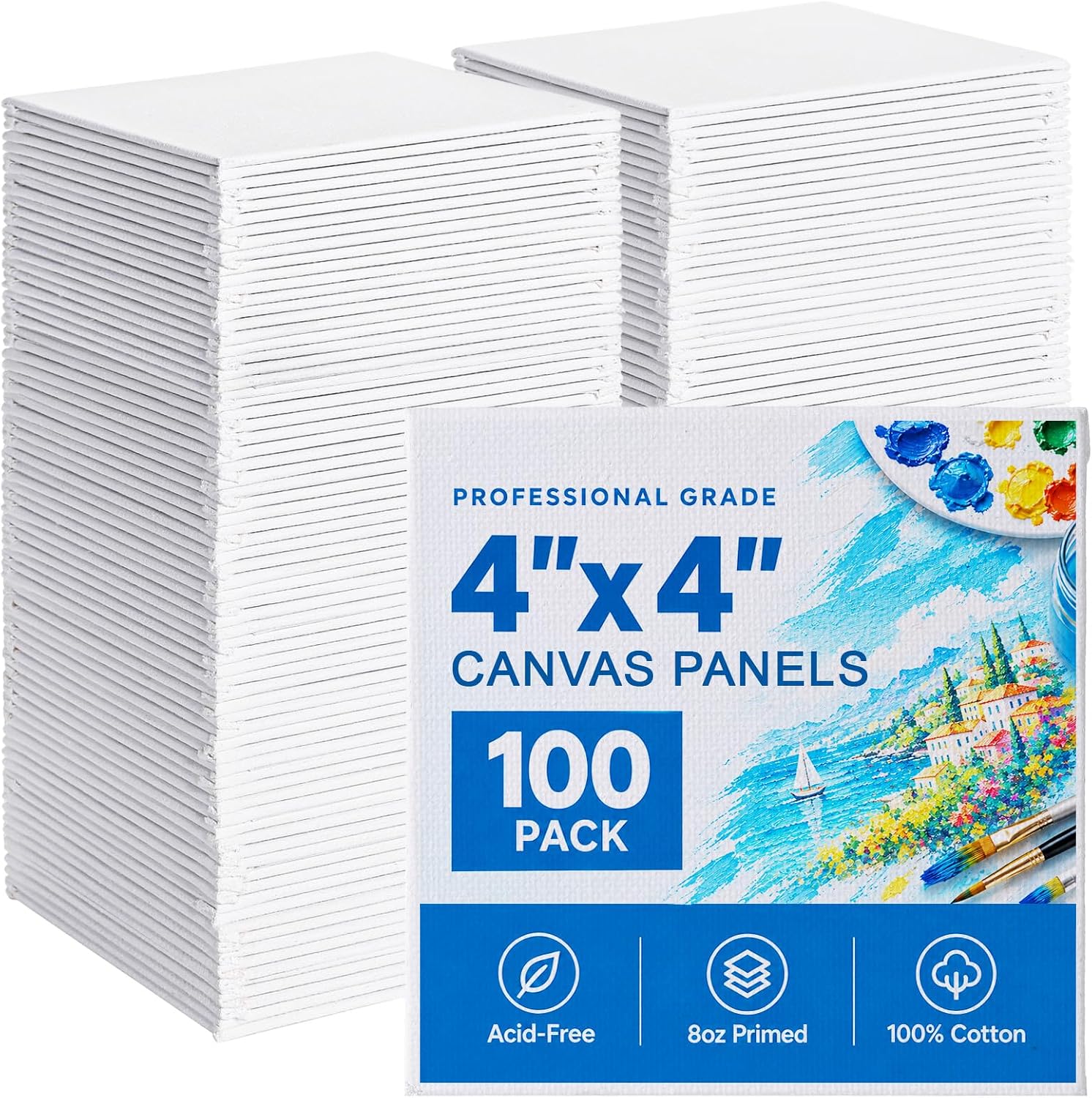
Small panels are underrated. A 4×4 can be finished in a single sitting, which makes it ideal for color-mixing tests, value studies, daily painting challenges and mini gallery walls. This Agolctry box contains 100 of them.
The listing describes 100% cotton, acid-free canvas at 8 oz with an MDF cardboard backing, pre-primed for acrylic, oil, gouache, tempera and pouring. Note “MDF cardboard” is a less specific description than a solid MDF core, so do not expect the same rigidity as the Simetufy boards.
Best suited for: color studies, art journaling, ornaments, kids’ classes and daily mini paintings.
Key features:
- 100 panels, 4×4 inches
- 8 oz cotton canvas, acid-free
- MDF cardboard backing
- Pre-primed
Pros:
- Huge quantity
- Quick to finish
- Great for swatches and tests
Cons and limitations:
- Backing described less precisely
- Very small format
Buying consideration: Label the back of each study with the paint colors used; a stack of labeled 4x4s becomes a personal color reference library.
Buying Guide: How to Choose Canvas Boards for Painting
Look at the core first
The core is what separates a good canvas board from a frustrating one. MDF and hardboard stay flat; thin cardboard can bow with water-based paint and humidity. If a listing states the core material and thickness, that is a good sign.
Cotton surface and priming
Nearly all affordable boards use cotton with an acid-free acrylic gesso, which accepts acrylic and oil. Triple priming gives a smoother, less absorbent surface. If a board feels thirsty, add one coat of gesso and sand lightly.
Choose standard sizes
Standard sizes such as 5×7, 8×10, 11×14 and 16×20 slip into inexpensive store-bought frames. Odd sizes mean custom framing.
Match the count to your habit
A dozen boards suits an occasional painter. Daily painters, teachers and workshop hosts save money with 50 to 100-piece packs.
Consider texture
Fine-grain surfaces suit detail and portraits; medium texture grips paint for looser work. Most budget boards have a fine to medium weave.
Plan for storage and transport
Boards are light and stack flat, which makes them perfect for plein air. Use a panel carrier or slip sheets of wax paper between wet paintings.
Which Canvas Board Size Should You Buy?
Size shapes how you paint. Small boards encourage quick decisions and bold shapes; larger boards invite detail and slower layering. If you are unsure, these guidelines help.
- 4×4 and 5×7: color swatches, value studies, thumbnail compositions and daily painting. You can complete one in twenty to forty minutes, which makes them perfect for building a habit.
- 8×10: the most popular size for practice and plein air. It fits standard frames, slips into most panel carriers and is big enough for a simple landscape or still life.
- 9×12: a slightly wider format that suits landscapes, and it matches common sketchbook proportions, so studies translate easily.
- 11×14: room for a fuller composition, portraits and finished small works. It still fits a tabletop easel comfortably.
Many painters settle on one main size for practice, usually 8×10, and keep a few larger boards for pieces they want to develop further. Working at a consistent size also makes it easier to compare your progress from one month to the next.
Canvas Boards vs Stretched Canvas
Canvas boards win on price, storage, portability and firmness. Stretched canvas wins on presentation and the springy feel some painters prefer. Many artists use both: boards for studies and practice, stretched canvas for finished work. Our full comparison of stretched canvas vs canvas board goes deeper into the trade-offs. If you want a professional-grade rigid panel, our Ampersand Gessoed Board review covers a premium alternative to canvas boards, and when your painting is finished, see how to hang a canvas board painting for framing and display options.
How to Prepare and Protect Canvas Board Paintings
Even pre-primed boards benefit from a minute of preparation. Wipe off dust, and if you want a smoother finish, apply a thin coat of gesso, let it dry and sand with fine sandpaper. For oil painting, some artists add an extra coat of gesso to reduce absorbency.
When the painting is dry, varnish it to protect the surface. Store finished boards upright or with paper between them, away from heat and humidity. Framed boards look best with a simple frame, and for small studies a mat can give them more presence on a wall. If you want to try bigger or more complex compositions, our guide on how to grid a canvas for painting works on boards as well as stretched canvas.
Common Mistakes to Avoid
- Buying the cheapest boards with paper cores. Warped boards are hard to frame.
- Using watercolor on acrylic-primed boards. Watercolor sits on top and stays fragile.
- Soaking boards with water. Even MDF can swell if saturated.
- Stacking wet paintings. Paint will transfer; let them dry or use spacers.
- Buying odd sizes for framing. Stick to standard sizes to save on frames.
- Skipping varnish on finished work. It protects against dust and handling.
FAQs
Are canvas boards good for acrylic painting?
Yes. Cotton canvas boards primed with acrylic gesso are ideal for acrylic practice and finished small works. They are firm, flat and inexpensive.
Can you use oil paint on canvas boards?
Yes. Acrylic-gesso-primed boards accept oil paint. For long-term work, choose boards with a rigid MDF core and consider an extra coat of gesso.
What is the difference between a canvas board and a canvas panel?
In everyday use the terms are interchangeable. Both refer to canvas glued to a rigid backing. Some brands use “panel” for thicker, better-quality boards.
Do canvas boards warp?
Cheap boards with thin cardboard cores can warp with moisture. Boards with MDF or hardboard cores are much more resistant.
Can canvas boards be framed?
Yes. Standard-size boards fit ordinary picture frames, usually without glass. They are also easy to mat for a more finished look.
Are canvas boards archival?
Acid-free surfaces help, but the core and adhesive also matter. For important work, many artists choose professional panels; budget boards are best for studies and practice.
Final Recommendation
For most painters, the Simetufy 52-pack of 8×10 panels balances value with a stated 3 mm MDF core. Choose the Simetufy 32-pack of 11×14 boards when you want more room, and the KEFF 24-pack when you want four sizes with triple priming. The Simetufy 12-pack is the low-risk way to try boards, the 72-pack is the classroom and daily-painting buy, and the Agolctry 100-piece box of 4x4s is perfect for color studies and minis.