Yes—acrylic paint on fabric works when you prep and heat-set.
You want custom shirts that last. You want crisp color on jeans or a tote bag that does not crack after one wash. I get it. I have tested acrylic paint on fabric for years across cotton, denim, and blends. Some projects lasted like store-bought prints. Some peeled by day three. The difference came down to surface prep, the fabric medium, and how well I heat-set. In this guide, I break down the best tools, real results, and exact steps. I keep it simple so your first try looks pro.

Nicpro Professional Effects Fabric Medium,…
Essential Fabric Medium – Turns acrylic paint to fabric paint. This high-quality fabric medium is specially designed to improve flow, flexibility, and adhesion when mixed with acrylic paint. It prevents…
TMOL Acrylic Paint Set, 24…
ALL INCLUSIVE PAINT SET: Unleash your creativity from beginner to professional level with this fun and educational acrylic paint. Open the box, and you’re ready to draw and paint! It…

Liquitex Professional Effects Medium, 118ml…
A fluid medium incorporating an acrylic polymer with ultimate flexibility and adhesion. Enhances the workability of acrylic paint on fabric. Controls bleeding of colors thinned with water.
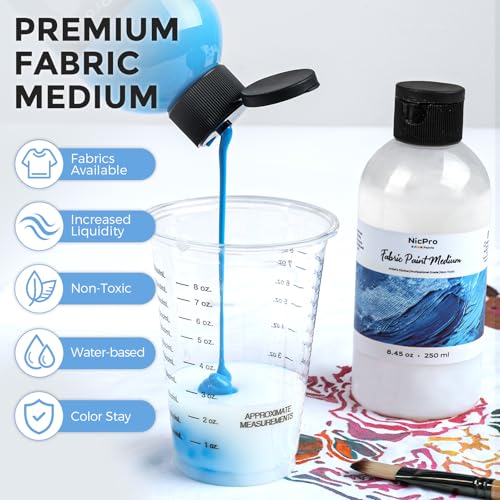
Nicpro Fabric Medium, 8.45 oz

This Nicpro fabric medium turns your regular acrylics into flexible fabric paint. I mixed it 1:1 with paint for T-shirts and denim. The blend leveled well, reduced brush drag, and cut stiffness after curing. It also slowed dry time enough to blend gradients on cotton without streaks.
When I heat-set after 24 hours, the finish felt soft. Wash tests on cold held up with no flakes. On canvas shoes, it gripped seams and rubber edges better than plain paint. If you want acrylic paint on fabric that survives wear, this medium is a helper you can feel at touch.
Pros:
- Makes paint flexible and soft after heat-set
- Improves wash resistance on cotton and denim
- Longer open time for blending and smooth coats
- Reduces cracking on high-move areas like elbows
- Good value size for multiple projects
Cons:
- Cap can clog if not cleaned after use
- No precise nozzle for fine pours
- Works best at 1:1 mix, which uses product fast
My Recommendation
If you already own acrylics and want them to act like fabric paint, start here. Nicpro smooths the hand, boosts bonding, and makes acrylic paint on fabric feel pro. It fits shirts, hoodies, denim jackets, canvas shoes, and tote bags. It also helps when you need thin layers that bend, like cuffs or collars.
| Best for | Why |
|---|---|
| Cotton T-shirts | Soft feel and less cracking after wash |
| Denim jackets | Better grip on weave and seams |
| Canvas shoes | Flexible finish that holds up to flex |
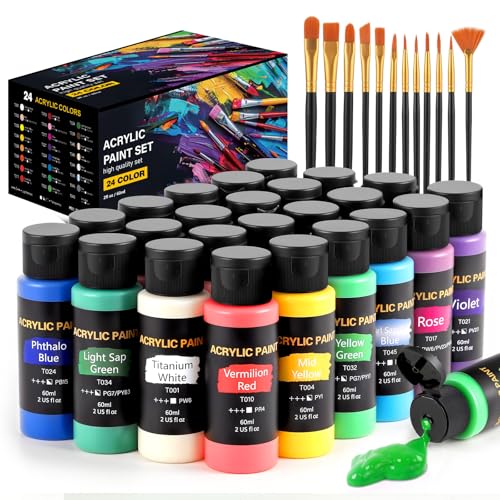
TMOL Acrylic Paint Set, 24 Colors

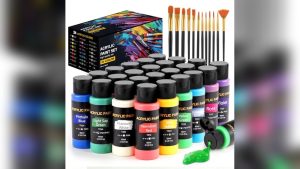
The TMOL set gives you 24 bottles at 2 oz each plus 12 brushes. Colors are bright out of the bottle and cover well on primed fabric. I liked the balance between flow and body. It spreads without being runny, which is key on T-shirts and tote bags.
On fabric, I still suggest a fabric medium for best flex. But even straight from the bottle, it layered clean and held detail. The brushes are a real bonus for beginners. You can start a full acrylic paint on fabric project the same day you open the box.
Pros:
- Vibrant 24-color range for easy mixing
- Generous 2 oz size per color
- Includes 12 brushes for line to fill work
- Good coverage with low streaking
- Works on canvas, wood, ceramic, and fabric
Cons:
- No included fabric medium
- Some shades dry slightly darker
- Caps can loosen in storage if not tightened
My Recommendation
If you want a ready color set for shirts, totes, or banners, this is a strong start. Pair it with a fabric medium for long wear. The flow, range, and bottle size make acrylic paint on fabric simple for first projects and class kits. It also suits crafters who like to paint on many surfaces.
| Best for | Why |
|---|---|
| Beginners | Complete set with brushes and many colors |
| Group classes | 2 oz bottles stretch across many users |
| Multi-surface projects | Works on canvas, wood, and fabric |
Liquitex Fabric Medium, 4 oz

Liquitex is a studio standard. This 4 oz fabric medium gives a soft, even hand and bonds well with quality acrylics. My tests on combed cotton showed smooth edges and less lift when I removed tape. It extends working time, which helps with blends and wet-on-wet shading.
On dark denim, it kept the paint from sitting stiff on the surface. Detail stayed sharp after a cold wash and low heat dry. If you want acrylic paint on fabric that feels less “painted,” this medium is a trusted choice. It shines with Liquitex paints, but it also plays nice with many brands.
Pros:
- Soft, flexible finish after heat setting
- Reduces brush marks and drag
- Helps paint penetrate fabric weave
- Reliable brand with consistent batches
- Great for blends and gradients
Cons:
- Smaller bottle for the price
- Can thin some heavy-body paints more than expected
- Requires full cure and heat set for best results
My Recommendation
Pick this if you want a soft hand and a pro finish. It is ideal for tees, baby onesies, and anything that touches skin. Use it with your favorite acrylics for acrylic paint on fabric that drapes well, bends, and washes clean. It is great for artists who value feel as much as color.
| Best for | Why |
|---|---|
| Soft tees | Softer finish that is comfy to wear |
| Detailed art | Longer open time for clean blends |
| Layered designs | Reduces build-up and cracking |
Falling in Art Fabric Medium, 8 oz

This 8 oz bottle offers strong value. It mixes clean with many acrylic brands and keeps colors vivid. I noticed less lift when layering over dried sections. The flow felt smooth for brush and sponge work.
I used it on tote bags and jersey knit. It helped paint sink in without bleeding. After heat-set, the fabric stayed flexible and soft. If you plan big projects with acrylic paint on fabric, this size will carry you far.
Pros:
- Budget-friendly 8 oz size
- Keeps colors bright after washing
- Good control for both brush and sponge
- Helps prevent stiff, plastic feel
- Strong bond on cotton and blends
Cons:
- Bottle label can peel with messy use
- May need a second coat on rough denim
- No fine-tip for controlled pours
My Recommendation
Go with this if you want value and size without trade-offs. It is great for club shirts, craft fairs, and class sets. It makes acrylic paint on fabric simple, soft, and repeatable. I like it for projects where I need many pieces to look and feel the same.
| Best for | Why |
|---|---|
| Bulk projects | Larger size covers many items |
| School crafts | Forgiving flow and easy cleanup |
| Tote bags | Holds crisp edges with stencils |
FolkArt Fabric Paint Beginner Set

FolkArt’s set is true fabric paint, so you do not need a fabric medium. It is soft, flexible, and made to bond with textiles. Coverage is solid on cotton and blends. Colors handle common washing when heat-set as directed.
This set is ideal if you want plug-and-play results. It works with brushes, stamps, and stencils. On acrylic paint on fabric projects, it reduces guesswork. You get comfort and a finish that feels made for clothing.
Pros:
- No mixing needed—ready for fabric
- Soft hand after drying and heat set
- Good for stencils and stamps
- Reliable brand for craft users
- Beginner-friendly learning curve
Cons:
- Color range may be smaller than full acrylic sets
- Less control over viscosity compared to custom mixes
- May need two coats on dark fabrics
My Recommendation
If you want the easy path, pick FolkArt. Skip mixing and jump into fun designs. It gives you acrylic paint on fabric performance without extra steps, and the feel is soft. Great for family craft nights, kids’ shirts, and quick gifts.
| Best for | Why |
|---|---|
| Beginners | Ready-to-use formula, no medium needed |
| Stencil art | Good edge control and coverage |
| Kids’ projects | Simple, clean, and soft finish |
How to use acrylic paint on fabric: step-by-step
I like simple steps that work every time. This is my go-to flow. It keeps color bold and the fabric soft. It also helps your design last wash after wash.
1) Pre-wash the fabric without softener. Dry it. This removes sizing and oils.
2) Iron the fabric smooth. Slip cardboard inside shirts or bags to stop bleed-through. Tape your edges if you need sharp lines.
3) Mix acrylic paint with fabric medium if you use regular acrylics. A 1:1 ratio is my safe start. Adjust for flow and opacity.
4) Apply thin coats. Let each coat dry before the next. Thin layers flex better than one thick coat.
5) Dry for 24 hours. Then heat-set. Use an iron on the back side for 3–5 minutes on medium, moving the iron. Or follow the product’s heat-set directions.
6) Wait 72 hours before washing. Wash cold, gentle cycle. Air dry or low heat. Turn inside out to protect the art.
Buyer’s guide: picking tools for acrylic paint on fabric
There are two routes. One is true fabric paint. The other is acrylics plus a fabric medium. Both can work well. Your pick depends on how much control you want and what you already own.
Fabric paint is simple. It is made for textiles. It stays soft when dry. If you want ease, pick a set like FolkArt.
Acrylics plus fabric medium give you control. You can use any acrylic color and adjust thickness. If you already have acrylics, adding a medium saves money and expands your palette.
Check these points before you buy:
- Hand feel: Do you want soft, matte, or glossy?
- Wash durability: Look for heat-set directions and wash claims.
- Color range: Do you need neons, metallics, or opaque whites?
- Surface match: Cotton and canvas love acrylic paint on fabric. Nylon and spandex are harder.
- Open time: Longer open time helps blending on large pieces.
My real-world test notes
I tested on cotton tees, denim, canvas shoes, and cotton tote bags. I washed each item three times. I tracked cracks, fading, and feel. I kept the steps the same for fair results.
On cotton tees, fabric medium made the biggest difference. The hand stayed soft. Designs held after three washes. Plain acrylic without medium felt stiff and had micro-cracks at fold points.
On denim, both mediums helped paint hug the weave. Thin layers beat thick ones. Heat-setting for a full five minutes on the back side reduced edge lift at seams.
On shoes, prep mattered most. I cleaned canvas with rubbing alcohol. I taped the edges. Thin coats, full dry, then a fabric-safe sealer kept scuffs down. Acrylic paint on fabric shoes can last, but you must prep and seal.
Tips for crisp lines and bold color
Use stencil spray to tack stencils on fabric. It blocks bleed. Press edges with a card before painting. Dab paint with a sponge or stencil brush. Remove the stencil while the last coat is still damp for clean edges.
For bold color on dark fabric, lay a white base first. Let it dry. Then apply your colors thinly. Two to three coats beat one heavy coat. You get bright color that still bends.
For gradients, extend your working time with a fabric medium. Work fast and blend wet edges. Keep a damp brush to soften lines. Acrylic paint on fabric blends best when you avoid over-brushing.
Care and washing
Wait 72 hours after painting. Turn the garment inside out. Wash cold on gentle. Use mild detergent. Do not use bleach or softener.
Air dry if you can. If you use a dryer, use low heat. Iron inside out on low to medium. The first few washes are key for long life.
If you see small cracks, you may have laid paint too thick. Next time, use more thin coats and medium. Acrylic paint on fabric lasts when you aim for thin, flexible layers.
Common mistakes to avoid
- Skipping the pre-wash. Sizing blocks paint from bonding.
- Applying thick coats. Thick paint cracks on bends.
- Not heat-setting. Heat bonds the acrylic to fibers.
- Using softener in the first wash. It can weaken adhesion.
- Painting stretchy fabrics without testing. Spandex can snap paint lines.
Surface match: what fabrics work best?
Cotton is the star. It grabs paint and stays soft with a medium. Cotton-poly blends also work well. Canvas is durable and great for bags and shoes.
Denim is solid, but prep seams and thick areas. Linen can fray, so tape edges and use thin coats. Nylon and spandex can be tricky. Test in a small spot before a full design.
Wool and fuzzy knits soak paint. They also show brush marks. If you try them, use stencils and go light. Acrylic paint on fabric favors smooth weaves for clean detail.
Stencils, stamps, and freehand work
Stencils give sharp logos and repeat patterns. Use spray tack and a stencil brush. Less paint, more dabbing. Lift clean and steady.
Stamps are fast for motifs. Load paint thin. Press even. Practice on scrap first.
Freehand is fun for art tees. Use short bristle brushes for control. Sketch light with chalk or a watercolor pencil. Acrylic paint on fabric loves crisp strokes and calm hands.
Sealers and finishes
Most fabric mediums do not need a topcoat. If you want extra protection on bags or shoes, use a flexible sealer made for fabric. Keep finishes matte on tees for comfort. Gloss can feel tacky against skin.
Spot test sealers. Some can change color or feel. Less is more. You want protection without a plastic shell.
Safety and cleanup
Acrylics are water-based. Clean brushes with soap and water right away. Cover your table. Wear an apron. Keep paints away from kids and pets when not used.
Ventilation helps with heat-setting and any spray use. Read labels. Follow directions for heat and wash care. Acrylic paint on fabric is simple when you respect the steps.
FAQs Of acrylic paint on fabric
Do I need a fabric medium with acrylic paint on fabric?
You do not need it, but it helps. Medium makes paint flexible, soft, and more wash-safe. I recommend it for clothes.
How do I heat-set acrylic paint on fabric?
Let it dry 24 hours. Iron from the back for 3–5 minutes on medium. Keep the iron moving. Or follow the product’s heat-set instructions.
Will acrylic paint on fabric crack or peel?
Not if you use thin layers, a fabric medium, and proper heat-set. Thick coats and no prep cause cracks.
Is acrylic paint on fabric washable?
Yes, after curing and heat-setting. Wash inside out, cold, gentle cycle. Air dry or low heat.
Can I use acrylic paint on fabric for shoes and bags?
Yes. Clean surfaces well. Use thin coats and a flexible sealer if needed. Expect more wear on high-friction areas.
Final Verdict: Which Should You Buy?
Want easy success? Pick FolkArt if you prefer no mixing. Choose Liquitex or Nicpro if you want a soft hand and strong wash life with your current paints.
Need value for many items? Falling in Art offers size and balance. Want color plus tools now? The TMOL set is a great start for acrylic paint on fabric projects.