

PaintingProGuide is reader-supported. When you buy through links on this page we may earn an affiliate commission at no extra cost to you.
Acrylic paintings are one of the easiest ways to put original artwork on your walls. Acrylic dries fast, so a large piece can be finished in a weekend; it is bold and opaque, so colors read from across a room; and it works on canvas, wood panels and paper without fumes or long drying times. Whether you want to paint your own artwork or simply understand what makes an acrylic painting work in a space, the essentials are the same: choose a style that suits the room, size the piece correctly, finish it with varnish, and hang it at the right height.
This guide covers popular styles of acrylic artwork and how each suits different rooms, how to plan size and placement, and how to finish and protect acrylic paintings so they last. It closes with six supplies sold on Amazon that help you create and finish your own acrylic artwork, from a 36-color paint set to matte varnish and a pouring topcoat.
Quick answer: For original acrylic artwork that fits your space, pick a style that matches the room’s mood, size it to about two-thirds of the wall or furniture width beneath it, and finish it with varnish. To make your own, start with a set like the Shuttle Art 36-color acrylic set and protect the finished piece with a clear matte acrylic varnish for a non-reflective finish, or a high-gloss topcoat for pour paintings.
Popular Styles of Acrylic Artwork
Abstract color fields
Large areas of color with soft or hard edges. They suit modern living rooms and offices, and are among the easiest large pieces to paint yourself. Choose two or three colors that echo the room’s textiles.
Acrylic pour paintings
Fluid paint poured and tilted to create marbled cells and flowing patterns. Pours are glossy and dramatic, especially with a gloss topcoat, and work well as statement pieces.
Textured and impasto art
Thick paint or texture gels applied with knives create sculptural surfaces that catch light. Neutral textured pieces suit minimalist and Scandinavian-style rooms.
Landscapes and seascapes
Acrylic’s fast layering suits skies, water and fields. A calm seascape suits a bedroom or bathroom; a bold sunset suits a dining room.
Florals and botanicals
Loose florals bring warmth to kitchens and entryways. Large, close-up blooms make a strong statement.
Line art and minimal pieces
Simple black lines on a white or neutral ground, painted with a brush or acrylic marker. They suit small spaces and modern decor and are approachable for beginners.
Choosing Artwork for Each Room
| Room | Styles That Work | Tips |
|---|---|---|
| Living room | Abstract, large landscapes, pours | One large statement piece or a balanced grouping |
| Bedroom | Soft seascapes, muted abstracts, florals | Calm palettes, matte finishes reduce glare |
| Kitchen and dining | Florals, still life, bright abstracts | Varnish for easier cleaning |
| Office | Minimal line art, color fields | Avoid busy patterns behind video calls |
| Bathroom | Small seascapes, botanicals | Varnish and avoid direct splashes; humidity can affect canvas |
| Entryway and hallway | Narrow vertical pieces, gallery walls | Keep pieces at eye level |
Sizing and Hanging Acrylic Artwork
- Over furniture: aim for artwork about two-thirds the width of the sofa, bed or sideboard below.
- Hanging height: the center of the piece around 57 to 60 inches from the floor is a common gallery guideline.
- Gallery walls: keep 2 to 3 inches between frames and plan the layout on the floor or with paper templates first.
- Gallery-wrap canvases: deep-profile canvases with painted edges can hang unframed for a modern look.
- Light: avoid hanging acrylic paintings in strong direct sunlight, which can fade some pigments over time.
Creating Your Own Acrylic Artwork
- Choose a style and three to five colors that suit the room.
- Pick a canvas size based on the wall and furniture.
- Sketch or plan the composition on paper, including where the strongest contrast will be.
- Block in large areas first with big brushes; acrylic dries fast, so work in sections.
- Build layers and details, stepping back often to judge from a distance.
- Paint the canvas edges if you plan to hang it unframed.
- Let it cure, then varnish for protection and an even finish.
Looking for inspiration and step-by-step help? Our guides to DIY wall art with acrylic and simple acrylic painting ideas for beginners include projects sized for real walls.
Building a Color Palette From Your Room
The quickest way to make original artwork feel like it belongs is to borrow colors from the space. Pick one dominant color from a large surface, such as the sofa or rug, one secondary color from pillows or curtains, and one accent from a small object like a vase or book spine. Use the dominant color for about 60 percent of the painting, the secondary for 30 percent and the accent for the final 10 percent. Then add a neutral, white, gray or a soft earth tone, to give the eye a place to rest.
Value matters as much as hue. A room with light walls and furniture often benefits from a painting with a few strong darks for contrast; a dark, moody room can take a lighter, brighter piece as a focal point.
Painting a Large Abstract, Step by Step
- Tone the whole canvas with a thin wash of your neutral color.
- Block in two or three large shapes with the dominant color using a wide flat brush or a foam roller.
- Overlap the secondary color, letting edges stay soft in some places and crisp in others.
- Add texture with a palette knife or dry brush in one area to create interest.
- Place the accent color in small amounts, usually near the area of highest contrast.
- Step back across the room, adjust anything that pulls attention in the wrong direction, and stop before it gets busy.
Why Varnish Acrylic Paintings?
Dried acrylic is durable, but it stays slightly soft and can attract dust. Varnish adds a protective layer that makes the surface easier to clean, evens out uneven sheen (some areas of an acrylic painting dry glossier than others), and with UV-protective varnishes, can help slow fading. Matte varnish reduces glare; gloss deepens colors and suits pours and vivid abstracts. Many artists apply an isolation coat first so the varnish can be removed later without disturbing the paint.
Timing matters too. Let thin acrylic layers dry for at least a day or two, and thick or textured pieces longer, before varnishing, so moisture is not trapped under the clear coat. Varnish in a dust-free room, lay the canvas flat, and brush in long, even strokes from one edge to the other.
Supplies That Help You Create Acrylic Artwork
- Shuttle Art Acrylic Paint Set, 36 Colors with Brushes and Palette — Best paint set for making your own artwork
- HissiCo 55 Pcs Acrylic Paint Set, 36 Colors — Best alternative 36-color set
- 7 Artists Matte Varnish for Acrylic Painting, 4 oz — Best matte finish for wall art
- U.S. Art Supply High Gloss Clear Acrylic Topcoat, 16 oz — Best gloss topcoat for pour paintings
- Pagather Black Acrylic Paint Markers, 12 Dual Tip — Best for line art and outlines
- The Complete Acrylic Painting Guide for Beginners — Best book for first-time painters
| Product | Best For | Key Spec | Key Strength | Price Tier |
|---|---|---|---|---|
| Shuttle Art 36 Colors | Making artwork | 36 x 2 oz with brushes and palette | Wide palette | $$ |
| HissiCo 36 Colors | Alternative set | 36 x 2 oz, 12 brushes | Value set | $$ |
| 7 Artists Matte Varnish | Non-reflective finish | 4 fl oz, water-based | Non-yellowing, UV protection per listing | $ |
| U.S. Art Supply Gloss Topcoat | Pour paintings | 16 oz high-gloss topcoat | Glossy finish for pours | $ |
| Pagather Black Markers | Line art, outlines | 12 dual-tip black markers | Opaque, quick-drying per listing | $ |
| Complete Acrylic Painting Guide | Beginners | Techniques, supplies, mistakes | All-in-one overview | $ |
How We Chose
The style and display guidance on this page reflects common interior design and painting practice. The supplies were chosen from our Amazon product data, checked in October 2026, based on their listing details and titles, how directly each helps you create or finish acrylic artwork, and how widely each is reviewed by Amazon buyers. Some listings provided only a title and image, and we describe those only by what the title states.
- Usefulness: each pick serves a step in creating or finishing artwork.
- Finish options: matte and gloss.
- Beginner friendliness.
Supplies Reviewed
1. Shuttle Art Acrylic Paint Set, 36 Colors with Brushes and Palette — Best for making your own artwork

Per its title, this Shuttle Art set includes 36 colors in 2 oz (60 ml) bottles, plus brushes and a palette, described as rich, non-toxic pigments for canvas, rocks, ceramic and wood. Thirty-six colors gives you ready-made options for most room palettes, which is useful when you want artwork that matches specific decor.
Best suited for: Beginners and hobbyists painting artwork for their own walls.
Key features:
- 36 colors, 2 oz each
- Brushes and palette included
- Non-toxic per title
Pros:
- Wide color range
- Complete start
- Good bottle size
Cons and limitations:
- Listing details limited
- White may run out first
Buying consideration: Buy a large white separately if you plan big canvases.
2. HissiCo 55 Pcs Acrylic Paint Set, 36 Colors — Best for an alternative set

The title describes 36 colors in 2 fl oz bottles with 12 brushes, non-toxic, with rich pigment for canvas, crafts and wood. It is a comparable alternative to the Shuttle Art set.
Best suited for: Painters comparing value 36-color sets.
Key features:
- 36 colors, 2 fl oz each
- 12 brushes
- Non-toxic per title
Pros:
- Value set
- Includes brushes
Cons and limitations:
- Listing details limited here
Buying consideration: Compare the color lists of both sets and choose the one closest to your room palette.
3. 7 Artists Matte Varnish for Acrylic Painting, 4 fl oz — Best for a matte finish

This water-based acrylic varnish gives a smooth, non-reflective matte finish. The listing describes it as crystal clear, non-yellowing over time, and protective against dust, scratches and UV exposure, for canvas, painted rocks, shells, air-dry clay, wood and mixed media.
Matte varnish is a good fit for artwork in bright rooms or opposite windows, where gloss would reflect glare.
Best suited for: Finishing wall art in bright rooms and anyone who prefers a natural, non-glossy look.
Key features:
- 4 fl oz water-based varnish
- Matte finish
- Non-yellowing per listing
- UV protection per listing
Pros:
- Reduces glare
- Clear finish
- Multi-surface
Cons and limitations:
- Small bottle for large canvases
- Matte can slightly soften dark colors
Buying consideration: Apply thin, even coats in one direction and let each dry; thick matte varnish can look cloudy.
4. U.S. Art Supply High Gloss Clear Acrylic Topcoat for Pouring Paint, 16 oz — Best for pour paintings
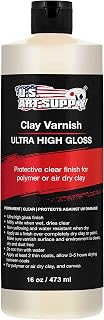
Per its title, this is a 16 oz high-gloss clear acrylic topcoat designed for pour paintings. Gloss deepens color and gives pours their characteristic glassy finish.
Best suited for: Acrylic pour artists and anyone wanting a glossy finish on vivid abstracts.
Key features:
- 16 oz
- High-gloss clear topcoat
- For pour paintings per title
Pros:
- Large bottle
- Glossy finish for pours
Cons and limitations:
- Listing details limited
- Gloss reflects light
Buying consideration: Work in a dust-free area and cover the piece loosely while the topcoat dries.
5. Pagather Black Acrylic Paint Markers, 12 Dual Tip — Best for line art

This set includes 12 black acrylic markers, each with an extra-fine tip for outlines and a brush tip for expressive strokes. The listing describes highly opaque, quick-drying black ink, suited to lettering, illustration, minimalist artwork and outlining.
Minimal line art is one of the easiest styles to make yourself, and markers make clean lines without brush control.
Best suited for: Minimal line art, outlines over painted backgrounds and lettering.
Key features:
- 12 black markers
- Extra-fine and brush tips
- Quick-drying, opaque per listing
Pros:
- Clean lines
- Plenty of black
- Beginner friendly
Cons and limitations:
- Black only
Buying consideration: Let painted backgrounds dry fully before drawing with markers.
6. The Complete Acrylic Painting Guide for Beginners by Leonard Koe — Best for first-time painters

This guide covers essential techniques, choosing the right supplies, avoiding common mistakes and creating your first paintings with confidence, per its title. It is a helpful companion if you are making artwork for your home for the first time.
Best suited for: Beginners who want a single book covering technique and supplies.
Key features:
- Techniques and supplies
- Common mistakes
- First paintings
Pros:
- All-in-one overview
- Affordable in this listing
Cons and limitations:
- Newer title
- Price varies between listings
Buying consideration: Read the supplies chapter before buying, so you only buy what you need.
Buying Guide: Supplies for Making Acrylic Wall Art
Paint quantity
Large canvases use more paint than expected, especially white and background colors. Buy large bottles of those.
Surface
Gallery-wrap canvases with deep profiles can hang without frames.
Brushes
Large flats for backgrounds, medium filberts for shapes, a small round for details.
Finish
Choose matte varnish for bright rooms, gloss for vivid pours and abstracts.
Hanging hardware
Use picture wire or sawtooth hangers rated for the weight.
Common Mistakes to Avoid
- Choosing artwork too small for the wall. Small pieces look lost over large furniture.
- Hanging too high. Keep the center near eye level.
- Skipping varnish. Unvarnished acrylic collects dust and shows uneven sheen.
- Ignoring the room’s palette. Repeat a color from textiles or decor.
- Leaving canvas edges raw on unframed pieces. Paint them for a finished look.
- Hanging art in direct sun. Some pigments can fade over time.
FAQs
Are acrylic paintings good for home decor?
Yes. Acrylic paintings are durable, colorful and easy to create in large sizes for wall art.
How do I protect an acrylic painting?
Let it cure, then apply a clear acrylic varnish. Matte reduces glare; gloss deepens color.
How big should wall art be over a sofa?
About two-thirds of the sofa’s width is a common guideline.
What height should I hang a painting?
Center the piece around 57 to 60 inches from the floor, adjusted for furniture below.
Do acrylic paintings need frames?
Not necessarily. Gallery-wrap canvases with painted edges can hang unframed.
Can beginners make their own acrylic wall art?
Yes. Abstract color fields, pours and minimal line art are approachable for beginners.
Final Recommendation
Choose a style that suits each room, size it to the wall and furniture, and always varnish the finished piece. To create your own acrylic artwork, start with the Shuttle Art 36-color set or HissiCo alternative, use Pagather black markers for line art, and finish with 7 Artists matte varnish or the U.S. Art Supply gloss topcoat for pours. The Complete Acrylic Painting Guide for Beginners helps if you are painting for the first time. Start with one piece for one wall, live with it for a week, and let that guide the next.




