
PaintingProGuide is reader-supported. When you buy through links on this page we may earn an affiliate commission at no extra cost to you.
An acrylic gloss medium is essentially acrylic paint without the pigment: a clear acrylic polymer you mix into your colors or brush onto the surface. It increases shine and translucency, improves flow, extends paint without weakening it, and lets you build luminous glazes the way oil painters do. The best acrylic gloss medium for painting levels smoothly, dries crystal clear, keeps the paint film strong when you add a lot of it, and, ideally, can double as an isolation coat or varnish.
The category overlaps with pouring mediums and gloss varnishes, which causes confusion. Below we compare six products currently listed on Amazon, separate what is a mixing medium, a pouring medium and a final varnish, and explain how to use gloss medium for glazing, extending paint and preparing surfaces.
Quick answer: The GOLDEN Gloss Medium (32 oz) is the best acrylic gloss medium for serious painting: a resinous, oil-like medium that promotes flow and leveling, builds clear glazes and blocks support-induced discoloration. For a smaller, versatile bottle, Liquitex Professional Gloss Fluid Medium works as both a gloss medium and a varnish. Students should start with Liquitex BASICS Gloss Fluid Medium. For acrylic pouring, use a dedicated pouring medium instead.
Our Top Picks at a Glance
- GOLDEN Gloss Medium, 32 oz — Best overall acrylic gloss medium for glazing and flow
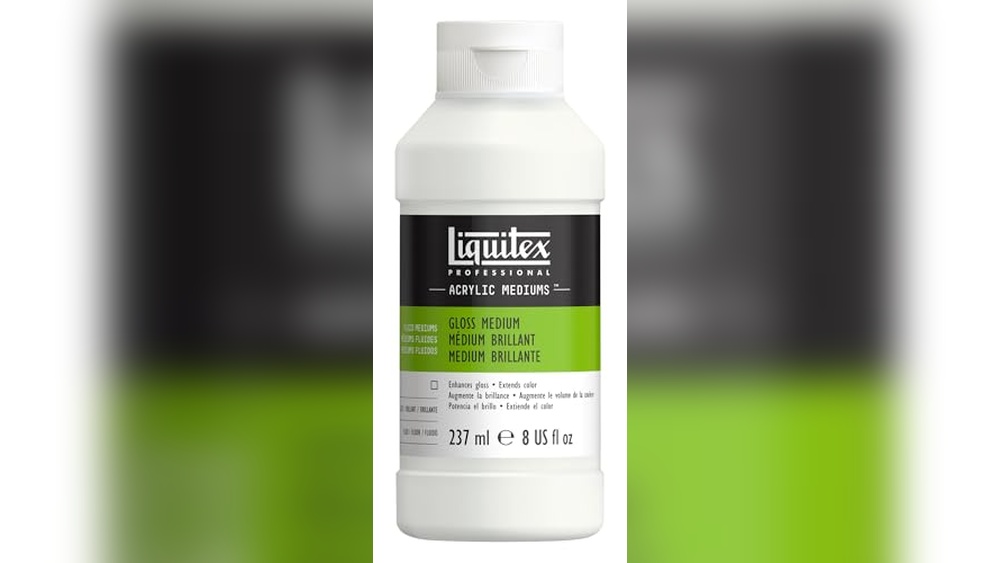
- Liquitex Professional Gloss Fluid Medium, 8 oz — Best dual-purpose gloss medium and varnish
- Liquitex BASICS Gloss Fluid Medium, 250 ml — Best budget gloss medium for students
- Mont Marte Acrylic Medium Gloss, 250 ml — Best low-cost medium for washes and glazes
- U.S. Art Supply Gloss Pouring Medium, 32 oz — Best gloss medium for acrylic pouring
- Nicpro Clear Acrylic Gloss Varnish, 33.8 oz — Best gloss finish coat for completed paintings
| Product | Best For | Key Spec | Key Strength | Price Tier |
|---|---|---|---|---|
| GOLDEN Gloss Medium 32 oz | Professional glazing | Liquid acrylic medium | Leveling, blocks SID | $$ |
| Liquitex Professional Gloss Fluid | Medium and varnish in one | 8 oz | Workhorse Liquitex medium | $$ |
| Liquitex BASICS Gloss Fluid | Students | 250 ml | Improves flow and transparency | $ |
| Mont Marte Acrylic Medium Gloss | Budget glazes and washes | 250 ml | Increases transparency and flow | $ |
| U.S. Art Supply Pouring Medium | Acrylic pouring | 32 oz | Cells, puddles, flow without cracking | $$ |
| Nicpro Gloss Varnish 33.8 oz | Final protective coat | 1000 ml with pump | Non-yellowing, UV protection claim | $$ |
How We Chose
These picks are based on the Amazon listing details and specifications checked in October 2026, how well each product’s stated purpose matches painting with gloss medium, and how widely each product is reviewed by Amazon buyers. We separated mixing mediums from pouring mediums and finishing varnishes, and we left out one small brush-on sealer in favor of a larger, better-documented varnish.
Criteria:
- Clarity: dries clear without clouding glazes.
- Flow and leveling: how smoothly it brushes out.
- Film strength: paint stays durable even with lots of medium.
- Versatility: use as glaze medium, extender, isolation coat or varnish.
- Volume and value: container size relative to how fast you use it.
Gloss Medium vs Gloss Gel vs Pouring Medium vs Varnish
| Product type | Consistency | Main use | Can be a final coat? |
|---|---|---|---|
| Gloss (fluid) medium | Liquid, like paint | Glazes, extending paint, sheen | Sometimes; some are labeled medium and varnish |
| Gloss gel medium | Thick, paste-like | Texture, collage, impasto | No |
| Pouring medium | Very fluid | Acrylic pouring and cells | No |
| Gloss varnish | Thin liquid | Protective final layer | Yes |
Varnish is designed to protect a finished painting and is often removable or UV-filtering. Gloss medium is part of the painting itself. Some Liquitex products are labeled as both, which is convenient, but a dedicated varnish is the better choice for long-term protection of finished work.
Best Acrylic Gloss Medium Reviewed
1. GOLDEN Gloss Medium, 32 fl oz — Best for Professional Glazing and Flow

GOLDEN describes Gloss Medium as an acrylic liquid medium for creating glazes, extending colors and enhancing gloss and translucency. The listing notes an oil-like feel and resinous nature that promotes flow and leveling, which is exactly what you want for smooth, jewel-like glazes.
It is also described as the best product in the range for blocking support-induced discoloration (SID), the yellowish staining that can migrate up from raw canvas or wood into clear acrylic layers. A coat of gloss medium on the support before painting helps prevent it. The 32 oz bottle suits painters who glaze often, and it is made in the USA by an employee-owned company.
Best suited for: painters who glaze, extend colors and want a professional, versatile medium.
Key features:
- 32 oz bottle
- Liquid acrylic gloss medium
- Promotes flow and leveling
- Blocks support-induced discoloration
- Made in USA
Pros:
- Excellent leveling and clarity
- Blocks SID on raw supports
- Large size for regular use
Cons and limitations:
- Premium price tier
- Large bottle may be more than a beginner needs
Buying consideration: stir gently rather than shaking to avoid bubbles that can dry into the glaze.
2. Liquitex Professional Gloss Fluid Medium & Varnish, 8 oz — Best for Medium and Varnish in One

Liquitex calls this the workhorse of its mediums range, and the listing says it can be used as a varnish and/or a fluid gloss medium. Mixed into paint, it increases gloss and transparency and improves flow; brushed on its own, it gives a high-gloss finish.
The 8 oz bottle is a good size for most painters and it is one of the most widely reviewed gloss mediums on Amazon. For archival varnishing of important work, many painters still prefer a removable varnish, but for everyday paintings and isolation coats this dual-purpose bottle is very convenient.
Best suited for: painters who want one bottle for glazing and finishing.
Key features:
- 8 oz bottle
- Gloss medium and varnish in one
- High-gloss finish
- Non-toxic
Pros:
- Dual purpose
- Trusted brand
- Very widely reviewed
Cons and limitations:
- Not removable like dedicated picture varnishes
- Smaller bottle than GOLDEN
Buying consideration: use it as an isolation coat over a finished painting before applying a removable varnish for best protection.
3. Liquitex BASICS Gloss Fluid Medium, 250 ml — Best for Students and Beginners

Liquitex BASICS Gloss Fluid Medium is designed for the BASICS student line. The listing says it improves the flow of color for blending, increases transparency and can be mixed with BASICS colors for added gloss. It is ACMI certified and conforms to ASTM D4236.
At a low price tier, it is a sensible first medium for students learning glazing, blending and how medium changes acrylic handling.
Best suited for: students and beginners using student-grade acrylics.
Key features:
- 250 ml bottle
- Improves flow and transparency
- Adds gloss
- ACMI certified, ASTM D4236
Pros:
- Inexpensive
- Good learning medium
- Widely reviewed
Cons and limitations:
- Listing finish field says matte, which conflicts with the product name; expect gloss
- Less leveling than professional mediums
Buying consideration: buy it alongside BASICS paints so the handling is consistent.
4. Mont Marte Acrylic Medium Gloss, 250 ml — Best for Budget Glazes and Washes

Mont Marte’s gloss medium is a low-cost option for mixing glazes, washes and watercolor-like effects with acrylic. The listing says you can mix as much as you like to create different levels of transparency, and that it increases paint flow and cleans up with water.
The listing also honestly notes that it reduces color vibrancy, which is the natural result of diluting pigment with clear medium. It is a practical medium for experimenting and for underpainting glazes.
Best suited for: budget-conscious painters experimenting with glazes and washes.
Key features:
- 250 ml bottle
- Gloss finish
- Increases flow and transparency
- Water cleanup
Pros:
- Very low price tier
- Unlimited mixing ratio per listing
- Honest listing
Cons and limitations:
- Reduces color intensity as more is added
- Fewer buyer reviews than major brands
Buying consideration: to keep glazes rich, use a strongly pigmented transparent color with the medium.
5. U.S. Art Supply Professional Gloss Pouring Medium, 32 oz — Best for Acrylic Pouring

Pouring needs a much more fluid medium than glazing. This Pouring Masters medium from U.S. Art Supply is a clear gloss acrylic polymer designed to improve the consistency and flow of paints for pours, puddles, cells and smooth-flowing applications.
The listing says it prevents cracking, fading and separation, increases shine, and will not slow drying, alter color or reduce adhesion. It is non-toxic and conforms to ASTM D4236. The quart size suits pour painters who go through a lot of medium.
Best suited for: fluid art and acrylic pour painters.
Key features:
- 32 oz bottle
- Clear gloss pouring medium
- Viscosity adjuster for pours
- Non-toxic, ASTM D4236
Pros:
- Made for pouring
- Large volume
- Very widely reviewed
Cons and limitations:
- Too fluid for brush glazing
- Not a varnish
Buying consideration: mix it with paint to a warm-honey consistency and test a small pour first.
6. Nicpro Clear Acrylic Paint Sealer, Gloss Varnish, 33.8 oz — Best for Final Protective Gloss Coat

If your goal is a glossy finish on a completed painting, a varnish is the right product rather than a mixing medium. Nicpro’s 1000 ml gloss varnish comes with a pump and a soft brush, and the listing estimates it covers about 18 to 22 8×10 canvases with heavy coats or up to 35 to 40 with thinner coats.
It is described as water-based, non-toxic and odorless, forming a clear, flexible, non-tacky surface that protects against dust, UV rays and yellowing. Each thin coat dries in one to two hours; the listing recommends two to three coats and leaving work flat for 24 hours.
Best suited for: painters, classrooms and workshops varnishing many acrylic paintings.
Key features:
- 1000 ml with pump and brush
- High-gloss, water-based
- UV and yellowing protection claims
- Dries 1 to 2 hours per coat
Pros:
- Huge volume
- Clear coverage estimates
- Easy application
Cons and limitations:
- Not a mixing medium
- Not described as removable
Buying consideration: varnish only when the painting is fully dry, and apply thin coats in one direction to avoid streaks.
How to Use Acrylic Gloss Medium
For Glazing
- Let the underlayer dry completely.
- Mix a small amount of transparent color with gloss medium, starting around one part paint to several parts medium.
- Brush thinly and evenly over the area.
- Let dry and repeat to deepen color gradually.
For Extending Paint
Adding gloss medium stretches paint without weakening adhesion the way water does. It is a smart way to make expensive colors go further in large passages.
For Sealing Supports
Brush a coat or two of gloss medium on raw canvas or wood before painting, especially if you will use clear or transparent layers. GOLDEN notes its Gloss Medium is particularly good at blocking support-induced discoloration.
As an Isolation Coat
A clear coat of gloss medium over a finished, dry painting creates a permanent barrier before a removable varnish. If you ever clean or remove the varnish, the isolation coat protects the paint.
For Collage
Fluid gloss medium works as a glue and sealer for thin papers in mixed media. Thicker gel medium is better for heavier papers and objects.
For Brighter Transparent Colors
Transparent pigments such as phthalo blue, quinacridone magenta and transparent yellow oxide look dull and dark straight from the tube. Mixed with gloss medium and brushed over a light ground, they become luminous, because light passes through the color and bounces back off the surface below. This is one of the most satisfying ways to use a gloss medium.
Buying Guide: How to Choose an Acrylic Gloss Medium
Decide What You Need It For
Glazing and extending call for a fluid gloss medium. Texture calls for a gel. Pouring calls for a pouring medium. Final protection calls for a varnish.
Look for Leveling and Clarity
Professional mediums level out brush marks and dry clearer, which matters most in multiple glaze layers.
Consider Volume
Glazers and pour painters use a lot of medium; 32 oz bottles save money. Occasional users are fine with 8 oz or 250 ml.
Check Compatibility
Acrylic mediums are generally intermixable with acrylic paints from any brand, but pairing within a brand gives the most predictable results.
Mind the Sheen
Gloss medium makes paint shinier and darker-looking. If you want low glare, use a satin or matte medium instead or varnish later in the sheen you prefer.
Avoid Bubbles
Stir rather than shake, and brush gently. Bubbles trapped in gloss medium can dry permanently in the film.
Step-by-Step Guides
For step-by-step technique, see our tutorials on how to use acrylic gloss gel medium for texture and collage, and how to use acrylic gloss medium on canvas for glazes and sealing. Not sure which medium you need? Read what medium to use with acrylic paint, and when your painting is done, follow our guide to varnishing an acrylic painting.
Common Mistakes to Avoid
- Thinning acrylic with lots of water instead of medium, weakening the paint film.
- Using pouring medium for brush glazes, which runs and puddles.
- Shaking gloss medium and creating bubbles.
- Applying thick glaze layers that cloud as they dry.
- Treating gloss medium as a removable varnish on valuable work.
- Varnishing before the painting has dried fully.
FAQs
What does acrylic gloss medium do?
It increases gloss and transparency, improves flow, extends paint without weakening it, and can be used for glazes, sealing supports and isolation coats.
Can I use gloss medium as a varnish?
Some products, like Liquitex Professional Gloss Fluid Medium, are labeled as both medium and varnish. For long-term protection, many painters apply gloss medium as an isolation coat and then a dedicated varnish.
How much gloss medium can I add to acrylic paint?
Most acrylic gloss mediums can be mixed in large amounts because they are made of the same binder as the paint. Mont Marte states you can mix as much as you like. More medium means more transparency and less color intensity.
Is gloss medium the same as pouring medium?
No. Pouring medium is much more fluid and designed for pour painting. Gloss medium has a paint-like consistency for brushing and glazing.
What is support-induced discoloration?
It is a yellowish staining that can migrate from raw canvas or wood into clear acrylic layers. Sealing the support with a medium such as GOLDEN Gloss Medium before painting helps prevent it.
Does gloss medium change paint color?
It makes colors look deeper and more saturated when dry because of the glossy surface, and more transparent as you add more. It dries clear on its own.
Final Recommendation
For serious glazing and the best leveling, choose GOLDEN Gloss Medium. If you want one bottle for glazing and finishing, Liquitex Professional Gloss Fluid Medium is the most versatile pick, while Liquitex BASICS and Mont Marte suit students and budget experiments. Pour painters should use a dedicated product like U.S. Art Supply Gloss Pouring Medium, and anyone simply wanting a shiny protective finish on completed work should reach for a varnish such as Nicpro’s gloss varnish.




