

PaintingProGuide is reader-supported. When you buy through links on this page we may earn an affiliate commission at no extra cost to you.
Walk into any thrift store and you will find shelves of plain ceramic: white vases, chunky planters, figurines in dated colors, mugs nobody wanted. With an acrylic paint set, all of it becomes raw material. Acrylic is the easiest way to decorate ceramics at home because it needs no kiln, cleans up with water and comes in every color. The catch is that ceramic, especially glazed ceramic, is slick and non-porous, so the paint you choose and the way you prep the surface decide whether your design lasts.
The best acrylic paint sets for ceramic painting have a sheen that blends with glaze, enough opacity to cover a dark base, and a color range suited to decorative designs. This guide compares six sets, then walks through a decision path for different ceramic pieces, prep steps and the finishing coats that protect your work. One limit up front: acrylic-painted ceramics are decorative, not food safe.
Quick answer: For glazed ceramics, the Nicpro 24-color set is the best fit thanks to its semi-gloss finish and a listing that names glass and ceramic. For unglazed bisque and terracotta, the matte Caliart 36-color set gives a soft, pottery-like surface. To paint small figurines and ornaments cheaply, the KOLOR KINGDOM 24-tube set is the budget choice.
Our Top Picks at a Glance
- Nicpro Acrylic Paint Set, 24 Colors — Best for glazed ceramic pieces
- Caliart Acrylic Paint Set, 36 Colors — Best for bisque and terracotta
- Shuttle Art Acrylic Paint Set, 36 Colors — Best glossy palette for colorful designs
- HissiCo 36-Color Acrylic Set — Best for raised dots and dimensional details
- TMOL Acrylic Paint Set, 24 Colors — Best starter kit with brushes
- KOLOR KINGDOM 24 x 12 ml Tubes — Best budget set for figurines and ornaments
| Product | Best For | Key Spec | Key Strength | Price Tier |
|---|---|---|---|---|
| Nicpro 24 | Glazed pieces | 24 x 2 oz, semi-gloss | Glass and ceramic listed | $$ |
| Caliart 36 | Bisque, terracotta | 36 x 2 oz, matte + metallic | Soft pottery look | $$ |
| Shuttle Art 36 | Colorful designs | 36 x 2 oz, gloss | Glaze-like shine | $$ |
| HissiCo 36 | Dimensional dots | 36 x 2 oz flip-top, thick | Holds raised texture | $$ |
| TMOL 24 | Beginners | 24 x 2 oz + 12 brushes | Ceramic named in title | $$ |
| KOLOR KINGDOM 24 | Small pieces | 24 x 12 ml tubes | Low cost, ceramic listed | $ |
How We Chose
We did not paint ceramic pieces with these sets. Our picks rely on Amazon listing details and specifications checked in October 2026, how well each set’s finish, consistency and surface list suit decorative ceramics, and how widely each product is reviewed by Amazon buyers. An Artkey 24-color set also appeared, but at the listing price checked it cost far more than comparable sets, so we did not include it.
- Ceramic listed: by name in the title, bullets or details.
- Sheen match: semi-gloss or gloss for glazed pieces, matte for unglazed.
- Opacity: coverage strong enough to hide existing glaze color.
- Consistency: creamy for smooth coats, thick for dot work.
- Format: bottles for vases and planters, tubes for small figurines.
A Quick Decision Path for Your Ceramic Piece
Will it touch food or drink?
If yes, acrylic is the wrong paint. Use kiln-fired underglaze or a bake-cure paint that is clearly labeled food safe after curing, or paint only areas that never touch food or lips, such as the lower outside of a planter-style mug. If no, carry on.
Is the surface glazed or unglazed?
Unglazed bisque and terracotta are porous; acrylic grips them readily. Glazed surfaces are glassy; they need degreasing, scuffing and often a primer before acrylic will stay put.
Will it get wet or handled?
Planters, soap dishes and frequently handled pieces need a durable clear sealer. Shelf decor needs less protection but still benefits from a coat.
Best Acrylic Paint Sets for Ceramic Painting Reviewed
1. Nicpro Acrylic Paint Set, 24 Colors with 12 Brushes — Best for glazed ceramic pieces

Painting on glazed ceramic is mostly about sheen. Paint that dries dead flat looks like a sticker on a shiny vase; paint with some gloss blends in. Nicpro lists a semi-gloss finish, names glass as a specific use and includes ceramic in its surface list. That combination makes it the most natural fit for refreshing thrifted glazed pieces.
The set includes 24 colors in 2 oz bottles, 12 brushes, a palette and a beginner’s guide. The listing describes creamy paint with excellent coverage, quick drying, waterproof and fade-resistant once dry, crack resistance and ASTM D4236 conformance.
Best suited for: Thrifted vases, decorative bowls, figurines and glazed planters.
Key features:
- 24 colors in 2 oz bottles
- Semi-gloss finish
- Glass and ceramic listed
- 12 brushes, palette and guide
- Crack and fade resistance claims
Pros:
- Sheen blends with glaze
- Good coverage description
- Complete kit
Cons and limitations:
- Still requires prep on slick glaze
- No metallics listed
- Not food safe
Buying consideration: Degrease with rubbing alcohol right before painting; a single fingerprint can cause paint to bead.
2. Caliart Acrylic Paint Set, 36 Colors — Best for bisque and terracotta

On unglazed bisque from a craft store or a terracotta pot, matte acrylic looks like it belongs. Caliart lists its finish as matte and metallic, with 36 colors in 2 oz bottles and 12 brushes, and names ceramic, clay, plaster and metal among supported surfaces.
The metallic gold and silver are useful for rims, handles and accents on pottery. The listing also describes crack-resistant, fade-resistant paint with good coverage for large areas and fine details.
Best suited for: Bisque figurines, terracotta planters, clay ornaments and plaster pieces.
Key features:
- 36 colors in 2 oz bottles
- Matte finish plus metallics
- 12 brushes
- Ceramic, clay and plaster listed
- ASTM D4236
Pros:
- Natural look on porous ceramics
- Metallic accents
- Big palette
Cons and limitations:
- Matte looks patchy next to shiny glaze
- Needs a sealer for handled pieces
- Not food safe
Buying consideration: Seal the inside of terracotta planters before painting the outside, or water will push paint off from behind.
3. Shuttle Art Acrylic Paint Set, 36 Colors — Best for colorful glossy designs

Shuttle Art’s 36 colors dry to a gloss finish, according to the listing, which suits bright folk-art florals, Talavera-style patterns and colorful polka dots on ceramic. Ceramic, glass and clay are among its listed surfaces.
The set includes gold and silver, 12 brushes and a palette, and conforms to ASTM D4236. With so many premixed colors, you can paint intricate multicolor patterns without mixing each shade.
Best suited for: Decorators painting detailed, colorful patterns on vases, ornaments and tiles.
Key features:
- 36 colors in 2 oz bottles
- Gloss finish
- Gold and silver
- 12 brushes and palette
- Ceramic and glass listed
Pros:
- Glaze-like shine
- Large palette for patterns
- Brushes included
Cons and limitations:
- Gloss reveals brush marks on broad areas
- Prep required on glaze
- Not food safe
Buying consideration: Use a soft synthetic brush and thin coats; gloss shows every ridge on smooth ceramic.
4. HissiCo 55-Piece Acrylic Paint Set, 36 Colors — Best for raised dots and dimensional details

Dot-painted pottery, raised mandala patterns and textured accents need paint that stands up rather than flattening out. HissiCo’s listing describes a fantastic thick consistency, and its flip-top squeeze bottles make it easy to dispense small amounts onto a dotting tool.
It includes 36 colors, 12 brushes and a palette, and conforms to ASTM D4236 and EN71. The surface list includes glass and ceramics among others.
Best suited for: Dot artists and anyone adding raised texture to ceramic decor.
Key features:
- 36 colors in 2 oz flip-top bottles
- Thick consistency
- 12 brushes and palette
- ASTM D4236 and EN71
Pros:
- Holds raised dots
- Easy portioning
- Good palette for patterns
Cons and limitations:
- Thick paint needs thinning for smooth base coats
- Finish not stated
- Not food safe
Buying consideration: Let dimensional dots dry overnight before sealing; thick paint cures slowly in the center.
5. TMOL Acrylic Paint Set, 24 Colors with 12 Brushes — Best for a starter kit with brushes
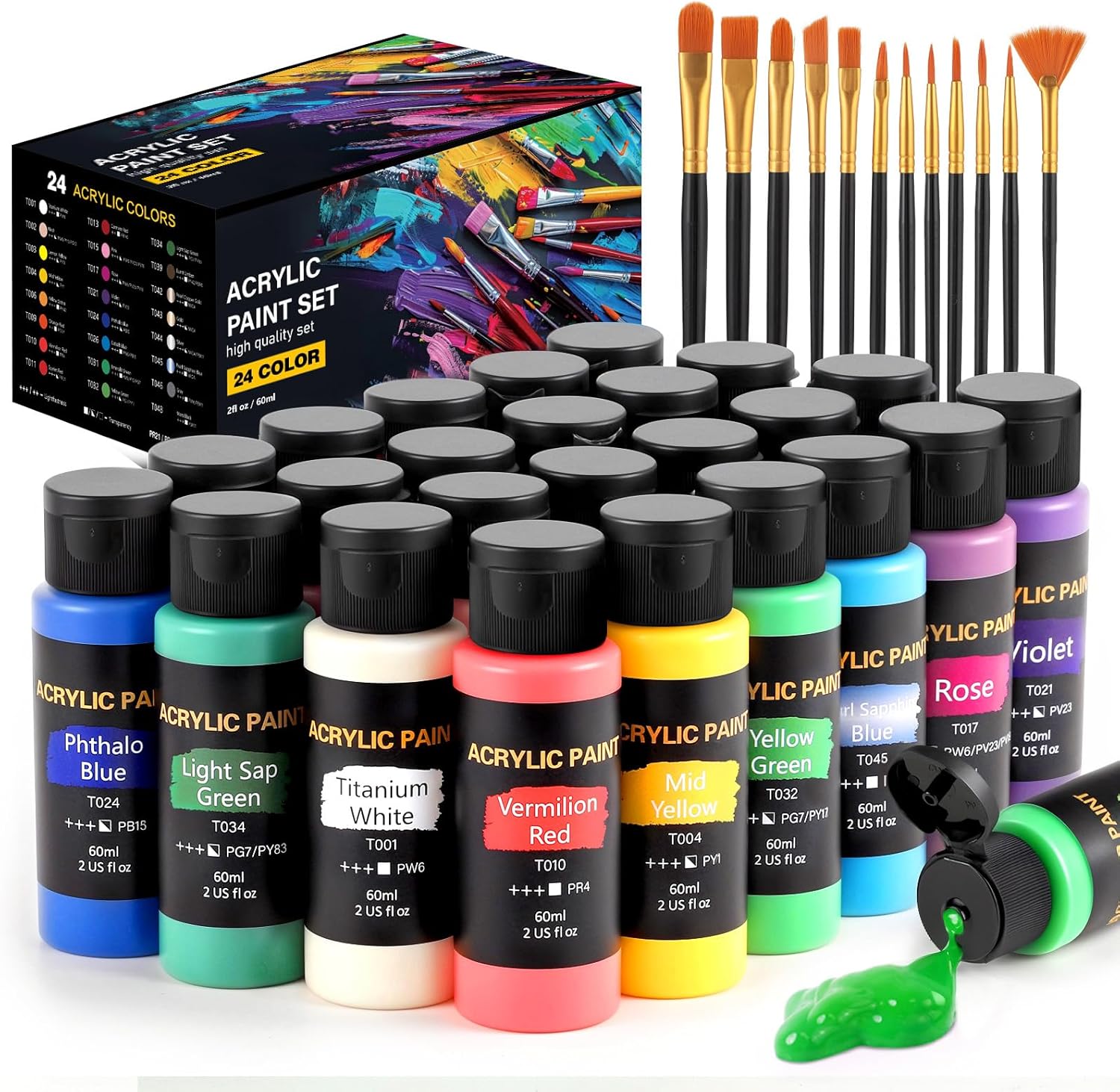
TMOL names ceramic in its product title, alongside canvas, wood and fabric. The set includes 24 colors in 2 oz bottles and 12 brushes, and the listing describes smooth-gliding, quick-drying paint conforming to ASTM D4236.
If you are starting from nothing, the included brush assortment saves a separate purchase for your first painted vase or planter.
Best suited for: First-time ceramic decorators who need paint and brushes together.
Key features:
- 24 colors in 2 oz bottles
- 12 brushes
- Ceramic named in title
- ASTM D4236
Pros:
- Complete starter
- Mid-size bottles
- Simple palette
Cons and limitations:
- Finish not clearly specified
- No metallics
- Basic brushes
Buying consideration: Practice your pattern on a cheap terracotta saucer first before painting a favorite piece.
6. KOLOR KINGDOM Acrylic Paint Set, 24 x 12 ml Tubes — Best for figurines and ornaments on a budget

Small bisque figurines, ceramic ornaments and miniature pots use very little paint, and KOLOR KINGDOM’s 24 tubes of 12 ml are well matched. Ceramic is listed among its surfaces, and the listing describes ASTM D4236 and EN71-3 certification and a gloss finish.
Three brushes come with the set; for fine figurine details, add a pack of small detail brushes.
Best suited for: Budget crafters painting small ceramic items and kids’ paint-your-own figurines with supervision.
Key features:
- 24 colors in 12 ml tubes
- 3 brushes
- Gloss finish
- Ceramic listed
- ASTM D4236 and EN71-3
Pros:
- Lowest price tier
- Right quantity for small pieces
- Tubes stay fresh
Cons and limitations:
- Not enough for vases or planters
- Only 3 brushes
- Not food safe
Buying consideration: Buy a pack of fine detail brushes; figurine faces and edges need sizes smaller than most sets include.
Buying Guide: How to Choose Acrylic Paint Sets for Ceramic Painting
Match sheen to surface
Semi-gloss or gloss for glazed ceramics, matte for unglazed bisque and terracotta. A final clear coat can fine-tune the look.
Check opacity for color changes
Covering a dark glaze with a light color needs opaque paint, often over a primer or white base. Plan two to three thin coats.
Choose consistency for your technique
Creamy paint for smooth coverage, thick paint for dots and texture, thinned paint for washes on bisque.
Pick tubes or bottles by piece size
Bottles for vases, planters and larger pieces; tubes for figurines and ornaments.
Plan for primer and sealer
A bonding primer improves adhesion on glaze. A clear acrylic sealer protects the design. Neither makes acrylic food safe.
Include detail tools
Fine brushes, dotting tools or paint markers help with patterns and lettering on curved ceramic.
Prep and Finish: The Steps That Make Acrylic Last on Ceramic
- Clean: wash with dish soap and dry completely.
- Degrease: wipe with rubbing alcohol and avoid touching paint areas.
- Scuff glaze: lightly sand glossy areas with fine-grit sandpaper or a sanding sponge.
- Prime if needed: use a primer suited to glossy surfaces if paint beads.
- Paint thin layers: let each layer dry before the next.
- Cure: leave the piece for at least 24 hours.
- Seal: apply two thin coats of clear acrylic sealer in your chosen sheen.
Tools That Make Curved Ceramic Easier
The brushes included in most sets are fine for base coats, but ceramic shapes reward a few extra tools. A soft synthetic flat about half an inch wide lays smooth coats on rounded vases without ridges. A small round and a liner handle petals, leaves and lettering. Dotting tools, or simply the wrong end of a paintbrush and a pencil eraser, give perfectly round dots for mandala patterns. For stripes and geometric bands, wrap painter’s tape around the piece and press the edges down firmly with a fingernail before painting.
Stability matters too. Rest vases on a turntable or an upturned bowl so you can rotate the piece instead of your wrist, and paint from the inside of curves outward. Hold small figurines by inserting a skewer into the base opening, or stand them on a ball of reusable putty, so you never touch wet paint. Finally, keep a damp cotton swab and a little rubbing alcohol nearby; on glazed ceramic, mistakes lift easily while wet, which is one advantage of a slick surface. Once the paint has dried, small slips can often be scraped away gently with a craft knife and touched up with a fine brush before you seal.
Ceramic Project Ideas for Acrylic Sets
- Thrift-store vase makeover: one bold color with a metallic rim.
- Dot mandala planters: concentric dots in three to five colors.
- Terracotta herb pots: matte colors with hand-lettered plant names.
- Holiday ornaments: bisque shapes painted and sealed.
- Decorative tiles: patterns for trivets or wall hangings, sealed well.
- Figurine refresh: repaint dated figurines in modern colors.
If you are hunting for ideas, these simple acrylic painting ideas for beginners translate well to ceramic surfaces. Glass needs similar prep, which we cover in can you use acrylic paint on glass jars.
Common Mistakes to Avoid
- Painting mugs and plates for daily use: acrylic is not food safe or dishwasher safe.
- Skipping the alcohol wipe: oils cause beading and peeling.
- Using matte paint on glossy glaze: it can look patchy.
- Laying on thick coats: they slide and crack on slick surfaces.
- Sealing too early: wait for the paint to cure.
- Soaking painted pieces: wipe them clean rather than immersing them in water.
FAQs
Which acrylic paint finish is best for ceramics?
Semi-gloss or gloss blends best with glazed ceramics, while matte suits unglazed bisque and terracotta. A clear sealer lets you adjust the final sheen.
Will acrylic paint stay on ceramic?
It can, with proper prep. Clean, degrease, scuff glazed surfaces, use primer if needed, paint thin coats and seal. Treat the piece as decorative.
Can I paint ceramic mugs with acrylic paint?
Only for decorative use. Craft acrylic is not food safe and will not survive dishwashers. For functional mugs, use kiln-fired glazes or a bake-cure paint labeled food safe.
Do I need primer for acrylic on ceramic?
For glazed ceramic, primer greatly improves adhesion. Unglazed bisque and terracotta usually do not need it.
How do I seal acrylic paint on ceramic?
Use a clear acrylic sealer or varnish in thin coats after the paint has cured for at least a day. Spray sealers give the smoothest finish on curved pieces.
Can kids paint ceramics with acrylic?
Yes, with supervision and non-toxic paint. Bisque figurines and terracotta pots are easier for kids than glazed pieces.
Final Recommendation
For glazed thrift-store ceramics, start with Nicpro’s semi-gloss set. For bisque and terracotta, Caliart’s matte palette looks most natural. Shuttle Art suits glossy, colorful patterns, HissiCo is the choice for raised dot work, TMOL gives beginners a complete kit, and KOLOR KINGDOM tubes are perfect for small figurines and ornaments. Prep and seal carefully, and keep acrylic-painted pieces decorative.




