
PaintingProGuide is reader-supported. When you buy through links on this page we may earn an affiliate commission at no extra cost to you.
Rinsing a brush removes paint from the tip, but the paint that ruins brushes hides deeper, packed into the heel next to the ferrule. Brush cleaning mats for painters are textured silicone surfaces that flex the hair as you rub it across them, pushing that hidden paint out so soap and water can carry it away.
The category has grown beyond a simple pad. Painting stations now pair large silicone mats with two-chamber rinsers, some kits bundle a solvent-free cleaner, and sink inserts turn an ordinary basin into a cleanup area. We compare five options and explain how to use a mat without damaging delicate hair.
Quick answer: For a simple, packable mat, choose the Vodolo Foldable Silicone Brush Cleaner. If you want table protection and separate clean and dirty water, the WZWXXQ Painting Station is the best all-in-one, and the Green Piece combo suits painters who want a solvent-free deep clean.
Our Top Picks at a Glance
- Vodolo Foldable Silicone Brush Cleaner Mat — Best for scrubbing paint from the heel of the brush
- WZWXXQ Painting Station with 20 x 16 in Silicone Mat — Best for a complete tabletop cleanup station
- Elisel 5-in-1 Painting Station Kit — Best for beginners and gift-giving
- Green Piece Non-Toxic Brush Cleaner with Mat — Best for solvent-free deep cleaning
- The Washbox Sink Insert for Brush Cleanup — Best for cleaning at the kitchen or bathroom sink
| Product | Best For | Key Spec | Key Strength | Price Tier |
|---|---|---|---|---|
| Vodolo Foldable Silicone Brush Cleaner Mat | Scrubbing paint from the heel of the brush | Collapsible silicone bowl; 4 textures | Textured pad reaches the ferrule | $ |
| WZWXXQ Painting Station with 20 x 16 in Silicone Mat | A complete tabletop cleanup station | Leak-proof rinser (400 ml clean, 500 ml dirty) + 20 x 16 in mat | Separate clean and dirty water | $$ |
| Elisel 5-in-1 Painting Station Kit | Beginners and gift-giving | 20 x 16 in mat; rinser; 12 acrylics; 10 brushes; apron | Everything to start painting | $$ |
| Green Piece Non-Toxic Brush Cleaner with Mat | Solvent-free deep cleaning | 18 fl oz cleaner + mat combo | No thinner or turpentine | $$ |
| The Washbox Sink Insert for Brush Cleanup | Cleaning at the kitchen or bathroom sink | 11.75 x 7.13 in insert; plug included | Ribs scrub brushes, sink stays clean | $$ |
How We Chose
We drew on Amazon listing details and specifications checked in October 2026, how well each product’s cleaning surface, size and water handling fit artist brush care, and how widely each product is reviewed by Amazon buyers. We excluded makeup brush cleaning bowls and roller combs intended for house painting.
What we compared:
- Cleaning surface texture and material
- Water handling: bowl, two-chamber rinser or sink
- Size relative to brush sizes
- Compatibility with water, acrylic and oil cleanup
- Extras that add real value (mat trays, cleaner)
- Portability and storage
Why the Heel of the Brush Matters
Every brush has a reservoir of hair inside the ferrule. When you paint, especially with acrylic or thick oil, paint gets pushed up into that space. Rinsing flushes the tip but leaves the heel loaded. Over time that paint dries, the hair near the ferrule stiffens and splays outward, and the brush loses its point or chisel edge.
A textured mat helps because it flexes the hair in many directions at once, opening the head so water and soap can reach the heel. Your fingers can do the same job, and many painters simply work soap into the brush in their palm, but a mat is faster and less messy, particularly with acrylic.
Best Brush Cleaning Mats for Painters Reviewed
1. Vodolo Foldable Silicone Brush Cleaner Mat — Best for scrubbing paint from the heel of the brush

A brush cleaning mat is a textured silicone pad you rub a brush across while it is wet with water or cleaner. The ridges and bumps flex the hair and push paint out from the heel, the part near the ferrule that rinsing alone often misses. Vodolo’s version folds into a small bowl, so it holds a little water or cleaning solution while you work.
The listing describes four different textured patterns on the pad and a silicone build that is gentle on bristles. You pour a little cleaning solution onto the pad, move the brush across it, then rinse. Because it collapses flat, it packs easily into a travel bag or plein air kit.
Silicone is the right material for this job. It is soft enough not to cut hair, nonstick enough that paint rinses off the mat itself, and tolerant of soap and water. Treat it as a tool for water-based paint and brush soap; for oil, wipe solvent out first and use the mat in the soap stage.
Best suited for: Watercolor, gouache and acrylic painters who want a compact way to deep-clean brushes, especially when traveling.
Key features:
- Foldable silicone bowl
- Four textured cleaning zones
- Holds water or cleaning solution
- Collapses for storage and travel
Pros:
- Reaches paint near the ferrule
- Very compact
- Low price tier
Cons and limitations:
- Small surface for large brushes
- Not designed as a solvent container
- Sold for many brush types, not only artist brushes
Buying consideration: Use light pressure. Grinding a delicate sable round against the ridges does more harm than good; let the texture do the work.
2. WZWXXQ Painting Station with 20 x 16 in Silicone Mat — Best for a complete tabletop cleanup station

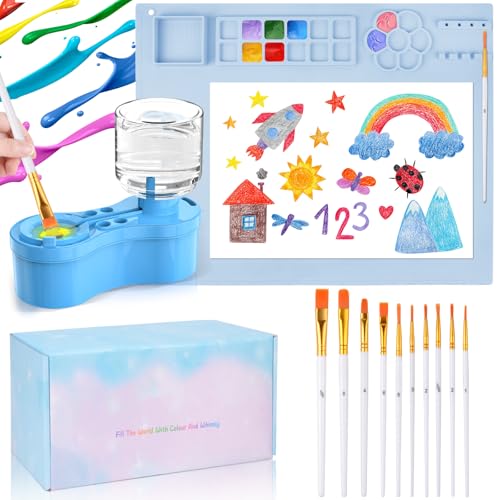
This kit pairs two useful items. The first is an upgraded, leak-proof brush rinser with a 400 ml clean water bottle and a 500 ml dirty water tank, plus a separate paint plate. The second is a 20 by 16 inch food-grade silicone painting mat with 19 small paint trays and one large square tray built in. Ten paint brushes are included.
Separating clean and dirty water is the main benefit of a rinser like this. You rinse in the dirty tank and finish with clean water, so brushes come out cleaner and colors stay brighter. The silicone mat protects the table, holds paint in its trays and peels free of dried acrylic.
The large mat is also the most practical cleaning surface here for big brushes: you can blot, wipe and work soap into a brush on its flat areas without worrying about the table.
Best suited for: Home painters and families who want table protection, mixing trays and a water system in one purchase.
Key features:
- Leak-proof rinser with separate clean and dirty water
- 20 x 16 inch silicone mat
- 19 small trays plus 1 large square tray
- Ten paint brushes included
- Mat folds and has hanging holes
Pros:
- Clean and dirty water kept apart
- Large protective mat
- Ready to use out of the box
Cons and limitations:
- Included brushes are basic
- Rinser is plastic, not for strong solvents
- Takes more space than a single mat
Buying consideration: If you already own good brushes, the value lies in the rinser and mat; treat the included brushes as spares for kids or messy techniques.
3. Elisel 5-in-1 Painting Station Kit — Best for beginners and gift-giving

Elisel’s kit goes a step further than the WZWXXQ by adding paint and an apron. You get a 20 by 16 inch food-grade silicone mat with 19 small trays and a large square tray, a brush rinser with a built-in holder and a water circulation feature, 12 acrylic paints, 10 brushes and a waterproof PVC apron with sleeves.
For a beginner or a child starting acrylics, that is a complete setup. The silicone mat is the part you will keep using the longest: it protects surfaces, holds paint and cleans up by peeling off dried acrylic.
Experienced painters will probably replace the included paints and brushes, but the mat and rinser stay useful as a cleanup and mixing area.
Best suited for: New painters, teens and families looking for a complete starter kit with table protection and cleanup tools.
Key features:
- 20 x 16 inch silicone painting mat
- Brush rinser with holder
- 12 acrylic paints
- 10 paint brushes
- Waterproof apron and sleeves
Pros:
- Complete starter package
- Large, durable mat
- Apron included
Cons and limitations:
- Entry-level paints and brushes
- More items than an experienced painter needs
- Rinser best for water-based paint only
Buying consideration: Buy this as a starter or gift; if you only want the cleaning mat and rinser, the WZWXXQ kit is a closer match.
4. Green Piece Non-Toxic Brush Cleaner with Mat — Best for solvent-free deep cleaning

Green Piece combines a cleaning solution with a mat. The cleaner is described as containing zero paint thinner and zero turpentine, made in the USA, biodegradable and safe for hands, and effective on wet or dry acrylic, latex and oil paint. It has an orange scent and, according to the listing, also conditions bristles.
Pairing a cleaner with a textured mat makes sense: the solution loosens paint and the mat works it out of the heel. For painters who want to avoid solvents in the home, especially with oils, this is the most complete solvent-free option in the list.
The listing also mentions removing epoxy and caulking residue, which tells you it is a strong cleaner. Rinse brushes thoroughly afterward and follow up with a gentle brush soap if you care for natural hair.
Best suited for: Oil and acrylic painters who want to reduce solvent use and need a cleaner strong enough for dried paint.
Key features:
- 18 fl oz cleaning solution
- Cleaning mat included
- No paint thinner or turpentine
- Biodegradable and made in USA
- Works on wet or dry acrylic and oil
Pros:
- Solvent-free approach
- Handles dried paint
- Cleaner and mat in one purchase
Cons and limitations:
- Highest price tier in this list
- Citrus scent may not suit everyone
- Strong formula; rinse well before painting
Buying consideration: Test on an inexpensive brush first, then use it as a periodic deep clean rather than for every quick rinse.
5. The Washbox Sink Insert for Brush Cleanup — Best for cleaning at the kitchen or bathroom sink
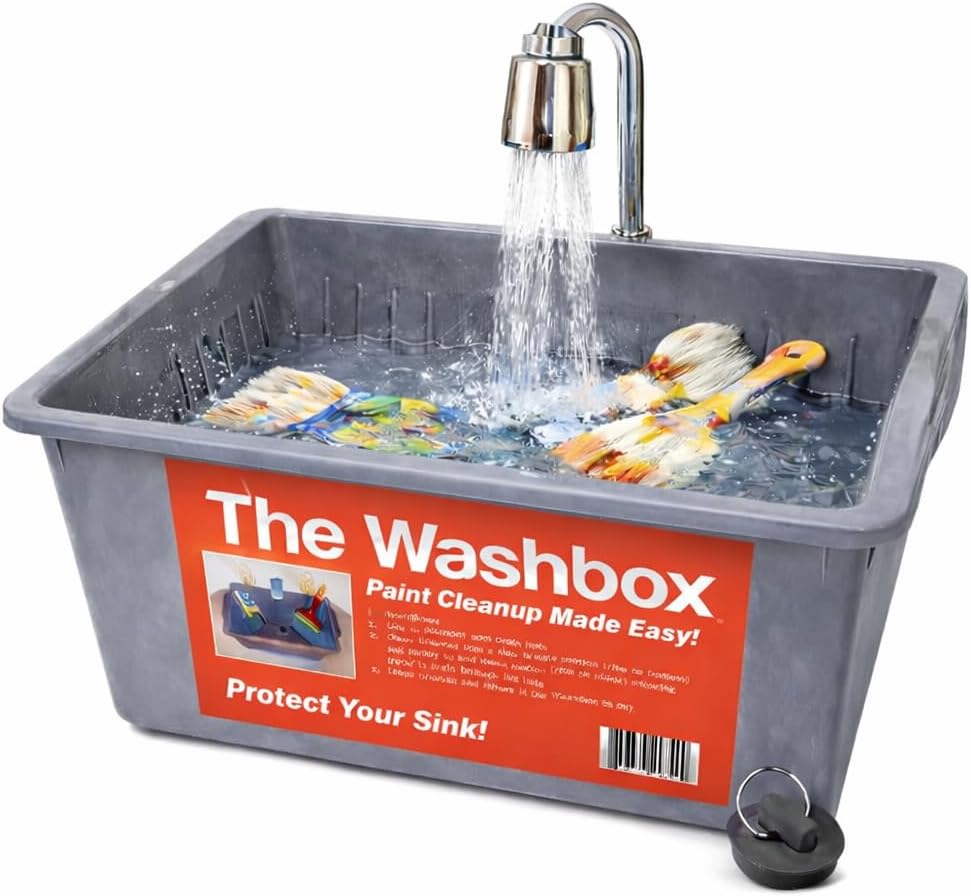
Not everyone has a utility sink. The Washbox is a plastic insert that fits most sinks, so paint splatter goes into the insert and down the drain instead of onto the basin. Interior ribs act as a built-in cleaning surface that helps remove built-up paint, and the current version includes a plug for soaking brushes.
It was designed for brushes and rollers in general, so it is larger than a tabletop mat and suits big flats, gesso brushes and mural brushes as well as smaller artist brushes. It is made in the USA.
Best suited for: Apartment and condo painters who clean brushes at a household sink, and anyone using large brushes for gesso or murals.
Key features:
- Sink insert that fits most sinks
- Interior ribs for scrubbing
- Plug for soaking
- Made in USA
Pros:
- Protects the household sink
- Handles large brushes
- Doubles as a soaking tray
Cons and limitations:
- Only useful at a sink
- Not for pouring solvents down the drain
- Bigger than small artist brushes need
Buying consideration: Only water-based paint should go down the drain, and even then in small amounts; wipe brushes on a rag first and dispose of solvents and heavy paint residue according to local rules.
A Cleanup Routine Using a Mat
- Wipe excess paint onto a rag or paper towel.
- Rinse in the dirty water chamber or first cup (or solvent for oils).
- Add a little brush soap or cleaner to the mat.
- Rub the brush gently across the textured area in the direction of the hair, then in small circles.
- Rinse in clean water and repeat until no color comes out.
- Press out water, reshape the tip and dry flat or bristles-down.
For oil painting, do the solvent stage first, away from the mat, then use the mat with soap to remove the remaining oil. Do not pour solvent onto silicone mats or into plastic rinsers unless the manufacturer says it is safe.
Clean the mat itself after each session. Acrylic peels off silicone once dry, and soap residue rinses away. A dirty mat simply moves old pigment back into clean brushes.
Disposing of Rinse Water Responsibly
Small amounts of watercolor and gouache rinse water are generally treated as household waste water, but acrylic and oil residues deserve more care. Let acrylic rinse water settle or evaporate in a container, then scrape the solid residue into the trash rather than sending a heavy load of paint solids down the drain.
Solvents and oil paint should never go into the sink. Let used solvent settle in a sealed jar, pour off the clear solvent for reuse and dispose of the sludge according to your local hazardous waste guidance. A two-chamber rinser makes this easier, because the dirty chamber collects most of the paint.
Buying Guide: How to Choose a Brush Cleaning Mat
Texture and softness
Varied textures help: fine ridges for small rounds, coarser bumps for flats and bristle brushes. Silicone should be soft enough to flex under light pressure. Hard plastic ridges are more likely to damage delicate hair.
If you own sable or squirrel brushes, use the gentlest area of the mat and light strokes.
Size relative to your brushes
A small foldable mat suits watercolor rounds and travel. Large flats, mops and gesso brushes need a bigger surface, such as a 20 by 16 inch painting mat or a sink insert.
Water management
A bowl-style mat holds a little water. A two-chamber rinser keeps dirty and clean water separate, which gives cleaner results. A sink insert relies on running water.
Medium compatibility
Silicone and plastic suit water-based paint. For oils, handle solvent in proper containers and use the mat only in the soap stage. Read the listing for solvent compatibility before using any thinner on a mat.
Kit or single item
Kits with mats, rinsers, brushes and paint are convenient for beginners and gifts. Experienced painters usually get more value from a single good mat or rinser.
Cleaning and storage
Silicone rinses clean and folds or rolls for storage. Large mats with hanging holes store neatly on a hook. Keep mats away from heat sources that could warp them.
Brush Technique Guides
Clean heels give crisp strokes. Put your brushes to work with our guide on painting dots with a round brush, or see which brush size suits detailed acrylic work so you know which brushes need the most careful cleaning.
Common Mistakes to Avoid
- Scrubbing hard enough to splay the hair
- Pouring solvent onto silicone mats or into plastic rinsers
- Skipping the rag wipe and loading the mat with paint
- Letting acrylic dry in the brush before cleaning
- Never cleaning the mat itself
- Pouring solvent or heavy paint sludge down the sink
FAQs
Do brush cleaning mats really work?
Yes, for removing paint from the heel near the ferrule. The textured surface flexes the hair so soap and water reach paint that rinsing alone leaves behind.
Can I use a cleaning mat with oil paint?
Use solvent in a proper container first, then use the mat with brush soap to remove the remaining oil. Do not pour solvent onto the mat unless the maker says it is safe.
Will a silicone mat damage sable brushes?
Not if you use light pressure and the softer textures. Heavy scrubbing can damage any fine brush.
What is the difference between a cleaning mat and a painting mat?
A cleaning mat has textured areas for working paint out of brushes. A painting mat is a large, flat silicone sheet that protects the table and often includes mixing trays.
Is it safe to rinse acrylic paint down the sink?
Small amounts are common practice, but large quantities of paint solids can build up in drains. Many painters let rinse water settle and dispose of the solids in the trash.
How do I clean a silicone painting mat?
Let acrylic dry and peel it off, or rinse wet paint with soap and water. Silicone is nonstick, so most paint releases easily.
Final Recommendation
For a simple, packable cleaning surface, the Vodolo silicone mat does the core job well. If you want a complete cleanup area, the WZWXXQ station adds a two-chamber rinser and a large mat that protects your table, while the Elisel kit is the better gift for a beginner because it includes paint and an apron.
Painters trying to cut solvent use, especially with oils, should look at the Green Piece cleaner and mat combo. And if your cleanup happens at a kitchen or bathroom sink, The Washbox keeps the basin clean and handles big brushes easily.




