
PaintingProGuide is reader-supported. When you buy through links on this page we may earn an affiliate commission at no extra cost to you.
Good brushes rarely wear out from painting. They wear out from being cleaned badly: paint left to harden in the heel near the ferrule, harsh detergents that strip natural hair, or solvent left to dry in the bristles. The best brush cleaning soap removes oil, acrylic and watercolor residue in one step, conditions the hair so it keeps its shape, and is gentle enough for expensive sable as well as tough enough for stiff hog bristle.
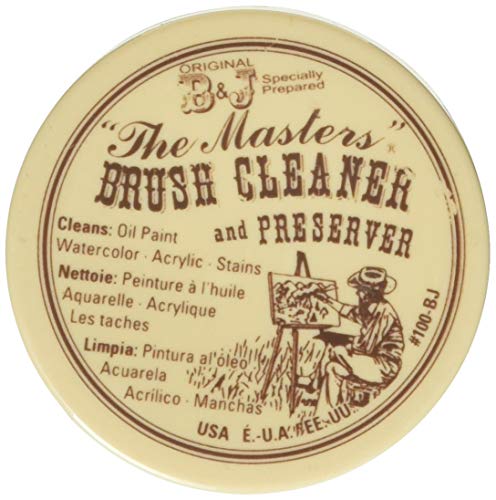
For artists, one product has dominated this niche for decades: The Masters Brush Cleaner and Preserver from General Pencil Company. In the listings we checked it was the only artist-specific brush soap; the other results were makeup brush cleaners, which are not designed for paint. So this guide covers The Masters in its three sizes, explains how to choose between them, and spends most of its length on the part that matters most, how to clean brushes properly for each medium.
Quick answer: The Masters Brush Cleaner and Preserver is the best brush cleaning soap for artists. It cleans and conditions in one step, works on oil, acrylic, watercolor, varnish and ink, is safe for sable, bristle and synthetic brushes, and can lift old dried paint if left on the brush for a few hours. Buy the 2.5 oz size for regular studio use, the 1 oz for travel or trying it out, and the 24 oz tub for classrooms and heavy users.
Our Top Picks at a Glance
- The Masters Brush Cleaner and Preserver, 2.5 oz — Best overall brush cleaning soap for most artists
- The Masters Brush Cleaner and Preserver, 1 oz — Best travel size and low-cost trial
- The Masters Brush Cleaner and Preserver Tub, 24 oz — Best for classrooms, studios and heavy use
| Product | Best For | Key Spec | Key Strength | Price Tier |
|---|---|---|---|---|
| The Masters 2.5 oz | Everyday studio cleaning | 2.5 oz cake | Cleans and conditions in one step | $ |
| The Masters 1 oz | Travel and plein air | 1 oz cake | Pocket-size, same formula | $ |
| The Masters 24 oz Tub | Classrooms and heavy users | 24 oz tub | Lowest cost per ounce | $$ |
How We Chose
Our recommendation is based on the Amazon listing details checked in October 2026, how well each product is designed for cleaning artist brushes, and how widely each product is reviewed by Amazon buyers. We excluded several makeup brush cleaners that appeared in the same search, because they are formulated for cosmetics rather than paint, oil and varnish. That left one artist brush soap in three sizes, so this page is honest about having a single core recommendation.
What we look for in a brush soap:
- Media coverage: removes oil, acrylic and watercolor residue.
- Gentleness: safe on natural sable and synthetic hair.
- Conditioning: leaves hair supple and helps reshape points.
- Dried paint removal: ability to soften residue that has hardened.
- Safety: non-toxic certification for home studios.
The Masters Brush Cleaner and Preserver Reviewed
1. GENERAL’S The Masters Brush Cleaner and Preserver, 2.5 oz — Best for Everyday Studio Cleaning

The Masters is a solid cleaning cake that you work into wet brushes. The listing describes a simple one-step total care process that removes oils, acrylics, watercolors, stains and varnishes, and works on glazes and most synthetic finishes. It is suitable for sable, bristle and synthetic brushes, which means one cake can serve every brush in your jar.
The 2.5 oz size is the most practical for a home studio: large enough to last through months of regular painting, small enough to keep beside the sink. The cleaner also conditions as it cleans, which helps brushes keep their shape and spring.
Best suited for: any painter who wants one cleaner for oil, acrylic and watercolor brushes.
Key features:
- 2.5 oz solid cleaner
- Removes oil, acrylic, watercolor, stains and varnish
- Safe for sable, bristle and synthetic
- Cleans and conditions in one step
Pros:
- Works across all common media
- Gentle on natural hair
- Widely reviewed
Cons and limitations:
- Oil paint still benefits from a solvent or oil pre-rinse
- Cake can get messy if left wet
Buying consideration: let the cake dry between uses with the lid off for a few minutes so it does not turn mushy.
Other Sizes: 1 oz and 24 oz Tub
The same formula comes in a 1 oz size and a 24 oz tub. According to General Pencil’s listings for those sizes, the cleaner is formulated for artist paints, ink, dye, stain and varnish, also works on house paint, grass stains and grease, and can remove old dried-on paint if left to sit on the brush for up to several hours. It is non-abrasive, safe for natural hair including Kolinsky sable, and made in the USA to ACMI AP non-toxic standards.
The 1 oz size is ideal for a plein air kit, a travel watercolor set or simply trying the product. The 24 oz tub is the economical choice for teachers, shared studios and painters who clean dozens of brushes a week.

How to Clean Brushes by Medium
Acrylic
- Never let acrylic dry on the brush. Keep brushes damp in use and wash promptly.
- Wipe off excess paint on a rag or paper towel.
- Rinse in lukewarm (not hot) water.
- Swirl the wet brush on the soap cake to form a lather, working it into the heel near the ferrule.
- Rinse until the water runs clear, repeat if needed.
- Reshape the head and dry flat or tip-down.
Oil
- Wipe excess paint on a rag.
- Rinse in odorless mineral spirits or a safe vegetable oil such as safflower to dissolve most of the paint.
- Wipe again, then wash with brush soap and lukewarm water until no color appears in the lather.
- Rinse, reshape and dry flat.
The soap step matters even after solvent: solvent leaves a thin film of oil and pigment in the hair that slowly stiffens brushes if not removed.
Watercolor and Gouache
Watercolor rinses out easily in clean water. Use soap occasionally, perhaps weekly or when you notice staining, to remove pigment buildup and condition natural hair. Always rinse thoroughly so no soap residue remains to affect your next wash.
Removing Dried Paint
Work the cleaner into the dried area, leave it on the brush for a few hours as the listing suggests, then work the hair gently with your fingers and rinse. Repeat if needed. Acrylic that has fully cured deep in the ferrule may never come out completely, which is why prompt cleaning matters so much.
Signs Your Brushes Need a Deep Clean
- Stiff heel: the hair near the ferrule feels hard or crunchy when you flex it.
- Splayed shape: a round no longer points or a flat no longer holds a chisel edge.
- Color bleeding: a “clean” brush still tints clear water or white paint.
- Odor: a sour or mildew smell from brushes stored damp.
- Tacky feel: oil brushes that stay slightly sticky after solvent rinsing.
Any of these means residue has built up deep in the hair. Give the brush a long soak-free deep clean: lather it thoroughly on the soap cake, leave the lather in the hair for a while, massage gently from ferrule to tip, then rinse and repeat until the lather stays white.
Care by Hair Type
Natural Sable and Squirrel
These soft, expensive hairs are the most sensitive to harsh cleaning. Use lukewarm water, a conditioning soap and fingertips rather than scrubbing against a hard surface. After washing, shape the point with a little of the soap’s lather left in the hair and let it dry; this “dressing” helps a round keep its point, and you simply rinse it out before your next session.
Hog Bristle
Hog bristle is tough and tolerates firmer cleaning, but it still dislikes long soaks, which swell wooden handles and loosen ferrules. Clean promptly after oil sessions, work the soap well into the heel, and reshape flats and filberts so the edges stay crisp.
Synthetics
Synthetic brushes are the easiest to clean and the most forgiving with acrylic, but they can develop permanent bends if dried in the wrong position. Reshape and dry flat. If a synthetic tip curls, dipping it briefly in warm (not hot) water and reshaping can sometimes straighten it.
Set Up a Simple Cleaning Station
A tidy routine makes good cleaning automatic. Keep two water jars at the easel for acrylic or watercolor, one for the first rinse and one for a cleaner second rinse. For oil, use a lidded solvent container with a coil or grate in the bottom so sludge settles and the clean solvent above can be reused. Keep a roll of paper towels or a stack of cotton rags, a brush soap cake by the sink, and a towel or brush rack where clean brushes can dry flat.
Dispose of oily rags safely: lay them flat to dry outdoors or store them in a sealed metal container with water, since rags soaked in drying oils can heat up as they cure. Never pour solvent down the drain; let the pigment settle, decant the clear solvent for reuse and dispose of the sludge according to local rules.
Brush Soap vs Alternatives
| Option | Pros | Cons |
|---|---|---|
| Artist brush soap (The Masters) | Cleans and conditions, safe on sable, handles all media | Small extra cost |
| Mild dish soap | Cheap and available | Can strip natural hair over time; no conditioning |
| Hand soap bar | Gentle, cheap | Weaker on oil and dried paint |
| Vegetable oil (for oil paint) | Solvent-free first rinse | Must be followed by soap |
| Makeup brush cleaners | Gentle | Not formulated for oil paint, varnish or acrylic |
Buying Guide: How to Choose a Brush Cleaning Soap
Match It to Your Media
If you paint in more than one medium, a cleaner that handles oil, acrylic and watercolor saves having multiple products.
Protect Natural Hair
Sable and squirrel brushes need non-abrasive, conditioning cleaners. Harsh detergents dry out natural hair and dull points.
Solid or Liquid
Solid cakes last a long time and are easy to lather. Liquid cleaners are convenient for soaking. For most artists, a solid cake is the better value.
Size
Choose 1 oz for travel, 2.5 oz for a home studio and a large tub for classrooms or daily heavy use.
Safety Labels
Look for non-toxic certification such as ACMI AP, especially if children use the studio sink.
Dried Paint Rescue
If you often rescue neglected brushes, choose a cleaner that states it can soften dried paint with dwell time.
Brush Care Habits That Matter as Much as Soap
- Never rest brushes on their heads in water or solvent.
- Keep paint away from the ferrule while painting; it is the hardest place to clean.
- Use lukewarm water; hot water can loosen glue and swell wooden handles.
- Reshape points and edges after every wash.
- Dry brushes flat or tip-down so water does not seep into the ferrule.
- Store dry brushes upright in a jar or in a roll.
How Long Should a Good Brush Last?
With consistent cleaning, a quality synthetic brush used for acrylic can last a year or more of regular painting, and a well-cared-for sable round can last many years. Most early brush deaths have the same causes: paint dried in the heel, brushes left standing in water, and harsh cleaning that dries out the hair. A cake of brush soap costs far less than replacing even one good brush, which is why it is one of the most cost-effective supplies in any studio.
It also helps to retire brushes gracefully rather than throwing them away. A round that has lost its point still makes a useful scrubber for texture, dry brushing or applying masking fluid, and a flat with a frayed edge is perfect for stippling foliage. Label these “rough” brushes with a strip of tape on the handle so they never get mixed up with your good ones. Masking fluid in particular ruins good brushes, so a dedicated old brush, rubbed on the soap cake first to coat the hair, is the smart way to apply it. The soap coating lets dried masking fluid peel out of the hair afterward instead of gluing it together permanently.
Keep Your Detail Brushes Sharp
Clean, conditioned brushes make detail work far easier. Put your fresh brushes to work with our guides on using a liner brush for detail work, choosing the right brush size for detailed acrylic work and painting dots with a round brush.
Common Mistakes to Avoid
- Letting acrylic dry in brushes between sessions.
- Cleaning oil brushes with solvent only and skipping soap.
- Using hot water, which damages glue and handles.
- Scrubbing sable brushes hard against the soap.
- Leaving soap residue in watercolor brushes.
- Using makeup brush cleaners on oil or varnish residue.
- Storing brushes wet in a closed case, which can cause mildew.
FAQs
What is the best soap for cleaning paint brushes?
The Masters Brush Cleaner and Preserver is the most widely used artist brush soap. It removes oil, acrylic, watercolor and varnish and conditions brushes in one step, and it is safe for sable, bristle and synthetic hair.
Can I use dish soap to clean paint brushes?
Mild dish soap works in a pinch, especially for acrylic. Over time it can dry out natural hair because it does not condition. An artist brush soap is gentler and more effective on oil residue.
How do you clean oil paint out of brushes?
Wipe off excess paint, rinse in odorless mineral spirits or vegetable oil, wipe again, then wash with brush soap and lukewarm water until the lather is clean. Reshape and dry flat.
Can The Masters remove dried acrylic paint?
The listing says it can remove old dried-on paint if left on the brush for up to several hours. Results depend on how long the paint has cured, and fully hardened acrylic deep in the ferrule can be difficult to remove completely.
Is The Masters brush cleaner safe for sable brushes?
Yes. The listing states it is non-abrasive and will not harm synthetic or natural hair brushes, including Kolinsky sable.
How often should I wash brushes with soap?
Wash acrylic and oil brushes with soap after every session. Watercolor brushes can be rinsed in water between sessions and washed with soap occasionally to remove buildup.
Final Recommendation
For almost every painter, The Masters Brush Cleaner and Preserver is the brush soap to buy. Get the 2.5 oz cake for a home studio, the 1 oz cake for travel or a first try, and the 24 oz tub for classrooms or heavy daily use. Pair it with good habits, prompt cleaning, lukewarm water and drying brushes flat, and your brushes will keep their shape far longer. The checked listings contained only this one artist-specific brush soap; we did not recommend the makeup brush cleaners that also appeared, because they are not made for paint.




2 Comments