PaintingProGuide is reader-supported. When you buy through links on this page we may earn an affiliate commission at no extra cost to you.
A good brush can last for years, and how you dry it matters almost as much as how you clean it. The best brush drying racks for painters keep water and solvent away from the ferrule, stop bristles from bending under their own weight, and get wet brushes off the table so they do not roll through your work.
The products below cover the three jobs involved: drying bristles-down after a water wash, holding brushes in a solvent washer while painting in oils, and organizing brushes once they are dry. We note clearly which is which, because some listings blur the line.
Quick answer: For actual drying, the Masterson Sta-New Brush Holder is the pick because it holds brushes bristles-down. Oil painters should add a CYTGOUPER stainless steel rinser for solvent cleaning, and the JANKINGS holders work well for storing brushes once they are dry.
Our Top Picks at a Glance
- Masterson Sta-New Brush Holder — Best for drying brushes bristles-down
- CYTGOUPER Stainless Steel Brush Drying Rack & Rinser — Best for oil painters who clean in solvent
- MyLifeUNIT Portable Artist Brush Washer — Best for a second solvent station or travel kit
- CYUXING Silicone Brush Rest (4-Pack) — Best for resting brushes between strokes
- JANKINGS Round Paint Brush Holder (2-Pack) — Best for organizing dry brushes upright
| Product | Best For | Key Spec | Key Strength | Price Tier |
|---|---|---|---|---|
| Masterson Sta-New Brush Holder | Drying brushes bristles-down | 10 rubber-lined slots | Mounts to easel, wall or bench | $$ |
| CYTGOUPER Stainless Steel Brush Drying Rack & Rinser | Oil painters who clean in solvent | Stainless steel; lift-out screen | Washes and holds in one unit | $ |
| MyLifeUNIT Portable Artist Brush Washer | A second solvent station or travel kit | Stainless steel; removable screen | Splits into two parts | $ |
| CYUXING Silicone Brush Rest (4-Pack) | Resting brushes between strokes | 6 slots each; silicone | Soft grip plus small mixing tray | $ |
| JANKINGS Round Paint Brush Holder (2-Pack) | Organizing dry brushes upright | Mixed-size holes; 2 holders | Separates brushes by size | $ |
How We Chose
Our picks are based on Amazon listing details and specifications checked in October 2026, how well each product’s design fits the job of drying or holding artist brushes, and how widely each product is reviewed by Amazon buyers. We left out listings marketed mainly for makeup brushes, even though some look similar, because their hole sizes and use guidance target cosmetics.
We judged each option against these points:
- Drying orientation: bristles-down, flat or upright
- Compatibility with water, acrylic and oil solvents
- Number of brushes held and handle-size range
- Material durability (stainless steel, silicone, plastic)
- Footprint and portability
- Ease of cleaning the rack itself
Best Brush Drying Racks for Painters Reviewed
1. Masterson Sta-New Brush Holder — Best for drying brushes bristles-down

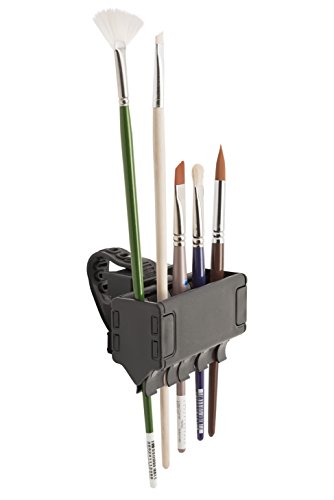
Most brush damage during drying is caused by water running back into the ferrule, where it loosens glue and swells wooden handles. The Masterson Sta-New is built to stop exactly that. It holds up to ten brushes with the bristles pointing down, each gripped in a rubber-lined slot, so gravity pulls water out of the hair and away from the ferrule.
It mounts to an easel, a wall, a workbench or the edge of a counter, which keeps the drying brushes off your table entirely. The rubber grips accept a range of handle thicknesses, though very thin liner handles and very fat hake handles sit at the edges of what one slot can hold.
Best suited for: Watercolor, gouache and acrylic painters who wash brushes in water and want to protect expensive rounds and natural-hair brushes during drying.
Key features:
- Holds 10 brushes bristles-down
- Rubber-lined slots grip handles
- Mounts to easel, wall, bench or counter
- Plastic construction
Pros:
- The correct drying orientation for brush longevity
- Keeps wet brushes off the work surface
- Simple, durable design
Cons and limitations:
- Only ten slots
- Needs a place to clamp or mount
- Very thin or very thick handles may not grip securely
Buying consideration: If you own good sable or squirrel brushes, this is the most important single purchase on the list. Pair it with a towel underneath to catch drips.
2. CYTGOUPER Stainless Steel Brush Drying Rack & Rinser — Best for oil painters who clean in solvent

For oil painters, drying starts with cleaning, and this CYTGOUPER unit handles both. It is a stainless steel canister with a lift-out filter screen; you rub brushes against the screen to release paint, and sediment settles below. A spring coil on top clips brushes so they hang, which keeps them off the table while solvent drains.
Stainless steel is the right material here because the listing confirms it works with water, oil and acrylic paints and with solvents such as mineral spirits and turpentine. The unit comes apart for travel and measures about 4.3 inches on each side, so it suits a tabletop or plein air kit.
Best suited for: Oil painters and acrylic painters who want a closed cleaning-and-holding station next to the easel.
Key features:
- Stainless steel tank
- Lift-out filter screen separates sediment
- Spring coil brush clip
- Disassembles for transport
- Compatible with water and common solvents
Pros:
- Solvent-safe material
- Combines rinsing and holding
- Small and portable
Cons and limitations:
- Spring coil holds only a handful of brushes
- Not a true bristles-down drying rack
- Solvent still needs a sealed container for storage
Buying consideration: Use the coil for short-term holding while painting, then move cleaned brushes to a bristles-down rack or lay them flat to finish drying.
3. MyLifeUNIT Portable Artist Brush Washer — Best for a second solvent station or travel kit

The MyLifeUNIT washer is a close cousin of the CYTGOUPER: a stainless steel tank, a removable filter screen and a spring holder that grips brushes of different sizes. The listing stresses that it resists rust and works with water, oil and acrylic paints and with spirits and turpentine.
Because it separates into two parts for storage, it packs neatly into a field bag. Many oil painters keep one unit for a dirty first rinse and a second for a cleaner final rinse; at this price tier, buying two washers is a practical way to do that.
Best suited for: Painters who want a two-stage rinse setup or a compact washer for outdoor painting.
Key features:
- Rust-resistant stainless steel
- Spring holder for multiple brush sizes
- Lift-out filter screen
- Separates into two parts
Pros:
- Inexpensive enough to buy as a pair
- Solvent compatible
- Packs flat for travel
Cons and limitations:
- Very similar to other washers in this tier
- Holder is for short-term use
- Lid seal is not described as airtight
Buying consideration: Pick whichever of the two stainless washers is priced better on the day; their listed features overlap almost completely.
4. CYUXING Silicone Brush Rest (4-Pack) — Best for resting brushes between strokes

A brush rest is not a full drying rack, but it solves a related problem: where to put a loaded brush for a minute without it rolling into your painting. These CYUXING rests are flexible silicone with six cut slots each, and the four-pack spreads easily across a large table.
The listing suggests placing brushes bristles-up for drying. That is fine for a short rest, but for overnight drying of water-washed brushes we would follow the long-standing advice to lay them flat or hang them bristles-down so moisture stays out of the ferrule.
Best suited for: Watercolor and gouache painters who switch brushes often and want them parked neatly beside the palette.
Key features:
- Four silicone rests
- Six slots per rest
- Front tray for small mixing
- Rinses clean under water
Pros:
- Soft material protects bristles
- Stops brushes rolling
- Four units for a big workspace
Cons and limitations:
- Not designed for full drying
- Bristles-up drying risks water in the ferrule
- Small capacity per rest
Buying consideration: Buy these as a working-session accessory, and pair them with a bristles-down rack for the end of the day.
5. JANKINGS Round Paint Brush Holder (2-Pack) — Best for organizing dry brushes upright

Once brushes are fully dry, storing them upright in separate holes keeps bristles from crushing against each other in a jar. The JANKINGS set includes two round plastic holders with multiple hole sizes and a label sheet, so you can sort detail rounds from larger flats and keep palette knives and pens in the same unit.
The listing calls this a drying and storage rack. For storage it is excellent. For drying wet brushes upright, the same ferrule caution applies: blot thoroughly first so water does not run down into the handle.
Best suited for: Painters with a growing brush collection who want tidy upright storage near the easel once brushes are dry.
Key features:
- Two round organizer racks
- Mixed hole sizes
- Labeling sticker sheet included
- Rustproof, easy-clean plastic
Pros:
- Prevents crowding and bent bristles
- Labels speed up finding the right brush
- Holds tools beyond brushes
Cons and limitations:
- Upright orientation is not ideal for wet brushes
- Plastic is less stable with heavy long handles
- Takes desk space
Buying consideration: Use it as the last stop: wash, dry flat or bristles-down, then file brushes here by size.
Why Drying Orientation Matters
When a wet brush stands bristles-up in a jar, water runs down into the ferrule. Over time that softens the glue holding the hair, swells wooden handles and cracks lacquer, and the brush starts to shed. Drying bristles-down or flat lets water leave through the tip instead.
Natural hair such as sable and squirrel is especially sensitive because it absorbs more water. Synthetic brushes tolerate more abuse, but the ferrule and glue are the same weak point in both.
A Simple Brush Drying Routine
The rack only works if the brush arrives clean and reshaped. This routine suits most water-based media and finishes the oil-painting cleanup after solvent:
- Wipe excess paint onto a rag or paper towel before rinsing.
- Rinse in water (or solvent for oils) until the color stops bleeding.
- Work brush soap gently into the hair near the ferrule, then rinse until the water runs clear.
- Press out water with a lint-free cloth, pulling toward the tip.
- Reshape the point or chisel edge with your fingers.
- Hang bristles-down or lay flat with the head hanging over a table edge.
- Move fully dry brushes to upright storage or a ventilated case.
Flat drying is a perfectly good fallback if you have no rack. Lay the brush on a towel so the head extends past the edge of the table and nothing presses on the hair. The rack simply makes this neater and frees space.
If you paint in a humid room, give brushes extra time before storing them in a closed case or roll. Trapped moisture can encourage mildew in natural hair and lift lacquer on handles.
Buying Guide: How to Choose a Brush Drying Rack
Decide which job you are solving
A drying rack, a solvent washer and a storage holder look similar in photos but do different things. If you paint with water-based media, prioritize bristles-down drying. If you paint in oils, start with a solvent-safe washer, then add a drying rack.
Capacity versus your brush count
Count the brushes you clean after a typical session, not the total you own. Ten slots is plenty for most watercolorists; a large acrylic painter may need two racks. Spring coils on washers hold only a few brushes at once.
If you rotate a big set of brushes, consider two smaller racks rather than one large one. You can mount one by the sink and one by the easel, and you never have to carry dripping brushes across the room.
Handle range
Brush handles run from slim liner handles to thick hake and mop handles. Rubber-lined slots and silicone grips adapt to more sizes than rigid holes. Check that your largest and smallest brushes will both fit.
Long-handled oil brushes add leverage, so a loose grip lets them tip. Short-handled watercolor brushes are lighter and sit securely in most holders.
Material and solvent safety
Stainless steel is the safest choice around mineral spirits and turpentine. Plastic and silicone are fine for water but may degrade with strong solvents over time. Keep solvents in lidded containers designed for them.
Ventilate the room while using solvent, and let rags dry flat outdoors or store them in a metal container with a lid, since oil-soaked rags can self-heat.
Mounting and space
A rack that clamps to an easel or wall frees the table. Countertop rests are easier to move but take up working room. In a small space, vertical mounting wins.
Cleaning the rack itself
Paint residue builds up on any rack. Removable screens and smooth surfaces make cleanup quick. A rack that is hard to clean tends to transfer old pigment back onto clean brushes.
Brush Care and Technique Guides
Clean, well-dried brushes hold a finer point, which you will notice in detail work. Practice with our guide on using a liner brush for detail work, and check what size brush to use for detailed acrylic work before adding new brushes to your rack.
Common Mistakes to Avoid
- Standing wet brushes bristles-up in a jar overnight
- Leaving brushes resting on their tips in a water cup
- Using plastic containers with strong solvents
- Putting brushes away damp in a closed case
- Crowding brushes so bristles press against each other while drying
- Skipping a reshape of the tip before the brush dries
FAQs
Should paint brushes dry bristles up or down?
Bristles down or flat. Drying bristles-up lets water run into the ferrule, which loosens glue and causes shedding over time.
Can I dry oil painting brushes on a rack?
Yes, after you remove solvent and wash with brush soap. Hang them bristles-down or lay them flat until fully dry.
How long do paint brushes take to dry?
Small synthetic brushes often dry in a few hours; large natural-hair brushes can take overnight. Humidity and how well you blot them make a big difference.
Is a stainless steel brush washer worth it?
For oil painters, yes. It contains solvent, separates sediment and is safe with mineral spirits, and it keeps brushes off the table during a session.
Can I use a makeup brush drying rack for paint brushes?
Sometimes, if the holes fit your handles, but makeup racks are sized for cosmetic brushes. An artist rack with adjustable grips usually fits a wider range of paint brushes.
Do I need a drying rack for cheap synthetic brushes?
It still helps. Synthetics resist water better, but the ferrule and glue are just as vulnerable, so correct drying extends their life too.
Final Recommendation
If you buy one product here, make it the Masterson Sta-New, because bristles-down drying is the habit that protects brushes most. Oil painters should add a stainless washer such as the CYTGOUPER or MyLifeUNIT for solvent cleaning during the session.
Silicone rests and upright holders round out the setup: the CYUXING rests keep loaded brushes tidy while you work, and the JANKINGS organizers keep dry brushes sorted by size. Together they cover cleaning, drying and storage without overlap.