

PaintingProGuide is reader-supported. When you buy through links on this page we may earn an affiliate commission at no extra cost to you.
Every painter eventually finds a brush stiff as a stick: acrylic forgotten during a phone call, oil left overnight, varnish dried in the bristles. Before throwing it out, a brush restorer can often bring it back.
Brush restorers for painters come in three forms. Solid cleaner-preservers like The Masters clean and condition in one step and can lift dried paint with patience. Liquid soaking restorers, such as U.S. Art Supply and Winsor & Newton cleaner and restorer, dissolve or soften dried acrylic and oil so it can be worked out. Conditioning restorers, like Vallejo and Trekell, focus on reshaping stiff or frayed hair and keeping it supple.
Each one suits a different problem. We compared five artist brush restorers available on Amazon using the details in their listings, and left out a contractor’s brush wash aimed at latex house paint and rollers.
Set expectations before you start: restorers can remove dried paint and soften hair, but they cannot regrow broken bristles or repair a loose ferrule.
Quick answer: For everyday cleaning that also rescues lightly dried paint, General’s The Masters Brush Cleaner and Preserver is the classic choice: one-step cleaning and conditioning for oils, acrylics, watercolor and varnish, safe on sable and synthetics. For brushes rock-hard with dried acrylic, soak them in U.S. Art Supply Brush Cleaner and Restorer. For detail brushes that are frayed or misshapen, Vallejo Brush Restorer is made for miniature painters.
What a Brush Restorer Can and Cannot Fix
Can fix: dried acrylic, oil, varnish and glazes in the bristles; stiffness from buildup near the ferrule; mild splaying caused by paint holding hairs apart; dull, dry-feeling hair.
Partly fix: fishhooked or frayed tips. Conditioning and reshaping help, but hair that has been bent many times may never fully recover.
Cannot fix: broken or worn-away hair, loose or cracked ferrules, and handles that have split. Once the glue in the ferrule has failed, the brush will keep shedding.
The sooner you treat a brush, the better the result. Paint that has dried for an hour is much easier to remove than paint that has cured for weeks.
Soap, Cleaner or Restorer: Which Do You Need?
Brush soaps and cleaner-preservers are for routine cleaning after each session. Used regularly, they prevent the buildup that makes restorers necessary.
Liquid restorers are for rescues: brushes with dried acrylic or oil. They usually involve soaking.
Conditioners keep hair supple and help reshape tips, particularly useful for fine detail brushes.
Many painters keep a solid cleaner by the sink and a bottle of liquid restorer for emergencies.
Our Top Picks at a Glance
- General’s The Masters Brush Cleaner and Preserver (2.5 oz) — Best overall cleaner-restorer
- U.S. Art Supply Brush Cleaner and Restorer (16 oz) — Best soak for dried acrylic and oil
- Trekell Paint Brush Restorer and Preserver — Best low-odor conditioner-restorer
- Vallejo Brush Restorer (2.87 fl oz) — Best for miniature and detail brushes
- Winsor & Newton Brush Cleaner and Restorer (16 oz) — Best from a major artist brand
| Product | Best For | Key Spec | Key Strength | Price Tier |
|---|---|---|---|---|
| General’s The Masters Brush Cleaner and Preserver (2.5 oz) | overall cleaner-restorer | 2.5 oz solid, for oil, acrylic, watercolor, varnish | Cleans and conditions in one step | $ |
| U.S. Art Supply Brush Cleaner and Restorer (16 oz) | soak for dried acrylic and oil | 16 oz liquid, soak and wipe | Softens dried-on paint | $$ |
| Trekell Paint Brush Restorer and Preserver | low-odor conditioner-restorer | Liquid conditioner solution for acrylic, watercolor and oil brushes | Low vapor, biodegradable per listing | $ |
| Vallejo Brush Restorer (2.87 fl oz) | miniature and detail brushes | 2.87 fl oz, soak and air dry | Restores frayed and misshapen tips | $ |
| Winsor & Newton Brush Cleaner and Restorer (16 oz) | from a major artist brand | 16 oz bottle, made in France | Trusted artist-brand formula | $$ |
We left out a contractor brush wash designed mainly for latex house paint and rollers.
How We Chose
We did not test these restorers. Picks are based on the Amazon listing details and specifications checked in October 2026, how well each product’s stated purpose fits rescuing and maintaining artist brushes, and how widely each product is reviewed by Amazon buyers.
- What it removes: dried acrylic, oil, varnish
- Whether it is a daily cleaner, a soak or a conditioner
- Compatibility with natural and synthetic hair
- Stated safety and odor information
- Bottle size and value
- Clarity of usage directions
Best Brush Restorers for Painters Reviewed
1. General’s The Masters Brush Cleaner and Preserver (2.5 oz) — Best overall cleaner-restorer

The Masters is one of the most familiar brush care products in art stores. The listing describes a simple one-step total care process that removes oils, acrylics, watercolors, stains and varnishes, and works on glazes and most synthetic finishes.
It is designed for sable, bristle and synthetic brushes. General Pencil Company’s related 1 oz listing adds that it is non-abrasive, made in the USA to ACMI AP non-toxic standards, and that for dried paint you can let the product sit on the brush for up to several hours.
Used after every session, it keeps brushes clean and conditioned; used with patience, it can rescue brushes with dried paint.
Best suited for: Painters in every medium who want one product for daily cleaning and occasional rescue.
Key features:
- Solid cleaner and preserver, 2.5 oz
- Removes oil, acrylic, watercolor, stains and varnish
- Safe for sable, bristle and synthetic
- One-step clean and condition
Pros:
- Daily-use and rescue in one
- Gentle on natural hair
- Long-lasting tub
Cons / limitations:
- Slow on fully cured acrylic
- Requires lathering by hand
- Not a soak for many brushes at once
Buying consideration: For dried paint, work the cleaner into the bristles, leave it on for a while, then lather and rinse; repeat as needed.
2. U.S. Art Supply Brush Cleaner and Restorer (16 oz) — Best soak for dried acrylic and oil

This liquid cleaner is built for rescues: brushes with dried-on acrylic and other paints. Directions in the listing are to soak brushes as needed and remove the softened residue with a wipe, knife or toothbrush.
A 16 oz bottle handles several brushes at once, and the listing also recommends it for cleaning airbrushes between colors and removing dried paint from other art tools.
Best suited for: Acrylic painters with stiff brushes and airbrush users.
Key features:
- 16 oz liquid restorer
- Soak-and-wipe directions
- For dried-on paint
- Also for airbrush and tool cleaning
Pros:
- Large bottle
- Treats many brushes at once
- Versatile for tools
Cons / limitations:
- Soaking takes time
- Use in a ventilated area
- Not a daily conditioner
Buying consideration: Soak only the bristles, not the ferrule and handle, to avoid loosening glue and damaging handle finish.
3. Trekell Paint Brush Restorer and Preserver — Best low-odor conditioner-restorer

Trekell positions its restorer as a way to stop throwing away brushes: it reshapes and reforms detail, round and fine brushes. The listing describes a liquid formula that emits a low amount of vapor and is non-toxic and biodegradable, unlike paint thinner.
Trekell recommends cleaning first with its brush soap and water to clear away paint, then dipping the brush in the restorer. That makes it more of a conditioner and shaper than a paint stripper.
Best suited for: Painters who want to keep fine brushes supple and well shaped.
Key features:
- Liquid restorer and preserver
- For acrylic, watercolor and oil brushes
- Low vapor, non-toxic, biodegradable per listing
- Designed after a soap wash
Pros:
- Gentle on fine brushes
- Low odor
- Helps reshape tips
Cons / limitations:
- Not the strongest option for cured acrylic
- Works best with a separate soap
- Mid price
Buying consideration: Use it as part of a routine after cleaning rather than as a last-ditch fix.
4. Vallejo Brush Restorer (2.87 fl oz) — Best for miniature and detail brushes
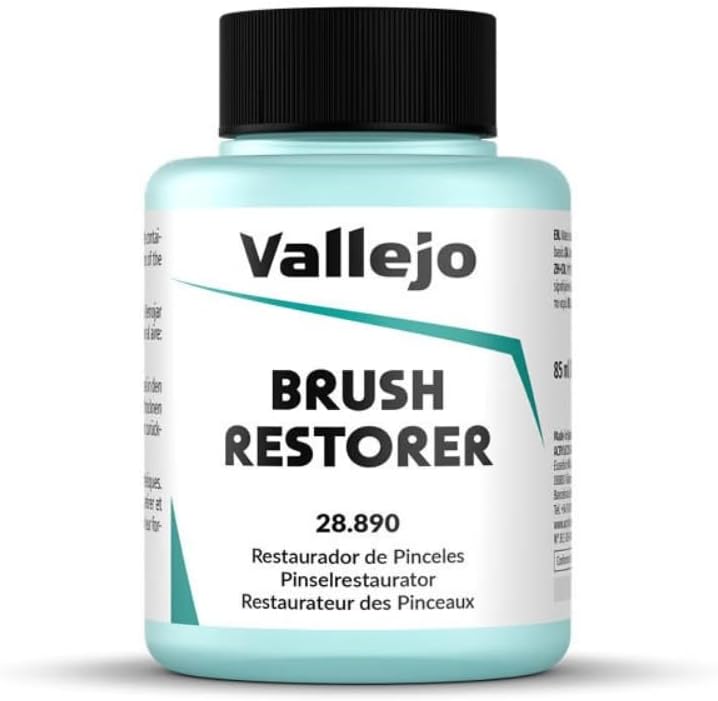
Vallejo is a major miniature and model paint brand, and its brush restorer is designed for detail brushes used with acrylics, watercolors, gouache and other water-based paints. Soak the brush for a few minutes, remove it and let it air dry; the conditioning formula helps restore shape.
The listing says it works on sable, synthetic and mixed-fiber brushes and can revive brushes that have become stiff, frayed or misshapen from repeated use.
Best suited for: Miniature painters, modelers and anyone with frayed detail brushes.
Key features:
- 2.87 fl oz bottle
- Soak a few minutes, air dry
- For natural, synthetic and mixed brushes
- Formulated for water-based media
Pros:
- Focused on detail brush shape
- Simple process
- Low price tier
Cons / limitations:
- Water-based media focus
- Small bottle
- Less suited to oil residue
Buying consideration: Reshape the tip by hand after soaking and let it dry in that shape.
5. Winsor & Newton Brush Cleaner and Restorer (16 oz) — Best from a major artist brand

Winsor & Newton’s Brush Cleaner and Restorer comes in a 16 oz bottle. The listing details are limited to packaging information and a country of origin of France, so we cannot add claims about its formula here.
Winsor & Newton is one of the best-known artist materials brands, and painters who prefer to stay within a brand system for mediums and cleaners may favor it. Check the label for usage directions and medium compatibility.
Best suited for: Painters who prefer an established artist-brand cleaner.
Key features:
- 16 oz bottle
- Brush cleaner and restorer
- Made in France
- From a major artist brand
Pros:
- Large bottle
- Trusted brand
- Fits a W&N materials routine
Cons / limitations:
- Listing gives few product details
- Highest price tier here
- Usage directions not listed online
Buying consideration: Read the label before use and test on an old brush first.
How to Restore a Brush With Dried Acrylic
Remove what you can first. Flex the bristles gently and pick out flakes of dried paint with a fingernail or a brush comb.
Soak only the bristles in a liquid restorer, keeping the ferrule out of the liquid where possible. Prop the brush so the tip is not resting on the bottom of the jar; a clothespin across the rim works.
Check every 15 to 30 minutes. As paint softens, work it out with your fingers, a comb or an old toothbrush, moving from the ferrule toward the tip.
Wash with soap and water to remove restorer residue. Reshape the tip, then dry flat.
Repeat if needed. Badly cured acrylic may take several rounds.
How to Restore an Oil Painting Brush
Wipe off excess paint, then work the brush in odorless mineral spirits or a solvent-free cleaner. Follow with a cleaner-preserver like The Masters or brush soap and water to remove oily residue.
For hardened oil paint, soaking in a restorer and working the paint out gradually works like the acrylic process above. Ventilate the room when using solvent-based products.
When a Brush Is Not Worth Saving
If hairs pull out easily, the ferrule wobbles, or the handle has cracked where it meets the ferrule, restoring the bristles will not help for long. Retire it to rough jobs such as glue, gesso texture or masking fluid.
Cheap brushes can still be worth a quick soak if you already own a restorer, but do not spend an hour reviving a brush that costs less than the time.
Reshaping Fishhooked or Splayed Tips
Soak the brush in warm, not hot, water with a little conditioner or a conditioning restorer, then reshape the tip with your fingers.
Some painters coat the reshaped tip with a little soap or gum arabic and let it dry in shape, then rinse before the next use.
For a stubborn fishhook, dipping the tip briefly in hot water can relax synthetic hair, but do not let hot water reach the ferrule glue.
Buying Guide: How to Choose a Brush Restorer
Identify the problem
Dried paint needs a soaking restorer or patient use of a cleaner-preserver. Stiffness and fraying need a conditioner.
Routine buildup is best prevented with a daily cleaner.
Check medium compatibility
Some restorers handle oil, acrylic and varnish; others focus on water-based paints.
Match the product to the paint that is stuck in the brush.
Hair type
Look for products stated as safe on sable and natural hair if you use them.
Harsh solvents can damage natural hair and some synthetics.
Odor and ventilation
Low-vapor products are easier to use indoors.
Always ventilate when soaking in any solvent-based product.
Size
Small tubs and bottles suit occasional rescues; 16 oz bottles suit frequent acrylic painters and classrooms.
Solid cleaners last a long time with daily use.
Directions
Clear directions help avoid damage. Follow soak times and rinse thoroughly afterward.
Test on an old brush before treating a favorite.
Put Restored Brushes Back to Work
A restored round with a sharp tip is perfect for painting dots with a round brush or liner brush detail work.
If a brush cannot be fully rescued, our guide to choosing brush sizes for detailed acrylic work will help you replace it wisely.
Common Mistakes to Avoid
- Soaking the whole brush, ferrule and handle included
- Using hot water on the ferrule
- Expecting a restorer to fix broken hair or loose ferrules
- Skipping the soap rinse after restoring
- Using harsh solvents on natural hair
- Waiting weeks before treating a brush with dried paint
FAQs
Can you save a paint brush with dried acrylic?
Often, yes. Soak the bristles in a brush restorer, work the softened paint out, wash with soap and reshape. The sooner you act, the better.
Is The Masters brush cleaner a restorer?
It is a cleaner and preserver that can remove dried paint with patience. Its maker says you can leave it on the brush for up to several hours for dried paint.
Does brush restorer work on oil paint?
Many do. Check the label; some products are designed mainly for water-based paints.
Can I use brush restorer on sable brushes?
Use products that state they are safe for natural hair, such as The Masters or Vallejo, and avoid harsh solvents.
How long should I soak a brush in restorer?
Follow the product directions. Check every 15 to 30 minutes and work softened paint out rather than leaving brushes for days.
Why does my brush still shed after restoring?
Shedding usually means the glue in the ferrule has failed or hair has broken. Restorers cannot fix that.
Final Recommendation
For most painters, General’s The Masters Brush Cleaner and Preserver is the best brush restorer to keep on hand, because it doubles as a daily cleaner that prevents buildup in the first place. For brushes already rock-hard with acrylic, soak them in U.S. Art Supply Brush Cleaner and Restorer.
Miniature painters should keep Vallejo Brush Restorer for frayed detail brushes, and Trekell’s low-vapor restorer suits painters who want to condition and reshape fine brushes after washing. Winsor & Newton’s restorer is the pick for those who prefer a major artist brand.
Most of all, wash brushes with soap at the end of each session; prevention is easier than any rescue.




