

PaintingProGuide is reader-supported. When you buy through links on this page we may earn an affiliate commission at no extra cost to you.
Pre-stretched canvas is the default surface for most acrylic painters: cotton already stapled tight over a wooden frame, primed and ready to paint the moment you unwrap it. It has a slight bounce under the brush that panels lack, it can hang without a frame, and it looks like a “real painting” on the wall. The best pre-stretched canvas for acrylic paint is tightly stretched 100% cotton on pine bars, with a stated primer weight (8 oz acid-free gesso is a common, decent spec), in the sizes you paint most often.
Where pre-stretched packs differ is in profile depth, priming, size mix and whether the bars are sturdy enough not to twist. This guide compares six packs from the listings we checked, from standard 5/8 inch studio canvas to a floater-framed set ready for the wall.
Quick answer: For most acrylic painters, the FIXSMITH 11×14 8-pack is the best balance: triple primed with 8 oz acid-free gesso, 100% cotton on pinewood bars, in the most useful mid size. If you want more canvases per pack, the ESRICH 11×14 10-pack has the same stated priming weight. If you want finished paintings ready to hang, the FROM ONE floater frame canvas set includes the frames.
Our Top Picks at a Glance
- FIXSMITH Stretched Canvas 11×14, 8 Pack — Best overall pre-stretched canvas for acrylic
- ESRICH Stretched Canvas 11×14, 10 Pack — Best higher-count 11×14 pack
- GlowStep Pre-Stretched Canvases, 12 Pack (5×7 and 8×10) — Best for small studies
- GOTIDEAL 14 Pcs Multi Pack — Best size variety for beginners
- ESRICH 14 Pack Multi Size with Round Canvas — Best for trying round and square formats
- FROM ONE 12×16 Floater Frame Canvas, 4 Pack — Best for wall-ready finished pieces
| Product | Best For | Key Spec | Key Strength | Price Tier |
|---|---|---|---|---|
| FIXSMITH 11×14 | All-round acrylic | 8 x 11×14 in, 5/8 in profile, 8 oz gesso | Triple primed cotton | $$ |
| ESRICH 11×14 | Regular practice | 10 x 11×14 in, 5/8 in, 8 oz primed | More canvases per pack | $$ |
| GlowStep 12 Pack | Small studies | 6 x 5×7 + 6 x 8×10, 5/8 in pine | 4-layer gesso | $ |
| GOTIDEAL 14 Pcs | Beginners | 4×4 to 11×14, mixed | Medium grain cotton | $$ |
| ESRICH 14 Multi | Format variety | 4×4 to 11×14 plus 8×8, 10×10 round | Includes round canvases | $$ |
| FROM ONE Floater 4 Pack | Finished wall pieces | 4 x 12×16 in, 10 oz cotton, floater frame | Frames and hardware included | $$ |
How We Chose
We have not painted on these specific packs. The picks are based on the Amazon listing details and specifications checked in October 2026, how well each pack’s construction, priming and sizes fit acrylic painting, and how widely each product is reviewed by Amazon buyers. One pre-drawn canvas set in the same search was left out because it is a guided craft product rather than a blank painting surface.
- Cotton and priming: 100% cotton with acid-free acrylic gesso, ideally with a stated primer weight.
- Stretcher quality: pinewood bars, firmly stapled, that resist warping.
- Profile depth: 5/8 inch studio profile for framing; deeper or floater-framed options for display.
- Size mix: single-size packs for consistent practice, multi-packs for exploration.
- Value per canvas: pack count against price tier.
Best Canvas for Acrylic Paint Pre-Stretched Reviewed
1. FIXSMITH Stretched Canvas 11×14, 8 Pack — Best for all-round acrylic painting

FIXSMITH’s listing is unusually specific. The canvas is 100% cotton, described as not rinsed with alkaline chemicals to keep its natural tone and flexibility, stretched and stapled onto pinewood bars, and triple primed with 8 oz of acid-free acrylic gesso that the listing says will not crumble or crack. The profile is 5/8 inch.
An 11×14 canvas is the size most acrylic painters reach for: big enough for a full composition, small enough to finish in a session or two, and easy to frame. Eight in a pack gives you room to make mistakes without feeling wasteful.
Best suited for: Beginner to intermediate acrylic painters who want a dependable, well-primed canvas in a standard size.
Key features:
- 8 canvases, 11×14 in
- 100% cotton
- Triple primed, 8 oz acid-free gesso
- Pinewood bars, 5/8 in profile
Pros:
- Stated priming weight
- Tight stretch per listing
- Frame-friendly profile
- Most useful mid size
Cons and limitations:
- 5/8 in profile looks thin unframed
- One size only
- Not a heavy-weight professional canvas
Buying consideration: If you plan to hang paintings unframed, paint the sides or choose a deeper canvas; 5/8 inch edges look best in a frame.
2. ESRICH Stretched Canvas 11×14, 10 Pack — Best for regular practice

ESRICH offers ten 11×14 inch cotton canvases, each pre-coated with acid-free acrylic gesso at a stated 8 oz primed weight, nailed to a 5/8 inch pinewood frame. The listing says the surface is easy to color and not prone to cracking.
Specification-wise it is very close to FIXSMITH, with two more canvases per pack. For painters working through a course or a series, that extra count adds up.
Best suited for: Painters working through lessons, series or daily practice in one size.
Key features:
- 10 canvases, 11×14 in
- Cotton, 8 oz primed weight
- Acid-free acrylic gesso
- 5/8 in pinewood frame
Pros:
- Higher count per pack
- Stated primer weight
- Sturdy frame per listing
- Good value for practice
Cons and limitations:
- Standard studio profile only
- One size
- Surface texture not detailed
Buying consideration: Buy this if you already know you like 11×14 and will use ten canvases; otherwise start with a mixed pack.
3. GlowStep Pre-Stretched Canvases, 12 Pack — Best for small studies

GlowStep’s pack has six 5×7 and six 8×10 inch canvases. The listing says each is tightly stretched over a 5/8 inch pine frame and primed with four layers of acid-free gesso to an 8 oz primed weight, on 100% cotton.
Small pre-stretched canvases are ideal for color studies, quick paintings and gifts. Four layers of gesso is a generous claim for a budget pack and should give a smooth, even surface for acrylic.
Best suited for: Beginners, daily painters, classes and gift projects.
Key features:
- 12 canvases: 6 x 5×7 in, 6 x 8×10 in
- 100% cotton, 8 oz primed weight
- 4-layer acid-free gesso
- 5/8 in pine frame
Pros:
- Low price tier
- Two small sizes
- Generous priming claim
- Good for quick studies
Cons and limitations:
- Small formats only
- Thin profile
- Not for large compositions
Buying consideration: Use 5x7s for color tests before committing to a larger canvas; it saves paint and frustration.
4. GOTIDEAL 14 Pcs Multi Pack — Best for size variety for beginners
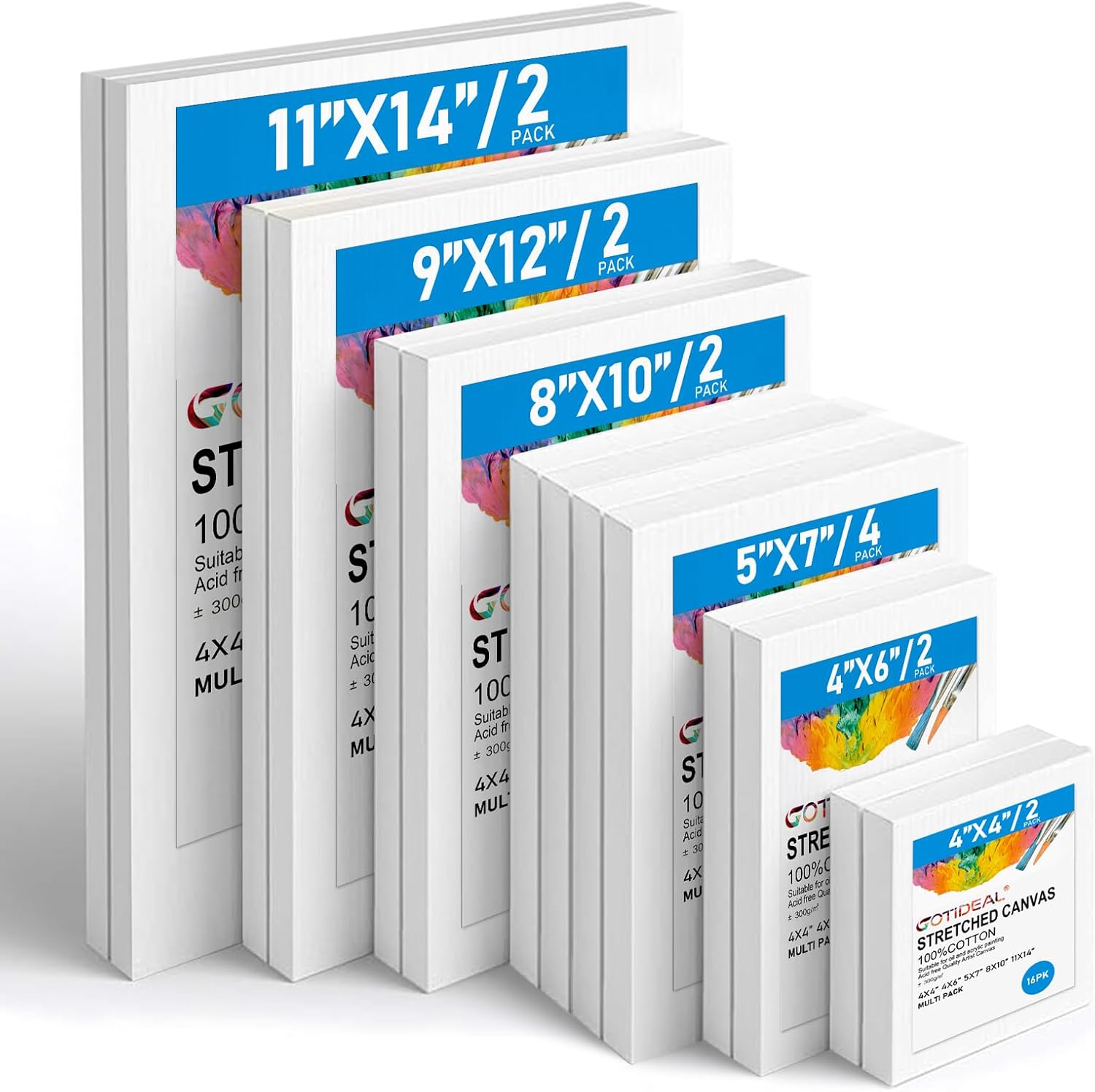
GOTIDEAL’s pack mixes sizes: two each of 4×4, 5×7, 8×10 and 11×14, plus four extra 5×7 canvases, per the listing. The cotton has a medium grain that holds paint without absorbing it, and each canvas is pre-coated with acid-free acrylic gesso and nailed firmly to a wood frame.
Multi-size packs are good for beginners who do not yet know which format they like. Small sizes let you practice quickly, while the 11x14s give you room for a more finished piece.
Best suited for: New acrylic painters exploring sizes and compositions.
Key features:
- 14 canvases: 4×4, 5×7, 8×10, 11×14 (2 each) plus 4 x 5×7
- 100% cotton, medium grain
- Acid-free acrylic gesso
- Wood frames
Pros:
- Wide size range
- Medium grain suits acrylic
- Good starter variety
- Firm frames per listing
Cons and limitations:
- Primer weight not stated
- Only two of the larger size
- Mixed sizes are harder to frame as a set
Buying consideration: Use the 4x4s for value studies and the 11x14s for finished paintings to get the most from the mix.
5. ESRICH 14 Pack Multi Size with Round Canvas — Best for trying round and square formats

ESRICH’s 14-pack covers 11×14, 9.44×12, 8×10, 5×7 and 4×4 inch rectangles plus 8×8 and 10×10 inch round canvases, two of each. The listing says each blank canvas is pre-coated with acid-free acrylic gesso and nailed to a pinewood frame.
Round canvases are popular for florals, mandalas, planets and decorative pieces, and they are hard to find in small quantities. This pack lets you try them alongside standard rectangles.
Best suited for: Painters who want to experiment with round formats and a broad range of sizes.
Key features:
- 14 canvases in 7 sizes, 2 each
- Includes 8×8 and 10×10 round canvases
- Acid-free acrylic gesso
- Pinewood frames
Pros:
- Round formats included
- Broadest size mix here
- Good for decorative projects
- Sturdy frames per listing
Cons and limitations:
- Primer weight not stated
- Round canvases are harder to frame
- Only two of each size
Buying consideration: Plan compositions for round canvases with a center point; they read differently from rectangles.
6. FROM ONE 12×16 Floater Frame Canvas, 4 Pack — Best for wall-ready finished pieces
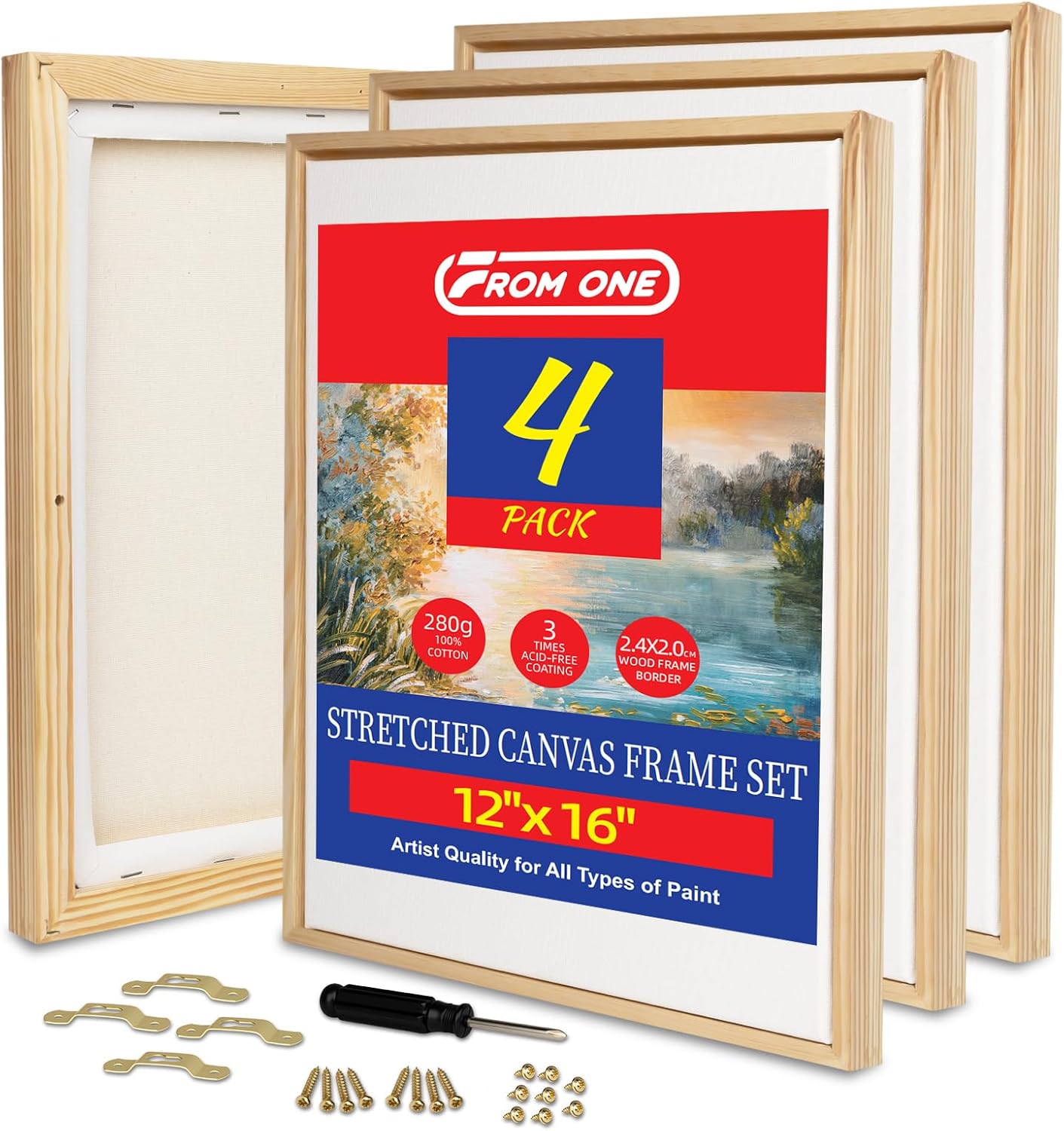
FROM ONE sells four 12×16 inch canvases pre-fitted into wooden floater frames. The listing describes 10 oz 100% cotton canvas with cottonseed husk fibers for bleed resistance, solid wood frames designed to resist warping, and complete hanging hardware: four hooks, screws and a screwdriver.
A floater frame leaves a small gap around the canvas so it appears to float, which gives finished acrylic paintings a gallery look. Having the frame included saves a separate framing step for gifts and wall pieces.
Best suited for: Painters creating finished pieces for gifts, sale or a gallery wall.
Key features:
- 4 x 12×16 in canvases in floater frames
- 10 oz 100% cotton canvas
- Solid wood frame, light brown
- Hooks, screws and screwdriver included
Pros:
- Ready to hang when finished
- Heavier 10 oz canvas
- Consistent set for gallery walls
- Hardware included
Cons and limitations:
- Higher cost per canvas
- One size
- Frame color fixed
Buying consideration: Paint with the canvas removed from the frame if possible, or mask the frame edges to keep them clean.
Buying Guide: How to Choose Pre-Stretched Canvas for Acrylic Paint
Check the profile depth
Standard or studio profile is about 5/8 to 3/4 inch, which suits framing. Gallery or deep profile, 1.5 inches, looks finished unframed and is preferred for wall display. Floater frames suit both.
Look at priming details
Acid-free acrylic gesso is standard. A stated primer weight, such as 8 oz, or a number of coats is a good sign. Thin priming makes acrylic sink in and look streaky.
Test the tension
The canvas should sound like a drum when tapped and feel taut with a little give. Slack canvas can be tightened with keys if the frame has them, or by lightly misting the back with water.
Choose cotton weight
Heavier canvas, 10 oz and up, feels more substantial and resists dents. Lighter canvas is fine for practice and small sizes.
Pick sizes by purpose
Use 5×7 and 8×10 for studies, 11×14 and 12×16 for finished pieces, and larger sizes when you are confident with composition. Multi-packs help you decide.
Consider storage
Stretched canvases take up space. Panels are better if you produce many studies; stretched canvas is better for pieces you will display.
Getting the Most From a Budget Pre-Stretched Canvas
Most value packs are perfectly usable, but a few minutes of preparation makes acrylic behave better on them. None of these steps take long, and together they close much of the gap between a budget canvas and a premium one.
Check each canvas on arrival. Look along the surface at a low angle for dents, wrinkles near corners and patches where the gesso looks thin or shiny. Mark any problem canvases for practice rather than finished work.
Tighten slack canvases. If a canvas ripples, mist the back lightly with clean water and leave it face down on a clean surface to dry. Cotton contracts as it dries, which usually pulls out minor slack.
Add a coat of gesso if the surface is absorbent. Brush a drop of water on a corner. If it soaks in immediately, a thin extra coat of acrylic gesso will stop the first paint layers sinking and drying dull.
Tone the canvas. A thin wash of a neutral color, such as burnt sienna or a warm gray mixed with water, removes the glare of bright white and makes it easier to judge values. It also hides small surface flaws.
Protect the back. Keep brushes and palette knives away from the back of the canvas while you work; pressure from behind leaves permanent bulges.
Store upright. Stand finished and blank canvases on their edges, separated by cardboard, rather than stacking them flat.
Pre-Stretched Canvas vs Canvas Panels
Stretched canvas offers bounce, a traditional look and frameless display. The give in the surface also softens brushstrokes slightly, which many acrylic painters find more forgiving than a rigid board. Canvas panels are cheaper, flatter, easier to store and better for travel and studies. Our comparison of canvas panels vs stretched canvas goes deeper, and if you are using boards, see can you use acrylic paint on canvas board.
Common Mistakes to Avoid
- Pressing too hard near the bars. It leaves ridges where the canvas meets the stretcher.
- Ignoring the sides. Plan whether to paint the edges or frame the piece before you start.
- Storing canvases face-to-face. Corners and stretcher bars dent the surface; separate them.
- Using too much water in acrylic. Over-thinned acrylic on cheap priming can bead or streak.
- Leaving canvas in hot cars or damp basements. Wood bars warp and canvas slackens.
- Buying only one size. A mix helps you discover the format you prefer.
FAQs
Is pre-stretched canvas good for acrylic paint?
Yes. Pre-stretched cotton canvas primed with acrylic gesso is the most common surface for acrylic painting. Choose one with a stated primer weight and tight stretch for best results.
Do I need to gesso pre-stretched canvas before using acrylic?
Usually not, since it is already primed. Some painters add one thin coat to improve smoothness or reduce absorbency, especially on budget canvases.
What profile depth should I choose?
Choose 5/8 to 3/4 inch if you will frame the painting and 1.5 inch if you want to hang it without a frame.
What size canvas should beginners use?
Start with 8×10 or 11×14. They are large enough for complete compositions and small enough to finish quickly.
How do I fix a loose stretched canvas?
Lightly mist the back with water and let it dry; cotton tightens as it dries. If the frame has keys, tap them gently outward.
Can I paint on the sides of a stretched canvas?
Yes. Many painters extend the image around the edges or paint the sides a solid color so the piece can hang without a frame.
Final Recommendation
For most acrylic painters, the FIXSMITH 11×14 8-pack offers the best-documented build at a sensible pack size. ESRICH’s 10-pack is the choice if you want a few more canvases with the same stated priming weight, and GlowStep’s small-format pack suits daily studies and classes.
Beginners unsure of their favorite size should start with GOTIDEAL’s mixed pack, or ESRICH’s 14-pack if round canvases appeal. If your goal is finished, wall-ready art, the FROM ONE floater frame set removes the framing step entirely.




