

PaintingProGuide is reader-supported. When you buy through links on this page we may earn an affiliate commission at no extra cost to you.
Cotton canvas is the default surface for acrylic painting, and for good reason: acrylic is flexible when dry, cotton is affordable and takes gesso evenly, and the combination suits everything from student studies to finished wall pieces. The best cotton canvas for acrylic is a triple-primed, acid-free stretched canvas on solid wood bars for finished work, plus a pack of cotton canvas panels for practice.
Linen is the premium alternative, but for acrylics the advantage is small and the price jump is large. What actually changes your results is format (stretched, panel or raw roll), the quality of the priming, and choosing a size that matches how you paint.
Quick answer: For finished acrylic paintings, the FIXSMITH 11×14 stretched cotton canvas 8-pack gives triple-primed, acid-free surfaces on pine bars at a low per-canvas tier. For practice, the KEFF 24-pack of cotton canvas boards in four sizes covers studies of every scale, and painters who want to stretch their own should look at Barcelonetta 10 oz cotton duck.
Our Top Picks at a Glance
- FIXSMITH Stretched Cotton Canvas, 11×14, 8 Pack — Best overall stretched cotton canvas
- ESRICH Stretched Canvas 12×16, 10 Pack — Best for larger regular practice
- KEFF 24-Pack Cotton Canvas Boards, Four Sizes — Best multi-size practice set
- Simetufy 30 Pack 8×10 Cotton Canvas Panels — Best bulk panels for classes
- ESRICH 5 Pack 8×10 Cotton Canvas Boards — Best low-cost trial pack
- Barcelonetta 10 oz Cotton Duck Canvas Fabric — Best for stretching your own
| Product | Best For | Key Spec | Key Strength | Price Tier |
|---|---|---|---|---|
| FIXSMITH 11×14 Stretched | Finished paintings | 8 oz primed, 5/8 in pine bars | Triple-primed, acid-free gesso | $$ |
| ESRICH 12×16 Stretched | Frequent painters | 10 canvases, 5/8 in profile | Larger size per canvas | $$ |
| KEFF 24-Pack Boards | Studies at several scales | 6 each of 5×7, 8×10, 9×12, 11×14 | Four sizes in one box | $$ |
| Simetufy 30 Pack Panels | Classrooms, daily practice | 30 x 8×10, MDF core | Rigid, will not warp | $$ |
| ESRICH 5 Pack Boards | Trying acrylics | 5 x 8×10 cotton panels | Lowest entry tier | $ |
| Barcelonetta Cotton Duck | DIY stretching, big work | 10 oz, 62 in wide, by the yard | Unprimed raw cotton | $ |
How We Chose
We did not paint on these canvases. Our picks are based on the Amazon listing details and specifications checked in October 2026, how well each product’s fiber, priming, format and size fit acrylic painting specifically, and how widely each product is reviewed by Amazon buyers. We dropped a second 12-pack of 8×10 panels that duplicated a larger bulk pack from the same brand.
For cotton canvas and acrylics, these factors carry the most weight:
- 100% cotton stated: blends and unspecified “canvas” can behave unpredictably with gesso.
- Priming: acid-free acrylic gesso, ideally triple-coated, so the surface is ready for acrylic straight from the wrapper.
- Format: stretched canvas for finished work and hanging; panels for studies, travel and storage; raw duck for custom sizes.
- Support quality: pine stretcher bars or MDF cores that resist warping.
- Value per surface: multi-packs matter because acrylic painters go through canvases quickly.
Best Cotton Canvas for Acrylic Reviewed
1. FIXSMITH Stretched White Blank Canvas, 11×14, 8 Pack — Best Overall Stretched Cotton Canvas
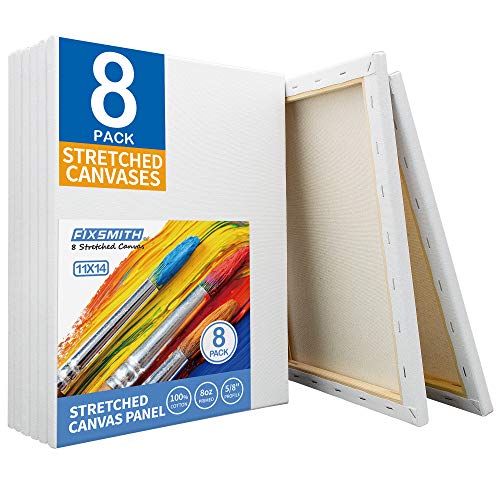
FIXSMITH is unusually specific about its build, which is a good sign. Each canvas is 100% cotton, stretched and stapled over pinewood bars with a 5/8 inch profile, and coated with acid-free acrylic gesso described as triple primed. The listing gives an unprimed weight of 4 oz and a primed weight of 8 oz, meaning a substantial gesso layer for a student-grade cotton.
For acrylic painters, that thick priming matters: it keeps paint from sinking into the weave and gives a smooth, slightly toothy surface for both thin glazes and heavier body paint. Eleven by fourteen is a practical size for finished pieces that will hang or be framed.
Best suited for: Acrylic painters who want ready-to-hang, framable canvases for finished work at a modest per-canvas tier.
Key features:
- 100% cotton canvas
- Triple-primed with acid-free acrylic gesso
- 4 oz unprimed, 8 oz primed weight
- Pinewood stretcher bars, 5/8 inch profile
- 8 canvases, 11 x 14 inches
Pros:
- Detailed, verifiable specs
- Heavier priming than many student canvases
- Fits standard 11×14 frames
Cons and limitations:
- 5/8 inch profile is too shallow to display frameless as gallery work
- 11×14 only in this pack
- Light cotton weight compared with professional canvas
Buying consideration: If you plan to hang paintings without frames, look for a 1.5 inch deep profile. For framing, this standard profile is ideal.
2. ESRICH Stretched Canvas 12×16, 10 Pack — Best for Larger Regular Practice

A step up in size from 11×14 makes a noticeable difference with acrylics, which dry quickly and reward big, confident strokes. ESRICH packs ten 12 x 16 inch cotton canvases, each pre-coated with acid-free acrylic gesso to a primed weight of 8 oz, stapled over a 5/8 inch pinewood frame.
Ten canvases is enough to work through a series or a month of weekly painting. The listing also pitches them for painting parties, and the size is a good middle ground for group sessions where everyone works from the same reference.
Best suited for: Hobby painters who paint weekly, painting party hosts, and anyone ready to move beyond small studies.
Key features:
- 10 cotton canvases, 12 x 16 inches
- Acid-free acrylic gesso, 8 oz primed weight
- Pinewood frame, 5/8 inch profile
- Listed for acrylic, oil, gouache and tempera
Pros:
- Larger working area per canvas
- Ten-pack suits series work
- Same priming weight as pricier options
Cons and limitations:
- 12×16 is a less common frame size than 11×14 or 16×20
- Shallow profile needs framing for a finished look
- Mid price tier overall
Buying consideration: Check frame availability before you commit to 12×16 for pieces you want to frame; 16×20 frames with mats are a common workaround.
3. KEFF 24-Pack Cotton Canvas Boards — Best Multi-Size Practice Set
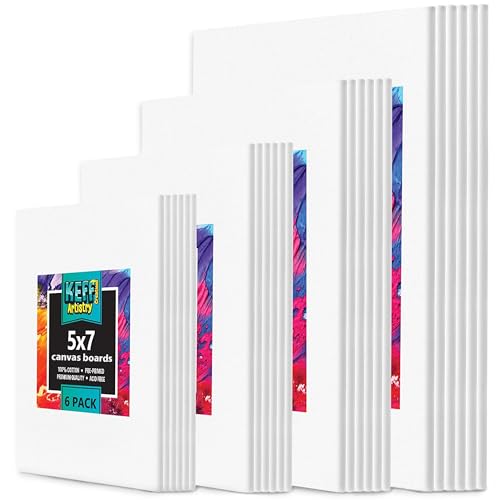
Practice is where most acrylic painters improve, and panels are the cheapest way to practice on real canvas texture. KEFF’s set gives six panels each in 5×7, 8×10, 9×12 and 11×14, all 100% cotton and triple primed. Small sizes are good for color studies and quick value sketches; the 11×14 panels handle fuller compositions.
Boards are flat and rigid, so they store in a drawer and travel easily, and they will not bounce under a palette knife the way a stretched canvas can. The trade-off is that panels need a frame to look finished on a wall.
Best suited for: Beginners and improving painters who want to practice at several scales, plus art teachers who want variety in one box.
Key features:
- 24 panels: 6 each of 5×7, 8×10, 9×12, 11×14
- 100% cotton surface
- Triple-primed
- Listed for acrylic, oil, watercolor, tempera and gouache
Pros:
- Four sizes for studies and finished pieces
- Flat panels store and travel easily
- Firm surface for knife work
Cons and limitations:
- Panels look unfinished without a frame
- Not as responsive as a stretched canvas for some brushwork
- Mid price tier
Buying consideration: Use the small panels for limited-palette studies before tackling a stretched canvas; it is a cheap way to test color mixes.
4. Simetufy 30 Pack 8×10 Cotton Canvas Panels — Best Bulk Panels for Classes

Thirty identical 8×10 panels is a classroom or daily-practice quantity. Simetufy describes 100% cotton canvas glued over an MDF board core, triple primed with gesso and acid-free. The MDF core is the detail worth noting: cheaper panels use cardboard that can bow when you load on wet acrylic, while MDF stays flat.
At 8×10 inches, these suit 30-minute studies, daily painting challenges and teaching sessions where everyone needs the same surface.
Best suited for: Art teachers, painting groups and anyone doing a daily painting habit at small scale.
Key features:
- 30 panels, 8 x 10 inches
- 100% cotton glued to MDF board
- Triple-primed, acid-free
- Listed for acrylic, oil, pastel, tempera and gouache
Pros:
- MDF core resists warping
- Strong per-panel value
- Uniform size for classes
Cons and limitations:
- Heavier than cardboard-core panels (the listing gives 6.63 lb total)
- Only one size
- MDF edges can chip if dropped
Buying consideration: If weight matters for travel, carry a handful rather than the whole pack, and store the rest flat.
5. ESRICH 5 Pack 8×10 Cotton Canvas Boards — Best Low-Cost Trial Pack

If you are just trying acrylics, five panels is enough to learn whether you enjoy it. ESRICH lists pure cotton boards with a non-toxic, acid-free primer and a sturdy core that the brand says will not easily deform or warp under heavy paint.
This is the lowest-tier way to paint on real cotton canvas rather than paper. It also makes a tidy gift add-on alongside a starter acrylic set.
Best suited for: First-time acrylic painters, kids’ projects and small gift bundles.
Key features:
- 5 cotton canvas boards, 8 x 10 inches
- Non-toxic, acid-free primer
- Sturdy board core
- Listed for acrylic, oil, watercolor, gouache and pouring
Pros:
- Lowest price tier on this list
- Small commitment for beginners
- Smooth surface for detail
Cons and limitations:
- Only five surfaces
- Listing is vague on number of primer coats
- Single small size
Buying consideration: Fine for trying acrylics; if you paint more than once a week, a bulk pack is better value.
6. Barcelonetta Cotton Duck Canvas Fabric, Natural 10 oz — Best for Stretching Your Own

Pre-stretched canvas is convenient, but it limits you to stock sizes and light cotton weights. Raw cotton duck lets you build any size you want. Barcelonetta sells 100% cotton duck by the yard at 62 inches wide, and offers 4, 7, 10 and 12 oz weights; this listing is the natural 10 oz.
A 10 oz duck is noticeably heavier than the 4 oz cotton on most budget stretched canvases, which gives a sturdier surface for large acrylic work. It is unprimed, so you will size and gesso it yourself, and you will need stretcher bars and a staple gun. Each yard ordered arrives as a separate piece.
Best suited for: Experienced painters making large or custom-size canvases, and anyone who wants heavier cotton than stock canvases offer.
Key features:
- 100% cotton duck fabric
- 10 oz weight (also sold in 4, 7 and 12 oz)
- 62 inches wide, sold by the yard
- Unprimed, natural color
Pros:
- Any size you can stretch
- Heavier weight than most pre-stretched cotton
- Lowest cost per square foot on this list
Cons and limitations:
- Requires stretcher bars, stapling and priming
- Learning curve for even tension
- Natural fabric may shrink slightly when wet-primed
Buying consideration: Plan for two or three coats of acrylic gesso, sanding lightly between coats, before painting with acrylics.
Buying Guide: How to Choose Cotton Canvas for Acrylic
Cotton versus linen for acrylic
Linen is stronger and less affected by humidity, which is why it has long been preferred for oil paintings meant to last generations. Acrylic, though, stays flexible when dry and is far less demanding of its support. For most acrylic work, a well-primed cotton canvas performs very similarly at a fraction of the cost.
Fabric weight
Canvas weight is measured in ounces per square yard. Budget stretched canvases often use around 4 oz cotton before priming; professional cotton canvas usually runs 10 to 12 oz. Heavier cotton resists dents and sagging, which matters more as canvas size grows. For small and medium acrylic pieces, lighter cotton is perfectly workable.
Priming and tooth
Acrylic gesso seals the fibers and gives the surface a bit of tooth. Triple-primed canvases feel smoother and need less paint to cover; single-primed canvases show more weave texture. If a canvas feels too absorbent, add one more coat of gesso yourself and sand lightly.
Stretched, panel or roll
Stretched canvases are ready to hang and have a slight give under the brush. Panels are rigid, cheaper and easier to store, ideal for studies, plein air and classes. Rolls or yardage let you make large or odd sizes but require stretching and priming. Many painters keep all three.
Profile depth
Standard 5/8 to 3/4 inch profiles are made to go into frames. Gallery profiles around 1.5 inches look finished on the wall without a frame, especially if you paint the edges. Decide before buying whether a piece will be framed.
Acid-free and archival claims
Acid-free priming helps prevent yellowing and fiber breakdown over time. All of the canvases here list acid-free priming. For pieces you want to last, also keep finished paintings out of damp areas and consider varnishing.
Size and pack count
Buy small panels in bulk for practice and a few stretched canvases at the size you most often frame. Common frame sizes such as 8×10, 11×14, 16×20 and 18×24 keep framing costs down.
Keep Improving Your Acrylic Work on Canvas
Once you have the right surface, a good start makes a big difference. Our guide to underpainting on canvas with acrylic explains how a toned first layer speeds up the whole painting.
When a piece is finished, protect it properly with our step-by-step on sealing acrylic paint on canvas, and if you mostly work on panels, see whether acrylic paint works on canvas board for tips specific to rigid surfaces.
Common Mistakes to Avoid
- Paying for linen too early: for acrylics, well-primed cotton is enough until you are selling or exhibiting.
- Skipping extra gesso on thin canvases: one more coat fixes an overly absorbent surface.
- Painting on raw duck without priming: acrylic will soak in and the fabric can stiffen unevenly.
- Buying odd sizes for framed work: nonstandard sizes need custom frames.
- Storing panels upright and damp: even MDF can warp in humid rooms; store flat and dry.
- Over-tightening keys on stretched canvas: it can distort the stretcher bars; tap in keys gradually.
- Expecting shallow canvases to look gallery-ready: 5/8 inch profiles usually need a frame.
FAQs
Is cotton canvas good for acrylic paint?
Yes. Cotton canvas is the most common acrylic surface. Acrylic is flexible when dry, so it does not need linen’s extra stability, and primed cotton takes acrylic evenly.
Do I need to gesso pre-primed cotton canvas?
No, pre-primed canvases are ready to use. Some painters add one extra coat and sand it for a smoother finish, especially for detailed work.
What weight of cotton canvas is best for acrylics?
For small and medium paintings, standard pre-stretched canvas works fine. For large pieces, heavier cotton such as 10 to 12 oz duck resists sagging and dents better.
Are canvas panels as good as stretched canvas?
For studies and practice, yes, and many painters prefer the firm surface. Stretched canvas is better for finished work you want to hang without a frame.
Can I use unprimed cotton duck for acrylic painting?
You can, but prime it first with two or three coats of acrylic gesso. Unprimed cotton absorbs paint unevenly and can stiffen as acrylic soaks in.
What size canvas should a beginner start with?
Smaller panels such as 8×10 or 9×12 are easiest for learning; step up to 11×14 or 12×16 for finished pieces as your confidence grows.
Final Recommendation
For finished acrylic paintings, the FIXSMITH 11×14 stretched cotton 8-pack offers the clearest specs and a framing-friendly size, while the ESRICH 12×16 ten-pack gives more room for regular painters. For practice, choose the KEFF 24-pack if you want variety or the Simetufy 30-pack if you need identical panels for a class.
New to acrylics? The ESRICH 5-pack is a low-risk start. And when stock sizes start to feel limiting, Barcelonetta 10 oz cotton duck lets you stretch canvas at any size you like.





One Comment