PaintingProGuide is reader-supported. When you buy through links on this page we may earn an affiliate commission at no extra cost to you.
Drawing directly on the image is the single biggest upgrade most digital painters make. With a screenless pen tablet, your hand moves on a pad while your eyes watch a monitor, and it takes weeks to stop overshooting lines. With a tablet that has a screen, the pen touches the painting itself, just like a brush on canvas. The best digital painting tablets with screens make that feel natural with a laminated display, a responsive pen and enough color accuracy that what you paint is what you get.
There are two kinds. Pen displays are screens that connect to a computer and run your desktop software. Standalone drawing tablets have a built-in Android computer and need nothing else. We compared five on Amazon, a Huion Kamvas Pro 16 and a Wacom One 14 pen display plus three standalones, and below the reviews you will find a comparison of the two formats, a guide to lamination, color gamut and pen specs, and setup tips.
Quick answer: If you paint in desktop software, the Huion Kamvas Pro 16 offers a 15.6-inch fully laminated screen with 120% sRGB (92% Adobe RGB) gamut volume, anti-glare glass, a touch bar and an 8,192-level pen. For the most reliable plug-and-play experience, the Wacom One 14 has a laminated 14-inch Full HD display with 98% sRGB. To skip the computer entirely, the Simbans PicassoTab A10 is a 10-inch Android 14 standalone with tutorials included.
Our Top Picks at a Glance
- Huion Kamvas Pro 16 — Best pen display for painting
- Wacom One 14 — Best pen display for reliability and ease
- Simbans PicassoTab A10 — Best standalone with a screen
- Frunsi RubensTab T11 Pro — Best budget 10-inch standalone
- Frunsi T8 8 Inch Standalone — Best compact screen tablet for sketching
| Product | Best For | Key Spec | Key Strength | Price Tier |
|---|---|---|---|---|
| Huion Kamvas Pro 16 | Desktop painting | 15.6 in laminated, 120% sRGB, 8,192 levels | Touch bar, 6 express keys, stand | $$ |
| Wacom One 14 | Plug-and-play desktop | 14 in laminated FHD, 98% sRGB, 4,096 levels | Single USB-C, software trials | $$$ |
| Simbans PicassoTab A10 | No-computer painting | 10 in laminated, Android 14, 6GB/64GB | Concepts PRO and tutorials | $$$ |
| Frunsi RubensTab T11 Pro | Budget standalone | 10.1 in, Android 12, 1,024 levels | Battery-free pen | $$$ |
| Frunsi T8 | Sketching on the go | 8 in, Android 13, 2,048 levels | Most portable | $$$ |
How We Chose
We did not paint on these tablets for this guide. Picks are based on the Amazon listing details and specifications checked in October 2026, how well each device’s screen size, lamination, color gamut, pen pressure and connectivity fit digital painting, and how widely each product is reviewed by Amazon buyers. Screenless pen tablets in our product set were excluded because they do not match the query.
- Screen and lamination: laminated screens reduce the gap between pen tip and line.
- Color gamut: sRGB coverage stated.
- Pen performance: pressure levels, tilt and battery-free design.
- Workflow: express keys, touch controls and stands.
- Connection: computer-connected or standalone.
Pen Display vs Standalone Drawing Tablet
| Feature | Pen Display | Standalone Tablet |
|---|---|---|
| Needs a computer | Yes | No |
| Software | Photoshop, Clip Studio, Krita, Corel Painter and more | Android apps |
| Performance | Uses your computer’s power | Limited by built-in processor and RAM |
| Portability | Desk-bound | Go anywhere |
| Cables | One to three cables | None while drawing |
| Best for | Serious desktop painting | Sketching, learning, travel |
Best Digital Painting Tablets With Screens Reviewed
1. HUION Kamvas Pro 16 Drawing Tablet with Screen, 15.6 Inch — Best for desktop painting
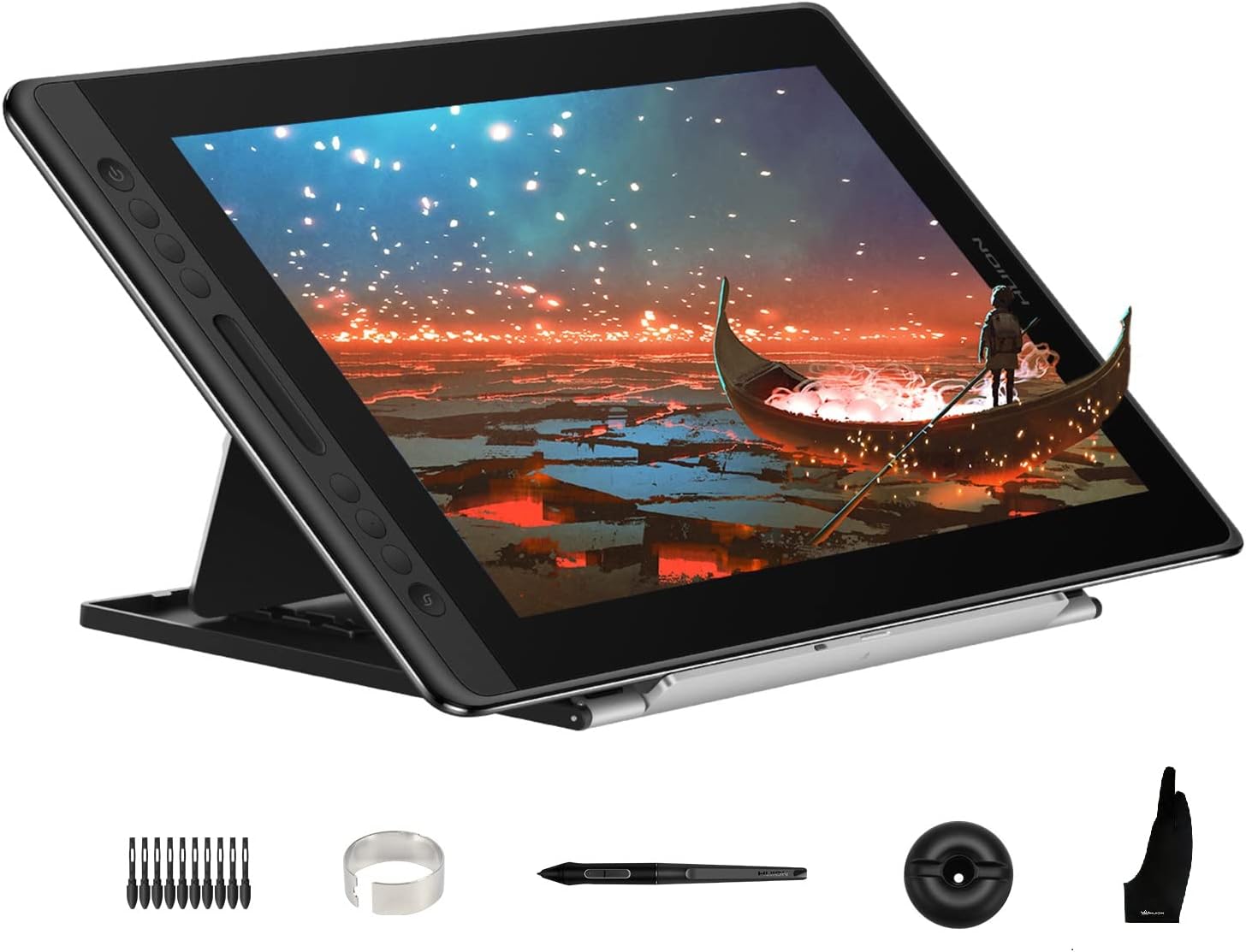
The Kamvas Pro 16 has a 15.6-inch fully laminated screen with anti-glare glass and a 120% sRGB (92% Adobe RGB) color gamut volume, 8-bit, with a 1,000:1 contrast ratio. Its battery-free pen offers 8,192 pressure levels and 60-degree tilt recognition. Six customizable express keys and a touch bar handle shortcuts, and the ST200 stand adjusts between 20 and 60 degrees.
For painters, the wide gamut and tilt support matter most: tilt lets you shade with the side of a brush, and the wide color volume shows saturated hues that a basic sRGB panel clips.
Best suited for: Painters using desktop software who want a large, color-rich screen.
Key features:
- 15.6 in fully laminated, anti-glare glass
- 120% sRGB / 92% Adobe RGB volume
- 8,192-level battery-free pen, 60-degree tilt
- 6 express keys, touch bar, ST200 stand
Pros:
- Wide color volume
- Tilt and high pressure levels
- Adjustable stand included
Cons and limitations:
- Needs a computer
- Gamut volume may oversaturate sRGB work without color management
- Listing price on check date may not reflect typical pricing
Buying consideration: Enable color management and use the sRGB mode for web work, since wide-gamut volume can make sRGB colors look oversaturated.
2. Wacom One 14 Drawing Tablet with IPS Full HD Laminated Screen and Pen — Best for reliability and ease

Wacom One 14 has a laminated 14-inch IPS Full HD display with 98% sRGB color accuracy and a paper-like texture that reduces glare. The battery-free pen captures light lines and bold strokes with Wacom’s pressure sensitivity (4,096 levels in the listing). It connects with a single USB-C cable to PCs on Windows 10 or later, Macs on macOS 13 or later, and Chromebooks.
Wacom emphasizes reliability: no driver headaches or mysterious disconnects, per the listing. It includes trials of Clip Studio Paint Pro, Magma, Concepts and Foxit, plus Skillshare courses.
Best suited for: Hobbyists and students who want a dependable pen display with minimal setup.
Key features:
- 14 in laminated IPS Full HD
- 98% sRGB
- Battery-free pen, 4,096 levels
- Single USB-C; HDMI devices need adapter kit
Pros:
- Simple setup
- Paper-like texture
- Software trials included
Cons and limitations:
- HDMI-only computers need extra accessories
- Lower pressure levels than Huion
- Full HD on 14 in
Buying consideration: Check your computer has a USB-C port with video output; otherwise budget for the adapter kit.
3. Simbans PicassoTab A10 Standalone Drawing Tablet — Best for a standalone with a screen

The PicassoTab A10 is a 10-inch standalone running Android 14 on an octa-core processor with 6GB RAM and 64GB storage expandable to 1TB. Its laminated screen reduces glare and parallax, and the active pen has 4,096 pressure levels.
It includes lifetime upgrades for Concepts PRO and Artixo tutorials, plus a case, a drawing glove and other accessories, which makes it a complete learning kit.
Best suited for: Beginners and students who want to paint without a computer.
Key features:
- 10 in laminated display
- Android 14, 6GB/64GB, expandable
- 4,096-level active pen
- App upgrades and accessories included
Pros:
- No computer needed
- Tutorials included
- Expandable storage
Cons and limitations:
- Active pen needs charging
- Smaller than pen displays
- Android apps only
Buying consideration: Install a full painting app such as Clip Studio or Infinite Painter alongside the included apps.
4. Frunsi RubensTab T11 Pro Standalone Drawing Tablet — Best for a budget 10-inch standalone

The RubensTab T11 Pro is a 10.1-inch standalone with a 5,800mAh battery for up to five hours, a battery-free pressure-sensitive pen and pre-installed drawing apps. It includes an adjustable stand case.
The listing details show Android 12 and 1,024 pressure levels. It is a budget way to get a screen tablet, best for beginners and casual sketching.
Best suited for: Budget beginners who want to draw on screen.
Key features:
- 10.1 in screen
- Android 12
- 1,024 levels, battery-free pen
- 5,800mAh battery
Pros:
- Low price tier for a screen
- Battery-free pen
- Stand case
Cons and limitations:
- Lower pressure levels
- Older Android
- Few display specs listed
Buying consideration: Confirm your preferred app supports Android 12.
5. Frunsi T8 8 Inch Standalone Drawing Tablet — Best for compact sketching
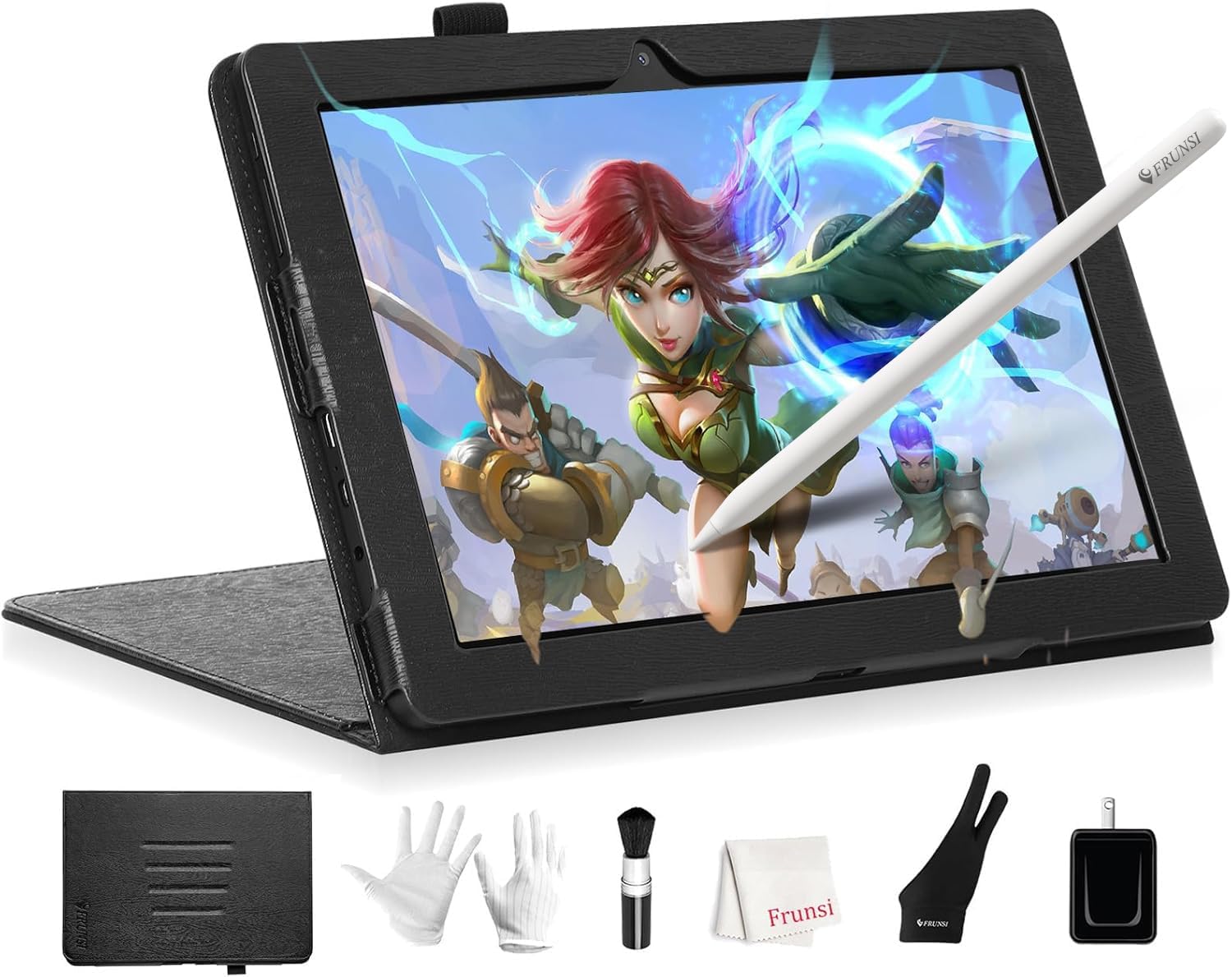
The Frunsi T8 is an 8-inch standalone on Android 13 with a 1200 x 800 display, 4GB RAM, 64GB storage expandable to 256GB and a 4,000mAh battery. The pen has 2,048 pressure levels.
Its size makes it a digital sketchbook more than a painting station, ideal for capturing ideas on the go and blocking in color studies.
Best suited for: Sketching, thumbnails and travel.
Key features:
- 8 in 1200 x 800
- Android 13, 4GB/64GB
- 2,048 pressure levels
- 4,000mAh battery
Pros:
- Very portable
- Expandable storage
- Lower price tier
Cons and limitations:
- Small for painting
- Lower resolution
- Modest RAM
Buying consideration: Keep canvases modest in size and layer count to stay within the RAM.
Buying Guide: How to Choose Digital Painting Tablets With Screens
Pen display or standalone
If you already paint in desktop software, a pen display gives you the full power of your computer. If you want to paint away from a desk, choose a standalone.
Lamination matters
A laminated screen bonds the glass to the display, reducing the gap between pen tip and cursor. It makes lines land exactly where the pen touches.
Non-laminated screens feel like drawing through a window.
Color gamut
Look for at least 98 to 100% sRGB. Wider gamuts look richer but need color management for web work.
Pen specs
Pressure levels of 4,096 or more, tilt support for shading, and a battery-free pen that never needs charging.
Screen size
13 to 16 inches suits most painters at a desk; 10 to 11 inches suits standalone use; 8 inches is for sketching.
Connectivity
Single USB-C connections are simplest; others need HDMI plus USB and power. Check your computer’s ports.
Screen Size and Use Guide
| Screen Size | Best For | Notes |
|---|---|---|
| 8 in | Sketching, thumbnails | Most portable |
| 10-11 in | Standalone painting, learning | Good balance of size and weight |
| 13-14 in | Desktop illustration | Fits on most desks |
| 15.6-16 in | Serious painting | Room for canvas and panels |
| 22-27 in | Professional studios | Requires desk space and arms or stands |
Setup Tips for Screen Tablets
- Install the latest driver (pen displays) or update Android and apps (standalones).
- Calibrate the pen position in the driver so the cursor sits under the tip.
- Set the stand at 20 to 45 degrees to reduce neck strain.
- Assign express keys to undo, brush size and eyedropper.
- Turn off blue light filters while judging color.
- Use a two-finger drawing glove to reduce friction and smudges.
Color Management on a Screen Tablet
A pen display is a second monitor, and it often shows color differently from your main screen. If you paint on the tablet but judge the finished image on a desktop monitor, colors can shift between the two. Three habits keep things consistent.
- Pick one reference screen. Decide whether the pen display or your main monitor is the color reference, and do final checks there.
- Use matching color modes. Set both screens to sRGB if your work is for the web, or calibrate both with a hardware colorimeter.
- Set your software working space. In Photoshop, Clip Studio or Krita, set the document color profile to sRGB unless you have a reason to use another.
- Check on a phone. Most viewers see your work on phones; preview before posting.
Wide-gamut pen displays like the Kamvas Pro 16 can make sRGB colors look more saturated than intended when software is not color-managed. That is not a defect; it is a setup issue, and enabling color management usually fixes it.
Screen Surface: Glass, Matte Film or Etched
The feel of the pen on the screen affects control as much as pressure levels. Smooth glossy glass is slippery and shows reflections; matte films and etched anti-glare glass add a slight tooth that feels closer to paper and reduces glare from room lights. The Kamvas Pro 16 uses anti-glare glass, the Wacom One 14 has a paper-like texture, and the PicassoTab uses a laminated anti-glare screen. Textured surfaces wear pen nibs faster, so keep spare nibs on hand and replace them when they flatten or feel scratchy.
Software That Works With Screen Tablets
| Software | Pen Display | Standalone (Android) | Strength |
|---|---|---|---|
| Clip Studio Paint | Yes | Yes | Illustration, comics, brush engine |
| Krita | Yes | Yes | Free, painterly brushes |
| Adobe Photoshop | Yes | No (desktop version) | Industry standard, painting and editing |
| Corel Painter | Yes | No | Natural media simulation |
| Infinite Painter | No | Yes | Natural brushes on Android |
| ibis Paint X | No | Yes | Free, large brush library |
Desk Setup and Ergonomics
A screen tablet changes how you sit. Instead of looking straight ahead at a monitor, you look down at the drawing surface, which strains the neck if the tablet lies flat. Raise the top edge with the included stand or a tablet arm so the screen sits at roughly 20 to 45 degrees, and bring it close enough that your elbow rests on the desk. Place the keyboard to the side of your non-drawing hand for shortcuts.
Cables matter too. Route them away from your drawing arm so they do not tug the tablet, and use a short USB-C cable where possible. For standalones, keep a charger at your usual painting spot so the battery never runs low mid-session. Every 30 to 45 minutes, look away at something distant and stretch your wrist; long painting sessions are easier on the body with regular breaks.
Practice Projects
Start with our tutorials on painting digital waves and ocean and digital night scenes, both of which benefit from a screen’s direct feedback. If you are deciding whether you need a tablet at all, our guide to digital painting without a tablet covers alternatives.
Common Mistakes to Avoid
- Buying a standalone for desktop software. It runs Android apps only.
- Ignoring ports. Pen displays need compatible video connections.
- Using wide-gamut mode for sRGB work. Colors look different elsewhere.
- Laying the tablet flat for hours. Use a stand to protect your neck.
- Skipping pen calibration. Offset lines feel wrong.
- Choosing an 8-inch screen for painting. It is a sketching size.
FAQs
What is the best drawing tablet with a screen for digital painting?
For desktop painting, the Huion Kamvas Pro 16 offers a large laminated screen and wide color. For standalone use, the PicassoTab A10.
Do drawing tablets with screens need a computer?
Pen displays like the Kamvas Pro 16 and Wacom One 14 do. Standalones like the PicassoTab and Frunsi RubensTabs do not.
Is a laminated screen important?
Yes. Lamination reduces the gap between pen tip and line, making drawing feel more precise.
How many pressure levels do I need?
4,096 is comfortable for painting; 8,192 adds finer control.
Is a 13 or 16 inch pen display better?
16 inches gives more room for canvas and panels; 13 to 14 inches fits smaller desks and is easier to move.
Can I use Photoshop on a drawing tablet with a screen?
Yes, on pen displays connected to a computer. Standalones use Android apps instead.
Final Recommendation
For desktop digital painting, the Huion Kamvas Pro 16 delivers a large laminated screen, wide color volume and an 8,192-level tilt pen. Choose the Wacom One 14 for simple, reliable USB-C setup and 98% sRGB. To paint without a computer, the PicassoTab A10 is the best standalone here, with the Frunsi RubensTab T11 Pro as a budget 10-inch option and the Frunsi T8 for pocket sketching.