PaintingProGuide is reader-supported. When you buy through links on this page we may earn an affiliate commission at no extra cost to you.
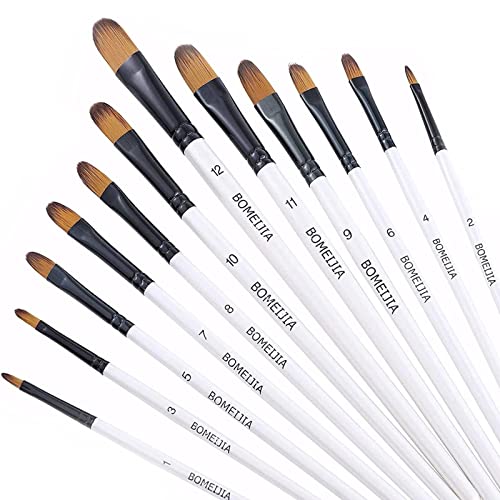
The filbert is the brush many painters reach for when they cannot decide between a flat and a round. Its flat ferrule holds a thick, flat body of hair like a flat brush, but the tip is shaped into a soft oval. Press down and you get a broad stroke with rounded ends; turn it on edge and you get a thinner line; roll it and you can taper strokes to almost nothing.
That range is why filbert brushes for painters are so popular for portraits, flowers, skies, clouds and any subject with soft, organic edges. Blending is easier too, because the rounded tip does not leave the hard corners a flat brush does.
Choosing a set comes down to hair type, sizes and handle length. Synthetic taklon or nylon filberts are springy and durable, ideal for acrylic. Natural sable holds more liquid and comes back to shape well, which watercolor and oil glazing painters value.
We compared six sets available on Amazon, five filbert-only sets and one mixed set that includes filberts, using the specifications each listing provides.
Quick answer: For acrylic and general use, the Nicpro 10-Piece Filbert Brush Set is the best value: taklon bristles, birch handles and a size run that covers small to medium work. Watercolor and oil painters who want natural hair should choose the Transon Red Sable Filbert Brushes (6 pcs), sizes 2 to 12. For the widest size range, the GETHPEN 12-Piece Filbert Set runs from size 1 to 12.
What a Filbert Brush Does Well
Soft-edged shapes. Petals, leaves, clouds, cheekbones and folds of fabric all have rounded ends. A filbert makes those shapes in one stroke.
Blending. Dragging a clean, slightly damp filbert across the border between two wet colors softens the transition without the streaks that a square flat can leave. Portrait painters lean on filberts for this reason.
Variable marks. One filbert does broad strokes when pressed flat, medium strokes on a slight angle and fine lines on its edge. That versatility means you can paint much of a painting with two or three filbert sizes.
Covering area without hard edges. Larger filberts lay in backgrounds and skies quickly while still leaving soft edges at the boundaries.
Filberts are not ideal for crisp, geometric edges, which flats and brights handle better, or for long fine lines, which riggers and liners do best.
Synthetic or Natural Hair?
Synthetic taklon and nylon filberts are the default for acrylic. They resist the harsh, fast-drying binder of acrylic, keep their shape when washed often and cost very little. They also work well with gouache and watercolor, although they hold less water than natural hair.
Natural red sable filberts, like the Transon set below, hold more liquid and release it steadily, and the hair springs back to shape. Watercolorists and oil painters doing thin glazes often prefer that feel. Natural hair is more delicate and should not be left standing in water or cleaned with harsh solvents.
Hog bristle filberts, common in oil painting, are stiffer still and move thick paint well. None of the sets here are hog bristle.
Our Top Picks at a Glance
- Nicpro 10-Piece Filbert Paint Brush Set — Best overall filbert set for acrylic
- Transon Red Sable Filbert Brushes (6 pcs) — Best natural-hair filberts
- GETHPEN 12-Piece Filbert Paint Brush Set — Best full size run
- Falling in Art 12-Piece Professional Filbert Set — Best budget set for mixed media
- Transon 7-Piece Synthetic Filbert Set — Best short-handle set for detail and tabletop work
- Fuumuui 25-Piece Paint Brush Set (9 shapes) — Best mixed set that includes filberts
| Product | Best For | Key Spec | Key Strength | Price Tier |
|---|---|---|---|---|
| Nicpro 10-Piece Filbert Paint Brush Set | overall filbert set for acrylic | 10 taklon filberts, sizes 0 to 10, birch handles | Taklon elasticity and a practical size range | $ |
| Transon Red Sable Filbert Brushes (6 pcs) | natural-hair filberts | 6 red sable filberts, sizes 2 to 12 | High liquid capacity and resilience | $$ |
| GETHPEN 12-Piece Filbert Paint Brush Set | full size run | 12 nylon filberts, sizes 1 to 12 | Every size from 1 to 12 | $ |
| Falling in Art 12-Piece Professional Filbert Set | budget set for mixed media | 12 nylon filberts in assorted sizes | Moisture-resistant nylon for many media | $ |
| Transon 7-Piece Synthetic Filbert Set | short-handle set for detail and tabletop work | 7 nylon filberts: sizes 1, 2, 4, 6, 8, 10, 14 | Includes a large size 14 | $ |
| Fuumuui 25-Piece Paint Brush Set (9 shapes) | mixed set that includes filberts | 24 brushes in 9 shapes plus canvas roll | Filberts alongside flats, rounds, riggers and more | $$ |
How We Chose
We did not paint with these brushes. Picks are based on the Amazon listing details and specifications checked in October 2026, how well each set’s hair type, sizes and build suit filbert techniques in common media, and how widely each product is reviewed by Amazon buyers.
- Hair type: synthetic taklon or nylon versus natural sable
- Size range and spacing
- Ferrule construction
- Handle length for tabletop or easel work
- Media compatibility
- Value per brush
Best Filbert Brushes for Painters Reviewed
1. Nicpro 10-Piece Filbert Paint Brush Set — Best overall filbert set for acrylic

Nicpro’s set gives ten filberts in sizes from 0 up to 10, enough to go from fine detail to medium passages. The bristles are taklon, described in the listing as having good absorption and elasticity, secured with crimped aluminum ferrules on birch wood handles.
Taklon is a smart choice for acrylic: it is springy enough to push paint, soft enough to blend and tough enough to survive regular washing. The listing also names watercolor, oil and gouache among suitable media.
Most painters use two or three filbert sizes most of the time, and this run covers the sizes acrylic painters tend to reach for on canvases up to about 16 x 20 inches.
Best suited for: Acrylic painters, beginners and anyone who wants a dependable everyday filbert set.
Key features:
- 10 filbert brushes, sizes 0 to 10
- Taklon synthetic bristles
- Crimped aluminum ferrules
- Birch wood handles
Pros:
- Excellent value per brush
- Taklon suits acrylic well
- Useful small-to-medium size range
Cons / limitations:
- No very large filberts for big canvases
- Synthetic hair holds less water for watercolor
- Basic finish on handles
Buying consideration: Wash acrylic out immediately after painting; even taklon splays when acrylic dries in the ferrule.
2. Transon Red Sable Filbert Brushes (6 pcs) — Best natural-hair filberts

This set of six natural red sable filberts covers sizes 2, 4, 6, 8, 10 and 12. The listing emphasizes the natural hair’s capacity for holding liquid and its resilience in staying in shape, plus FSC-certified birch handles finished through six painting processes with a UV coating.
Ferrules are nickel-plated copper, double crimped to stop wiggling. Transon lists acrylic, oil, watercolor, tempera and gouache, but natural hair performs best with fluid media like watercolor and thin oil.
Best suited for: Watercolorists, oil glaze painters and anyone who prefers the feel of natural hair.
Key features:
- Six red sable filberts, sizes 2 to 12
- Natural hair with high liquid capacity
- Double-crimped nickel-plated copper ferrules
- UV-coated FSC birch handles
Pros:
- Holds and releases water smoothly
- Good size spread including a large 12
- Quality ferrule and handle details
Cons / limitations:
- Natural hair is more delicate with acrylic
- Higher price tier than synthetics
- Needs careful cleaning and drying
Buying consideration: Reserve natural hair for watercolor or oil and use synthetic filberts for acrylic to keep the sable in good condition.
3. GETHPEN 12-Piece Filbert Paint Brush Set — Best full size run

If you are not sure which sizes you will use, a full run is the safest buy. GETHPEN includes every size from 1 to 12, with soft synthetic nylon bristles, white-tipped short wooden handles and aluminum crimped ferrules that the listing says will not shed.
Care advice is simple: wash in warm water immediately after use and reshape the tip.
Best suited for: Painters who want every filbert size to experiment with.
Key features:
- 12 filberts, sizes 1 to 12
- Soft synthetic nylon
- Aluminum crimped ferrules
- Short wooden handles
Pros:
- Complete size range
- Good for acrylic, oil and watercolor per listing
- Low cost per brush
Cons / limitations:
- Short handles are less suited to easel work at a distance
- Budget nylon may lose its edge sooner
- Many sizes you may rarely use
Buying consideration: After a few months, note which sizes you actually use and buy better versions of those.
4. Falling in Art 12-Piece Professional Filbert Set — Best budget set for mixed media

Another 12-size set, this one from Falling in Art, uses imported nylon described as soft, smooth and resistant to moisture. The listing names acrylic, watercolor, gouache, enamel and more, and recommends warm soapy water and reshaping tips with fingers after use.
It is a versatile, inexpensive set for painters who switch between media.
Best suited for: Hobby painters working across acrylic, watercolor and gouache.
Key features:
- 12 filberts
- Imported nylon hair
- Multi-media use per listing
- Air-dry after washing
Pros:
- Low price
- Wide range of sizes
- Good for students
Cons / limitations:
- Exact size list not detailed in the bullets
- Budget handles
- Similar to other 12-piece sets
Buying consideration: Lay brushes flat to dry so water does not run into the ferrules.
5. Transon 7-Piece Synthetic Filbert Set — Best short-handle set for detail and tabletop work

Transon’s basic synthetic set covers sizes 1, 2, 4, 6, 8, 10 and 14, from small detail to large area coverage. Short, ergonomic handles give close control at a desk, and double-crimped aluminum ferrules secure the nylon.
The size 14 is a useful addition for laying in backgrounds and skies, which many budget sets skip.
Best suited for: Tabletop painters, students and anyone who wants a compact, well-spaced size range.
Key features:
- 7 filberts: 1, 2, 4, 6, 8, 10, 14
- Synthetic nylon
- Short ergonomic handles
- Double-crimped aluminum ferrules
Pros:
- Includes a large filbert
- Very low cost
- Comfortable for close work
Cons / limitations:
- Short handles for easel painting
- Fewer brushes
- Nylon is less absorbent for watercolor
Buying consideration: Pair with a larger flat for very big backgrounds.
6. Fuumuui 25-Piece Paint Brush Set (9 shapes) — Best mixed set that includes filberts

If you are building a brush kit from scratch, a mixed set lets you compare filberts against other shapes. Fuumuui’s set has 24 brushes in nine shapes, including wide flat, flat, filbert, fan, dagger, cat tongue, round, angle and rigger, plus a waterproof canvas roll with separate compartments.
The cat tongue shape, a long pointed filbert, is especially useful for portrait and floral work. Birch handles are described as balanced for long sessions.
Best suited for: Beginners building a first full kit and painters who want filberts plus other shapes.
Key features:
- 24 brushes in 9 shapes
- Includes filbert and cat tongue
- Synthetic bristles
- Waterproof canvas brush roll
Pros:
- Complete starter kit
- Brush roll for storage and travel
- Lets you compare shapes
Cons / limitations:
- Fewer filbert sizes than dedicated sets
- Highest price tier here
- Some shapes may go unused
Buying consideration: Good if you need a whole kit; if you only want filberts, a dedicated set gives more sizes for less.
Filbert Techniques Worth Practicing
The petal stroke. Load a filbert, press it flat and lift as you pull. You get a rounded shape that tapers at one end, ideal for petals and leaves. Practice a row of these at different pressures to learn the brush.
Edge lines. Turn the filbert on its narrow edge and pull. The line is thinner than the flat stroke and can thicken as you rotate the brush mid-stroke.
Soft blending. Lay two wet colors side by side, wipe the brush, and drag lightly across the border in short strokes. Keep the brush clean between passes.
Scumbling. With a dry filbert and very little paint, scrub lightly in small circles to build broken color over a dry layer, useful for skin texture, foliage and atmosphere.
Cloud shapes. Dab and twist a medium filbert with white over a blue sky to make soft, rounded cloud edges, then soften the bases with a clean damp brush.
Buying Guide: How to Choose Filbert Brushes
Match the hair to your medium
Acrylic: synthetic taklon or nylon. Watercolor: natural sable or a soft synthetic. Oil: hog bristle for thick paint, sable or synthetic for glazes.
If you paint in several media, keep separate brushes for acrylic so the binder does not shorten the life of natural hair.
Choose the right sizes
For most canvases under 16 x 20 inches, sizes 2, 4, 6 and 8 cover the majority of work. Add a 10 to 14 for backgrounds and a 0 or 1 for detail.
Sizes are not standardized between brands, so a size 6 from one maker can be noticeably larger than another.
Check ferrules
Double-crimped, seamless metal ferrules hold hair firmly and resist wobbling. Loose ferrules shed and twist.
Avoid letting water sit at the ferrule; it loosens glue over time.
Handle length
Short handles suit tabletop and detail work. Long handles suit easel painting where you stand back from the canvas.
Most budget sets have short handles; check before buying if you work at an easel.
Shape quality
A good filbert has a symmetrical oval tip that returns to shape after washing. Uneven tips cause ragged edges.
Inspect new brushes and reshape them after each wash.
Set or single brushes
Sets are economical for learning. Once you know your favorite sizes, buy higher-quality single brushes in those sizes.
A couple of excellent filberts often outperform a dozen average ones.
Look After Your Filberts
New synthetic brushes sometimes lose a few hairs; our guide to keeping paint brushes from shedding explains why and what to do.
Drying matters as much as washing: see how to dry paint brushes correctly. If you want to work looser with bigger filberts, read our guide to painting with large brushes.
Common Mistakes to Avoid
- Using natural sable filberts with acrylic and letting paint dry in them
- Buying only tiny filberts and over-working small areas
- Standing brushes in water, which bends tips and loosens ferrules
- Expecting a filbert to make crisp, square edges
- Pressing too hard and splaying the oval tip
- Assuming size numbers match across brands
FAQs
What is a filbert brush used for?
Soft-edged shapes, blending, petals, leaves, clouds, portraits and general painting where you want rounded strokes rather than square corners.
Is a filbert brush good for beginners?
Yes. Its versatility means beginners can paint much of a picture with two or three filbert sizes.
What is the difference between a filbert and a flat brush?
Both have flat ferrules, but a flat has a square tip and a filbert has an oval tip. Flats make crisp edges; filberts make soft, rounded edges.
Which filbert sizes should I buy first?
Sizes 2, 4, 6 and 8 cover most small to medium paintings. Add a larger size for backgrounds.
Can I use synthetic filberts with oil paint?
Yes. Synthetic filberts work with oil, especially for smoother passages and glazes. Clean them with an appropriate brush cleaner afterward.
What is a cat tongue brush?
A long, pointed variation of the filbert. It combines the broad body of a filbert with a sharper tip for detail.
Final Recommendation
For acrylic painters, the Nicpro 10-piece taklon set is the best overall filbert choice for the money. Watercolor and oil glaze painters will get more from the Transon red sable set, especially its larger sizes.
If you want every size to experiment with, the GETHPEN and Falling in Art 12-piece sets are inexpensive full runs. The Transon 7-piece synthetic set adds a large size 14 for backgrounds, and the Fuumuui 25-piece kit is the pick if you need filberts plus a full range of other shapes and a brush roll.