
PaintingProGuide is reader-supported. When you buy through links on this page we may earn an affiliate commission at no extra cost to you.
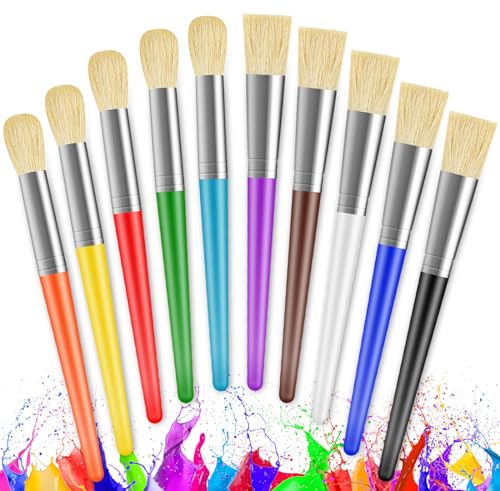
The best brush sets for kids are not miniature versions of adult artist brushes. Small children grip with a fist, press hard, leave brushes in water and paint with thick tempera, so they need short, chunky handles and sturdy bristles. Older kids want variety and a finer point. Choosing well makes painting less frustrating for the child and less messy for the adult.
Many search results for kids’ brush sets are actually hair brushes and combs. We left those out and focused only on paint brushes for children. That leaves two clearly suitable sets in our product data, so this guide spends more time on how to choose and use brushes at each age, which is often the bigger question for parents and teachers.
Quick answer: For toddlers and preschoolers, choose the Anezus Chubby Kids Paint Brushes, whose thick handles suit a fist grip. For school-age children ready to explore shapes, the KEVIN&SASA CRAFTS 15-Piece Value Pack offers six brush types.
Our Top Picks at a Glance
- Anezus Chubby Kids Paint Brushes (10 pc) — Best for toddlers and preschoolers
- KEVIN&SASA CRAFTS 15-Piece Paint Brush Value Pack — Best for school-age kids exploring different shapes
| Product | Best For | Key Spec | Key Strength | Price Tier |
|---|---|---|---|---|
| Anezus Chubby Kids Paint Brushes (10 pc) | Toddlers and preschoolers | 5 round + 5 flat; chunky handles; hog bristle | Thick grip for small hands | $ |
| KEVIN&SASA CRAFTS 15-Piece Paint Brush Value Pack | School-age kids exploring different shapes | 15 brushes; 6 head types; nylon | Fan, mop, angle, round, bright and detail shapes | $ |
How We Chose
We based these picks on Amazon listing details and specifications checked in October 2026, how well each set’s handle size, bristle type and brush shapes fit children of different ages, and how widely each product is reviewed by Amazon buyers. Several listings returned for this search were hair-care sets for children, not paint brushes, and we excluded them.
Our criteria for kids’ brushes:
- Handle thickness and length for small hands
- Bristle type and durability with thick paints
- Ferrule security to limit shedding
- Shape variety appropriate to age
- Compatibility with washable and tempera paints
- Price per brush for classrooms and groups
Why Kids’ Brushes Wear Out So Fast
Children are hard on brushes, and it is not a matter of carelessness. They press the bristles flat to make broad marks, scrub to fill shapes, rest the brush in the water cup with the head on the bottom, and set it down with paint still in it while they go to show someone their picture.
Each of those habits stresses a different part of the brush. Pressing and scrubbing splay the bristles. Standing in water soaks the ferrule and loosens the glue, so hairs start to fall out. Paint drying near the ferrule stiffens the head into a clump. A good kids’ brush set is built to tolerate these habits better, with stiff bristle, a firmly crimped ferrule and a handle that does not crack when it gets wet.
Even so, expect children’s brushes to be semi-disposable. Buying an inexpensive set and replacing it once or twice a year is usually smarter than buying expensive brushes and worrying about every session. Save the better brushes for the age when a child can clean them properly.
Best Brush Sets for Kids Reviewed
1. Anezus Chubby Kids Paint Brushes (10 pc) — Best for toddlers and preschoolers
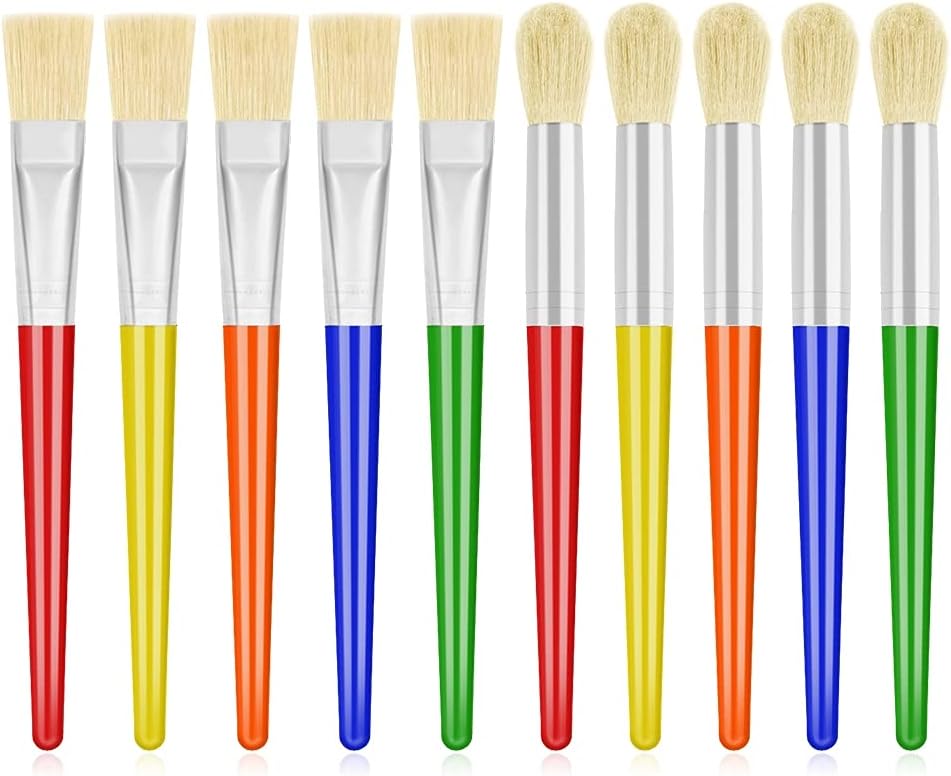
Toddlers hold a brush in a fist, not between finger and thumb, so a thin artist handle is the wrong tool for them. The Anezus set uses large, chunky handles in bright colors with five round and five flat heads. The listing describes soft hog bristle, rust-proof ferrules and bristles fixed firmly to resist shedding.
The pairing of rounds and flats is useful even at preschool level: rounds for dots, lines and small shapes, flats for filling in big areas. The listing names washable paint, tempera and acrylic, plus surfaces such as rock and ceramic, which covers most early craft projects.
Hog bristle is stiffer than the soft nylon in many craft sets. That suits thick tempera and finger-paint-style projects, where a soft brush would just bend, and it stands up to the pressing and scrubbing young children do naturally.
Best suited for: Children roughly two to five years old, preschool classrooms and anyone using thick washable or tempera paint.
Key features:
- Ten brushes: five round, five flat
- Chunky, colorful handles
- Hog bristle heads
- Rust-proof ferrules
- Listed for washable, tempera and acrylic paint
Pros:
- Handles sized for a fist grip
- Stiff bristles handle thick kids’ paint
- Low price tier for a classroom-friendly count
Cons and limitations:
- Too chunky for older children doing detail
- Hog bristle leaves visible streaks in thin paint
- Listing material field is inconsistent with the bullets
Buying consideration: Buy one set per child if you are running a group activity. Sharing brushes between paint colors is where most muddy-paint frustration starts.
2. KEVIN&SASA CRAFTS 15-Piece Paint Brush Value Pack — Best for school-age kids exploring different shapes

Once children move past fist-grip painting, around kindergarten and early elementary, they start to want variety. This 15-piece pack includes six head types: fan, bright, detail, round, mop and angle. That spread lets kids discover what each shape does, which is a big part of learning to paint.
The heads are nylon, which works with all paint types and is easy to rinse in water. The listing highlights colorful heads and crystal-style handles, details that matter more to a seven-year-old than to an adult.
Nylon is a good material for kids because it tolerates being left in water and rinses out quickly. It also keeps a point better than hog bristle, so older children can try simple outlines and details.
Best suited for: Children around five to twelve, homeschool art lessons and family craft boxes.
Key features:
- Fifteen brushes
- Six brush shapes including fan and angle
- Nylon bristles for all paint types
- Colorful heads and decorative handles
Pros:
- Wide shape variety for learning
- Easy-rinse nylon
- Very low price tier
Cons and limitations:
- Handles are standard size, not chunky
- Quality is craft-grade
- Decorative handles may be fragile if stepped on
Buying consideration: Introduce the shapes gradually: start with a flat and a round, then add the fan and angle once a child is comfortable.
Brushes by Age: What Children Actually Need
Ages 2 to 4. Fist grip, big movements, thick paint. Chunky handles are essential, and stiff bristles hold up to pressing. Two or three brushes is plenty; more just means more cleaning. Pair them with washable tempera or finger paint and a heavy paper.
Ages 4 to 6. Children begin to hold a brush between fingers and thumb. Medium handles and a mix of flat and round shapes help them fill areas and draw lines. This is a good time to introduce rinsing between colors.
Ages 6 to 9. Kids start to care about results. A set with rounds, flats and one or two special shapes (fan, angle) lets them experiment. Nylon bristles are a good default because they work in tempera, watercolor and acrylic craft paint.
Ages 9 and up. Many children are ready for basic student artist brushes in a few sizes. A small round for detail, a medium round, a flat and a wash brush cover a lot of ground, and a child at this age can learn proper cleaning.
Pairing Brushes with Kids’ Paints
The paint affects which brush works. Thick tempera and washable kids’ paint need sturdy bristles that do not collapse. Watercolor pan sets need a soft, absorbent round that holds water. Acrylic craft paint dries fast and ruins brushes if left on them, so it suits older children who will clean up promptly.
For young children, washable tempera is the easiest choice for both cleanup and clothing. For older children doing more careful work, a student watercolor set with a soft round brush is a rewarding next step.
Setting Up a Kids’ Painting Station
The right setup prevents most of the mess and frustration that turns painting time sour. None of this requires special equipment.
- Cover the table with an old shower curtain, a plastic tablecloth or kraft paper taped down at the edges.
- Use two water cups with wide, heavy bases: one for the first dirty rinse, one for a clean final rinse.
- Pour small amounts of paint into a muffin tin, egg carton or ice cube tray. You can always add more, and small amounts limit waste.
- Give each color its own brush for young children, so colors stay bright.
- Keep a damp rag or paper towel beside each child to wipe the brush and fingers.
- Use heavy paper such as mixed-media or watercolor paper; thin printer paper buckles and tears under wet paint.
- Plan a drying spot before you start, such as a clothes-drying rack or a clear area of floor covered with newspaper.
Put an apron or old adult T-shirt on the child, even with washable paint. Washable formulas come out of most fabrics, but they wash out far more easily if they are rinsed before they dry.
Simple Brush Skills to Teach
Children learn faster when they are shown what a brush can do, rather than just handed one. A few short exercises make a big difference, and they double as play.
Dots and dabs. Press the tip of a round brush straight down and lift. Make caterpillars, ladybug spots or rain. This teaches control of pressure.
Long lines. Pull a loaded brush across the paper without lifting. Try straight, wavy and zigzag lines. This builds wrist control and shows how paint runs out as you go.
Filling a shape. Draw a simple shape in crayon, then fill it with a flat brush. The wax line acts as a boundary and helps the child stay inside it.
Rinse and blot. Make rinsing part of the game: swish, tap on the rim, blot on the rag, then pick a new color. Children who learn this early keep their paints cleaner for years.
Older children can try a fan brush for grass and trees or an angle brush for clean edges. Introduce one new shape per session so each has a chance to stand out.
Buying Guide: How to Choose Brush Sets for Kids
Handle size and length
Short, thick handles are easier for small hands to control. Long artist handles are designed for easel painting at arm’s length and tend to wobble for kids sitting at a table. As children grow, move toward standard short-handle brushes.
Brightly colored handles also help with tidy-up time: they are easy to spot on a cluttered table and easy to sort by color into a jar.
If a child keeps dropping the brush or gripping it near the ferrule, the handle is probably too thin.
Bristle material
Stiff hog bristle suits thick paint and heavy pressure. Nylon is softer, rinses easily and keeps a point for detail. Natural soft hair is unnecessary and too delicate for children.
For a mixed-age household, a set of each makes sense: stiff bristle for the youngest child’s tempera and nylon for the older child’s watercolor.
Shape variety
A round and a flat are the two essential shapes. Fan, angle and mop brushes add fun and teach how shapes create textures, but they are extras. For toddlers, fewer shapes is better.
Ferrule and shedding
Kids press hard and leave brushes in water, which loosens poor ferrules. Look for crimped metal ferrules and listings that mention firmly fixed bristles. Loose hairs in paint frustrate children quickly.
Quantity and sharing
For a group, count one set per child or at least one brush per paint color. Sharing a single brush across colors leads to muddy paint and arguments.
Value packs with ten or more brushes are worth it for classrooms, birthday parties and family craft nights, where several children paint at once.
Safety and cleanup
Choose non-toxic, washable paints labeled for children, and supervise young children closely. Bright, sturdy handles are easier to find and less likely to be mistaken for something else. Keep a water cup with a wide, stable base to limit spills.
Kids’ Projects and Brush Brand Guides
Wondering whether to upgrade an older child to a student artist brand? Our reviews cover whether Princeton Neptune brushes are good for watercolor, how Princeton Select brushes perform as all-round synthetics, and whether Reeves paint brushes are a good budget choice.
Ready to paint? Try our step-by-step guides on painting an easy ladybug with kids and making painted rock critters, both of which work well with a chunky round and a small flat.
Common Mistakes to Avoid
- Buying a cheap adult artist set with long, thin handles for a toddler
- Leaving brushes standing in the water cup overnight
- Using one brush for every color
- Letting acrylic craft paint dry on kids’ brushes
- Buying many special shapes before the child has used a round and a flat
- Choosing paints not labeled non-toxic and washable for young children
FAQs
What size paint brush is best for a toddler?
A short, chunky brush with a thick handle and a medium-size head. Toddlers grip with their whole hand, so handle thickness matters more than bristle size.
Are hog bristle brushes good for kids?
Yes, for thick tempera and washable paint. Stiff hog bristle holds up to pressure. For watercolor or finer work, nylon is a better choice.
How many brushes does a child need?
Young children need two or three. School-age kids benefit from four to six shapes. In a group, provide at least one brush per paint color to keep colors clean.
How do you clean kids’ paint brushes?
Rinse in warm water while the paint is wet, wash gently with mild soap, rinse again, reshape and lay flat to dry. Do not leave brushes standing in water.
When should kids move to real artist brushes?
Around age nine or when a child shows interest in detail and results. A few student-grade synthetic brushes are a good step up.
Can kids use acrylic paint with these brushes?
Yes, but acrylic dries quickly and stains clothes. It is better for older children who can rinse brushes promptly. Washable tempera suits younger kids.
Final Recommendation
For toddlers and preschoolers, the Anezus chubby brushes are the clear match: thick handles, sturdy bristle and a sensible mix of rounds and flats. For school-age children who want to experiment, the KEVIN&SASA CRAFTS value pack offers six shapes at a very low price tier.
As children grow and start caring about results, step up to a few student-grade synthetic brushes. Until then, the biggest improvements come from good habits: one brush per color, rinsing between colors and never leaving brushes in the water cup.
If you are buying for a classroom or a group, plan on two sets: chunky brushes for the youngest painters and a varied nylon pack for the older ones. Replace them as soon as the bristles splay or start shedding, because worn brushes are the quickest way to make a child think they are bad at painting.





4 Comments